
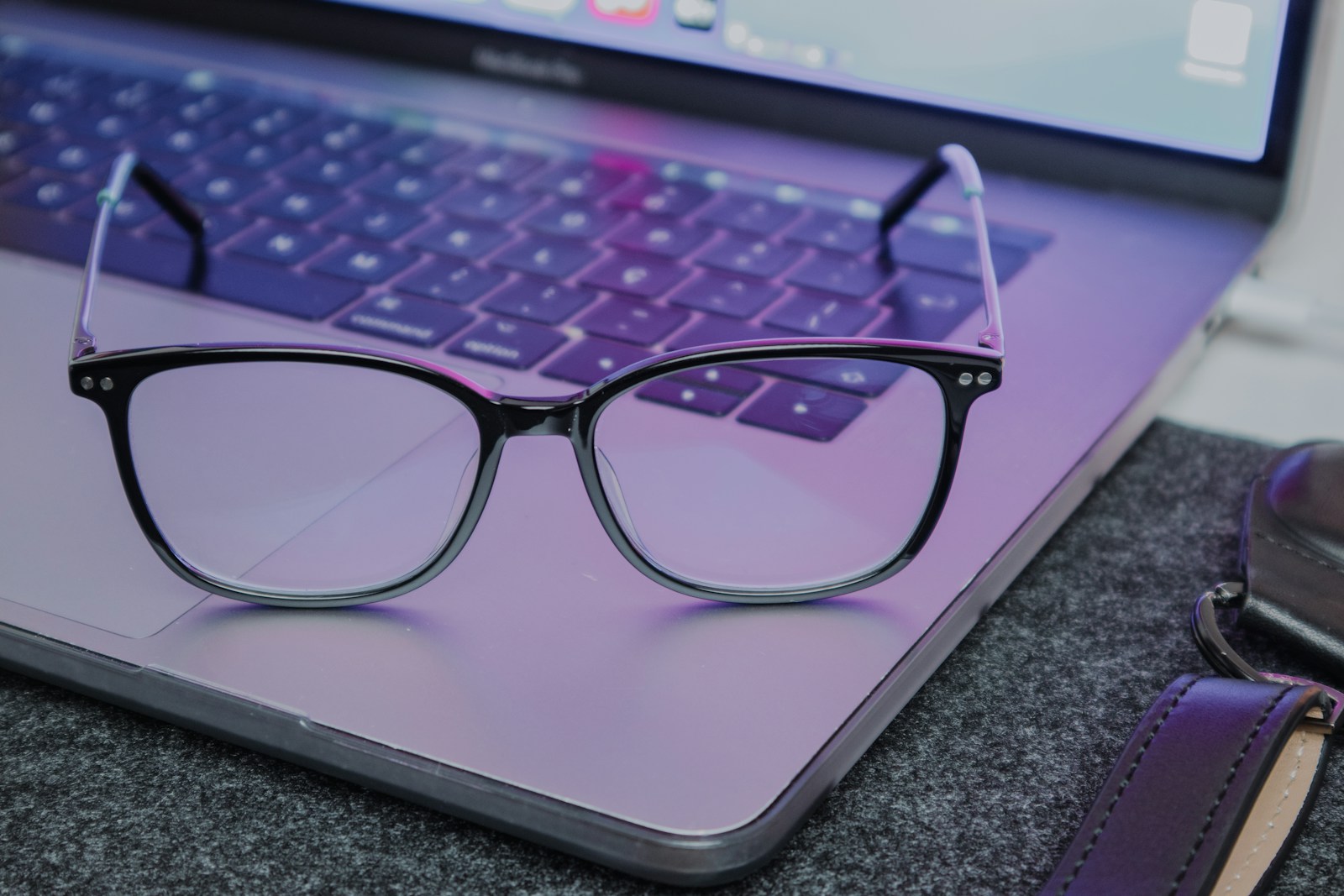
A Whoop for Your Eyes? What STASIS Smart Glasses Can and Cannot Tell You About Eye Fatigue
A two-person Y Combinator startup says its glasses can read every blink, squint and stare. The science of blinking supports part of that promise. The accuracy numbers, so far, come only from the company.
Presented By Our Partners


Your watch knows your resting heart rate. Your ring knows how long you spent in deep sleep. After nine hours in front of a monitor, the organ that did most of the work gets no number at all. You find out your eyes are tired the old fashioned way: they burn, the text starts to swim, and somewhere around four in the afternoon you notice you have read the same paragraph three times.
STASIS, a San Francisco startup in Y Combinator’s Fall 2026 batch, wants to close that gap with a pair of glasses that watches your eyes instead of the world. Its founders pitch it as the WHOOP for 16 billion eyes. Founding Member preorders are open now, with a launch the company has set for this month. No independent reviewer has worn a production unit, the company has not published a price, and every accuracy figure in circulation comes from STASIS itself. What the glasses propose to measure, though, rests on a body of research that is older, stranger and more useful than the pitch.
What STASIS Says Its Smart Glasses Do
The company describes glasses that read “every blink, every squint, & every stare” to estimate fatigue, cognitive performance and sleep, with lenses that tint on their own when your eyes need relief. A launch listing for the product claims more than 30 eye metrics, gaze accuracy within 4 degrees and blink detection above 95% precision, rolled into a daily eye health score that sits beside fatigue, focus duration, heart rate variability, blood oxygen and posture.
Spanish outlet ElNacional reported the company’s claim that its models were trained on 550 billion eye data points and detect fatigue and cognitive load with better than 90% accuracy, and noted, correctly, that no independent study backs the number yet. Coverage of the prototype describes an eye tracking module built around a camera smaller than 2 millimeters. The companion app is said to show when in the day you are sharpest, issue a mental readiness score and compare today’s fatigue with earlier days. It borrows the readiness score grammar that WHOOP and Oura taught a generation of wearable owners and points it at the eyes.
What the company has not shown matters as much. There is no peer reviewed validation study, no published method behind the 90% figure, no price and no regulatory filing. STASIS is positioned as a wellness product. Nothing about it is FDA cleared, and nothing we found suggests it has asked to be. One trap for anyone doing their own research: the only FDA 510(k) under the Stasis name belongs to Stasis Labs, an unrelated Los Angeles hospital vital signs company that is no longer operating.
Who Is Building the WHOOP for Your Eyes
STASIS is two people. Neil Goradia, founder and CTO, co-founded GlaucoNova Labs at 18, where by his own account he led hardware for non-invasive eye pressure monitoring through four prototypes to 92% accuracy. Soham Chakraborty, his co-founder, is listed by Y Combinator as an AI researcher at Mayo Clinic and describes his background as neurology AI research. The two met as freshmen in UC Berkeley’s College of Engineering.
Chakraborty has written that the company is in conversations with Kaiser optometry leadership, large eyewear brands and testing labs. Those talks are company stated and unconfirmed. Kulveer Taggar, an early stage investor and co-founder of Zeus Living, posted on November 9 that he had funded the company. We track STASIS, its founders and the open questions in our Healthcare Company Directory profile, alongside nearly 700 other YC and venture backed healthcare companies.
Digital Eye Strain Is Common, and Getting Better Measured
The market STASIS is chasing is not hypothetical. A 2026 systematic review and meta-analysis covering 11,254 people with digital eye strain put its global prevalence at 63%. The risk factors it identified read like a description of modern office work: viewing screens up close roughly tripled the odds, as did excessive screen brightness, while poor lighting, bad ergonomics and device use after work all added risk.
A separate 2026 meta-analysis in the Journal of Global Health, pooling 63 studies, found eye strain symptoms in 51% of people overall, 77% of computer workers and 90% of digital device users. The most common complaint was eye tiredness, reported by 65%. Half reported headache and 44% reported difficulty concentrating, which is the bridge from sore eyes to lost work. Regular breaks were strongly protective, cutting the odds by roughly 80%.
Dose matters. A 2026 meta-analysis of 71,633 university students found that screen time roughly doubled the odds of digital eye strain, and that once daily screen time passed about 2.5 hours, risk climbed sharply, by more than 15% for every additional hour. If you want a single number to explain why a startup thinks eyes deserve their own wearable, that curve is it.
Featured Partner
Invest in the Infrastructure Behind Modern Medicine
As healthcare expands beyond hospital walls, the buildings and campuses supporting that shift are generating compelling returns for investors who move early. The Healthcare Real Estate Fund offers qualified investors direct access to a curated portfolio of medical office, outpatient, and specialty care facilities.
Learn More →
Brightness and glare are the part of this a tinting lens could plausibly touch. Whether STASIS’s tint does so in practice is untested.
What a Blink Can Reveal About Fatigue
The average person blinks more than 10,000 times a day, and researchers have long treated those blinks as a readout of the nervous system. A 2022 review in Military Medicine describes blink frequency and blink duration as easily observed, valid biomarkers of fatigue. When we get tired, blinks lengthen and the lids take longer to reopen. That is the signal STASIS is betting on.
The research also contains a twist that a simple blink counter would miss. In a carefully controlled 2014 study in Optometry and Vision Science, 25 people read identical text for 20 minutes on a computer screen and on paper. Blink rates were statistically the same, 14.9 versus 13.6 blinks per minute. What changed was the quality of the blinks: incomplete blinks rose from 4.33% on paper to 7.02% on screen. The authors concluded that the drop in blink rate seen in earlier studies probably reflects cognitive demand rather than the screen itself.
That distinction is the most interesting argument for a camera sitting inches from the eye. A 2022 review in Acta Ophthalmologica traced how screen use lowers blink rate and raises incomplete blinking, destabilizing the tear film and inflaming the eye’s surface on the way to dry eye disease. The same review found that blink animation programs, simple on-screen prompts to blink, improved both signs and symptoms. If prompting people to blink helps, a sensor that knows the moment you stopped blinking fully has something worth prompting.
Academic labs are converging on the same idea from different directions. At the University of Pennsylvania, the BlinkWise project, presented at MobiSys 2025, clips onto ordinary glasses and bounces radio waves off the eyelid to model eye openness in real time, using off the shelf parts that cost under $50. Its authors found that more partial blinks pointed toward dry eye disease, while longer closures tracked drowsiness. A University of Washington and Dongguk University team reported a contactless carbon nanotube sensor in 2025 that measures eye closure and blink rate for fatigue monitoring. STASIS is the first company trying to put this into a pair of glasses people will buy and wear all day.
Where Eye-Tracking Glasses Have Struggled
The most sobering read on the category comes from the military. The 2022 Military Medicine review that endorsed blinks as fatigue biomarkers also concluded that no eye tracking glasses on the market could yet be recommended for demanding work. Glasses shift on the face, sunlight floods infrared sensors, and facial movement, vibration and sweat all degrade accuracy. The authors called for sampling rates of at least 200 Hz and noted that blink behavior changes with the environment, the task and the individual.
An office is gentler than a field exercise, but the physics are the same. Frames slide down noses. People rub their eyes, glance out windows and walk into sunlight at lunch. A fatigue score that does not explain how it handles those moments will be hard to trust. These are the questions we would want STASIS to answer in public:
- What sampling rate does the eye tracker run at, and what happens to the score when the frames move?
- What was the 90% accuracy figure measured against: a reaction time test, a sleepiness scale, a clinician exam?
- Who was in the validation sample, and does it hold for people who wear prescription lenses or have dry eye?
- Where does the eye data go, who can see it, and can you delete it?
The 20-20-20 Rule, Reconsidered
Nearly every eye strain article repeats the 20-20-20 rule: every 20 minutes, look at something 20 feet away for 20 seconds. The 2026 prevalence meta-analysis found that people who did not follow it had about three times the odds of eye strain. Yet when researchers at the SUNY College of Optometry actually tested the rule, they found no benefit. Thirty young adults did a demanding 40 minute reading task on a tablet with 20 second breaks every 5, 10, 20 or 40 minutes. Symptoms rose in every condition, and the break schedule made no difference to symptoms, reading speed or accuracy.
Breaks still seem to matter; the length and timing are the open question. A 2025 study in Experimental Eye Research ran 24 adults through a 40 minute reading task four ways. With no break, eye irritation, eye strain and the temporary nearsightedness that follows close work were all worse than with three breaks or with breaks people took when they felt they needed them. The authors concluded that individualized, frequent breaks hold the most promise.
That is the strongest scientific case for personal eye data. A generic timer may be the wrong tool, and a break triggered by your own blink pattern is a testable alternative. Nobody has tested it yet, STASIS included.
How STASIS Compares to Other Eye-Tracking Glasses
Eye tracking is arriving in eyewear from several directions at once. Most companies use it as an input device or an optical correction. STASIS is the one whose entire product is the health read.
| Product | Company | What the Eye Tracking Is For | Status |
|---|---|---|---|
| STASIS | STASIS (YC Fall 2026) | Eye fatigue, focus, cognitive load and sleep insights; auto tinting lenses | Founding Member preorders; price not disclosed |
| Qwen N1 Pro | Alibaba | Gaze navigation of the interface, plus eye strain and fatigue information | Sold by Alibaba |
| Maverick AI Pro | Everysight | Gaze input for display glasses | Crowdfunded in 2026 at a $359 early bird price, $599 list |
| IXI autofocus glasses | IXI (Finland) | Gaze driven liquid crystal lenses that refocus for people with presbyopia | $36.5 million Series A; preparing a European launch |
| Luchs Eyewear | Soma Reality (Vienna) | Real time readings of cognitive state | Waitlist; launch planned for 2027 |
| MindLink | AdHawk Microsystems | Camera free MEMS eye tracking for research | Research market |
The closest analogues already in our wearables guide are not glasses at all. Neurofeedback headbands like Mendi and the Muse 2 try to make focus measurable from the brain outward, while recovery trackers like WHOOP 5.0 built the readiness score habit STASIS wants to extend to the eyes.
What We Would Want to See Before Recommending It
- Independent validation. A published study, ideally peer reviewed, comparing the fatigue score with an accepted reference measure.
- Price and subscription terms. The WHOOP comparison raises the question of whether the metrics sit behind a monthly fee.
- Prescription support. Most of the people with the worst eye strain already wear correction, which the 2026 meta-analysis also identified as a risk factor.
- Battery life and comfort over a full workday, since the data is only as good as the hours you wear them.
- A clear privacy policy. An inward facing camera captures data about attention and fatigue that is more sensitive than a step count.
- Regulatory clarity if the company ever moves from wellness language toward detecting dry eye disease or neurological conditions.
What This Means for You
You do not need a new pair of glasses to act on the science behind them. The research points to habits that cost nothing and map onto the pillars we use across Healthcare Discovery.
- Take breaks that fit your eyes, not a timer. The best recent evidence favors frequent, self paced breaks over a rigid 20 second ritual. Stand, look across the room and let your focus relax. It doubles as a dose of movement.
- Fix brightness and lighting. Excessive screen brightness and poor room lighting both raised strain in the 2026 meta-analysis. Match the screen to the room and kill glare at its source.
- Push the screen back. Near viewing was one of the strongest risk factors. An arm’s length is a reasonable starting point.
- Blink on purpose. The problem on screens is less how often you blink than how completely. A few slow, full blinks when your eyes feel dry help spread the tear film.
- Protect your sleep. Short sleep was a risk factor for eye strain in the Journal of Global Health review, which makes the sleep pillar part of eye care too.
- Get an exam if symptoms persist. Uncorrected vision and binocular vision problems drive much of what gets called digital eye strain. Our doctor directory can help you find an eye care professional near you.
As for STASIS, it is the most interesting attempt yet to make the eyes a tracked metric, built on biomarkers with real science behind them. It is also a preorder from a two-person team whose numbers no one outside the company has checked. We will review it hands on when units ship. Until then, treat the claims as a hypothesis worth watching, not a measurement worth buying.
Frequently Asked Questions
What Are STASIS Smart Glasses?
STASIS makes smart glasses with built in eye tracking that the company says measure eye fatigue, focus, cognitive load and sleep related signals from your blinks and gaze, with lenses that tint automatically. The company is a 2026 Y Combinator startup based in San Francisco.
Are STASIS Glasses FDA Approved?
No. STASIS is marketed as a wellness device and has no FDA clearance or approval on record. The 510(k) that appears under the Stasis name belongs to Stasis Labs, a different company.
How Much Do STASIS Glasses Cost?
The company has opened Founding Member preorders but has not published a price or subscription terms as of November 2026.
Can Smart Glasses Really Detect Eye Fatigue?
The underlying signals are real: blink frequency, blink duration and incomplete blinks are established markers of fatigue and eye surface stress. The harder problem is measuring them reliably on a moving face in changing light, and research reviews have found that eye tracking glasses often lose accuracy outside the lab. STASIS has not yet published independent validation.
Does the 20-20-20 Rule Work?
The evidence is mixed. Surveys link following the rule with less eye strain, but a controlled trial found that fixed 20 second breaks did not reduce symptoms. Newer work suggests frequent, self paced breaks work better than a rigid schedule.
Sources
- Liu Z, et al. Global prevalence and risk factors of digital eye strain: a systematic review and meta-analysis. 2026. doi:10.1007/s44402-026-00219-9
- Song F, et al. Clinical manifestations, prevalence, and risk factors of asthenopia: a systematic review and meta-analysis. Journal of Global Health. 2026;16:04053. doi:10.7189/jogh.16.04053
- Zeng Z, et al. Effects and dose-response relationship of screen exposure on university students’ health and academic performance: a systematic review and meta-analysis. BMC Public Health. 2026;26. doi:10.1186/s12889-026-27025-9
- Chu CA, Rosenfield M, Portello JK. Blink patterns: reading from a computer screen versus hard copy. Optometry and Vision Science. 2014;91(3):297-302. doi:10.1097/OPX.0000000000000157
- Kamøy B, et al. Video display terminal use and dry eye: preventive measures and future perspectives. Acta Ophthalmologica. 2022;100(7):723-739. doi:10.1111/aos.15105
- Schweizer T, Wyss T, Gilgen-Ammann R. Detecting soldiers’ fatigue using eye-tracking glasses: practical field applications and research opportunities. Military Medicine. 2022;187(11-12):e1330-e1337. doi:10.1093/milmed/usab509
- Johnson S, Rosenfield M. 20-20-20 rule: are these numbers justified? Optometry and Vision Science. 2023;100(1):52-56. doi:10.1097/OPX.0000000000001971
- Redondo B, et al. The impact of break schedules on digital eye strain symptoms and ocular accommodation during prolonged near work. Experimental Eye Research. 2025;258:110463. doi:10.1016/j.exer.2025.110463
- University of Pennsylvania School of Engineering and Applied Science. AI at the eyelid: glasses that track health through your blinks (BlinkWise, MobiSys 2025). engineering.upenn.edu
- Advanced Science News. Smart eye sensor warns of dangerous fatigue. September 1, 2025. advancedsciencenews.com
- Y Combinator. STASIS company page. ycombinator.com
- Gizmodo. Smart glasses want to be the next gadget to incessantly track your health. 2026. gizmodo.com
- ElNacional.cat. STASIS smart glasses analyze your eyes to measure fatigue and focus. November 2026. elnacional.cat
- FDA openFDA 510(k) database search for applicant “Stasis”: one result, K183634, Stasis Labs, Inc. Queried November 15, 2026.


Similar Posts
Suunto Race 2 and Vertical 2 Review 2026: Price, Battery, Accuracy, HSA/FSA Status
Suunto Race 2 and Vertical 2 first look: price, battery, what studies show about Suunto heart rate, GPS and calorie accuracy, FDA status and HSA/FSA options.

The Finnish Heat Prescription: Sauna, Heat Shock Proteins, and the 2026 Science of Hormetic Longevity
From Jari Laukkanen’s Finnish cohort data to new heat shock protein research, 2026 is turning sauna bathing from cultural ritual into one of the most rigorously studied longevity interventions of…

Closed-Loop Referrals: The AI Delivery Layer Healthcare Keeps Missing
A referral is not care. Closed-loop referrals show whether healthcare AI can turn a clinical recommendation into a completed visit, returned result, and next action.

Healthcare Delivery Venture Capital: Why Closing the Last Mile Creates Value
Healthcare delivery creates venture-scale value when access, clinical operations, evidence, reimbursement, and unit economics combine to close the last mile of care.
RingConn Gen 2: Sleep Apnea Monitoring Smart Ring with 12-Day Battery Life
An ultra-thin titanium smart ring weighing just 2 to 3 grams at 2.5mm thickness, offering AI-powered sleep apnea monitoring with AHI scoring, 12-day battery life with 150-day charging case, heart…
Clair: Stanford-Developed Continuous Hormone Monitoring Wearable with 10 Biosensors
A wrist-worn wearable from a Stanford spinout that uses 10 biosensors and AI to estimate estrogen, progesterone, LH, and FSH levels in real time without blood draws, achieving 94.1% cycle…
