
Myokines and the Muscle Brain Axis: What 2026 Research Reveals About Strength Training and Longevity
In the late 1990s, a Danish researcher named Bente Klarlund Pedersen was puzzling over a strange observation in the lab at Rigshospitalet in Copenhagen. When her subjects finished a hard bout of cycling, their blood showed a dramatic spike in interleukin-6, a signaling protein that science textbooks of the era treated almost exclusively as a marker of disease. IL-6 rose in sepsis, in rheumatoid arthritis, in the aftermath of surgery. It was, by reputation, a villain. Yet here it was, pouring out of the bloodstream of perfectly healthy athletes during the most wholesome thing a body can do. Something did not add up.
Presented By Our Partners



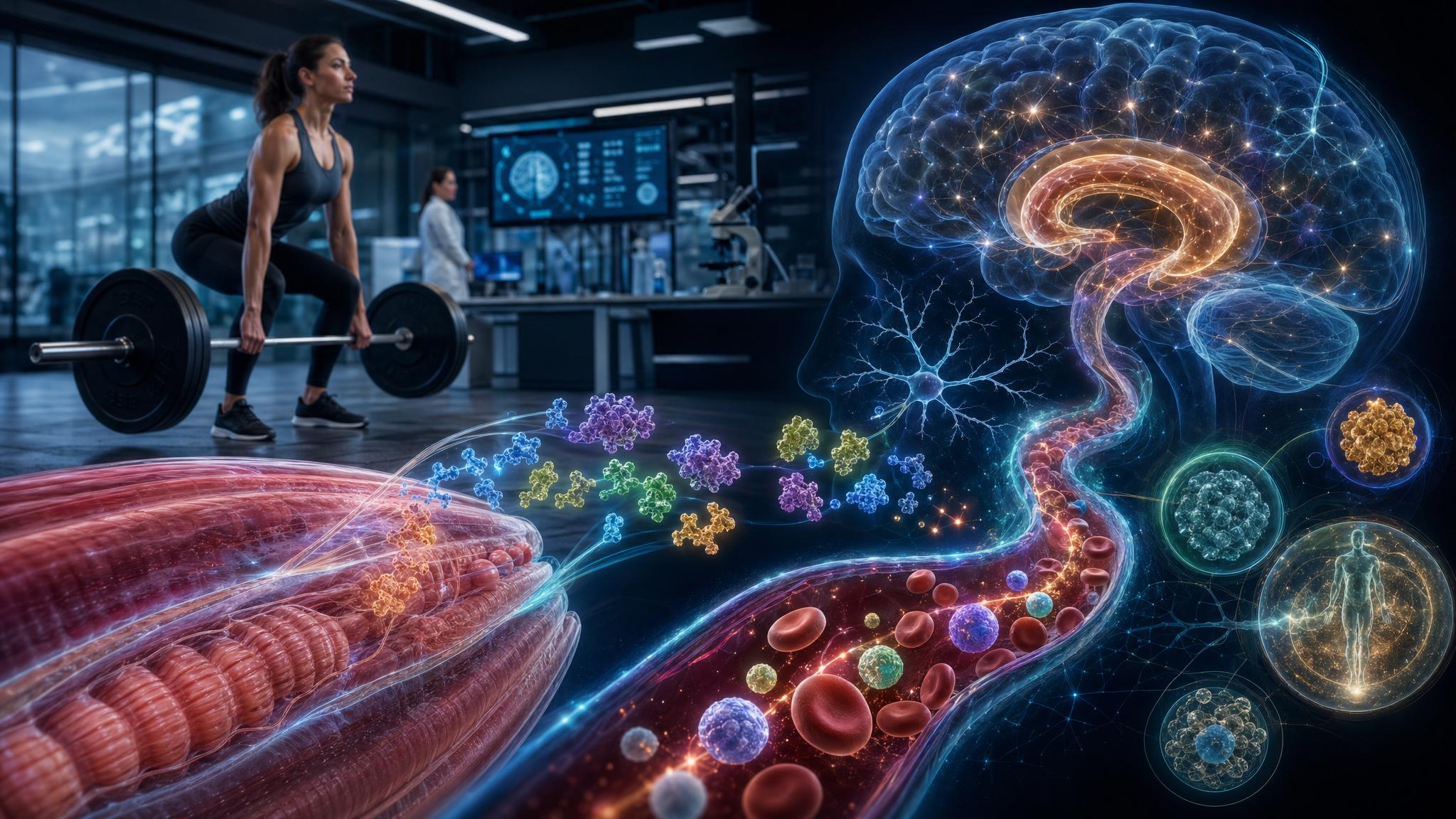
What Pedersen and her colleagues eventually proved, in a series of papers published between 1998 and 2007, rewrote a chapter of physiology that most clinicians had considered long closed. Skeletal muscle, she demonstrated, is not simply a mechanical tissue. It is an endocrine organ. During contraction it secretes dozens of small signaling proteins, which she christened myokines, and those proteins travel through the bloodstream to influence fat tissue, the liver, the pancreas, the immune system, and, perhaps most surprisingly, the brain. The muscle you build in a gym is not just a set of levers for lifting groceries. It is a chemical factory that talks to every other organ in your body.
Two and a half decades later, the myokine field has exploded. More than 650 secreted proteins have now been mapped in skeletal muscle secretomes. Researchers have identified molecules that mediate cognition, mood, memory, insulin sensitivity, tumor surveillance, and biological aging itself. And in 2026, the pace of discovery has reached a threshold where the practical implications for how ordinary people train have become impossible to ignore. The short version is this: when you do resistance work and interval training, you are not just getting stronger. You are dosing yourself with an endogenous cocktail of neuroprotective, anti-inflammatory, and metabolism-tuning compounds that no pharmaceutical company has managed to replicate in a pill.
This article walks through what the science actually shows, which myokines matter most, how different kinds of exercise stimulate different molecules, and what the research means for anyone trying to translate it into a training week. It is a long walk through a dense literature, so here is the map. First, the origin story and why muscle became recognized as an organ of communication. Second, the individual myokines now considered most consequential for healthspan, especially the ones crossing the blood-brain barrier. Third, the dose-response data: how much exercise, of what intensity, for how long, actually moves these molecules in humans. Fourth, what happens to myokine signaling with age, which is where the longevity implications get concrete. And finally, a practical synthesis.
From Contraction to Communication
Pedersen’s IL-6 finding was the opening wedge, but the conceptual reframing took a decade to settle. In 2003, her group published a landmark review in The FASEB Journal formally proposing that muscle functions as an endocrine organ. By 2008, her book Muscular Interleukin-6 and Its Role in Exercise and Metabolism had made the case in detail. The accumulation of evidence was striking. Muscle tissue in culture, stimulated electrically to mimic contraction, secreted proteins that then altered the behavior of hepatocytes, adipocytes, and neurons at a distance. The communication was real, quantifiable, and directional.
What made the finding even more consequential was a clinical puzzle the myokine framework explained. Researchers had known for years that regular exercise reduced the risk of cancer, dementia, cardiovascular disease, and type 2 diabetes by margins that dwarfed most pharmaceutical interventions. But the mechanisms had always been hand-waved. People pointed to improved insulin sensitivity, lower blood pressure, better lipid profiles. True, but insufficient. The risk reductions were too large, and the protection extended to conditions like depression and dementia that have no obvious mechanical relationship to muscle contraction. Myokines offered a plausible answer. The exercising muscle was sending chemical messages that directly modulated the pathways underlying these diseases.
Mark Febbraio at Monash University in Melbourne, who trained with Pedersen and has spent the last two decades mapping the muscle secretome, has argued that the field is now at an inflection point similar to where endocrinology sat in the 1950s. The cast of characters is still being identified, their receptors are being located, and the full signaling geography is not yet mapped. But the basic architecture is established, and the physiological consequences are visible in human trials.
The Headline Myokines
Of the hundreds of proteins that fit the myokine definition, several have emerged as particularly important for healthspan and brain function. A working list, drawn from 2024 to 2026 reviews in Nature Reviews Endocrinology, Cell Metabolism, and the Journal of Applied Physiology, starts with the following.
Irisin is perhaps the most famous, and also the most contentious. First described by Bruce Spiegelman’s lab at Harvard in a 2012 Nature paper, irisin is cleaved from a membrane protein called FNDC5 during exercise. Spiegelman’s group initially proposed that irisin drove the browning of white adipose tissue, turning ordinary fat into the metabolically active kind that burns calories as heat. The finding generated years of controversy, partly because different labs struggled to replicate the effects and partly because early commercial irisin assays turned out to be unreliable. But the story turned interesting again in 2019 when Christiane Wrann, working at Massachusetts General Hospital, published a paper in Cell Metabolism showing that exercise-induced FNDC5 expression in the hippocampus drove brain-derived neurotrophic factor, or BDNF, and protected against neurodegeneration in mouse models of Alzheimer’s disease. More recent work from her group, published through 2025, has extended the finding into human cerebrospinal fluid samples. Irisin appears to be a genuine link between skeletal muscle contraction and the brain’s capacity to form new neurons.
Cathepsin B is a second myokine with strong neurobiological credentials. In 2016, Henriette van Praag’s group at the National Institutes of Health showed in a Cell Metabolism paper that exercise raised circulating cathepsin B in mice, rhesus monkeys, and humans, and that the protein crossed the blood-brain barrier, entered the hippocampus, and drove adult neurogenesis. The human subjects in her study who ran on a treadmill four days a week for four months showed both improved memory performance and elevated blood cathepsin B, and the two were correlated. The finding has since been replicated in several independent cohorts.
Brain-derived neurotrophic factor itself, BDNF, is often classed as a neurotrophin rather than a myokine, but exercising muscle is now understood to be a major peripheral source. BDNF is crucial for synaptic plasticity, the cellular substrate of learning. Low BDNF is associated with depression, cognitive decline, and Alzheimer’s risk. Exercise, particularly high-intensity exercise, raises circulating BDNF in a reliable dose-dependent fashion.
Interleukin-6, the molecule that started the whole field, has proven more complicated than a simple good or bad framework can capture. From muscle, during exercise, IL-6 acts as an energy-sensing hormone, mobilizing glucose from the liver and free fatty acids from fat tissue, and paradoxically triggering anti-inflammatory cascades downstream. From adipose tissue or immune cells in a chronic disease state, the same molecule drives inflammation. Context, it turns out, matters enormously.
Featured Partner
Invest in the Infrastructure Behind Modern Medicine
As healthcare expands beyond hospital walls, the buildings and campuses supporting that shift are generating compelling returns for investors who move early. The Healthcare Real Estate Fund offers qualified investors direct access to a curated portfolio of medical office, outpatient, and specialty care facilities.
Learn More →
Beyond these, the 2026 literature highlights decorin, a myokine that suppresses myostatin and therefore amplifies the hypertrophy signal after resistance training. Musclin, which influences bone and cardiac function. Cathepsin L, related to cardiac stress resilience. Irisin-related FNDC4 and FNDC5 peptides. SPARC, which has been implicated in colon cancer risk reduction after exercise. Myonectin, which helps regulate fatty acid uptake. Apelin, which declines sharply with age and whose decline appears mechanistically linked to sarcopenia. And a growing catalog of exerkines, a broader term used in the 2022 Nature Reviews Endocrinology paper by Febbraio and others that encompasses myokines alongside hepatokines, adipokines, and neurokines released during exercise.
The Muscle Brain Axis
The implication that most often surprises people, because it cuts against the folk intuition that exercise is primarily cardiovascular or aesthetic, is that skeletal muscle is one of the most important tissues for brain health across the lifespan. The Wrann and van Praag work suggests a direct molecular pathway. The epidemiology supports it. A 2022 meta-analysis in JAMA Neurology that pooled data from 58 studies and 257,983 participants found that higher muscle strength, measured by grip dynamometer or leg extension, was associated with a 21 percent lower risk of incident dementia, independent of aerobic fitness. A separate study published in Neurology in 2023 following 1,159 adults aged 65 and older found that loss of muscle mass over a four-year period predicted cognitive decline with remarkable sensitivity, and that the effect remained after controlling for physical activity, education, and vascular risk factors.
The mechanism is not a single molecule. It is a chorus. Contracting muscle raises BDNF, irisin, cathepsin B, IGF-1, and vascular endothelial growth factor, while simultaneously dampening circulating inflammatory cytokines like TNF-alpha. Each of these has independent effects on hippocampal function, cerebral blood flow, and microglial tone. The aggregate is a biochemical environment in the brain that is strikingly similar to what researchers target with experimental Alzheimer’s drugs, except that the intervention is completely endogenous.
Dose, Intensity, and the Training Question
None of this is useful unless it translates into a prescription. Here the research has become more specific, though still imperfect. Three patterns have emerged from the human data.
First, resistance training and high-intensity interval work appear to raise myokines more robustly than steady-state aerobic exercise, though both matter. A 2023 study in Medicine and Science in Sports and Exercise led by Micah Drummond at the University of Utah compared acute myokine responses to moderate-intensity continuous cycling versus high-intensity intervals in the same subjects. The intervals drove larger acute rises in IL-6, irisin, and BDNF, and the effect persisted for longer after the session ended. Similar findings have been reported for heavy compound resistance training compared to lower-load circuit work.
Second, the magnitude of the myokine response scales with mechanical loading and metabolic stress, not with session duration. A thirty-minute hard resistance session appears to produce more acute myokine signaling than a two-hour jog at conversational pace. This has practical implications for busy clinicians and patients: the minimum effective dose for brain and metabolic signaling is smaller than most people assume, provided the intensity is high enough to genuinely challenge the muscle.
Third, training frequency matters because myokine elevations are transient. IL-6 rises during and immediately after exercise and returns to baseline within hours. Irisin and cathepsin B follow similar kinetics. BDNF elevations can persist somewhat longer but still dissipate over the course of a day. If you want the signaling to be a regular physiological input rather than an occasional pulse, you need to be training most days of the week. The 2024 guidelines from the American College of Sports Medicine, updated in part based on myokine data, now recommend a minimum of two full-body resistance sessions per week, and note that three to four sessions is likely closer to the dose associated with the largest observational mortality benefits.
Aging, Sarcopenia, and the Myokine Collapse
The longevity implications become most urgent when you look at what happens to myokine signaling with age. Sarcopenia, the progressive loss of muscle mass and function, is typically discussed as a problem of frailty and falls. The myokine lens reframes it as a communication failure. As muscle mass declines, the secretome declines with it. Less muscle means less irisin, less BDNF support, less cathepsin B crossing into the hippocampus. The tissue that was supposed to be feeding chemical signals into the brain is fading.
A striking 2024 paper in Nature Aging from a Stanford team led by Tony Wyss-Coray, whose organ-aging work has been discussed widely, showed that a subset of circulating muscle-derived proteins declined markedly between age 40 and age 70 in a cross-sectional cohort of 11,000 adults. Apelin was among the most strongly affected, with a roughly 40 percent reduction in circulating levels by age 65. In parallel mouse work, restoring apelin signaling via genetic manipulation or pharmacologic means improved muscle strength, exercise tolerance, and cognitive performance.
The critical point is that resistance training appears to partially rescue this decline. A 2023 study in The Journals of Gerontology in a cohort of adults aged 65 to 80 who underwent a twelve-week supervised progressive strength program showed that circulating levels of several age-declining myokines rose measurably, and the rises tracked with improvements in a battery of cognitive tests. The sample was small, and causal inference is limited, but the direction of the effect is consistent with the larger animal literature and with the broader epidemiology linking muscle mass to brain preservation.
Where the Research Still Has Work to Do
It is worth being honest about the unfinished parts of the story. Irisin remains controversial. Assay reliability has improved but is still imperfect, and some prominent labs have failed to replicate core findings. The proteins that make it across the blood-brain barrier in rodent models do not always translate cleanly to humans, where brain penetration is harder to measure. The causal chain from myokine release to cognitive protection over decades cannot be demonstrated in a randomized trial because no such trial could realistically be run. What we have is convergent evidence: mechanistic plausibility in cells, causal manipulation in animals, and large observational human data pointing in the same direction. It is the same kind of evidence that underlies the case for not smoking. Not a single clinching study, but a mountain of aligned findings.
The other caveat is that pharmacology has been trying for a decade to bottle these effects. Companies have pursued irisin analogs, myostatin inhibitors, and apelin mimetics. None has yet produced a human-approved drug that meaningfully replicates the cognitive or longevity effects of training. The reason is probably that the myokine response is a symphony, not a single instrument. Swallowing one molecule fails to recreate the coordinated release of dozens. Which, for the moment, leaves exercise as the only route to the full biochemical package.
What This Means For Your Practice
Here is the practical distillation, grounded in the literature above.
Train for strength, not just cardio. If your week is built around running or cycling alone, you are probably under-stimulating large portions of the myokine response. Two to four resistance sessions per week, using compound movements that load large muscle groups, is the evidence-based floor. Squat, deadlift, hip hinge, press, pull, and carry patterns all qualify. Machines work if free weights intimidate you. What matters is that the load is heavy enough to genuinely tax the muscle and that you are progressing it over time.
Add high-intensity intervals, briefly but consistently. One or two sessions per week of short, hard intervals appears to contribute disproportionate myokine signaling for the time invested. Formats as simple as ten rounds of thirty seconds hard, ninety seconds easy, on a bike or rower, are well supported by the acute physiology data.
Train frequently rather than for length. A thirty-minute resistance session four times a week will likely signal more than two ninety-minute sessions. The molecules rise and fall within hours, so the goal is to keep triggering them.
Prioritize muscle mass through midlife and beyond. The evidence that age-related sarcopenia starves the brain of myokine input is strong enough that maintaining and building muscle after age 40 should be treated as a cognitive intervention, not a vanity project. Grip strength dynamometer measurements, which correlate with total body muscle quality, are cheap and worth tracking annually.
Do not skip protein. Myokine responses to training are blunted in a protein-deficient state. A working target, drawn from the 2024 International Society of Sports Nutrition position stand, is 1.6 to 2.2 grams of protein per kilogram of body weight per day, distributed across three to four meals.
Sleep and recover, because myokine signaling depends on repair. Training without sleeping well produces a chronically elevated inflammatory baseline and compromises the anti-inflammatory benefit of the next session. Seven to nine hours, as close to the same schedule as you can manage, is the recovery companion to all of the above.
The larger point is that skeletal muscle is medicine, and the prescription writes itself. You do not need a research lab or a longevity clinic to access the myokine economy. You need a barbell, a set of intervals, and the patience to show up often enough that the signals stack. Twenty-five years after Pedersen’s puzzling IL-6 spike, the practical implication has clarified: if you want your brain to last as long as the rest of you, build the body that feeds it.


Similar Posts
Samsung Galaxy Watch Ultra: Titanium Durability Meets Clinical Grade Heart and Sleep Monitoring
A rugged titanium smartwatch built for extreme conditions that also carries FDA cleared sleep apnea detection and irregular heart rhythm notifications, bridging adventure fitness with clinical cardiovascular monitoring. Presented By…

Your Blood Can Map the Biological Age of Every Organ in Your Body. Here Is What Stanford’s Landmark Study Found.
A Stanford University study of 44,498 people and 2,916 blood proteins has mapped the biological age of 11 organs and identified a startling finding: a biologically aged brain carries Alzheimer’s…

First-in-Class Bispecific ADC Rewrites the Rules for Triple-Negative Breast Cancer at ASCO 2026
At ASCO 2026, izalontamab brengitecan became the first bispecific antibody-drug conjugate to improve both progression-free and overall survival in triple-negative breast cancer. Inside the EGFRxHER3 mechanism, the Phase 3 trial…
Your VO2 Max May Be the Single Best Predictor of How Long You Will Live: What 3.8 Million People and 58 Clinical Trials Reveal About Cardiorespiratory Fitness and the Science of Living Longer
A meta-analysis of 3.8 million people shows that each one-MET increase in cardiorespiratory fitness reduces all-cause mortality by 14 percent. A 2026 Cochrane review of 58 clinical trials confirms HIIT…

The Daily Rounds: Longevity & Health Care Brief | June 5, 2026
🤖 Daraxonrasib Nearly Doubles Pancreatic Cancer Survival — A pivotal Phase 3 NEJM trial showed the first RAS inhibitor extending median survival from 6.7 to 13.2 months, cutting death risk by 60% in a cancer with historically grim odds. 🦠 Colon Cancer Immunotherapy Achieves 33-Month Remission — NEOPRISM-CRC showed pre-surgery pembrolizumab kept 59% of MMR-deficient patients cancer-free at nearly three years, with zero recurrences among responders. 🔬 4-Week Diet Shift Reduces Biological Age Markers in Older Adults — A low-fat, plant-forward diet reduced biological age estimates across 20 biomarkers in adults aged 65 to 75 after just four weeks. 🥗 GLP-1 Drugs Trigger Nutritional Deficiencies Within 12 Months — Major health organizations now recommend structured dietary monitoring for all GLP-1 patients to prevent protein, vitamin D, and mineral deficits that may offset weight-loss benefits. 😴 Circadian Amplitude Is the New Sleep Treatment Target — Updated guidelines shift focus from sleep duration alone to strengthening biological clock signal strength through light exposure, meal timing, and new pharmacological tools.

The GPS for Zombie Cells: How Mayo Clinic’s DNA Breakthrough Could Finally Unlock Precision Senolytic Therapy
A casual conversation between two Mayo Clinic graduate students sparked a discovery that could solve one of longevity medicine’s most stubborn problems: finding the cells that silently drive aging, cancer,…
