
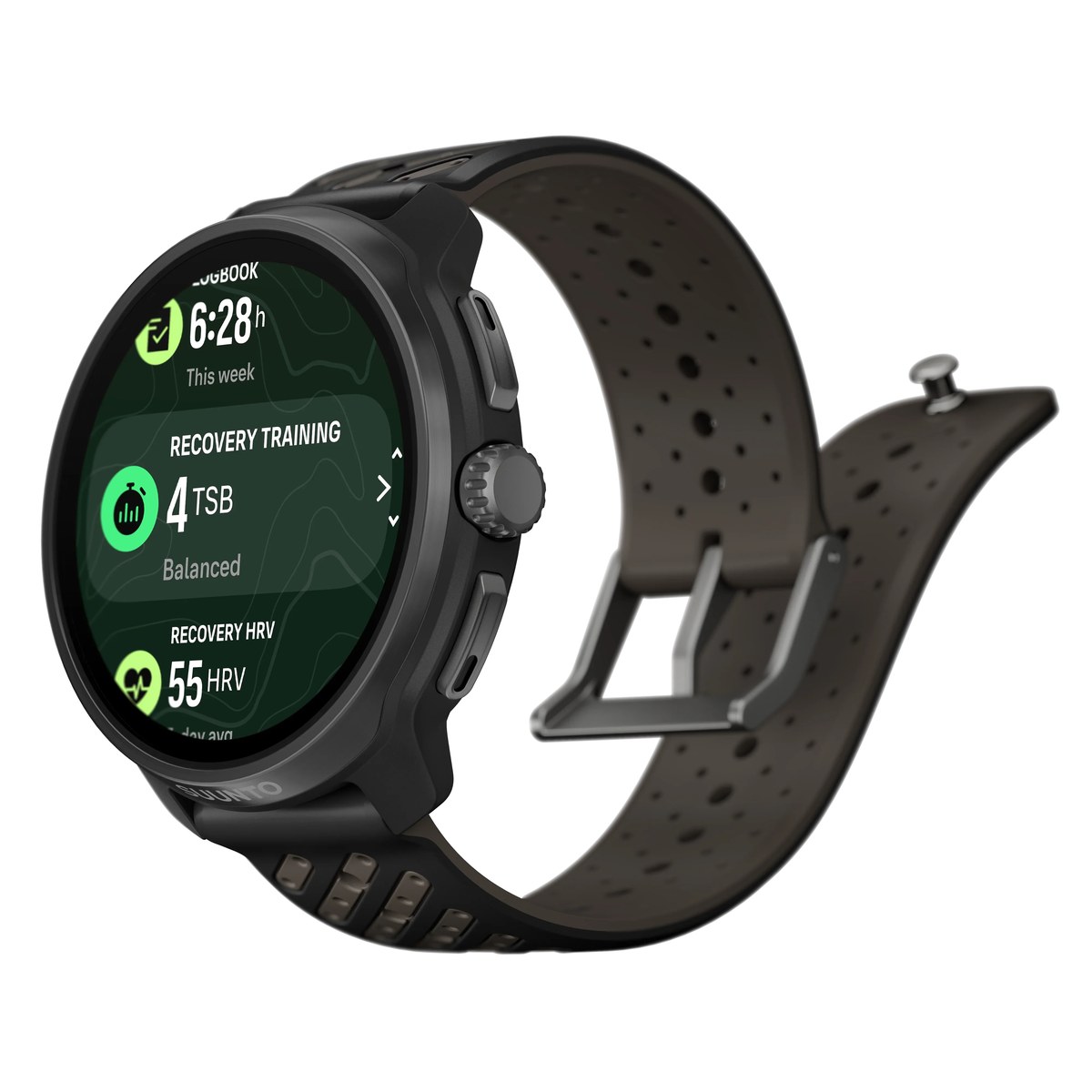
Suunto Race 2 and Vertical 2 Review 2026: Price, Battery, Accuracy, HSA/FSA Status
Suunto’s two 2025 flagships promise long battery life and bright AMOLED screens for runners, hikers and ultra athletes. The training tools are serious, but the published evidence behind Suunto’s wrist sensors is thin and old, so treat the health numbers as estimates.
Presented By Our Partners


Suunto introduced the Race 2 alongside the Wing 2 headphones in 2025 (Endurance Sportswire), and the5krunner published its Race 2 review on August 28, 2025 (the5krunner). The Vertical 2 followed on September 30, 2025, when Gadgets & Wearables reported that it landed with an AMOLED screen and an LED flashlight (Gadgets & Wearables). This review covers both watches together because they share Suunto’s software and sensor approach, and looks past the launch to what Suunto’s sensors have been shown to measure in published studies.
First look. No peer-reviewed study has tested the Suunto Race 2 or Vertical 2 yet; a PubMed search on October 28, 2026 found none. The accuracy section draws on studies of older Suunto watches and chest straps, plus multi-brand studies that included Suunto, and the 2025 watches may perform better or simply differently.
The short answer: The Suunto Race 2 is a training watch for runners and triathletes, and the Vertical 2 is an adventure watch with a built-in flashlight and offline maps. Both launched in 2025 with AMOLED screens. Older Suunto chest straps measured heart rate very accurately in independent studies, but we found no published validation of Suunto’s current wrist sensor, sleep tracking, heart rate variability or VO2 max estimates.
- Best for: Runners, trail runners, hikers and multisport athletes who want long battery life and maps without paying top Garmin prices, and who will pair a chest strap for exact heart rate.
- Not for: Anyone who wants medical-grade features such as an ECG or rhythm alerts, or buyers who mainly want sleep and health tracking.
- Price (October 2026): The Race 2 has been seen at $499 with a bonus strap in a US deal. We could not confirm a US list price for either watch from search results; check Suunto’s US store.
- Regulatory status: We found no FDA clearance for the Suunto Race 2, the Vertical 2 or any Suunto health feature. These are fitness devices, not medical devices.
- Evidence: Good for Suunto chest strap heart rate; fair for satellite distance; poor for calorie estimates on older models; none published for the Race 2 or Vertical 2 themselves, or for Suunto’s wrist heart rate, sleep or VO2 max.
What Are the Suunto Race 2 and Vertical 2?
The Suunto Race 2 and Suunto Vertical 2 are 2025 GPS sports watches from the Finnish maker Suunto: the Race 2 is built for training and racing, and the Vertical 2 for long outdoor adventures, with a flashlight and offline maps.
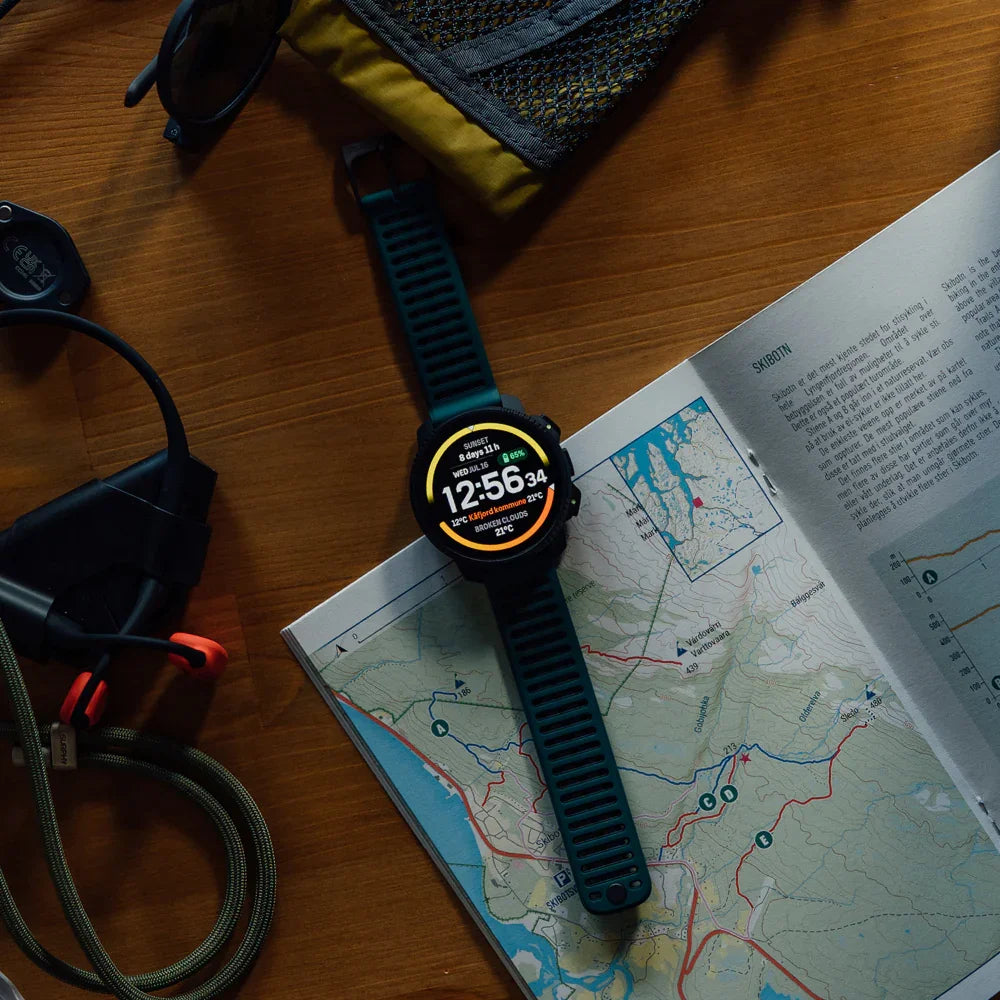
Notebookcheck reported that the Race 2 has an AMOLED screen, GPS and maps, and also comes in a titanium edition (Notebookcheck). Android Central described it as a battery beast for ultramarathoners (Android Central), and Notebookcheck reported that it leaked on Amazon with a thinner titanium case (Notebookcheck). For the Vertical 2, the5krunner’s buyer’s guide lists an AMOLED screen, a flashlight and 65 hours of GPS (the5krunner), Wareable reported AI coaching alongside the flashlight (Wareable), and Notebookcheck described LED offline navigation and new sensors (Notebookcheck). Those figures come from the publications’ headlines and were not tested by Healthcare Discovery.
Reviews are positive. TechRadar called the Race 2 a brighter and lighter serious Garmin contender (TechRadar), Tom’s Guide called it an affordable Garmin rival for keen athletes (Tom’s Guide), and Wareable called it an impressive evolution (Wareable). For the Vertical 2, TechRadar’s reviewer wrote that after months of wear Garmin has competition in the outdoor superwatch arena (TechRadar), and GearJunkie called it an AMOLED fitness watch with all-weekend stamina (GearJunkie).
Suunto has since launched a smaller sibling. AndroidGuys reported that Suunto unveiled the Race 3S with an AI coach for trail runners (AndroidGuys), and iDevice reported that it costs $599 in the US (iDevice). A full-size Race 3 has leaked, but we found no confirmation that it is on sale, so the Race 2 remains Suunto’s current full-size Race as of this review.
How Do the Suunto Race 2 and Vertical 2 Work?
Like other GPS sports watches, both read your pulse with light shining into the skin of the wrist, track your route with satellite positioning, and estimate effort, recovery and fitness from those signals. Neither is a medical device, and we found no ECG or rhythm alert feature on either watch.
The optical sensor on the back of the watch sees the skin brighten and dim as each heartbeat pushes blood through small vessels. That works well at rest and in steady exercise, but arm movement, cold hands and rough terrain can confuse it. Suunto, like Garmin and Polar, lets you pair a chest strap, which reads the heart’s electrical signal directly and is the more accurate option in hard or bumpy sessions.
Training scores, calorie counts, sleep and fitness estimates are models built on heart rate, movement and your profile. They are useful for spotting trends over weeks, but each one adds its own error on top of the sensor’s.
How Accurate Are the Suunto Race 2 and Vertical 2? What the Research Shows
No study has tested either watch yet. On older Suunto hardware, Suunto chest straps tracked heart rate very closely, satellite distance was within a few percent, and calorie estimates were off by more than a third at slow speeds. We found no published study of Suunto’s wrist heart rate, sleep, heart rate variability or VO2 max.
Heart rate with a chest strap. In a trail running study of 21 adults, a Suunto Spartan Sport watch paired with its chest strap had a mean absolute percent error of 2 percent against a Polar H7 reference, with a concordance of 0.96. Every optical wrist or ear device in the same study, including a Garmin Fenix 5 at 13 percent error, showed poor agreement (PMID 32866216). In a mountain biking study of 20 riders, the same Suunto watch and chest strap pairing was the only valid device of five tested, with a 0.66 percent error and a concordance of 0.99 (PMID 38287935).
Heart rate variability. In 19 young men, R-R intervals recorded by an older Suunto t6 chest belt agreed excellently with an ambulatory ECG, but most heart rate variability frequency measures showed unacceptable discrepancies between devices (PMID 20225081). That study used a chest belt, not the optical wrist sensor the Race 2 and Vertical 2 use for overnight heart rate variability, and we found no study of Suunto’s wrist-based heart rate variability.
GPS distance. A Swiss study of eight sport watches from Apple, Coros, Garmin, Polar and Suunto measured walking, running and cycling routes in urban, forest and track settings. Mean absolute percentage errors ranged from 3.2 to 6.1 percent, distances were generally underestimated by up to 9 percent, and only the Polar receivers stayed under 5 percent overall (PMID 32396865).
Calories. In 20 trained runners measured with indirect calorimetry, a Suunto Ambit2 overestimated energy expenditure by 38.09 and 36.29 percent at the two slowest speeds, and all three watches tested underestimated it by 21.62 to 49.30 percent at fast, anaerobic speeds (PMID 29296281).
Featured Partner
Invest in the Infrastructure Behind Modern Medicine
As healthcare expands beyond hospital walls, the buildings and campuses supporting that shift are generating compelling returns for investors who move early. The Healthcare Real Estate Fund offers qualified investors direct access to a curated portfolio of medical office, outpatient, and specialty care facilities.
Learn More →
Steps and elevation. Against video step counts, a Suunto Spartan Sport missed the industry accuracy target while walking with a 22.93 percent error, while the Suunto Spartan Trainer met it for both walking and running (PMID 29958058). In a track study that included a Suunto Ambit2, elevation errors were larger with the watch on the wrist than on the hip, 4.0 to 7.4 meters versus 1.2 to 5.7 meters per 1,200 meters, because of arm swing (PMID 28149368).
Sleep and VO2 max. We found no peer-reviewed validation of any Suunto sleep stage or VO2 max estimate on PubMed as of October 28, 2026.
Company ties: none of the studies cited here list Suunto employees or Suunto funding in their PubMed affiliations; they come from universities and the Swiss Federal Institute of Sport. PubMed affiliations are not a full disclosure of funding or conflicts.
What the Suunto Race 2 and Vertical 2 Get Right
Both watches get the outdoor basics right: long battery life, bright AMOLED screens, maps, and solid chest strap support, with reviewers ranking them as real Garmin rivals at lower deal prices.
Accurate heart rate when you pair a strap. Suunto’s chest strap pairing was the most accurate device in two independent field studies, at 2 percent and 0.66 percent error (PMID 32866216; PMID 38287935). If heart rate zones matter to your training, a strap closes most of the gap.
Battery for long days. Reviewers singled out battery life on both watches, and the Vertical 2 is listed at 65 hours of GPS, enough for multi-day races and trips without a charger.
Outdoor tools. The Vertical 2’s flashlight and offline maps are practical safety tools for hikers and trail runners who finish in the dark.
Where the Suunto Race 2 and Vertical 2 Fall Short
The weaknesses are evidence, not features: no study of either watch, no published validation of Suunto’s wrist sensor, sleep or VO2 max, calorie estimates that were far off on older models, and no FDA-cleared health features.
Wrist heart rate is unproven. Optical wrist sensors performed poorly in variable trail running in an independent study (PMID 32866216), and we found no study of Suunto’s own optical sensor to show it does better.
Calories are rough. Older Suunto estimates ran more than a third too high at slow speeds and too low at fast speeds (PMID 29296281). Do not use them to plan what you eat.
No medical features. There is no ECG app, no irregular rhythm alert and no FDA-cleared screening feature that we found, which Apple, Samsung, Google and some Garmin watches offer.
New hardware, older evidence. Every study above tested an older Suunto watch or strap. Until researchers test the Race 2 and Vertical 2, their accuracy is inferred, not shown.
Suunto Race 2 vs Suunto Vertical 2 vs Garmin fenix 9 vs Polar Grit X2 Pro vs Forerunner 970
The Race 2 is the training watch and the Vertical 2 the adventure watch, with a flashlight and longer listed GPS time. Garmin’s fenix 9 and Polar’s Grit X2 Pro are the rugged rivals, and the Forerunner 970 is Garmin’s top running watch.
| Feature | Suunto Race 2 | Suunto Vertical 2 | Garmin fenix 9 | Polar Grit X2 Pro | Garmin Forerunner 970 |
|---|---|---|---|---|---|
| Form | Training and racing watch, AMOLED | Adventure watch, AMOLED, flashlight | Rugged multisport watch, titanium | Rugged outdoor watch | Running and triathlon watch |
| Launched | 2025 | 2025 | Not verified for this review | 2024 | Not verified for this review |
| Battery headline | Battery beast for ultras, per Android Central | 65 hours GPS, per the5krunner | Not verified for this review | Not verified for this review | Not verified for this review |
| FDA-cleared health features | None found | None found | Not verified for this review | Not verified for this review | Not verified for this review |
| Published study of this model | None found | None found | Not verified for this review | Not verified for this review | Not verified for this review |
| Price (October 2026) | Seen at $499 in a US deal | Not verified for this review | Not verified for this review | Seen at $699.93 on Amazon | $749 at launch |
Our Garmin fenix 9 review and Polar Grit X2 Pro review cover the two closest rugged rivals. Runners comparing training watches can read our Forerunner 970 review and Polar Vantage V3 review. If you want medical-grade rhythm alerts in a tough case, see our Apple Watch Ultra 4 review or, on Android, our Galaxy Watch Ultra 2 review. Every device we track is in our healthtech wearables guide.
How Much Do the Suunto Race 2 and Vertical 2 Cost, and Are They HSA or FSA Eligible?
Slickdeals listed the Race 2 at $499 with a bonus strap and free shipping (Slickdeals), but we could not confirm a US list price for either watch, or any current US price for the Vertical 2, from search results. Notebookcheck reported a leaked 599 euro Amazon listing for a titanium Race 2 in Europe, which is not a US price. Check Suunto’s US store for current pricing.
Suunto’s US store has an HSA/FSA product collection (Suunto) and a Truemed page that says buyers can qualify to save an average of 30 percent by paying with HSA/FSA (Suunto). We could not confirm from search results which models that collection covers, and Truemed-style programs usually rely on a letter of medical necessity, so eligibility depends on your health and your plan. Ask your HSA or FSA administrator before assuming either watch qualifies. Insurance does not cover them as far as we found.
Who Should Buy the Suunto Race 2 or Vertical 2, and Who Should Skip Them?
These watches suit runners, hikers and multisport athletes who want long battery life, maps and solid training tools, especially if they already use or will buy a chest strap. They are a poor fit for anyone who wants medical alerts, proven sleep tracking, or a smartwatch that doubles as a health monitor.
Good candidates:
- Trail runners and ultra athletes who need a watch to last through long races: the Race 2.
- Hikers, backpackers and mountain athletes who want offline maps and a built-in flashlight: the Vertical 2.
- Athletes who train by heart rate zones and will pair a chest strap for accuracy.
Better served by something else:
- Chest pain, fainting, or a racing heart with shortness of breath: that is an emergency. Call 911; do not wait for a watch.
- People at risk of atrial fibrillation who want rhythm alerts or an ECG: look at an Apple Watch, Galaxy Watch, Pixel Watch or another watch with FDA-cleared rhythm features.
- Buyers focused on sleep and recovery tracking: a ring or a watch with published sleep validation is a better bet.
- Anyone who wants Garmin’s newest rugged watch and its ecosystem: compare the fenix 9.
If training data raises questions about your heart, the Healthcare Discovery doctor directory lists cardiologists and sports medicine clinicians by state and specialty.
What This Means for You
The Race 2 and Vertical 2 are strong outdoor and training watches, and reviewers rank them alongside Garmin. The most dependable health number they can give you is heart rate from a paired Suunto chest strap, which matched a reference strap within 2 percent in independent studies. Everything built on the wrist sensor, from sleep to recovery to VO2 max, has no published validation for Suunto. For the wider picture of what drives heart risk, see our heart health evidence review.
Buy one for battery, maps, the flashlight and the training tools, and treat calories, sleep and fitness scores as trends, not verdicts. If medical alerts matter to you, choose a watch with FDA-cleared features instead.
Compiled by Healthcare Discovery from the cited PubMed studies and Suunto’s launch materials. Every PMID, study size and result on this page was checked against PubMed on October 28, 2026. Launch, price, specification and review details come from the named publications’ headlines and listings and were not independently tested. This is a first look; no Healthcare Discovery hands-on testing was done.
How accurate is Suunto heart rate?
No study has tested the Race 2 or Vertical 2. Paired with a Suunto chest strap, an older Suunto watch had a 2 percent error in trail running (PMID 32866216) and 0.66 percent in mountain biking (PMID 38287935). We found no study of Suunto’s optical wrist sensor.
What is the difference between the Suunto Race 2 and Vertical 2?
The Race 2 is a training and racing watch for runners and triathletes. The Vertical 2 is an adventure watch with a built-in flashlight, offline maps and 65 hours of GPS listed by the5krunner. Both launched in 2025 with AMOLED screens.
Do the Suunto Race 2 and Vertical 2 have ECG or FDA-cleared health features?
We found no ECG app, irregular rhythm alert or FDA clearance for either watch. They are fitness devices, not medical devices.
Are Suunto calorie and VO2 max estimates accurate?
On an older Suunto Ambit2, calories were overestimated by about 36 to 38 percent at slow running speeds (PMID 29296281). We found no published validation of any Suunto VO2 max or sleep estimate as of October 2026.
Are the Suunto Race 2 and Vertical 2 HSA or FSA eligible?
Suunto’s US store has an HSA/FSA product collection and a Truemed page, but we could not confirm which models qualify. Truemed-style programs usually need a letter of medical necessity, so check with your plan administrator before buying with pre-tax funds.
How much do the Suunto Race 2 and Vertical 2 cost?
The Race 2 has been seen at $499 with a bonus strap in a US deal. We could not confirm a US list price for either watch, or a current US price for the Vertical 2. Check Suunto for current pricing.
Sources
- Navalta JW, et al. Concurrent heart rate validity of wearable technology devices during trail running. PLoS One, 2020. PMID 32866216
- Carrier B, et al. Assessing the validity of several heart rate monitors in wearable technology while mountain biking. International Journal of Exercise Science, 2023. PMID 38287935
- Weippert M, et al. Comparison of three mobile devices for measuring R-R intervals and heart rate variability: Polar S810i, Suunto t6 and an ambulatory ECG system. European Journal of Applied Physiology, 2010. PMID 20225081
- Gilgen-Ammann R, et al. Accuracy of distance recordings in eight positioning-enabled sport watches: instrument validation study. JMIR mHealth and uHealth, 2020. PMID 32396865
- Roos L, et al. Validity of sports watches when estimating energy expenditure during running. BMC Sports Science, Medicine and Rehabilitation, 2017. PMID 29296281
- Bunn JA, et al. Assessment of step accuracy using the Consumer Technology Association standard. Journal of Sports Sciences, 2018. PMID 29958058
- Ammann R, et al. The influence of the gait-related arm swing on elevation gain measured by sport watches. Journal of Human Kinetics, 2016. PMID 28149368
- Endurance Sportswire. Train with intention and perform with purpose: Suunto introduces the Race 2 and Wing 2, 2025. Endurance Sportswire
- the5krunner. Suunto Race 2 review, August 2025. the5krunner
- Gadgets & Wearables. Suunto Vertical 2 lands with AMOLED screen and LED flashlight, September 2025. Gadgets & Wearables
- Android Central. The Suunto Race 2 looks like a battery beast for ultramarathoners. Android Central
- Notebookcheck. Suunto Race 2 leaks on Amazon with thinner titanium case for 599 euros. Notebookcheck
- the5krunner. Suunto Vertical 2: AMOLED, flashlight, and 65-hour GPS, in-depth buyer’s guide, September 2025. the5krunner
- Notebookcheck. Smartwatch with AMOLED, GPS and maps: Race 2 also launches in a titanium edition. Notebookcheck
- Wareable. Suunto Vertical 2 adds a bright AMOLED display, flashlight, and AI coaching. Wareable
- Notebookcheck. Suunto Vertical 2 launches as Garmin rival with LED, offline navigation and new sensors. Notebookcheck
- TechRadar. Suunto Race 2: a brighter and lighter watch makes for a serious Garmin contender. TechRadar
- Tom’s Guide. Suunto Race 2 review: an affordable Garmin rival for keen athletes. Tom’s Guide
- Wareable. Suunto Race 2 review: an impressive evolution. Wareable
- TechRadar. I wore this rugged Suunto smartwatch for months, and I reckon Garmin’s got competition in the outdoor superwatch arena. TechRadar
- GearJunkie. Finally, an AMOLED fitness watch with all-weekend stamina: Suunto Vertical 2 watch review. GearJunkie
- AndroidGuys. Suunto unveils the Race 3S watch and AI coach for trail runners. AndroidGuys
- iDevice. Suunto’s Race 3S costs $599 in the US, $100 more than the leak said. iDevice
- Slickdeals. Suunto Race 2 performance watch with bonus strap, $499, free shipping. Slickdeals
- Suunto. HSA/FSA product collection. Suunto
- Suunto. Truemed: qualify to save an average of 30% by paying with HSA/FSA. Suunto
- Notebookcheck. Forerunner 970: Garmin replaces Forerunner 965 with new smartwatch that arrives for $749. Notebookcheck
- Technobezz. Polar Grit X2 Pro GPS smart sports watch falls to $699.93. Technobezz
- Wareable. Garmin Fenix 9 and 9 Pro land with thinner titanium case and improved LTE. Wareable


Similar Posts

ZRT Laboratory Hormone Kits: Saliva and Blood Spot Testing From a Pioneer in At-Home Diagnostics
Before the wave of consumer fertility monitors and direct-to-consumer testing startups, one Oregon laboratory was quietly building the scientific foundation for at-home hormone testing that practitioners would come to rely…

From Epigenetic Speedometers to AI Drug Design, Science Is Learning to Reverse Aging at Its Source
Three landmark studies are transforming how scientists understand biological aging in 2026. From epigenetic clock data predicting mortality over 24 years, to brain training that reverses a decade of neural…
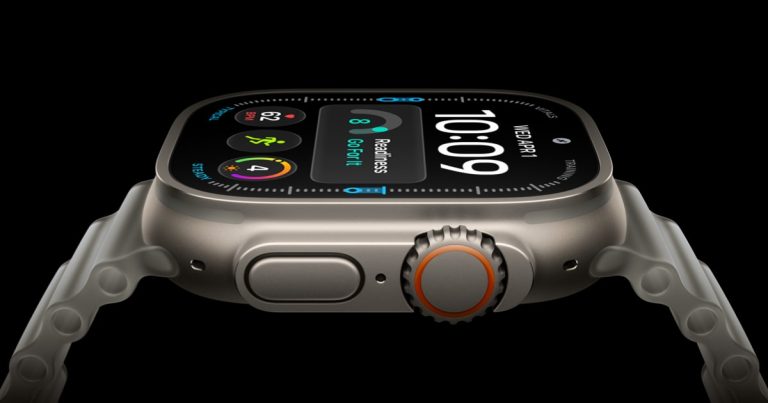
Apple Watch Ultra 4 Review 2026: $799 Price, Battery, Health Accuracy, HSA/FSA Status
Apple Watch Ultra 4 first look: $799 price, two-day battery, what studies show about Apple’s AFib alerts, heart rate variability, sleep and VO2 max, and HSA/FSA status.
twiist for Type 2 Diabetes: FDA Clearance, Trial Results and Who It Is For
The FDA cleared Sequel Med Tech’s twiist automated insulin delivery system for adults with insulin treated type 2 diabetes. Trial results, how it works, who qualifies and Libre Duo compatibility.
Tonal Smart Gym: Electromagnetic Resistance Training for Strength and Longevity
A wall-mounted cable system that replaces an entire weight room with digital resistance, AI coaching, and real-time form feedback. Does the science of strength training support this approach to building…

Muscle Is a Longevity Organ: What the Science of Strength Training Reveals About All-Cause Mortality
Grip strength outperforms blood pressure as a mortality predictor. A 2022 BMJ meta-analysis found that 30 to 60 minutes of resistance training per week cuts all-cause mortality by 15 percent….
