

First Human Partial Reprogramming Results: What Life Biosciences’ Day 56 Trial Data Shows
On October 8, 2026, Life Biosciences released Day 56 results from the first epigenetic reprogramming clinical trial in human beings. The data is early, comes from three patients, and has not been peer reviewed. It may also mark one of the most significant inflection points in the history of modern medicine.
Presented By Our Partners



The report is not about a drug that blocks a receptor or kills a cancer cell. It is about whether a gene therapy can instruct a living human cell to dial back its molecular age signature, restoring function that aging had erased. That is a different category of intervention. Drugs treat disease. What Life Biosciences is testing treats the condition that makes most diseases possible in the first place.
What the Day 56 results show, what they do not prove, and why the longevity research community is watching this trial more closely than any other program in clinical development right now.
The Science Behind Partial Reprogramming
In 2006, Kyoto University researcher Shinya Yamanaka showed that any adult cell could be converted back into a pluripotent stem cell by switching on just four genes: Oct4, Sox2, Klf4, and c-Myc. The discovery won Yamanaka the Nobel Prize in 2012 and spawned an entirely new field of medicine. But the full combination of all four factors created a problem: cells that fully reversed to pluripotency became tumorigenic. They lost their tissue identity entirely.
The partial reprogramming hypothesis proposes a solution. If you turn on only three of the four factors (Oct4, Sox2, and Klf4, abbreviated OSK) for a controlled period rather than indefinitely, cells appear to reset their epigenetic age markers without losing their specialized identity. They stay retinal ganglion cells, or liver cells, or muscle cells. They just appear younger at the molecular level, their gene expression patterns shifted back toward a more youthful state.
The concept was demonstrated in a 2020 landmark study published in Nature, in which a Harvard Medical School research team used OSK delivered via adeno-associated virus (AAV) to restore vision in mice with glaucoma, optic nerve crush injuries, and age-related vision decline (PMID: 33268865). Retinal ganglion cells rejuvenated their transcriptional profile and their axons regenerated. The epigenetic clock signatures reversed. The vision improved.
Life Biosciences, the Boston-based company co-founded to advance this work, with Harvard geneticist David Sinclair as board chair, spent the subsequent years translating the mouse results into a human-ready gene therapy: ER-100.
The Trial Design: Why Glaucoma Was the Entry Point
Glaucoma affects more than 80 million people globally and ranks as the second leading cause of blindness worldwide. It is caused in part by the progressive loss of retinal ganglion cells, the same cell population targeted in the Harvard mouse work. The eye also offers a compelling testing environment for first-in-human reprogramming work for a reason that has nothing to do with ophthalmology.
The eye is accessible, contained, and directly observable. Visual field testing provides quantitative, objective outcome measures that do not require tissue biopsies. Any serious adverse event would be localized and detectable early. If a reprogramming therapy caused uncontrolled cell growth, it would be visible through standard ophthalmic monitoring. The risk profile of a local intravitreal injection is well understood from decades of approved macular degeneration therapies.
The ClinicalTrials.gov registration (NCT07290244) describes ER-100 as a Phase 1 safety and tolerability trial in patients with open-angle glaucoma. Delivery is by intravitreal injection. ER-100 uses a modified AAV vector to deliver the OSK gene package. A subsequent eight-week course of daily doxycycline, an antibiotic already widely used in clinical medicine, acts as a molecular switch, activating the reprogramming genes for a defined and controlled window.
The design is intentionally controllable. Doxycycline-inducible systems allow for temporal precision: the genes switch on during the dosing window and switch off when doxycycline is stopped. That controllability is what distinguishes partial reprogramming from more radical proposals to restart aging biology wholesale. The therapy has a defined start and a defined end.
Reading the Day 56 Data: Safety and an Early Signal
Life Biosciences’ October 8, 2026 announcement covered the first three patients, all enrolled at Dose Level 1, the trial’s lowest dose cohort. The primary endpoint at Day 56 was safety: specifically, the absence of dose-limiting toxicities and serious adverse events.
The trial cleared that bar cleanly. No dose-limiting toxicities were reported across all three participants. No serious adverse events were attributed to the therapy itself. The adverse events that were noted were assessed as attributable to the intravitreal injection procedure, to the steroid drops prescribed post-injection, or to pre-existing conditions unrelated to the trial. The independent Data Safety Monitoring Board reviewed the full data package and recommended dose escalation. Dose Level 2, described by the company as approximately three times the Dose Level 1 amount, is now enrolling.
“We are encouraged by the Data Safety Monitoring Board’s recommendation to escalate to Dose Level 2,” said Dr. Sharon Rosenzweig-Lipson, Life Biosciences’ Chief Scientific Officer, in the company’s announcement.
Then there is the exploratory efficacy signal that has drawn the attention of the broader research community. In two of the three participants, visual field testing at Day 56 showed improvement. In each of those two patients, at least 28 percent of the tested visual field points showed increased sensitivity of more than 4 decibels. That threshold matters in clinical perimetry: a 4 dB change in sensitivity sits at the boundary of what most glaucoma specialists consider a detectable functional improvement rather than test-to-test variability.
Featured Partner
Invest in the Infrastructure Behind Modern Medicine
As healthcare expands beyond hospital walls, the buildings and campuses supporting that shift are generating compelling returns for investors who move early. The Healthcare Real Estate Fund offers qualified investors direct access to a curated portfolio of medical office, outpatient, and specialty care facilities.
Learn More →
Life Biosciences was appropriately cautious in how it framed these results. There is no placebo group in a Phase 1 trial. The patient count is three. The data has not been peer reviewed. Spontaneous fluctuation in visual field testing is real and well-documented in the glaucoma literature. The company described the efficacy signal as early and exploratory.
All of that is accurate. The signal is still worth examining carefully.
What It Means When Two of Three Patients Show Visual Field Improvement
To understand why a two-of-three signal in a Phase 1 trial carries significance in this context, consider what the alternative would look like. Glaucomatous visual field loss is not a reversible condition under any currently approved therapy. No existing glaucoma drug, surgical procedure, or laser intervention has demonstrated the capacity to restore visual sensitivity once it has been lost. Approved treatments slow progression; they do not reverse it. A visual field that has deteriorated due to retinal ganglion cell loss is, under conventional medical understanding, permanently deteriorated.
If what two of three patients in this trial experienced reflects a genuine biological effect of the ER-100 therapy, it would constitute the first demonstrated instance of vision restoration in a human patient through partial epigenetic rejuvenation of the target cell population. That is a category of result that has not previously existed in clinical medicine.
The cautious interpretation is correct: three patients, 56 days of follow-up, no control arm. And those limitations do not make the signal disappear. They make it a hypothesis requiring larger studies, which is precisely what a Phase 1 trial is designed to generate. The escalation to Dose Level 2 is the next test of whether the signal scales with dose, as mechanistic predictions would suggest it should.
The Bonn Parallel: Laboratory Evidence Reinforces the Mechanism
On October 21, 2026, two weeks after the Life Biosciences announcement, a separate line of evidence appeared in the journal Aging Cell. Researchers at the University Hospital of Bonn and the University of Bonn, working with colleagues at RWTH Aachen University, published results from a laboratory study that addressed the basic biology of cellular age reversal from a completely different technical angle (Aging Cell, 2026; 25(10), DOI 10.1111/acel.70751).
The team, led by senior author Oliver Brüstle, director of the Institute of Reconstructive Neurobiology at the University Hospital of Bonn, converted immature red blood cell precursors directly into neural stem cells. What made this conversion scientifically significant was what happened to the cells’ biological age in the process.
The donor cells were taken from an 80-year-old. After conversion, the epigenetic clock signatures of the resulting neural stem cells corresponded to a biological age under 20. A rejuvenation of approximately 60 years, measured at the molecular level, occurred over the course of about 50 days and was tracked for over 100 days.
“In our approach, rejuvenation occurred gradually and could be tracked for over 100 days,” Brüstle noted in a statement accompanying the publication.
The Bonn study does not involve patients and does not establish a treatment capable of reversing aging in people. It is laboratory science demonstrating that the epigenetic age signatures of human cells can be substantially reset under specific conditions of cellular conversion, without going through the intermediate pluripotent stage that creates tumor risk in full Yamanaka reprogramming. What it adds to the clinical picture from the Life Biosciences trial is mechanistic confidence.
The two findings converge on the same underlying biology from different directions: one showing that partial epigenetic resetting can produce functional benefit in a living human patient at the cellular level in the target tissue; the other confirming that the degree of biological age reversal achievable in human cells under laboratory conditions is substantial. Neither finding alone would be sufficient to draw the broader conclusion. Together, they indicate that the mouse models were not misleading the field about what is possible in human biology.
The Capital Influx Tracks the Science
The investment landscape around epigenetic reprogramming reflects the degree to which sophisticated capital is treating this area as a high-probability bet on the next major wave of medicine.
On June 2, 2026, NewLimit, the San Francisco-based reprogramming company founded by Coinbase co-founder Brian Armstrong and biologist Jacob Kimmel, announced a $435 million Series C funding round led by Founders Fund, with participation from Thrive Capital, Greenoaks, Kleiner Perkins, and Eli Lilly Ventures. The round brought NewLimit’s total funding to over $610 million. The company is targeting a first-in-human study for its liver disease program in 2027, with CEO Jacob Kimmel describing the approach as designed to restore youthful cellular function in diseased tissue.
Altos Labs, the reprogramming-focused biotech backed by estimated funding of approximately $3 billion, continues development work on multiple programs across tissue types, though it has not disclosed a clinical trial timeline.
Retro Biosciences, reportedly valued at approximately $1.8 billion in mid-2026, has advanced a program targeting Alzheimer’s disease into Phase 1 trials.
Across these organizations and others in the space, private capital had committed in excess of $5.5 billion to epigenetic reprogramming approaches as of mid-2026. The longevity biotech category more broadly is estimated to reach approximately $29.7 billion in market size by 2034, according to sector analysts. The capital deployment matters not because valuation predicts biology, but because it provides a proxy for how the scientific community with the deepest access to unpublished data is evaluating the probability that these approaches will work in humans.
When Eli Lilly Ventures co-invests in a reprogramming startup alongside Kleiner Perkins and Founders Fund, the signal is not speculative enthusiasm. It is institutional assessment that partial reprogramming has cleared the bar of mechanistic plausibility and is now a question of clinical execution.
What Partial Reprogramming Cannot Do Yet
It is worth being precise about the boundaries of what has been demonstrated at this stage.
The Life Biosciences Phase 1 trial tests safety and tolerability in a targeted tissue: the retina. It is not testing systemic rejuvenation. It is not testing the biology of whole-body aging. The delivery is local, intravitreal, confined to the eye. Any extrapolation from improved visual field scores to broader anti-aging effects is not supported by data from this trial.
The partial reprogramming hypothesis as a systemic intervention faces substantial remaining questions. How much rejuvenation is needed for meaningful functional benefit in each tissue type? In which tissues does partial reprogramming produce the clearest effects? What are the long-term consequences of repeated epigenetic resetting cycles? Can the approach scale from a local intravitreal injection to systemic delivery without oncogenic risk? None of these questions has a definitive clinical answer yet.
What the Day 56 data provides is the most important single piece of information the field needed: a signal that a partial reprogramming approach can be tested in a living human patient at the lowest dose level, produce no serious harm, and generate a visual field improvement consistent with the mechanism being tested. That is what a Phase 1 trial is designed to determine, and ER-100 appears to have accomplished it.
What This Means for You
The gap between first human data in a Phase 1 trial and an approved therapy that extends healthspan is measured in years, not months. That is not a pessimistic statement. It is an accurate one that shapes how to think about what is happening in the epigenetic reprogramming field right now.
The practical question for anyone following this science is not “when will I be able to take a reprogramming therapy?” The practical question is “what do I need to do to remain biologically healthy enough to access these therapies when they complete the development pipeline they just entered?”
This is the core logic of what researchers have termed Longevity Escape Velocity: the idea that medicine is advancing rapidly enough that each additional year of healthy life brings a person closer to the next wave of therapies, which in turn extends the runway to the wave after that. The ER-100 Phase 1 data, the Bonn lab’s cellular rejuvenation results, and the multi-billion dollar capital deployment around this category collectively represent evidence that the reprogramming wave is not theoretical. It is in human clinical testing.
The foundational practices that determine whether you reach that window in good biological shape remain constant: resistance training to preserve muscle mass and cognitive function, cardiovascular exercise to protect the heart and brain, whole-food nutrition to maintain metabolic health and gut microbiome diversity, adequate sleep to allow the brain’s glymphatic system to clear waste, and stress regulation practices that keep the nervous system from sustained overactivation. None of those practices become irrelevant because reprogramming is in Phase 1. They become more valuable, because they determine the biological platform from which you will access Phase 3.
The researchers at Life Biosciences, Altos Labs, NewLimit, and the University of Bonn are building the next bridge. The bridge to that bridge is the biology you are building today.


Similar Posts

Sleep Regularity Beats Sleep Duration: The Overlooked Fundamental That Predicts How Long You Live
A wave of accelerometer studies in more than 130,000 adults shows that when you sleep matters more than how long. Inside the Sleep Regularity Index, the mortality and cardiovascular data,…

Lumen Metabolic Analyzer: Real-Time Breath CO2 Tracking for Metabolic Flexibility
A handheld device that measures your breath CO2 concentration to determine whether your body is burning fat or carbohydrates, turning the concept of metabolic flexibility from a laboratory metric into…

Polar Vantage V2 Review: Multisport VO2 Max and Training Load Analysis Without a Subscription
Polar’s flagship multisport watch combines decades of heart rate science with running power from the wrist and comprehensive training load management, all without a recurring fee. Presented By Our Partners…
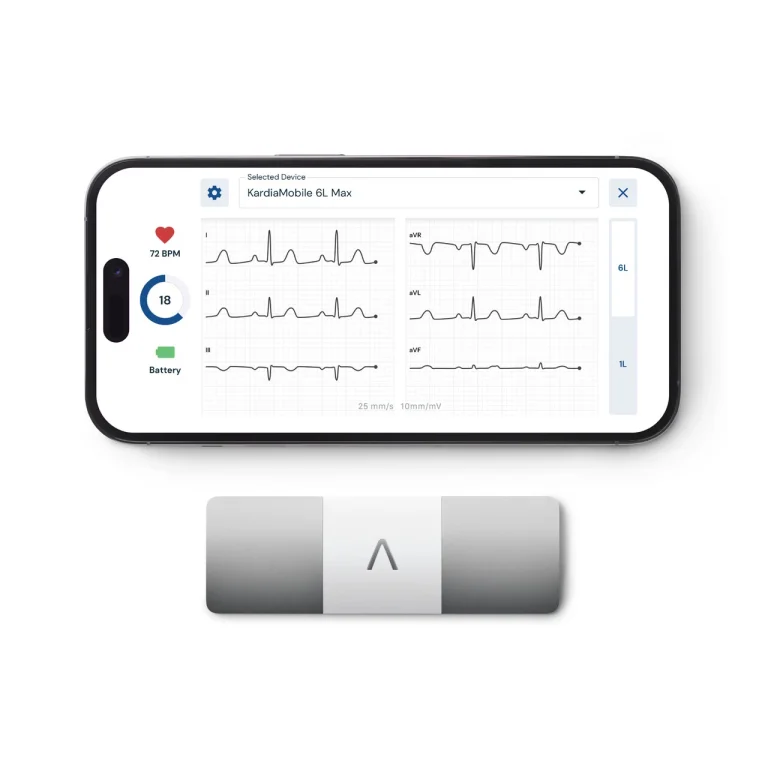
AliveCor KardiaMobile 6L: The Most Clinically Advanced Consumer ECG Device
A pocket sized, six lead ECG that captures half the diagnostic information of a full clinical 12 lead, FDA cleared for six arrhythmia determinations, and priced at $149 with no…
WatchPAT One: The Most Comfortable FDA-Cleared Home Sleep Apnea Test
An estimated 80% of moderate to severe obstructive sleep apnea cases remain undiagnosed. A wrist-worn device that requires no nasal cannula is changing the diagnostic calculus. Presented By Our Partners…

The Daily Rounds: Longevity & Health Care Brief | May 15, 2026
🩸 Depression Detectable in Blood: Accelerated monocyte aging is a measurable biomarker for emotional and cognitive depression symptoms, moving the field toward early pre-symptomatic blood-based screening. ⭐ Astrocytes Recruited to Clear Alzheimer's Plaques: Boosting Sox9 turns brain support cells into plaque-clearing machines, preserving cognition in already-impaired mouse models and validating a new therapeutic target. 🐀 Naked Mole Rat Gene Extends Mouse Lifespan: Transferring the HMW-HA gene from the world's longest-lived rodent delivers a 4.4% lifespan extension and 34% cancer reduction in mice, validating cross-species longevity transfer. 💡 Hallucination-Free Psychedelic Antidepressants Synthesized: UV light applied to amino acids generates serotonin agonists with full antidepressant receptor activity and no hallucinogenic effects in animals, a major step for non-psychedelic mental health therapeutics. 💤 Sleep and Gut Health Form a Two-Way Reinforcing Cycle: Multiple 2026 studies confirm that sleep deprivation degrades microbiome diversity, and gut dysbiosis in turn disrupts sleep and circadian rhythms, with both deteriorating together if neither is addressed.
