
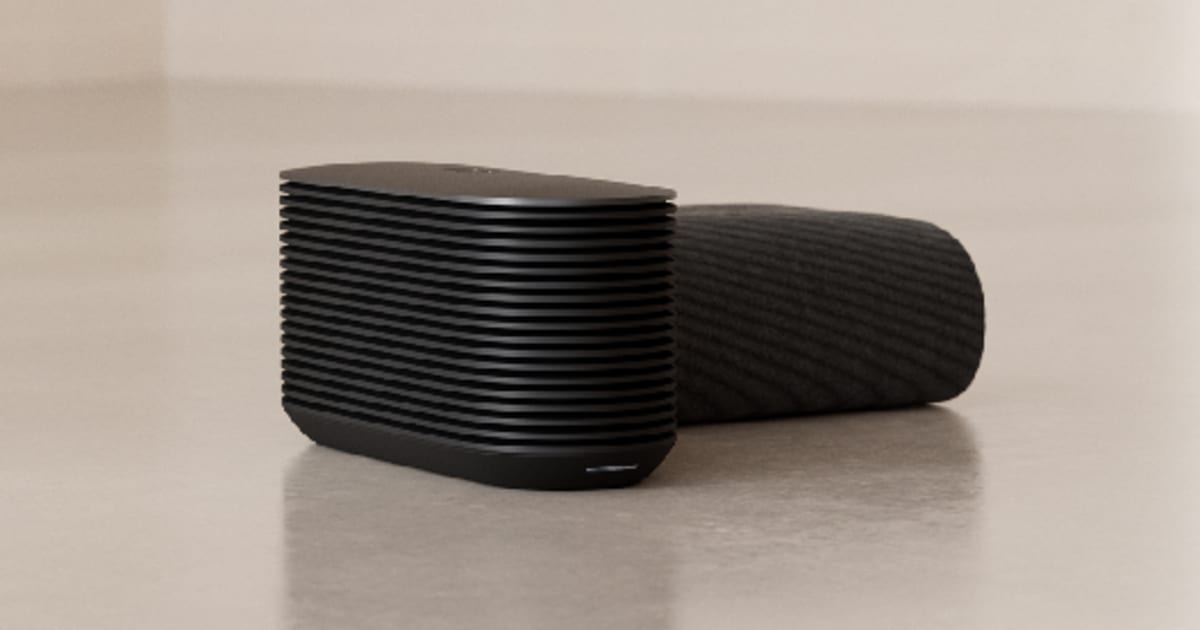
Eight Sleep Pod 6 Review 2026: $1,999 Price, Sleep Temperature, HSA/FSA Status
Eight Sleep’s newest smart bed cover starts at $1,999 and packs more sensors into a smaller hub. Studies of earlier Pods show people feel they sleep better on a temperature-controlled bed, but the measured gains are small, mostly come from the company’s own research, and its sleep tracking has not been independently validated.
Presented By Our Partners


Eight Sleep introduced the Pod 6 in September 2026, calling it the smallest, most powerful Pod yet and pricing it from $1,999 (Business Wire). Dealroom’s headline describes a half-size hub and nine times more sensors (Dealroom), and tbreak’s coverage points to 18 sensors and a subscription (tbreak). This review looks past the launch to what research shows about cooling and warming a bed, and about tracking sleep from under the sheets.
First look. No peer-reviewed study has tested the Eight Sleep Pod 6 itself yet; a PubMed search on October 28, 2026 found none. The research section draws on studies of earlier Eight Sleep Pods, including the Pod 3, which use the same idea of a water-cooled and water-warmed cover, plus independent studies of other temperature-controlled beds and under-mattress sleep sensors. The Pod 6 may perform better or simply differently.
The short answer: The Eight Sleep Pod 6 is a temperature-controlled mattress cover with a bedside hub, launched in September 2026 from $1,999. In independent trials of the Pod 3, people rated their sleep clearly better, but wrist-measured sleep and heart rate did not change in a 34-person crossover study. Its built-in sleep and heart tracking has been validated only by the company.
- Best for: People who sleep hot or cold, couples who disagree about bed temperature, and people with night sweats or hot flashes who want a drug-free comfort tool.
- Not for: Anyone who needs a sleep diagnosis, buyers who want proof that it lengthens deep sleep, or anyone unwilling to pay $1,999 or more plus a possible subscription.
- Price (October 2026): From $1,999 at launch. Launch coverage mentions an Autopilot subscription; we could not confirm its cost or whether it is required.
- Regulatory status: We found no FDA clearance for the Pod 6. Eight Sleep has said it is seeking FDA clearance for sleep apnea features, which is not the same as having one.
- Evidence: Moderate for better perceived sleep and thermal comfort; weak and mostly company-funded for longer deep or REM sleep; none for the Pod 6 itself or for its sensor accuracy outside Eight Sleep.
What Is the Eight Sleep Pod 6?
The Eight Sleep Pod 6 is a smart mattress cover, launched in September 2026, that cools or warms each side of the bed with circulating water from a bedside hub and tracks sleep, heart rate and breathing with sensors built into the cover.
Eight Sleep’s launch release frames the Pod 6 as its smallest and most powerful Pod and sets the starting price at $1,999 (Business Wire). Spanish-language startup outlet Ecosistema Startup reported 18 sensors at the same price (Ecosistema Startup), and Digg’s tech summary said the Pod 6 adds more sensors and a smaller cooling hub (Digg). Eight Sleep’s own overview lists what changed from earlier models (Eight Sleep). These details come from headlines and were not tested by Healthcare Discovery.
Early impressions focus on price and sleep scores. Gadget Flow called it the $1,999 bed cover gunning for its tester’s morning sleep score (Gadget Flow), and Italy’s SmartWorld welcomed the 18 biometric sensors and more compact hub but called the price still dizzying (SmartWorld). The5krunner published an everything-you-need-to-know guide at launch (the5krunner).
How Does the Eight Sleep Pod 6 Work?
The Pod pumps temperature-controlled water from a hub beside the bed through thin tubes in a cover that fits over your mattress like a thick fitted sheet. Sensors in the cover read movement, heart rate and breathing, and the app or the Autopilot feature changes each side’s temperature through the night.
A 2025 study of the Pod 3 describes the system in detail: water in the cover ranged from about 13 to 43 °C, set on a scale from minus 10 to plus 10, and users could set separate temperatures for a bedtime phase, a four-hour early phase and a late phase that lasts until waking. The hub pre-cooled or pre-warmed the bed about an hour before bedtime, and an AI Autopilot adjusted temperature from sleep stage estimates, heart rate, heart rate variability, breathing rate, room temperature and humidity (PMID 41133665). Those figures describe the Pod 3; the Pod 6’s hub is smaller and its sensor count higher, per launch coverage.
The idea rests on basic sleep physiology. Core body temperature falls as you fall asleep, and a bed that is too hot or too cold can delay sleep and wake you up. A cooler bed early in the night may help the body shed heat, and a slightly warmer bed toward morning may stop you from waking cold.
How Accurate Is the Eight Sleep Pod 6? What the Research Shows
No study has tested the Pod 6 yet. On earlier Pods, an Eight Sleep study found more deep and REM sleep at some points in the night, but two independent Pod 3 studies found mainly better self-rated sleep, with no measured change in wrist-tracked sleep or heart rate in the more rigorous one. The Pod’s own sleep and heart tracking has not been validated outside the company.
Sleep stages and recovery, company study. In an Eight Sleep study of 54 people who wore a home sleep test for eight nights, four with the Pod’s temperature control on and four with it off, men sleeping cooler in the first half of the night gained 14 minutes of deep sleep and women gained 9 minutes of REM sleep. Men sleeping warmer in the second half gained 23 minutes of light sleep. Sleeping heart rate fell 2 percent and heart rate variability rose 7 percent with the Pod on (PMID 38671774).
Independent crossover trial. A La Trobe University team randomized 34 healthy adults to seven nights with an Eight Sleep Pod 3’s temperature control on and seven nights off. People rated their sleep quality much better with it on, a large effect (Cohen’s d 0.92), and felt calmer, more refreshed and more thermally comfortable. Wrist actigraphy showed no significant change in total sleep time, time to fall asleep or time awake, and the Pod’s own heart rate, heart rate variability and breathing readings did not differ. The authors noted that because participants knew which condition they were in, expectancy or placebo effects may explain part of the benefit (PMID 41133665).
Athletes. The same group gave 32 elite Australian Rules football players either an Eight Sleep Pod 3 or their own mattress for 14 nights. The Pod group reported 29 minutes more total sleep on a sleep questionnaire and better sleep quality scores, but rated thermal comfort no differently afterward, and sleep was not measured objectively. The authors called the findings preliminary pending randomized studies with validated objective measures (PMID 42694933).
Hot flashes and night sweats. In a Wake Forest pilot study, 15 perimenopausal and postmenopausal women with at least four hot flashes or night sweats a day used a cooling mattress pad for eight weeks. Their daily hot flash and night sweat count fell 52 percent, and their Pittsburgh Sleep Quality Index score improved from 11.14 to 7.87. The study had no control group and did not name the brand of pad (PMID 35881974).
Other temperature-adjusting beds. In a Korean polysomnography study of 25 adults, a mattress that cooled during REM sleep and warmed during non-REM sleep raised total sleep time from 356.2 to 383.2 minutes and sleep efficiency from 82.8 to 87.3 percent compared with normal sleep (PMID 41095607). That was a different product with a different control scheme, so it supports the idea rather than the Pod.
Featured Partner
Invest in the Infrastructure Behind Modern Medicine
As healthcare expands beyond hospital walls, the buildings and campuses supporting that shift are generating compelling returns for investors who move early. The Healthcare Real Estate Fund offers qualified investors direct access to a curated portfolio of medical office, outpatient, and specialty care facilities.
Learn More →
Sleep tracking from the bed. The Pod 3 study notes that Eight Sleep validated the cover’s heart rate and heart rate variability against an ECG, and its breathing rate against a respiratory belt, but that this had yet to be validated externally (PMID 41133665). We found no independent PubMed study of Eight Sleep’s sleep staging. For context, an under-mattress Withings sensor tested against lab polysomnography in 183 people classified sleep and wake correctly 83 percent of the time, caught sleep 95 percent of the time but wake only 37 percent of the time, overestimated total sleep by 48 minutes and underestimated time awake by 54 minutes (PMID 40017337). A Navy study of seven consumer sleep trackers, including three bedside or under-mattress devices, found the same pattern: sensitivity for sleep of at least 0.93, specificity for wake of only 0.18 to 0.54, and inconsistent sleep stages (PMID 33378539).
Company ties: nine of the ten authors of the 54-person Pod study list Eight Sleep, Inc. as their affiliation, and the tenth lists a research consulting firm (PMID 38671774). Five of the six authors of the Korean adaptive mattress study list the Asleep Research Institute rather than a university or hospital (PMID 41095607). The La Trobe Pod 3 studies, the menopause pilot, the Withings study and the Navy study list academic, hospital or government affiliations only, and the Navy study’s authors also list contractors such as Leidos. PubMed affiliations are not a full disclosure of funding or conflicts.
What the Eight Sleep Pod 6 Gets Right
The Pod does something no wearable can: it changes the temperature of your bed, side by side, through the night. People consistently say they sleep better and feel more comfortable on it, and a cooling pad cut hot flashes and night sweats in half in a small menopause study.
Comfort people can feel. In the most rigorous independent trial, the improvement in self-rated sleep quality was large, and participants felt calmer, more refreshed and more comfortable (PMID 41133665). For someone whose main problem is a hot or cold bed, that matters.
A promising tool for night sweats. A 52 percent drop in hot flashes and night sweats over eight weeks is a meaningful signal, even from a small uncontrolled pilot (PMID 35881974).
Nothing to wear. Sleep and heart data come from the cover, so there is no ring or watch to charge or forget. Under-mattress sensors in general are good at telling when you are asleep (PMID 40017337).
Where the Eight Sleep Pod 6 Falls Short
The weaknesses are a high price with a subscription of unconfirmed cost, measured sleep gains that rest mainly on the company’s own study, sleep tracking validated only by Eight Sleep, and no independent data on the Pod 6 itself.
Feeling better is not the same as sleeping longer. In the independent crossover trial, wrist-measured sleep and the Pod’s own heart readings did not change, and the authors raised placebo effects as a possible explanation (PMID 41133665). The deep and REM sleep gains come from a study run by Eight Sleep staff (PMID 38671774).
Sleep scores are unverified. No independent study has checked Eight Sleep’s sleep stages, and under-mattress trackers in general miss much of the time you lie awake (PMID 40017337, PMID 33378539). Treat the morning sleep score as a trend, not a measurement.
No medical clearance. We found no FDA clearance for the Pod 6. Reports that Eight Sleep is seeking clearance for sleep apnea detection mean it cannot be relied on to screen for apnea today.
New hardware, older evidence. Every study above tested an earlier Pod or a different product. Until researchers test the Pod 6, its benefits are inferred, not shown.
Eight Sleep Pod 6 vs Earlier Pods vs Garmin Index Sleep Monitor vs Oura Ring 5
The Pod 6 is the only one of these that changes your bed’s temperature; the Garmin Index Sleep Monitor and Oura Ring 5 only track sleep, for a fraction of the price. Earlier Pods offer the same cooling idea and are the models with independent studies behind them.
| Feature | Eight Sleep Pod 6 | Earlier Pods (Pod 3 to Pod 5) | Garmin Index Sleep Monitor | Oura Ring 5 |
|---|---|---|---|---|
| Form | Temperature-controlled mattress cover with smaller bedside hub | Temperature-controlled mattress cover with bedside hub | Screenless upper arm band worn to sleep | Smart ring |
| Cools or warms the bed | Yes | Yes | No | No |
| Sleep tracking | Built into cover, 18 sensors per launch coverage | Built into cover | Arm-worn tracker | Ring-worn tracker |
| Independent studies | None yet | Two independent Pod 3 studies, mainly self-rated benefits | Not verified for this review | Not verified for this review |
| FDA status | No clearance found | No clearance found | Not verified for this review | Not verified for this review |
| Price (October 2026) | From $1,999 at launch | Not verified for this review | $170 at launch (2025) | $399 at launch |
If you want sleep tracking without changing your bed, see our Garmin Index Sleep Monitor review and our Oura Ring 5 price and blood pressure guide. Ring buyers can also compare our Samsung Galaxy Ring review and Ultrahuman Ring Pro review. Before you trust any nightly number, read our essay on sleep tracker accuracy and sleep scores. Every device we track is in our healthtech wearables guide.
How Much Does the Eight Sleep Pod 6 Cost, and Is It HSA or FSA Eligible?
The Eight Sleep Pod 6 starts at $1,999, according to Eight Sleep’s launch release (Business Wire). Eight Sleep runs an HSA and FSA page through Truemed headlined “Save an average of 30% with FSA/HSA” (Eight Sleep), so paying with pre-tax funds appears possible for some buyers.
That page is the company’s own marketing, and we could not confirm how buyers qualify. Ask your HSA or FSA administrator before assuming the Pod qualifies for you, and keep any paperwork the program provides. Coverage from tbreak and Vora flags an Autopilot subscription alongside the launch price (Vora); we could not confirm its cost or whether it is required, so check the total at checkout. We found no reported discount on the Pod 6 as of October 28, 2026.
Who Should Buy the Eight Sleep Pod 6, and Who Should Skip It?
The Pod 6 suits people whose sleep is disrupted by heat or cold, couples with different temperature needs, and people with night sweats who can afford it. It is a poor fit for anyone who needs a medical answer about their sleep, or who wants proof of longer deep sleep for the money.
Good candidates:
- Hot or cold sleepers, and couples who argue about the thermostat or the duvet.
- People with menopause-related night sweats who want a non-drug comfort option, with their clinician’s input on other treatments.
- Athletes and others who value perceived recovery and comfort and accept that the measured gains are uncertain.
Better served by something else:
- Loud snoring with gasping or choking, or severe daytime sleepiness: ask a clinician about a sleep study. If someone stops breathing and cannot be woken, or has chest pain, call 911.
- Chronic insomnia: cognitive behavioral therapy for insomnia has stronger evidence than any bed gadget.
- Buyers who mainly want sleep data: a ring or arm band such as the Oura Ring 5 or Garmin Index Sleep Monitor costs far less.
- Anyone on a tight budget: a cooler bedroom, lighter bedding or a fan may deliver much of the comfort for little cost.
If poor sleep sends you looking for a sleep specialist, the Healthcare Discovery doctor directory lists clinicians by state and specialty.
What This Means for You
The Pod 6’s real strength is comfort: it lets each sleeper set the bed to the temperature they like, and people reliably say they sleep better on it. The evidence that it adds measurable deep or REM sleep is thinner and comes mostly from Eight Sleep itself, while the best independent trial found better feelings but unchanged measured sleep.
Buy it if a hot or cold bed is what keeps you up and the price fits your budget. Treat the sleep scores and heart readings as rough trends until someone outside the company validates them, and do not use it in place of a sleep study if you suspect a sleep disorder.
Compiled by Healthcare Discovery from the cited PubMed studies and Eight Sleep’s launch materials. Every PMID, study size and result on this page was checked against PubMed on October 28, 2026. Launch, price, specification and review details come from the named publications’ headlines and listings and were not independently tested. This is a first look; no Healthcare Discovery hands-on testing was done.
Does the Eight Sleep Pod 6 improve sleep?
No study has tested the Pod 6 yet. In an independent randomized crossover trial of the Pod 3 with 34 adults, people rated their sleep quality much better with temperature control on, but wrist-measured sleep and heart rate did not change, and the authors noted possible placebo effects (PMID 41133665). An Eight Sleep study of 54 people reported 14 more minutes of deep sleep in men and 9 more minutes of REM sleep in women at certain points in the night (PMID 38671774).
How accurate is Eight Sleep sleep tracking?
Eight Sleep says it validated the cover’s heart rate, heart rate variability and breathing rate against clinical references, but a 2025 study noted this had not been validated externally (PMID 41133665). We found no independent study of its sleep stages. Under-mattress trackers in general detect sleep well but miss much of the time spent awake (PMID 40017337).
How much does the Eight Sleep Pod 6 cost, and is there a subscription?
Eight Sleep’s launch release says the Pod 6 starts at $1,999. Launch coverage mentions an Autopilot subscription, but we could not confirm its cost or whether it is required. Check the full price at checkout.
Is the Eight Sleep Pod 6 FDA cleared?
We found no FDA clearance for the Pod 6. News reports say Eight Sleep is seeking FDA clearance for sleep apnea features, which means it should not be used to screen for sleep apnea today.
Is the Eight Sleep Pod 6 HSA or FSA eligible?
Eight Sleep runs an HSA and FSA page through Truemed that advertises average savings of 30 percent. We could not confirm how buyers qualify, so check with your plan administrator before paying with pre-tax funds.
Can a cooling mattress cover help with hot flashes or night sweats?
Possibly. In a small pilot study, 15 women using a cooling mattress pad for eight weeks had 52 percent fewer hot flashes and night sweats and better sleep quality scores (PMID 35881974). The study had no control group, so larger trials are needed.
Sources
- Moyen NE, et al. Sleeping for one week on a temperature-controlled mattress cover improves sleep and cardiovascular recovery. Bioengineering (Basel), 2024. PMID 38671774
- Stevenson S, et al. Under the covers: the effect of a temperature-controlled mattress cover on sleep and perceptual measures in healthy adults. Clocks & Sleep, 2025. PMID 41133665
- Stevenson S, et al. A temperature-controlled mattress cover is associated with improved subjective sleep in elite male Australian-rules football athletes: a 14-night parallel-group field study. Temperature (Austin), 2026. PMID 42694933
- Avis NE, et al. Results of a pilot study of a cooling mattress pad to reduce vasomotor symptoms and improve sleep. Menopause, 2022. PMID 35881974
- Kim JW, et al. Polysomnographic evidence of enhanced sleep quality with adaptive thermal regulation. Healthcare (Basel), 2025. PMID 41095607
- Manners J, et al. Performance evaluation of an under-mattress sleep sensor versus polysomnography in more than 400 nights with healthy and unhealthy sleep. Journal of Sleep Research, 2025. PMID 40017337
- Chinoy ED, et al. Performance of seven consumer sleep-tracking devices compared with polysomnography. Sleep, 2021. PMID 33378539
- Business Wire. Eight Sleep introduces Pod 6, the smallest, most powerful Pod yet, now starting at $1,999, September 2026. Business Wire
- Dealroom. Eight Sleep’s Pod 6 launches at $1,999 with half-size hub, 9x more sensors. Dealroom
- tbreak. Eight Sleep Pod 6: 18 sensors and subscription. tbreak
- Ecosistema Startup. Eight Sleep lanza el Pod 6 desde US$1.999 con 18 sensores. Ecosistema Startup
- Digg. Eight Sleep’s Pod 6 adds more sensors and a smaller cooling hub. Digg
- Eight Sleep. Discover everything new with Pod 6. Eight Sleep
- Gadget Flow. First impressions: Eight Sleep Pod 6, the $1,999 bed cover gunning for my morning sleep score. Gadget Flow
- SmartWorld. Eight Sleep Pod 6: 18 sensori biometrici e hub più compatto, ma il prezzo resta da capogiro. SmartWorld
- the5krunner. Eight Sleep Pod 6: all you need to know, September 2026. the5krunner
- Vora. Eight Sleep Pod 6 price and Autopilot subscription. Vora
- Eight Sleep. Save an average of 30% with FSA/HSA (Truemed). Eight Sleep
- EdgeX. Eight Sleep seeks FDA clearance to detect and treat sleep apnea, pushing beyond its $2,999 mattress cover. EdgeX
- Dealroom. Eight Sleep hits $1.5B valuation with $50M round, eyes FDA sleep apnea clearance, March 2026. Dealroom
- Bloomberg. Garmin launches $170 health-tracking arm band for wear during sleep, June 2025. Bloomberg
- Tom’s Guide. Garmin launches first sleep-only tracker, a screenless lightweight armband with illness-predicting tech. Tom’s Guide
- Pulse 2.0. Oura reveals $399 Oura Ring 5 as the world’s smallest smart ring. Pulse 2.0


Similar Posts

Walking for Longevity: The 7,000 Step Sweet Spot, Brisk Cadence, and the Underrated Power of the Post Meal Walk
A wave of large cohort studies, including the I-Min Lee Harvard analyses, the Paluch JAMA Internal Medicine meta-analysis, and a 2025 Lancet Public Health update, is reshaping the way clinicians…

Vessel Health Wellness Panel: Daily Urine Testing for Metabolic Optimization
Vessel Health Wellness Panel: Daily Urine Testing for Metabolic Optimization How smartphone-powered urinalysis is bringing thousands of years of diagnostic wisdom into your daily wellness routine. Presented By Our Partners…
Ultrahuman Ring Pro Review 2026: $479 Price, 15-Day Battery, No Subscription, HSA/FSA Status
Ultrahuman Ring Pro first look: $479 with no subscription and a 15-day battery, what ring studies show about its sleep, HRV and AFib check, the Oura lawsuit, and HSA/FSA status.

Cyclic Sighing: The Five Minute Breathwork Protocol That Outperformed Meditation in a Stanford Trial
A 2023 Stanford randomized trial found that five minutes a day of cyclic sighing produced larger gains in mood, anxiety, and respiratory rate than mindfulness meditation. Inside the vagus nerve…

The 72-Hour Promise
Newly released records from Medicare’s WISeR pilot show why AI-assisted prior authorization must be judged by timely, appropriate, completed care, not decision speed alone.

FDA AI Medical Devices and the Quiet Reality of Medical AI
The FDA’s list of AI-enabled medical devices reveals a quieter medical AI revolution: narrow, regulated tools already helping clinicians see, measure, monitor, and act earlier.
