

Masimo W1: Clinical-Grade SpO2 Monitoring in a Wrist Wearable
The company that wrote the book on pulse oximetry accuracy brings hospital-grade oxygen monitoring to a wrist-worn form factor for the first time.
Presented By Our Partners



In the early months of the COVID-19 pandemic, a quiet crisis unfolded in emergency departments worldwide. Patients arriving with critically low blood oxygen levels, sometimes below 70%, reported feeling only mildly short of breath. The phenomenon, termed “silent hypoxia,” revealed a dangerous gap between subjective symptoms and objective physiology. Pulse oximeters, the small clip-on devices that measure blood oxygen saturation, suddenly became household items. But not all pulse oximeters are created equal. A 2021 study published in the New England Journal of Medicine by Sjoding et al. found that pulse oximeters overestimated oxygen saturation in Black patients nearly three times as often as in white patients, a finding that raised urgent questions about which devices could be trusted when accuracy is a matter of life and death.
Masimo Corporation has spent three decades answering that question. The company’s Signal Extraction Technology (SET) pulse oximetry platform is used in virtually every major hospital system in the United States and has been validated in over 100 independent, peer-reviewed studies. The Masimo W1 Wearable represents the company’s effort to bring that clinical-grade accuracy out of the hospital and onto the wrist, creating a continuous monitoring device that maintains the measurement standards clinicians depend on while serving patients in remote monitoring, post-surgical recovery, and transitional care settings.
What Is the Masimo W1 Wearable?
The Masimo W1 is an FDA-cleared wrist-worn pulse oximeter and vital sign monitor built on Masimo’s SET pulse oximetry platform. Unlike consumer smartwatches that include SpO2 estimation as one feature among many, the W1 was designed from the ground up as a clinical monitoring device. Its primary function is continuous, accurate measurement of blood oxygen saturation (SpO2) and pulse rate, with the measurement quality that Masimo’s hospital-grade sensors are known for.
The device also monitors heart rate, respiratory rate, heart rate variability, and plethysmograph variability index (PVi), a parameter that reflects fluid responsiveness and is used in clinical settings to guide intravenous fluid management. Data transmits wirelessly to clinical monitoring platforms where care teams can track patients remotely with configurable alert thresholds for each parameter.
The W1 is positioned for clinical use: hospital step-down units, post-surgical recovery, skilled nursing facilities, and physician-supervised remote patient monitoring programs. It is acquired through Masimo’s clinical sales channels with institutional pricing rather than direct consumer purchase. The device represents Masimo’s strategy of extending its clinical monitoring ecosystem beyond the bedside to wherever patients need continuous vital sign surveillance.
The Science Behind Pulse Oximetry Accuracy
Pulse oximetry works by shining two wavelengths of light (red and infrared) through tissue and measuring the ratio of light absorbed by oxygenated versus deoxygenated hemoglobin. The principle is straightforward, but achieving accurate measurements in real-world conditions is extraordinarily difficult. Patient movement, low perfusion states (cold extremities, shock, vasoconstriction), ambient light interference, skin pigmentation, nail polish, and venous pulsation all introduce errors that can push readings away from true arterial oxygen saturation.
Masimo’s SET technology addresses these challenges through adaptive signal processing that separates the arterial signal from noise sources in real time. The company’s published data shows an accuracy specification (Arms) of approximately 1.5% to 2% SpO2 across conditions that cause conventional pulse oximeters to fail. A 2022 systematic review published in Anesthesia and Analgesia by Cabanas et al. examined 22 studies comparing Masimo SET with conventional pulse oximetry and found that SET maintained accuracy during motion and low perfusion conditions where conventional devices produced clinically significant errors.
The clinical stakes of pulse oximetry accuracy are substantial. A 2023 study published in JAMA Internal Medicine by Fawzy et al. analyzed over 7,000 paired readings and confirmed that occult hypoxemia (oxygen levels that appear normal on pulse oximetry but are actually dangerously low) was significantly more common in Black and Hispanic patients when measured with devices lacking advanced signal processing. This racial disparity in pulse oximetry accuracy has become a major focus of FDA regulatory attention, with the agency issuing guidance recommending that new pulse oximetry devices demonstrate accuracy across diverse skin pigmentation ranges.
Within Healthcare Discovery‘s longevity framework, oxygen delivery is foundational to every cellular process that sustains life. Chronic hypoxemia accelerates cardiovascular disease, impairs cognitive function, and compromises exercise capacity, touching three of the Four Shadows (cardiovascular disease, neurodegenerative disease, and metabolic dysfunction). Accurate, continuous oxygen monitoring is not a luxury; it is a prerequisite for informed clinical decision-making in patients at risk for respiratory compromise.
What the W1 Does Well
The W1’s defining strength is measurement accuracy rooted in Masimo’s three decades of pulse oximetry innovation. While consumer wearables typically specify SpO2 accuracy of plus or minus 3% to 5% under ideal (stationary, well-perfused) conditions, Masimo’s clinical-grade sensors maintain tighter accuracy specifications during the real-world conditions that matter most: patient movement, low perfusion, and challenging skin pigmentation scenarios. For clinical applications where treatment decisions depend on SpO2 readings, this accuracy differential is not incremental; it is the difference between a reliable measurement and a potentially misleading one.
The wrist-worn form factor represents a genuine advance over traditional clip-on finger pulse oximeters for continuous monitoring. Finger sensors restrict hand use, can be dislodged during sleep or daily activities, and are uncomfortable for extended wear. The W1 allows patients to maintain normal hand function while receiving continuous monitoring, which promotes both compliance and early mobilization in post-surgical settings.
The inclusion of PVi (plethysmograph variability index) extends the device’s clinical utility beyond basic vital sign monitoring. PVi is used in perioperative and critical care settings to assess fluid responsiveness, helping clinicians determine whether a patient would benefit from additional intravenous fluids. Having this parameter available in a wrist-worn form factor opens the possibility of fluid status monitoring in step-down and remote care settings where traditional invasive monitoring is not available.
Integration with Masimo’s Patient SafetyNet and other clinical surveillance platforms means the W1 fits into existing hospital monitoring infrastructure rather than requiring a separate, standalone monitoring ecosystem.
Featured Partner
Invest in the Infrastructure Behind Modern Medicine
As healthcare expands beyond hospital walls, the buildings and campuses supporting that shift are generating compelling returns for investors who move early. The Healthcare Real Estate Fund offers qualified investors direct access to a curated portfolio of medical office, outpatient, and specialty care facilities.
Learn More →
Pricing, Access, and Practical Realities
The Masimo W1 operates within the clinical device market with institutional pricing. It is not available for direct consumer purchase through retail channels. Healthcare facilities, hospital systems, and remote patient monitoring programs acquire the device through Masimo’s commercial team, with pricing determined by volume, contract terms, and integration requirements. Specific per-unit pricing is not publicly disclosed.
For patients, the cost of W1 monitoring is embedded in their clinical care charges, whether as part of an inpatient hospital stay, a post-acute care episode, or a physician-supervised remote monitoring program billed under CPT codes for remote physiological monitoring. Patients do not typically receive a separate invoice for the device itself.
The W1 is FDA cleared as a prescription pulse oximeter and vital sign monitor. This regulatory classification places it in a fundamentally different category from consumer smartwatches with SpO2 features, which typically receive general wellness device classifications or, in the case of the Apple Watch, FDA clearance for specific functions (like irregular rhythm notification) but not for clinical-grade SpO2 measurement. The distinction matters: clinical-grade FDA clearance means the device’s accuracy has been validated against arterial blood gas measurements (the gold standard) under conditions defined by FDA guidance.
HSA and FSA eligibility is generally not applicable since patients do not purchase the device directly. The monitoring cost flows through standard clinical billing channels.
Who It Is Best For
The W1 is designed for patients requiring continuous SpO2 monitoring outside of traditional ICU or telemetry settings. The primary use cases include post-surgical patients transitioning from intensive monitoring to general ward or home care, where continuous oxygen monitoring needs to continue but full bedside monitoring infrastructure is no longer warranted. Patients with chronic respiratory conditions (COPD, interstitial lung disease, obstructive sleep apnea on supplemental oxygen) who require remote monitoring of oxygen status represent another core population.
Post-COVID patients with persistent respiratory symptoms, patients undergoing pulmonary rehabilitation, and those in skilled nursing or long-term acute care facilities all benefit from continuous wrist-worn SpO2 monitoring that does not restrict mobility or hand function.
The W1 is not intended for healthy individuals seeking wellness-level oxygen tracking. Consumers interested in general SpO2 awareness during exercise or sleep would find consumer wearables (Apple Watch, Garmin, Fitbit) more accessible and appropriately priced for that use case. The W1 occupies a clinical niche where measurement accuracy under challenging conditions justifies the institutional acquisition model and clinical pricing.
How It Compares
In the clinical wrist-worn SpO2 space, the W1’s closest competitor is not another wearable but rather the traditional finger-clip pulse oximeter used in every hospital. The W1’s value proposition is delivering comparable accuracy in a wrist-worn form factor that enables continuous monitoring without restricting hand use. Against clip-on sensors, the W1 trades the established accuracy profile of fingertip measurements (where arterial pulsation is strong and consistent) for the practical advantages of wrist-based monitoring (comfort, mobility, compliance for extended wear).
The Biobeat BB-613, another clinical-grade wearable in this category, offers broader hemodynamic monitoring including cuffless blood pressure, but uses a chest patch form factor rather than a wrist-worn device. For facilities prioritizing SpO2 accuracy specifically, Masimo’s decades of pulse oximetry expertise give the W1 a credibility advantage. For facilities seeking comprehensive hemodynamic monitoring (blood pressure, cardiac output, respiratory rate, and SpO2 together), the Biobeat platform offers broader parameter coverage.
Consumer wearables with SpO2 capabilities (Apple Watch Ultra, Garmin Fenix 7, Samsung Galaxy Watch) cost a fraction of the W1’s clinical pricing and offer SpO2 measurement as part of a broader consumer feature set. However, these devices are validated under ideal conditions for healthy users and do not claim clinical-grade accuracy during motion, low perfusion, or across diverse skin pigmentation. For clinical decision-making, particularly medication titration or supplemental oxygen management, the accuracy gap between consumer estimation and clinical-grade measurement is not acceptable.
Limitations and Open Questions
Wrist-based pulse oximetry faces inherent physiological challenges compared to fingertip measurement. The wrist has lower arterial perfusion and more variable tissue composition than the fingertip, which can affect signal quality. Masimo’s signal processing technology mitigates these challenges, but wrist-based SpO2 measurements may still show slightly wider accuracy ranges than the company’s hospital-grade finger sensors in certain conditions.
The institutional acquisition model limits accessibility for patients who might benefit from continuous clinical-grade SpO2 monitoring but whose healthcare providers have not adopted the Masimo platform. Remote patient monitoring programs are growing rapidly, but adoption is uneven across health systems and geographic regions.
Battery life and charging requirements for continuous monitoring are practical considerations. Any wrist-worn device that must be removed periodically for charging creates monitoring gaps that could miss clinically significant desaturation events, particularly during sleep when obstructive sleep apnea commonly causes intermittent hypoxemia.
The broader question of whether clinical-grade wrist-worn monitoring will eventually reach consumers at accessible price points remains open. Masimo’s strategy has historically focused on clinical markets, but the trajectory of health technology suggests that accuracy improvements in consumer devices may eventually narrow the gap that currently distinguishes clinical from consumer SpO2 measurement.
What This Means for Your Health
Oxygen is the most fundamental requirement for human cellular function. Every organ system depends on adequate oxygen delivery, and even brief periods of significant desaturation can cause lasting harm to the brain, heart, and kidneys. The clinical importance of accurate, continuous oxygen monitoring cannot be overstated for patients at risk for respiratory compromise.
The Masimo W1 represents an important step in making clinical-grade monitoring more portable and patient-friendly. By moving accurate SpO2 measurement from a finger clip to a wrist-worn form factor, the device enables continuous monitoring in settings where traditional pulse oximetry is impractical: during ambulation, rehabilitation exercises, sleep, and daily activities. For patients transitioning from hospital to home, this continuity of monitoring can provide both clinical data and personal reassurance during a vulnerable recovery period.
Within the Five Pillars framework, oxygen monitoring connects directly to Movement (exercise capacity depends on oxygen delivery efficiency), Sleep (nocturnal desaturation is both a symptom and a driver of cardiovascular and neurocognitive disease), and Breathwork (breathing techniques that improve oxygenation are measurable with pulse oximetry). The W1 makes these connections quantifiable for clinical populations.
The larger story is one of clinical monitoring democratization. Technologies that were once confined to ICUs are migrating to general wards, then to skilled nursing facilities, then to home monitoring programs. The Masimo W1 is a clinical tool for clinical populations today, but it carries forward the principle that accurate physiological measurement should follow the patient, not confine them to a specific care setting.
Frequently Asked Questions
What is the Masimo W1 and how is it different from a smartwatch with SpO2?
The Masimo W1 is an FDA-cleared clinical-grade pulse oximeter in a wrist-worn form factor, built on Masimo’s Signal Extraction Technology (SET) platform used in hospitals worldwide. Unlike consumer smartwatches that estimate SpO2 as one feature among many, the W1 is designed specifically for accurate oxygen monitoring during challenging conditions: patient movement, low perfusion, and diverse skin pigmentation. It is validated against arterial blood gas measurements and cleared for clinical decision-making, while consumer SpO2 features carry general wellness designations not intended for medical use.
Can I buy the Masimo W1 as a consumer?
No. The W1 is a clinical medical device acquired by healthcare institutions through Masimo’s commercial sales channels. It is prescribed for patients requiring continuous SpO2 monitoring in hospitals, post-acute facilities, or physician-supervised remote monitoring programs. Patients encounter the device as part of their clinical care. Consumers seeking SpO2 tracking for wellness purposes should consider consumer wearables, understanding the accuracy limitations compared to clinical-grade devices.
How accurate is the Masimo W1 compared to hospital finger-clip pulse oximeters?
The W1 uses the same Masimo SET signal processing technology found in the company’s hospital finger sensors, which have been validated in over 100 independent peer-reviewed studies. The accuracy specification (Arms) is approximately 1.5% to 2% SpO2, comparable to clinical finger sensors. However, wrist-based measurement faces inherently lower perfusion than fingertip measurement, which may affect accuracy in extreme conditions. Masimo’s adaptive signal processing is specifically designed to maintain accuracy despite these physiological differences.
What vital signs does the W1 monitor besides oxygen saturation?
Beyond continuous SpO2, the W1 monitors pulse rate, respiratory rate, heart rate variability (HRV), and plethysmograph variability index (PVi). PVi is a particularly notable inclusion: it measures respiratory-induced variations in the pulse oximetry waveform that correlate with fluid responsiveness, a parameter typically available only through invasive arterial line monitoring. All parameters transmit wirelessly to clinical monitoring dashboards with configurable alert thresholds.
Why does pulse oximetry accuracy matter so much?
Pulse oximetry accuracy directly affects clinical decisions including supplemental oxygen titration, ventilator management, surgical safety monitoring, and identification of patients at risk for respiratory deterioration. A 2021 study in the New England Journal of Medicine found that conventional pulse oximeters overestimated oxygen levels in Black patients nearly three times as often as in white patients, potentially masking dangerous hypoxemia. Devices with advanced signal processing like Masimo SET have shown more consistent accuracy across skin pigmentation ranges, making accuracy a matter of both clinical quality and health equity.
Is the Masimo W1 covered by insurance?
The W1 monitoring cost is typically embedded in clinical care charges rather than billed as a separate device purchase. For inpatient and post-acute care, the monitoring is part of facility charges. For remote patient monitoring programs, physicians bill under established CPT codes for remote physiological monitoring services. Insurance coverage for RPM varies by plan, but Medicare covers RPM services under specific billing codes, and most major commercial plans have followed suit. Patients do not typically purchase the device directly.


Similar Posts

The Protein Paradox: Why Less May Mean More for Longevity
A sweeping review of 350 studies says the protein supplement boom may be overselling something most sedentary adults do not actually need, and that eating less of it could activate…

NeuroSky MindWave Mobile 2: The Most Affordable Consumer EEG for Beginners and Developers
A single channel EEG headset that costs less than a fitness tracker, offering the lowest barrier to entry for anyone curious about brainwave monitoring, neurofeedback, and brain computer interface development….
PUSH Band 2.0: Velocity-Based Training for Data-Driven Strength Development
The barbell does not lie, but it does not tell the whole truth either. How much weight you lifted is only half the equation. How fast you moved it reveals…
WHOOP 5.0: ECG, Blood Pressure Insights, and Pace of Aging in the Most Advanced Recovery Platform Yet
WHOOP’s latest generation adds ECG, blood pressure insights, and a proprietary Pace of Aging metric to its recovery coaching platform, transforming a fitness tool into a longevity monitoring system. Presented…

Zone 2 Training: The Mitochondrial Science Behind Low-Intensity Cardio and Why It Matters for Longevity
Zone 2 training has become the most talked about protocol in longevity circles, from Peter Attia to Iñigo San-Millán. Here is what the mitochondrial science actually says about low-intensity cardio,…
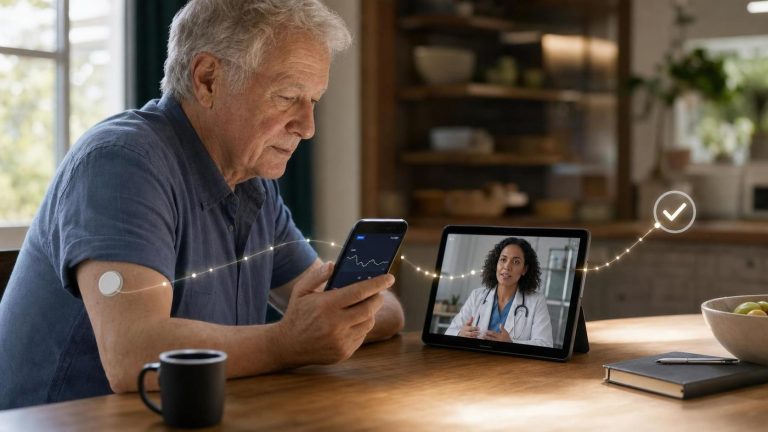
The FDA’s New AI Experiment Asks a Better Question: Did the Patient Get Better?
The FDA and CMS are testing a new bridge from AI-enabled chronic-care technology to Medicare payment, real-world evidence, and measurable patient outcomes. The promise is real. The proof is not…
