
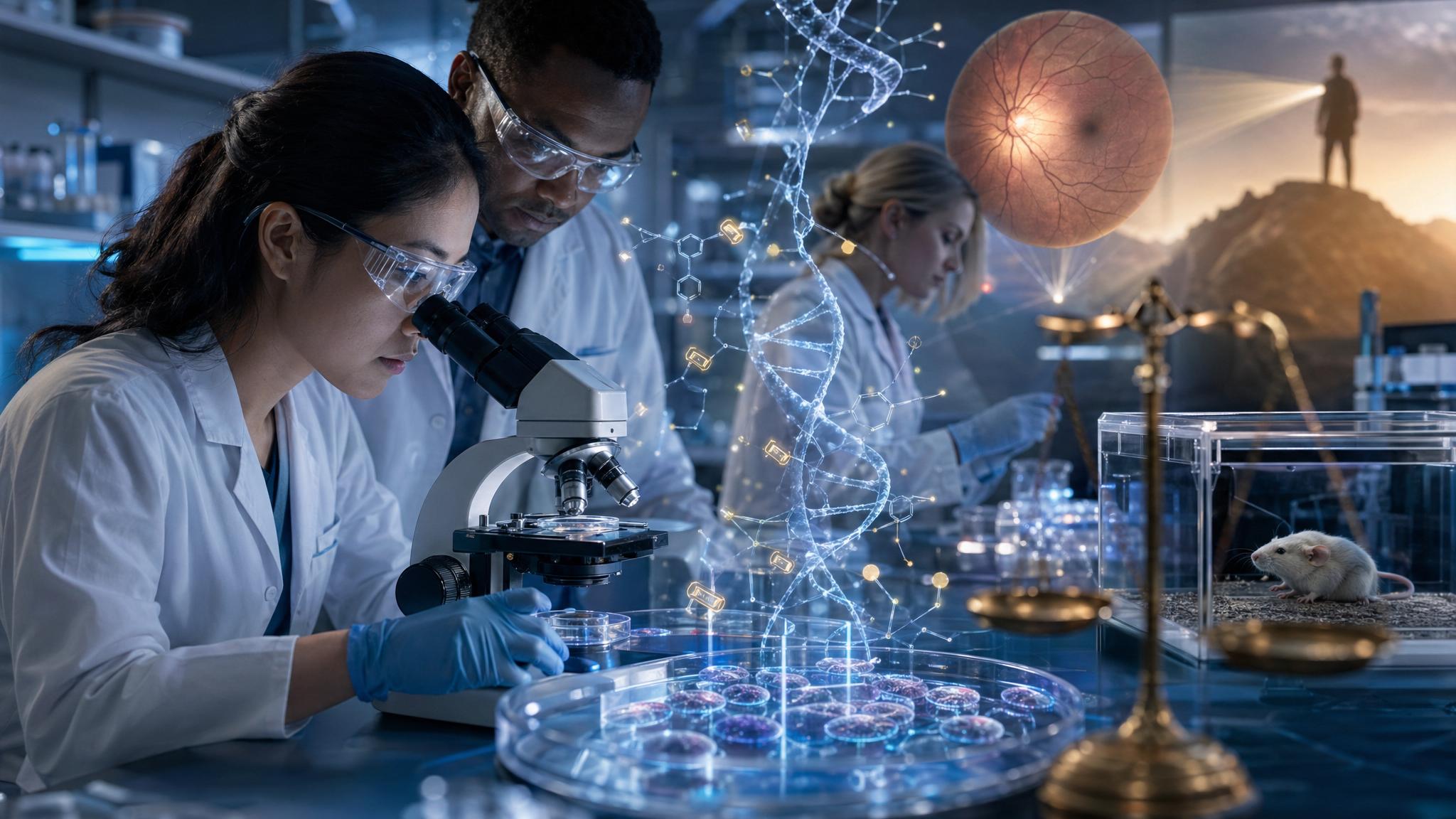
The New Longevity Gold Rush: Can Science Really Reverse Aging, or Are We Getting Ahead of the Evidence?
There is a certain kind of sentence that can electrify the modern health internet.
Presented By Our Partners



We may soon be able to reverse aging.
Not slow it. Not modestly delay some of its effects. Reverse it.
That is the promise now floating through podcasts, venture decks, biotech labs, billionaire circles, and the increasingly crowded market of longevity optimism. In one recent conversation, investor and entrepreneur David Friedberg sketched the idea with the kind of confidence that makes the future feel startlingly close. The core claim was simple enough to sound almost inevitable: if aging is, at least in part, a loss of epigenetic information, then perhaps science can reset the system and restore cells to a younger state.
This is not a fringe fantasy anymore.
Nobel Prize-winning science sits underneath it. Serious labs are pursuing it. Major capital is betting on it. Startups like Altos Labs, NewLimit, Retro Biosciences, and Life Biosciences have helped turn cellular reprogramming into one of the most heavily watched frontiers in biotechnology.
And yet the bigger the promise gets, the more careful we need to be about the story we tell.
Because the next longevity gold rush is being built on a mix of real scientific breakthroughs, simplified public explanations, venture-scale ambition, and a level of confidence that can easily outrun the evidence.
The science is real. The stakes are real. The hype is real too.
The pitch everyone is hearing
Friedberg’s version of the story is effective because it compresses a very complicated biology into a clean narrative arc.
Every cell in the body contains the same DNA. Cells differ because different genes are turned on and off. Over time, the system that regulates those gene-expression patterns can drift. DNA gets damaged, repair systems get activated, and the markers that help preserve cell identity may gradually shift out of place. Eventually the wrong genes are active, the right ones are quiet, and cells stop doing what they once did well. Skin ages. Muscles weaken. Eyes fail. Organs lose resilience.
In that telling, aging is less like a slow-burning clock and more like a corruption of biological software.
Then comes the exhilarating leap: if the system can drift, maybe it can be reset.
That is where the story turns to Yamanaka factors, the set of genes that made it possible to reprogram adult cells back toward a stem-cell-like state. In the broadest public retelling, this becomes something like a biological factory reset. And once you say that out loud, it is only a small jump to the idea that we may someday rejuvenate tissues, restore function, and maybe even push age reversal into clinical reality.
The seduction is obvious.
If that arc is right, then age-related disease begins to look less like destiny and more like an engineering problem.
What Yamanaka actually changed
The story starts in 2006, when Shinya Yamanaka showed that adult cells could be pushed back into an induced pluripotent state by introducing four transcription factors, now famously known as the Yamanaka factors. That discovery won him the Nobel Prize and permanently changed regenerative biology.
But there is an important difference between what that discovery proved and what the longevity world now often implies.
Yamanaka’s breakthrough showed that cell identity is more reversible than scientists had believed. It did not prove that whole-body age reversal in living humans is around the corner. It did not solve the delivery problem, the safety problem, the cancer problem, the dosage problem, or the problem of making cells younger without erasing what they are supposed to be.
Those missing pieces matter.
Because a complete reset is not what most serious researchers are actually after.
The real promise is partial reprogramming
The most compelling scientific idea in this area is not full cellular reset. It is partial reprogramming.
That is the attempt to restore some youthful function without pushing cells all the way back into a stem-cell-like state. In theory, you want to move the system toward younger behavior while preserving tissue identity. In practice, that means walking a very narrow line.
Reset too little, and you may not get meaningful benefit. Reset too much, and you risk dedifferentiation, dysfunction, or tumor formation.
That distinction is where a lot of the popular age-reversal conversation goes soft. Public enthusiasm often treats reprogramming as if it were already a coherent therapeutic category. In reality, it is still a high-risk, technically difficult, biologically delicate set of interventions that may work very differently across tissues and disease states.
This is why the most serious work has tended to focus first on specific tissues, not whole-body rejuvenation.
Featured Partner
Invest in the Infrastructure Behind Modern Medicine
As healthcare expands beyond hospital walls, the buildings and campuses supporting that shift are generating compelling returns for investors who move early. The Healthcare Real Estate Fund offers qualified investors direct access to a curated portfolio of medical office, outpatient, and specialty care facilities.
Learn More →
The strongest proof points are still narrow
One of the most famous examples came from the December 2020 Nature paper [“Reprogramming to recover youthful epigenetic information and restore vision”](https://www.nature.com/articles/s41586-020-2975-4), also indexed on [PubMed](https://pubmed.ncbi.nlm.nih.gov/33268865/). The paper was coauthored by David A. Sinclair, Zhigang He, Bruce R. Ksander, George M. Church, Steve Horvath, and collaborators, and it reported that partial reprogramming could help restore vision in animal models and reverse some hallmarks of age-related decline in retinal cells. That paper helped ignite enormous excitement because it suggested something profound: maybe some aspects of aging are not simply deterioration, but information loss that can be meaningfully restored.
That was a major scientific and cultural moment.
But even there, the lesson is often overstated.
Restoring function in retinal cells or optic pathways in animal models is not the same thing as proving safe systemic age reversal in humans. Local tissue benefit does not automatically translate into whole-body rejuvenation. And showing functional improvement in a mouse is not the same thing as establishing durable, scalable, safe therapies for complex aging humans.
That does not make the work unimportant. Quite the opposite. It makes it exciting in the way real science is exciting: specific, promising, and unfinished.
The problem begins when unfinished science gets narrated like imminent destiny.
Why the money is flooding in
This is where the story stops being academic.
Age reversal is no longer only a scientific hypothesis. It has become a capital magnet.
The commercialization wave matters because it tells us that powerful people believe there is something here worth chasing at enormous scale. Altos Labs became the emblem of that shift, raising extraordinary sums and attracting major scientific talent around cellular rejuvenation. Other well-funded efforts, including NewLimit, Retro Biosciences, and Life Biosciences, have turned partial reprogramming into one of the most crowded prestige races in biotech.
Even the first human-facing attempts are beginning to appear. A recent report in MIT Technology Review described Life Biosciences preparing a targeted human study in eye disease, using a tightly controlled reprogramming strategy as a proof of concept. That is a meaningful milestone. It shows this is not just theory.
But it also shows how early we still are.
The first human study of a tightly localized intervention in a high-need condition is not the same thing as a validated pathway to routine age reversal. It is the opening move in a long and uncertain game.
Where the claims get slippery
This is where longevity storytelling often stops being careful.
There are several ways the public version of this narrative gets flattened.
First, mice are not humans. The history of biomedicine is crowded with animal results that never became useful human medicine.
Second, partial reprogramming is not a single uniform technology. Different factors, vectors, tissues, timing windows, and delivery systems may produce very different outcomes.
Third, local rescue is not systemic rejuvenation. An intervention that might help the eye, or one tissue, or one disease context, does not prove that whole-body age reversal is close.
Fourth, clinical trials beginning does not mean usable therapies are imminent. It means the long, failure-prone process of human validation is finally starting.
And fifth, the cultural ecosystem around longevity increasingly rewards overstatement. Investors want category-defining upside. Founders want capital. Influencers want attention. Media wants big hooks. Consumers want hope. Those incentives do not always reward nuance.
That is how a real and fascinating scientific frontier can turn into a market of seductive compression.
Friedberg’s real role in the story
This is why Friedberg is useful here, but not as the central authority.
He is not the scientist behind Yamanaka reprogramming. He is not the laboratory architect of the underlying biology. He is better understood as an intelligent translator of frontier science, a venture-minded optimist, and a public narrator of abundance stories. He matters because he helps tell the story of why this field feels consequential, investable, and near.
That is valuable.
But it is also exactly why the article cannot stop with him.
Because this is not fundamentally a story about one podcast clip or one investor’s conviction. It is a story about what happens when serious science meets money, ambition, and a public imagination hungry for immortality.
The HDAI bridge: the future may be real, but the fundamentals still matter
This is where the age-reversal story becomes especially relevant to Healthcare Discovery.
If these therapies work, even partially, they may become one of the biggest medical stories of the century.
But one of the strangest features of the longevity boom is the fantasy that future interventions somehow excuse present neglect.
They do not.
No one gets to skip the fundamentals.
Not while the science is early. Not if the science succeeds. Not if longevity escape velocity becomes more than a slogan.
A body that is sleep-deprived, sedentary, metabolically unstable, under-muscled, chronically stressed, and poorly regulated is not somehow made irrelevant by the existence of futuristic therapies. If anything, the opposite may be true. The people best positioned to benefit from the future are likely to be the ones who treated exercise, sleep, metabolic health, stress regulation, and physical resilience as force multipliers, not boring afterthoughts.
That matters because Friedberg himself gestures toward it. In the same conversation, when asked what someone can do now, he comes back to exercise as one of the most meaningful real-world bridges. And that instinct is telling. Even inside the most futuristic version of the age-reversal story, the basics keep reappearing.
That is not a contradiction. It is the point.
The future of longevity may be built in high-end labs, but it still lands in bodies governed by ancient rules.
The gold rush is real. So is the uncertainty.
Age reversal may eventually reshape medicine.
The combination of reprogramming biology, serious capital, and targeted human trials means this is not a joke category, not a fringe fantasy, and not a story that can be dismissed with a wave of the hand.
But it is also not yet the clean, inevitable path that some of its loudest public narrators suggest.
Right now, age reversal sits in an unstable middle space.
It is more than theory.
Less than revolution.
More than hype.
Less than proof.
More than a moonshot.
Less than a treatment plan.
That is what makes this moment so important.
The next longevity gold rush is not just a scientific race. It is a storytelling race. A market race. A credibility race. A race to determine whether one of the most consequential biological ideas of the century becomes real medicine, overconfident commerce, or some uneasy mix of both.
That is why we should pay attention.
But it is also why we should stay skeptical.
Because the future may indeed be extraordinary.
The only question is whether we are learning to describe it with the precision it deserves.
Sources
- Nature, Reprogramming to recover youthful epigenetic information and restore vision
- MIT Technology Review, The first human test of a rejuvenation method will begin shortly
- Public materials on Altos Labs, NewLimit, Retro Biosciences, and Life Biosciences
- Public podcast interview with David Friedberg on age reversal and Yamanaka factors


Similar Posts

The Daily Rounds: Longevity & Health Care Brief | March 31, 2026
🧠 - Heidelberg scientists have identified a protein pairing that acts as a molecular "death switch" in Alzheimer's disease, and a new compound can break it apart, protecting neurons even as it reduces amyloid. 🧬 - The first-ever human trial of partial epigenetic reprogramming is now enrolling, with Life Biosciences testing ER-100 in patients with retinal degeneration in a trial that could redefine what it means to treat aging at the cellular level. 💊 - GLP-1 receptor agonists do not cause disproportionate muscle loss, and new data shows they actually increase mitochondrial proteins in skeletal muscle, suggesting metabolic benefits that go well beyond weight reduction. 🦠 - Gut bacteria are actively injecting proteins into human intestinal cells via molecular syringes, and this mechanism appears more prevalent in people with Crohn's disease, pointing to a new pathway for understanding and treating chronic gut inflammation. ⌚ - ARPA-H's new Delphi program is funding wearable biosensors that can continuously track cytokines and hormones in real time, a potential leap from tracking symptoms to detecting the earliest biological signals of disease and aging.

PlatinumLED BioMax 900 Review: Seven Wavelength Red Light Therapy for Deep Tissue Recovery and Performance
With seven wavelengths spanning 480 to 1064 nanometers, the BioMax 900 delivers the broadest spectrum in consumer photobiomodulation. Presented By Our Partners The question that drives photobiomodulation research is not…
The Daily Rounds: Longevity & Health Care Brief | June 6, 2026
🤖 AI Coronavirus Vaccine Passes First Human Trial. An AI-designed pan-coronavirus vaccine produced broad immune responses in its first human safety study, marking a proof-of-concept milestone for AI-driven vaccine design against future variants. 🔬 Nature Transcriptomic Clocks Reveal Pathway-Level Aging Signals. New aging clocks built from over 11,000 gene expression profiles across four mammals map aging to specific biological pathways, enabling far more precise longevity research than prior single-number clocks. 🦠 GLP-1 Drugs Cut Overdose Deaths by 50% in Largest Addiction Study Yet. A BMJ study of 606,000 veterans showed GLP-1 medications dramatically reduce substance use disorders and overdose mortality across all major addictive substances. 🧠 UCLA Identifies Why Some Neurons Resist Alzheimer's. Specific neuron populations activate protective transcriptional programs under amyloid burden, pointing toward new treatments that extend natural neuroprotection to vulnerable brain regions. 🔬 Genetics Drives Nearly Half of Lifespan Variation. A Science paper doubles prior heritability estimates for human lifespan, opening a substantially larger target space for longevity-focused drug and gene therapy development.
Elvie Trainer: Premium Pelvic Floor Biofeedback Device with Real-Time Visualization
Half of all women who attempt Kegel exercises perform them incorrectly. The most common error, bearing down instead of lifting, can actually worsen the pelvic floor dysfunction the exercises are…

Omron HeartGuide: The First FDA Cleared Wrist Blood Pressure Watch
The first and only FDA cleared oscillometric blood pressure monitor built into a wristwatch, turning discreet on demand blood pressure readings into a daily habit rather than a clinical chore….
Eight Sleep Pod 3 Cover: Active Thermal Sleep Optimization and Biometric Tracking
Your body temperature drops by nearly two degrees Fahrenheit as you fall asleep. What happens when technology learns to manage that drop for you? Presented By Our Partners Thermoregulation is…
