
NMN vs Nicotinamide Riboside: The Science vs the Hype in 2026
Two precursors, one pathway, and a 2026 trial suggesting the body may not distinguish between them at all.
Presented By Our Partners


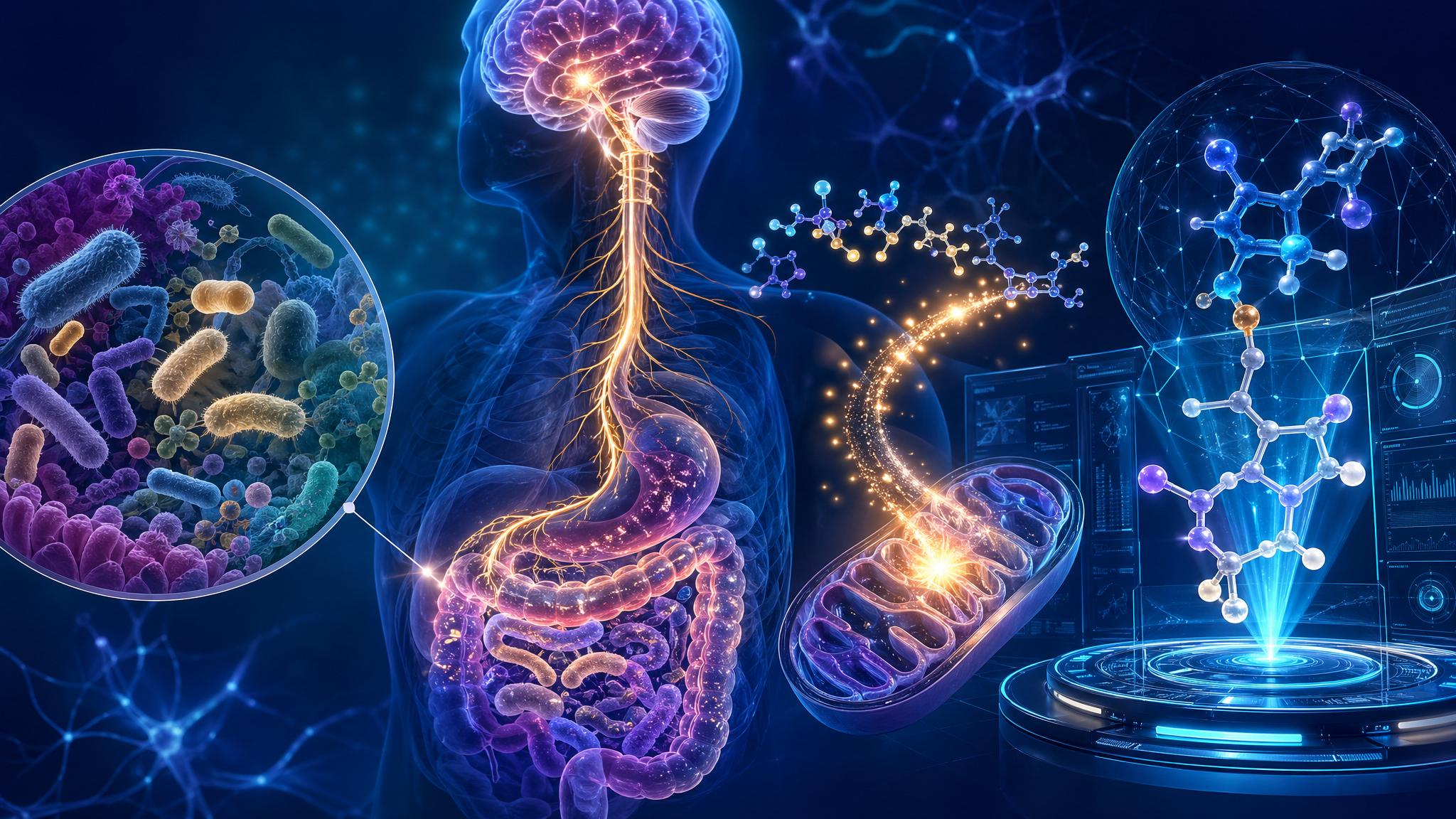
In 65 healthy adults, 14 days of nicotinamide riboside or NMN, but not plain nicotinamide, comparably raised circulating NAD, and ex vivo experiments showed gut microbes convert both molecules to nicotinic acid before they reach the bloodstream (PMID 41540253). That result cuts against the central marketing argument on each side of the NMN versus NR debate. NMN sellers say their molecule is one step closer to NAD and therefore more direct. NR sellers say their molecule is better absorbed because NMN is too large to cross cell membranes intact. If both are being broken down to nicotinic acid in the gut and rebuilt from there, the one-step-closer argument and the membrane argument are both describing a route the body may not use. This page compares the human trial records Healthcare Discovery has graded, with full numbers for NMN and the NR evidence that appears within the same reviews.
Side by side
| Question | NMN | Nicotinamide riboside |
|---|---|---|
| Raises blood NAD in humans | Yes: 12 RCTs, n=513 (PMID 39116016); 14 days sufficient (PMID 41540253) | Yes: comparably to NMN at 14 days in the same trial (PMID 41540253) |
| Proposed route to NAD | Sold as direct precursor; 2026 data suggest gut conversion to nicotinic acid (PMID 41540253) | Sold as better absorbed; same gut conversion observed (PMID 41540253) |
| Human trial in Alzheimer’s disease | None; 3 preclinical studies only (PMID 39422945) | 2 human trials reporting improved plasma and imaging biomarkers and cognitive measures (PMID 39422945) |
| Muscle outcomes in adults over 60 | Null on muscle index, grip, gait speed, chair stand (PMID 40275690) | Mixed: longer 6-minute walk in peripheral artery disease, worse SPPB and chair stand in mild cognitive impairment (PMID 40275690) |
| Glycemic outcomes | Null across 3 meta-analyses (PMID 39531138; PMID 39116016; PMID 42514320) | Not graded by Healthcare Discovery from the NMN study set |
| Blood pressure | Diastolic -2.15 mmHg (95% CI -3.68 to -0.61) across 10 RCTs (PMID 41901064) | Not graded by Healthcare Discovery from the NMN study set |
| Human aging outcome | None tested (PMID 41655607) | None tested (PMID 41655607) |
| Short-term safety | No excess adverse events across 15 RCTs up to 24 weeks (PMID 42514320) | Well tolerated over weeks to months in the 113-study review (PMID 41655607) |
Where the two records diverge
The clearest difference is in the brain. A 2024 systematic review searching for NAD precursor trials in Alzheimer’s disease found 3 preclinical NMN studies and no human NMN trial, but 2 human trials of nicotinamide riboside that reported improvements in plasma biomarkers, neuroimaging markers and cognitive measures (PMID 39422945). NR has been taken into human neurological testing; NMN has not. Those NR results do not transfer to NMN, and treating them as if they did is one of the drifts Healthcare Discovery flags in the NMN brain-health claim, scored 77 out of 100 on the HYPE Index.
The second difference runs the other way. In older adults, a 2025 meta-analysis pooled NMN and NR separately. NMN was simply null: skeletal muscle index MD -0.42 (95% CI -0.99 to 0.14), handgrip MD 0.61 kg (95% CI -0.89 to 2.10), gait speed MD -0.01 m/s (95% CI -0.08 to 0.06). NR was mixed, with a longer six-minute walk distance in peripheral artery disease but worse Short Physical Performance Battery and chair-stand results in people with mild cognitive impairment (PMID 40275690). The authors concluded that current evidence does not support either precursor for preserving muscle mass and function after 60.
Where they converge
On the question buyers care most about, the two molecules are identical: neither has a human trial measuring any aging outcome. The 2026 systematic review that covered 33 human intervention studies and 80 rodent studies of NR, NMN and NAD itself concluded that both oral precursors consistently raise NAD-related metabolites and are well tolerated over weeks to months, but that effects on functional, metabolic, vascular and healthspan outcomes are heterogeneous and often null (PMID 41655607). Dose is the other open question. NMN trials ran from 250 to 2,000 mg per day, with the strongest biomarker response at 600 to 900 mg (PMID 36482258) and the only positive weight result at 2,000 mg of a proprietary formulation (PMID 36740954), while most trials used 250 mg per day.
Featured Partner
Invest in the Infrastructure Behind Modern Medicine
As healthcare expands beyond hospital walls, the buildings and campuses supporting that shift are generating compelling returns for investors who move early. The Healthcare Real Estate Fund offers qualified investors direct access to a curated portfolio of medical office, outpatient, and specialty care facilities.
Learn More →
The gut-conversion finding deserves one more sentence. If NR and NMN both become nicotinic acid before raising systemic NAD, then the molecule that matters may be the one that has been in multivitamins for decades, and the 14-day trial found plain nicotinamide did not raise NAD the same way (PMID 41540253). That is a mechanistic proposal from an open-label study with doses not stated in the abstract and authors from Nestlé Health Science and Nestlé Research, not a settled fact, but it reframes the premium both precursors command.
What we do not know
Whether either molecule changes any clinical outcome over years. Whether the gut-conversion route holds at label doses in older adults, who made up most trial populations. Whether NR’s two Alzheimer’s trials, which the review did not quantify in its abstract, would replicate with NMN. How the two compare in a direct, blinded, adequately powered head-to-head trial on a functional endpoint, because no such trial exists. And whether stacking them, as some products do, adds anything beyond a higher nicotinamide metabolite load (PMID 31685720).
Doses used in studies
These are doses reported by the named sources, not recommendations.
| Source | Dose reported | Context |
|---|---|---|
| PMID 41540253 | NR or NMN for 14 days, doses not stated in abstract | 65 healthy adults, open-label, NAD raised comparably by both |
| PMID 36482258 | NMN 300, 600 or 900 mg once daily for 60 days | 80 healthy middle-aged adults |
| PMID 36797393 | NMN 125 mg twice daily for 12 weeks | 36 healthy middle-aged adults |
The full NMN grading, with ten claims scored and the complete interaction table, is in Healthcare Discovery’s NMN evidence review. Scoring method at HYPE Index methodology.
Compiled by Healthcare Discovery from the cited PubMed studies. Every citation, author affiliation and trial sponsor named on this page was checked against PubMed on October 27, 2026. How claims are scored: HYPE Index methodology.
Is NMN or nicotinamide riboside better at raising NAD?
In 65 healthy adults, 14 days of NR or NMN comparably raised circulating NAD, and ex vivo work showed both are converted to nicotinic acid by gut bacteria (PMID 41540253). Neither was superior.
Does NMN or NR have better evidence for brain health?
A 2024 systematic review found no human NMN trial in Alzheimer’s disease but 2 human NR trials reporting improved plasma and imaging biomarkers and cognitive measures (PMID 39422945). Those NR results do not transfer to NMN.
Does NMN or NR slow aging?
Neither has a human trial with an aging endpoint. A 2026 systematic review of 113 studies found both raised NAD metabolites but produced heterogeneous and often null healthspan outcomes (PMID 41655607).


Similar Posts
Withings Body Cardio: Smart Scale with Pulse Wave Velocity for Arterial Health
Your arteries age faster than you do. A bathroom scale that measures how fast is the first step toward slowing them down. Presented By Our Partners Updated October 28, 2026:…
The Daily Rounds: Longevity & Health Care Brief | April 30, 2026
🧬 SuperAgers Reveal the Biology of Exceptional Brain Longevity: Adults over 80 with 50-year-old memory function produce twice as many new hippocampal neurons as peers, with resistance and resilience to Alzheimer's pathology both playing a role in cognitive fate. 🤖 Novo Nordisk and Insilico Advance the AI Drug Discovery Era: Novo's sweeping OpenAI partnership and Insilico's new TargetPro-TargetBench framework signal that AI is moving from research novelty to core pharmaceutical operational infrastructure. ☕ Coffee Rewires the Gut Microbiome and Modifies Brain Function: A Nature Communications human trial confirms habitual coffee intake shifts microbial communities and alters cognition and mood through gut-brain axis pathways distinct from caffeine's direct neurological effects. 🔬 Immature Neuron Behavior, Not Quantity, Determines Alzheimer's Resilience: Netherlands researchers found that the 30% of Alzheimer's patients who never develop dementia have immature neurons that activate protective programs, opening a new class of therapeutic targets beyond amyloid clearance. 🧬 Geroscience Proposes Preventing Multiple Diseases by Targeting Aging Itself: ACS Pharmacology researchers argue that senolytic, mTOR-inhibition, and NAD+ interventions targeting biological aging upstream could delay several chronic conditions simultaneously, calling for regulatory reform to support multimorbidity prevention.

The Unexpected Cancer Shield: ASCO 2026 Data Shows GLP-1 Drugs Cut Advanced Tumor Progression by Up to 50%
A major study being presented this week at the American Society of Clinical Oncology’s annual meeting found that patients with early-stage cancer who took GLP-1 receptor agonists were 38 to…

The VO2 Max Verdict: Why Cardiorespiratory Fitness Is the Single Strongest Predictor of How Long You Will Live
A 122,000-person Cleveland Clinic study found that low cardiorespiratory fitness carries a greater mortality risk than smoking, diabetes, or coronary artery disease, with no upper limit of benefit. Inside the…

Tim Ferriss’s Health and Longevity Stack: The Biohacker Who Got More Conservative
Tim Ferriss’s current health and longevity stack is less extreme than many expect: sleep, exercise, food quality, creatine, vitamin D, metabolic experiments, mitochondrial health, and cautious interest in rapamycin, ketones,…

The New Race in Healthcare AI Is Not to Detect More. It Is to Finish the Job.
Healthcare AI is getting better at finding signals. The harder test is whether those signals turn into accountable action, completed care, and measured outcomes.
