
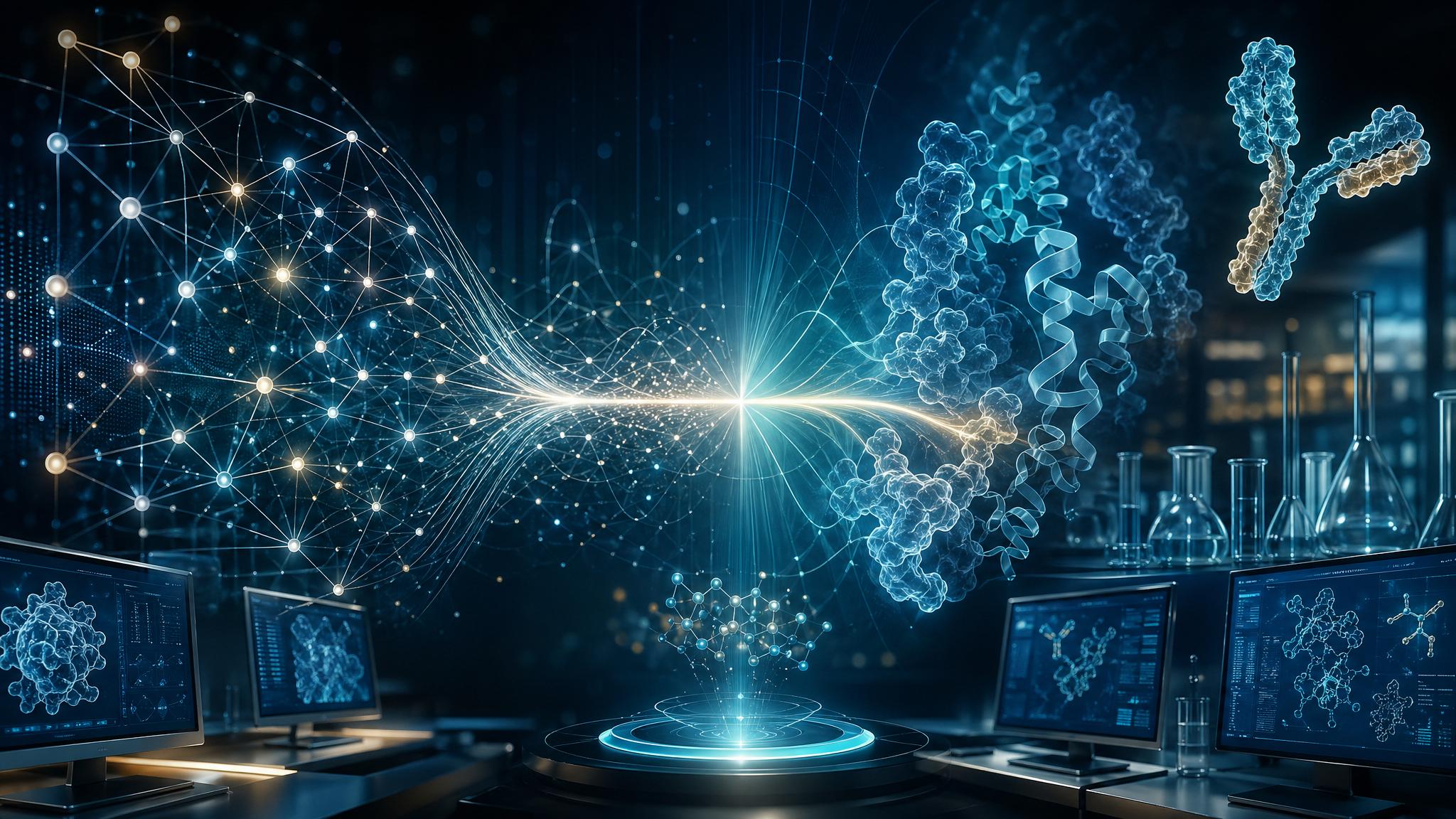
Anthropic Just Bought a Drug Discovery Startup for $400M. Here Is What It Means for Healthcare AI.
A foundation model company just paid $400 million in stock for a team of fewer than 10 people. The implications for drug discovery, precision medicine, and the entire healthcare AI landscape are enormous.
Presented By Our Partners



On April 3, 2026, Anthropic confirmed the acquisition of Coefficient Bio, a stealth biotech AI startup, in an all-stock transaction valued at just over $400 million. The deal closed quietly. No product had been publicly launched. No revenue had been disclosed. The company had existed for roughly eight months.
What Coefficient Bio did have was a founding team with credentials that matter deeply in computational drug discovery, and a thesis about where biological research is heading that Anthropic apparently found worth nearly half a billion dollars.
Who Built Coefficient Bio and Why It Matters
Coefficient Bio was co-founded by Samuel Stanton and Nathan C. Frey, both alumni of Genentech’s Prescient Design unit. Prescient Design is not a peripheral R&D experiment. It is Genentech’s dedicated accelerator for machine learning in drug discovery, focused on biomolecular structure, protein design, and structure-function relationships that underpin how new therapeutics are identified and optimized.
Frey’s background is particularly notable. At Prescient Design, he served as Group Leader and Principal Scientist, directing a multidisciplinary team of machine learning scientists, molecular biologists, and computational biologists working on biological foundation models. He sat on Genentech’s Foundation Model and Large Molecule Drug Discovery Leadership Teams, where he set the research direction, product roadmaps, and long-term AI strategy for both Genentech and its parent company Roche. He also established and led Genentech’s collaboration with NVIDIA on computational biology infrastructure. His published work spans journals including Science Advances, Nature Machine Intelligence, and ACS Nano, along with presentations at NeurIPS, ICML, and ICLR.
In other words, this is not a team that was experimenting with AI in biology. This is a team that was defining how one of the world’s largest pharmaceutical companies applies machine learning to discover new drugs.
What Computational Drug Discovery Actually Does
For readers unfamiliar with the field, computational drug discovery uses machine learning to accelerate several stages of the pharmaceutical R&D pipeline that have traditionally been slow, expensive, and failure-prone.
The core problems include: identifying which biological targets (proteins, receptors, enzymes) are most relevant to a disease, designing molecules that interact with those targets in therapeutically useful ways, predicting how candidate molecules will behave in living systems before running expensive wet-lab experiments, and optimizing drug candidates across multiple properties simultaneously (efficacy, toxicity, bioavailability, stability).
Traditional approaches rely heavily on trial and error. A pharmaceutical company might screen hundreds of thousands of chemical compounds against a target, spending years and hundreds of millions of dollars before identifying a viable drug candidate. The failure rate is staggering: roughly 90% of drugs that enter clinical trials never reach patients.
Computational approaches, particularly those built on foundation models trained on biological data, aim to compress this timeline dramatically. Instead of screening compounds one by one, a well-trained model can generate novel molecular structures from scratch, predict their properties computationally, and prioritize the most promising candidates for laboratory validation.
Featured Partner
Invest in the Infrastructure Behind Modern Medicine
As healthcare expands beyond hospital walls, the buildings and campuses supporting that shift are generating compelling returns for investors who move early. The Healthcare Real Estate Fund offers qualified investors direct access to a curated portfolio of medical office, outpatient, and specialty care facilities.
Learn More →
Genentech describes this as a “lab-in-a-loop” methodology: computational models generate hypotheses, experimental scientists test them, the results refine the models, and the cycle accelerates. Prescient Design, where Coefficient Bio’s founders trained, was at the center of this approach.
Why Anthropic Is Building, Not Just Partnering
Six months before acquiring Coefficient Bio, Anthropic launched Claude for Life Sciences, a platform that connects its foundation model to scientific tools including Benchling (laboratory notebook and experiment management), PubMed (biomedical literature), 10x Genomics (single-cell and spatial analysis), and BioRender (scientific figures). The platform also introduced Agent Skills, including a single-cell RNA sequencing quality control skill that automates analysis following scverse best practices.
That October launch was a connectors play. Anthropic was positioning Claude as a research assistant that could access scientific platforms, summarize literature, and help with data analysis. Useful, but fundamentally a horizontal tool applied to a vertical domain.
The Coefficient Bio acquisition represents a categorically different strategic posture. Anthropic is no longer just connecting to scientific tools. It is internalizing the domain expertise required to make Claude natively capable of biological reasoning at a molecular level.
Eric Kauderer-Abrams, who leads Anthropic’s Healthcare Life Sciences group, articulated the ambition directly: the goal is for a meaningful percentage of all life science work globally to run on Claude, mirroring the adoption pattern already established in software engineering.
This is vertical integration. The acquired team brings expertise in protein design, biomolecule modeling, and autonomous therapeutic design systems, capabilities that cannot be replicated simply by fine-tuning a general-purpose language model on PubMed abstracts.
The Competitive Landscape Is Moving Fast
Anthropic is not making this move in a vacuum. The convergence of AI and drug discovery is attracting massive capital from multiple directions simultaneously.
One week before the Coefficient Bio deal closed, Eli Lilly signed a collaboration with Insilico Medicine worth up to $2.75 billion ($115 million upfront, with milestone payments and royalties). Insilico’s Pharma.AI platform uses generative AI to design novel molecules from scratch, identify disease targets, and predict clinical behavior. The deal grants Lilly exclusive worldwide rights to develop and commercialize preclinical oral therapeutics across multiple disease areas. Insilico’s CEO, Alex Zhavoronkov, described the platform’s ability to identify multi-purpose targets driving multiple diseases simultaneously.
Lilly has also committed $1 billion over five years with NVIDIA to build AI research infrastructure for drug discovery, using NVIDIA’s BioNeMo platform. Roche, Genentech’s parent company, is deploying thousands of NVIDIA Blackwell GPUs across cloud and on-premises systems in the U.S. and Europe to accelerate R&D. Sanofi, Novo Nordisk, and AbbVie are all using Claude in their operations already.
Google DeepMind’s Isomorphic Labs continues to advance its own AI-driven drug discovery platform, building on the protein structure prediction breakthroughs of AlphaFold. The competitive dynamics are clear: foundation model companies and pharmaceutical giants are converging on the same conclusion that AI will fundamentally reshape how drugs are discovered, designed, and brought to market.
The Valuation Signal
The deal’s economics deserve attention. Dimension, the New York-based venture firm that held roughly half of Coefficient Bio, is reporting a 38,513% internal rate of return on its investment. That number reflects the speed at which AI valuations are repricing early-stage science bets more than it reflects Coefficient Bio’s commercial viability.
Against Anthropic’s $380 billion post-money valuation from its $30 billion Series G round in February, the acquisition represents roughly 0.1% dilution. For Anthropic, this is a rounding error on the balance sheet but a significant strategic commitment to building life sciences as a core vertical alongside coding and enterprise productivity.
For the broader ecosystem, the valuation sends a signal: domain-specific biological AI expertise commands a premium that generic AI capabilities cannot replicate. The talent market for researchers who understand both machine learning and molecular biology at a deep level is extremely thin, and the acqui-hire economics of this deal reflect that scarcity.
What This Means for You
If you work in healthcare, pharmaceutical research, or biotech, the implications are concrete. Foundation model companies are building specialized biological reasoning capabilities, not just offering API access to general-purpose models. The tools available to researchers are about to become significantly more capable at understanding and manipulating biological systems at a molecular level.
If you are a patient waiting for better treatments for cardiovascular disease, cancer, neurodegenerative conditions, or metabolic dysfunction, the timeline matters. These are the four primary chronic disease threats that define the longevity challenge, what we at Healthcare Discovery call “The Four Villains.” Every advance that compresses drug discovery timelines moves us closer to the longevity escape velocity concept: the point where medical progress extends healthy lifespan faster than time passes.
The foundational practices still matter. Nutrition, sleep, movement, breathwork, and mindset remain the bridge between where we are today and where the science is taking us. AI is not replacing those foundations. It is accelerating the arrival of the next generation of therapeutics that will complement them.
We are watching a fundamental restructuring of how drugs are discovered. Foundation model companies are betting billions that they can do it faster, cheaper, and better than traditional pharmaceutical R&D. The Coefficient Bio acquisition is the clearest signal yet that this is not theoretical. It is happening now.


Similar Posts
Berberine for Blood Sugar: What 46 Trials Show (2026 Evidence Grade)
Yes. Across 46 randomized controlled trials, berberine lowered HbA1c by 0.73 points and fasting glucose by about 15 mg/dL compared with control in adults with type 2 diabetes (PMID 34956436)….

Your Light Diet: How Bright Days and Dark Nights Shape Your Healthspan
A landmark UK Biobank study of 13 million hours of wrist-sensor data found that bright days and dark nights predict longer life. Here is the science of circadian light, and…

AI Is Making Body Scans Cheaper. Medicine Still Has to Decide What They’re For.
AI may make full-body MRI faster and cheaper, but lower scan prices do not automatically create better healthcare. The real test is evidence, follow-up, affordability, and whether discovery becomes useful…
The NAD+ Renaissance: How a Cellular Fuel Molecule Is Rewriting the Science of Brain Aging, Sleep, and Neurodegeneration
A landmark Nature Aging expert review by 25 scientists, a Science Advances study showing NAD+ reverses Alzheimer’s memory deficits through RNA splicing, and the first human evidence that oral NAD+…
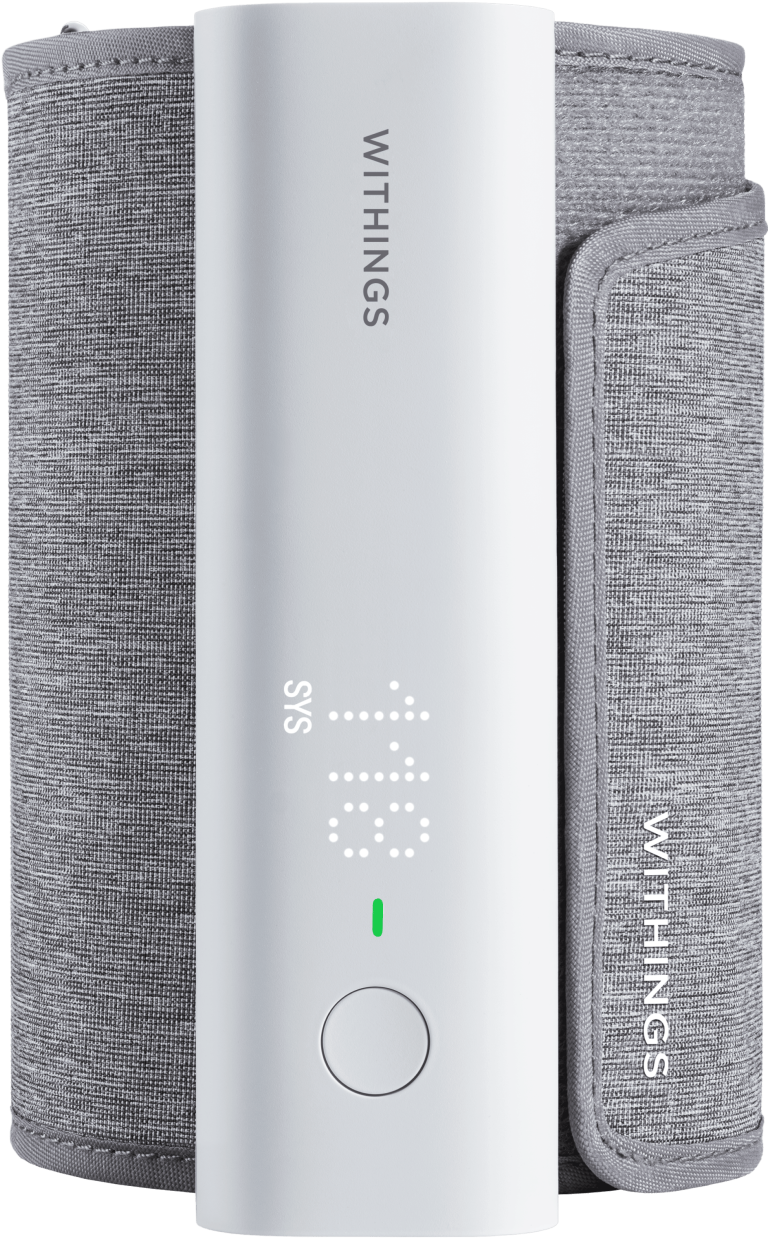
Withings BPM Connect Review: Validated Accuracy, Price, and Wi-Fi
The Withings BPM Connect is an FDA cleared Wi-Fi upper-arm blood pressure cuff that passed two independent accuracy studies. Accurate and easy to use.
Bloomlife Pregnancy Monitor: Wearable Contraction and Fetal Movement Tracker
Pregnant women have been told to “count the contractions” for generations, but timing contractions with a stopwatch during active labor is like measuring a hurricane with a rain gauge. A…
