

The 95 Percent Warning: What Healthcare AI Must Learn From Prior Authorization Appeals
There is a moment after a hospital stay when medicine becomes logistics.
Presented By Our Partners



The operation is over. The infection is controlled. The patient is stable enough to leave the acute-care bed, but not strong enough to go home. A physician recommends rehabilitation or skilled nursing. A family begins arranging transportation and trying to understand what comes next.
Then the answer comes back: denied.
This is where the healthcare system’s fascination with artificial intelligence meets a harder question. AI can read records, assemble documentation, match clinical criteria, and accelerate prior-authorization workflows. But if it makes a flawed gate move faster, the patient does not experience innovation. The patient experiences a faster no.
A newly highlighted federal finding gives that risk a number: 95 percent.
In a July 10 advocacy update, the American Medical Association summarized two recent evaluations from the U.S. Department of Health and Human Services Office of Inspector General. One examined Medicare Advantage requests for admission to skilled nursing facilities after hospitalization. Across the plans studied, 12 percent of requests were denied. Only 18 percent of those denials were appealed. But when patients or their representatives did appeal, plans overturned 95 percent of the denials.
The number does not prove that every initial denial was improper. Appeals can include new records, clarified facts, or changed circumstances. The OIG evaluation also examined one month of 2024 requests, not every authorization decision made today.
Still, a system that reverses nearly every challenged denial is broadcasting an alarm. And because more than four out of five denials were not appealed, the people helped by that second look were a small, unusually persistent subset of those turned away.
This is not merely an insurance-processing problem. It is a healthcare delivery problem: whether an appropriate clinical recommendation becomes care the patient can actually receive.
The appeal is not a safety net if most people never reach it
An appeal looks simple on a process map. In real life, it arrives when patients and families are least equipped to manage another administrative campaign.
Post-acute care is not an elective convenience. Skilled nursing facilities provide nursing and therapy for people recovering from illness, injury, or surgery. Inpatient rehabilitation and long-term care hospitals serve patients with substantial medical and functional needs. Delays can mean extra hospital days, interrupted rehabilitation, a rushed discharge home, or a caregiver suddenly asked to provide care the system had already determined was necessary.
The companion OIG evaluation of inpatient rehabilitation and long-term care hospital requests found striking variation among plans. The three largest Medicare Advantage organizations denied more than 70 percent of long-term care hospital requests and more than 50 percent of inpatient rehabilitation requests during the study period. Appeals reversed a meaningful share of those decisions, and the rates differed sharply among insurers.
Featured Partner
Invest in the Infrastructure Behind Modern Medicine
As healthcare expands beyond hospital walls, the buildings and campuses supporting that shift are generating compelling returns for investors who move early. The Healthcare Real Estate Fund offers qualified investors direct access to a curated portfolio of medical office, outpatient, and specialty care facilities.
Learn More →
Variation matters because it is evidence that the gate is not simply reflecting one stable clinical truth. Different rules, vendors, documentation practices, thresholds, and review cultures can produce different answers for patients who need the next step in care.
AI can remove friction. It can also industrialize it.
Prior authorization is an obvious target for automation. Much of the work is repetitive: extracting information from notes, checking benefit rules, identifying missing documentation, formatting submissions, tracking status, and drafting appeals. Used well, AI could reduce clerical burden and help patients reach appropriate care sooner.
But the same technology can be deployed on the other side of the gate. It can sort requests, predict utilization, apply coverage rules, flag cases for denial, and standardize decisions at enormous scale.
That is why the useful question is not, “Did AI speed up prior authorization?” It is, “What happened to the patient after the system made its decision?”
For authorization AI, the minimum serious scorecard should include:
- how often an initial denial is reversed;
- how reversal rates differ by service, plan, vendor, and patient population;
- how long approval, denial, and appeal take;
- whether the patient actually enters the recommended setting;
- whether delays lead to extra hospital days, deterioration, readmission, or abandonment;
- whether people with fewer resources are less likely to appeal and therefore less likely to reach care.
These are not peripheral fairness metrics. They are the outcome.
The invisible inequity is administrative stamina
An appeal-based system quietly rewards the people best able to resist it.
Some patients have an adult child who can spend hours on the phone. Some have a clinician with experienced authorization staff. Some know which documents to request and which words will trigger reconsideration. Others are cognitively impaired, live alone, speak limited English, lack broadband access, or are simply exhausted after hospitalization.
If two people receive the same questionable denial but only one can mount an appeal, the formal rule may look equal while the practical result is not.
AI could reduce that disparity. A patient-side or provider-side system could detect missing records before submission, explain a denial in plain language, assemble the evidence for reconsideration, track deadlines, and escalate cases before a care transition collapses.
But that promise depends on where the intelligence is placed and whose goal it serves. An optimization system built to reduce utilization is not the same product as one built to complete appropriate care.
Governance has to follow the patient, not just the model
The timing of the OIG findings is notable. On July 15, WHO/Europe reported that nearly two thirds of countries in its regional readiness assessment were already deploying AI in diagnostics, while only 8 percent had a health-specific AI strategy and only 8 percent had liability standards defining responsibility when an AI system fails.
That gap is often discussed as a model-safety problem: bias, hallucination, drift, validation, privacy. All matter. But prior authorization shows why governance must extend into workflow and consequences.
A model can perform exactly as designed and still help create a bad system. It can classify documents accurately, apply the configured policy consistently, and return a decision in seconds. If the policy is too restrictive, the inputs are incomplete, the escalation path is weak, or nobody measures completed care, technical accuracy becomes a very small comfort.
The CMS Interoperability and Prior Authorization Final Rule pushes affected payers toward more interoperable processes, clearer denial reasons, and faster decisions. Those are necessary improvements. The OIG reports point toward the next layer: request-level data detailed enough to identify which services, contractors, and decision patterns generate denials that later collapse on appeal.
The real test is completed care
Healthcare AI is often sold through the minutes it saves. Prior authorization exposes the limit of that story.
A ten-second denial is not better than a two-day denial if the patient loses the rehabilitation bed. A perfectly drafted appeal is not success if it arrives after the safe discharge window has closed. A lower administrative cost is not a clinical benefit if it shifts the burden onto a family at the worst moment of the patient’s recovery.
The 95 percent reversal rate should not become another statistic in the long argument over Medicare Advantage. It should become a design warning for every organization bringing AI into a gatekeeping workflow.
Do not automate the first decision without auditing the second. Do not count a closed case when the patient is still waiting. And do not call the system intelligent until it can show that appropriate care was actually completed.
That is the difference between moving paperwork and moving a patient forward.


Similar Posts
The Daily Rounds: Longevity & Health Care Brief | May 30, 2026
🧠 Ribosome Failure Drives Brain Aging: Stanford's killifish research reveals that jamming of protein-building cellular machinery may be a primary cause of age-related cognitive decline, opening a new therapeutic target class for neuroprotection. 🦠 Young Gut Bacteria Reverses Liver Aging: DDW 2026 research showed transplanting youthful microbiota into aging mice dramatically reduced liver damage and cancer risk via the gut-liver axis, accelerating the case for human trials. ❤️ CKD Reaches 800 Million People Worldwide: Chronic kidney disease is now among the world's top killers, with most cases undiagnosed until irreversible damage has occurred, demanding universal early screening. 🤖 Pfizer AI Screens Millions of Drug Candidates in 30 Days: AI-powered molecular scanning is eliminating years from early drug discovery timelines, marking a permanent structural shift in pharmaceutical R&D. 😴 Irregular Bedtime Tied to 172 Diseases: A massive sleep study found that circadian misalignment, not just short sleep, is independently associated with scores of serious diseases, reinforcing sleep consistency as a longevity lever accessible to everyone.
Tempo Studio: 3D Motion Capture and Real Weights for AI-Coached Strength Training
The only smart home gym that combines real weight plates with 3D body scanning and AI form correction. Does adding a depth sensor to a barbell change the equation for…

Multi-Cancer Early Detection in 2026: cfDNA Methylation, the NHS-Galleri Trial, and the Tests That Could Reshape Cancer Screening
A new generation of liquid biopsy tests is trying to do something cancer screening has never done before: catch fifty kinds of cancer from a single tube of blood, often…

The Naked Mole Rat’s Longevity Secret Just Got Transferred to Mice. Humans May Be Next.
University of Rochester researchers transferred the naked mole rat’s longevity gene, nmrHAS2, into mice and produced animals with 34% less cancer, lower inflammaging markers, healthier guts, and a 4.4% longer…
NuvoAir Home Spirometer Review: FDA Cleared At Home Lung Function Monitoring for Asthma and COPD
The NuvoAir Home Spirometer brings clinical grade lung function testing out of the pulmonologist’s office and into daily home monitoring for the 300 million people worldwide living with respiratory disease….
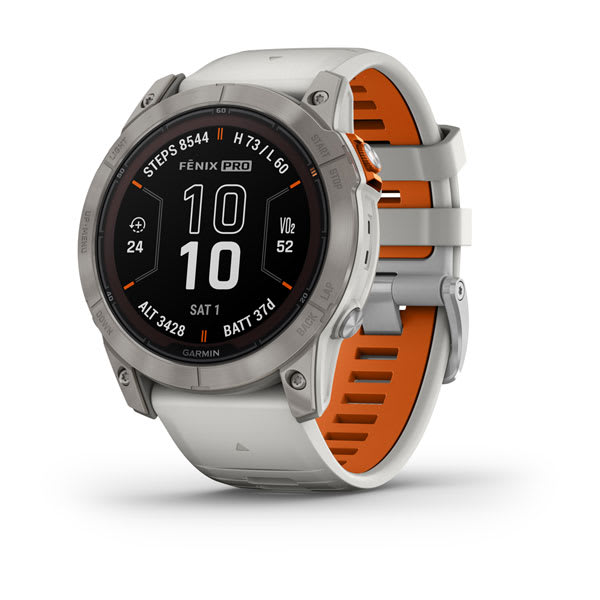
Garmin Fenix 7X Pro Sapphire Solar: Solar Powered Endurance Tracking With ECG and Advanced Navigation
Garmin’s flagship endurance watch combines solar charging, multi band GPS, FDA cleared ECG, and VO2 max estimation in a sapphire crystal package built for ultra distance athletes and backcountry expeditions….
