
Signal Ring Blood Pressure Wearable: What the $399 Ring Actually Does
The short verdict
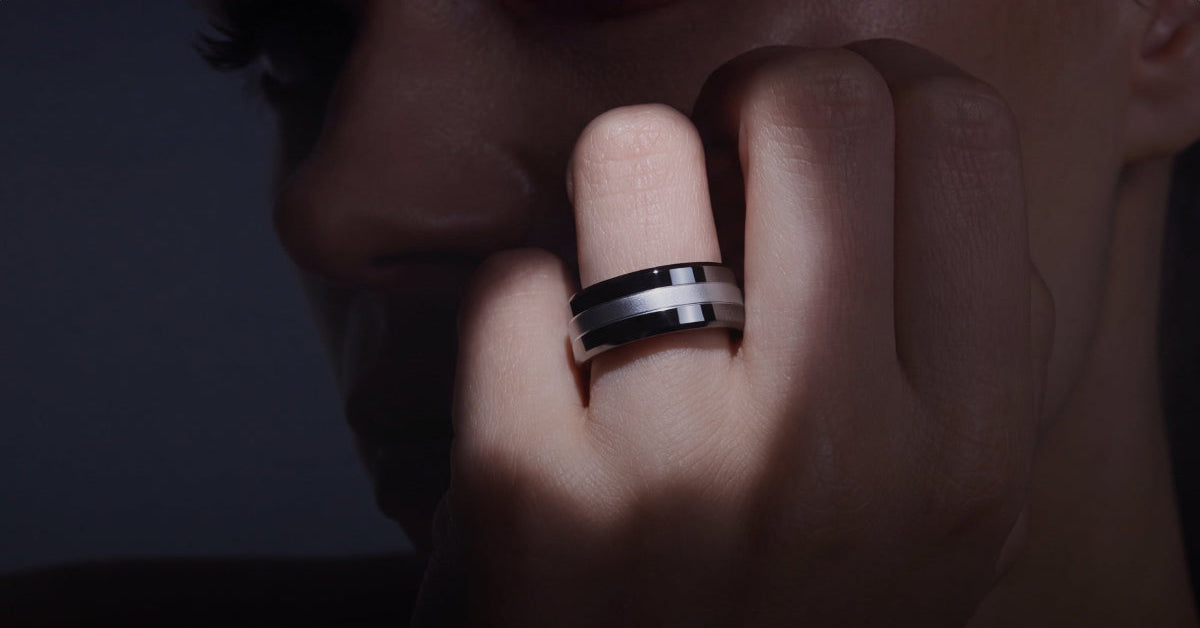
Signal Ring is a $399 titanium smart ring from Vital Signals that promises something unusually ambitious: systolic and diastolic blood-pressure readings from the finger without an inflatable cuff and without calibrating against one.
Presented By Our Partners



That could matter. Blood pressure changes across sleep, stress, exercise, meals, medication, and ordinary daily life, while conventional home cuffs capture only the moments when someone stops to use them. A comfortable ring could expose patterns that sporadic measurements miss.
But Signal Ring is still a preorder wellness product, not an FDA-cleared medical device. Vital Signals says a 451-person multisite study met the numerical requirements of ISO 81060-2, but as of August 5, 2026, the study has not been published or independently peer-reviewed. The ring should therefore be treated as a promising investigational wearable—not as a replacement for a validated upper-arm cuff, ambulatory monitor, diagnosis, or treatment plan.
Signal Ring at a glance
- Product: Signal Ring cuffless blood-pressure wearable
- Company: Vital Signals, San Francisco
- Status: preorder; company expects initial U.S. shipments in October 2026
- Price: $399
- Subscription: none currently required
- What it reports: on-demand systolic and diastolic readings, background trends, mean arterial pressure trends, and contextual cardiovascular data
- Calibration: company says no cuff calibration is required
- Materials: titanium outer surface and resin inner surface
- Water resistance: IP68; company specifies up to 30 minutes in 3 meters of water
- Battery: company lists up to five days when used with the included charging case
- Sizes: 5 through 13; free sizing kit included
- Connectivity: Bluetooth LE; phone required; iOS and Android apps
- Availability: United States only at launch
- Regulatory status: not reviewed or cleared by the FDA; company calls it investigational and informational only
- HDAI hands-on status: not tested by HealthcareDiscovery.ai
What is Signal Ring?
Signal Ring is a dedicated blood-pressure wearable rather than a general smart ring with blood pressure added to a long list of sleep and fitness scores. Vital Signals was founded in 2023 by Tom Moss with Mohammad Usman and Faisal Kashif, whose backgrounds include optical sensing work at Masimo. The company says it has raised more than $15 million.
The ring uses an optical sensor to capture pulse-wave information at the finger. Vital Signals says its physiological model interprets the shape and timing of that signal to estimate blood pressure without establishing a personal baseline from a conventional cuff. The companion app is designed to display familiar systolic and diastolic numbers as well as trends and context.
That calibration-free claim is the product’s defining bet. Other cuffless approaches often use an upper-arm reading to anchor their estimates and require periodic recalibration. Signal Ring says it can distinguish changes in arterial tone from changes in blood pressure directly, making the baseline unnecessary. That explanation is plausible as a product thesis, but the public evidence is not yet strong enough to treat it as settled clinical fact.
How readings are supposed to work
Signal Ring has two main measurement modes. Its guided Zen Mode is intended for intentional readings. The app provides posture cues, breathing guidance, calming audio, and visual prompts because movement, talking, and anxiety can distort blood-pressure measurements.
The ring also collects background readings intended to reveal patterns across ordinary life. Vital Signals describes near-real-time tracking in ten-second increments and all-day mean arterial pressure trends, alongside pulse rate, heart-rate variability, respiratory rate, sleep, and recent activities that may affect a result.
The value of those contextual layers is easy to see. A reading after exercise means something different from the same number at rest. But context does not automatically make a wrist or finger estimate clinically interchangeable with a properly used cuff. Motion, fit, skin contact, temperature, perfusion, vascular differences, and algorithm performance across people can all affect optical measurements.
The evidence: interesting, but not yet public enough
Vital Signals says it tested the technology in a 451-person multisite study. According to figures the company shared with Inc., mean error was -0.3 mmHg for both systolic and diastolic pressure, with standard deviations of 7.2 and 6.1 mmHg. The company says these results satisfy ISO 81060-2 requirements.
Those numbers are encouraging, but they remain company-reported results from a commissioned study. The protocol, participant distribution, exclusions, reference method, repeatability, subgroup performance, and full statistical analysis have not yet been published for independent scrutiny. Vital Signals told Inc. that publication and demographic breakdowns by age, skin tone, and blood-pressure range are planned for fall 2026.
There is also an important standards question. ISO 81060-2 was built primarily to validate intermittent noninvasive sphygmomanometers under controlled conditions. A ring marketed for background use during changing real-world conditions creates additional questions: Does accuracy hold for an individual over weeks? During sleep? Across movement, stress, temperature, medication changes, and different vascular characteristics? Does the device reliably detect change rather than merely perform well on average?
University of Pennsylvania hypertension researcher Dr. Jordana Cohen told Inc. that a calibration-free device faces a higher bar than showing average agreement in a controlled study. That is the right frame. The study claim deserves attention, but public, peer-reviewed, subgroup-specific, and longitudinal validation is still needed.
FDA status: the ring is not cleared
Vital Signals states plainly that the current Signal Ring is not a medical device, is intended for informational purposes only, is investigational, and has not been reviewed or cleared by the U.S. Food and Drug Administration.
The company has discussed a future medical version intended to pursue regulatory clearance and potentially support hypertension diagnosis. That future device should not be confused with the $399 consumer ring now taking preorders.
Featured Partner
Invest in the Infrastructure Behind Modern Medicine
As healthcare expands beyond hospital walls, the buildings and campuses supporting that shift are generating compelling returns for investors who move early. The Healthcare Real Estate Fund offers qualified investors direct access to a curated portfolio of medical office, outpatient, and specialty care facilities.
Learn More →
This distinction matters because showing blood-pressure numbers can feel inherently medical. A consumer should not use an unreviewed ring reading to start, stop, or change medication; dismiss symptoms; confirm or rule out hypertension; or replace clinician-directed monitoring. Unexpected readings should be checked with a validated cuff and discussed with a qualified professional. Symptoms of a hypertensive emergency require urgent medical evaluation, not repeated wearable checks.
Price, subscription, shipping, and returns
Signal Ring costs $399 and, unlike many premium wearables, does not currently require a subscription to access its app, data, or insights. The price includes the ring, a charging case, and a sizing kit. Sizes run from 5 to 13, and the company says the index finger is the usual wear location.
Vital Signals expects initial shipments to begin in October 2026. That makes every current assessment provisional: consumers are preordering hardware that independent reviewers have not yet broadly tested in normal use. Delivery timing can also change.
The company offers returns within 30 days of delivery, minus a $25 handling fee for the sizing kit, and lists a one-year warranty. Buyers should review the live policy before ordering because preorder, shipping, and return terms can change.
What Signal Ring appears to get right
The product focuses on a real problem rather than adding another vague recovery score. Hypertension is common, frequently silent, and poorly represented by occasional office readings. A wearable that makes repeated measurement easy could help people see patterns worth confirming and discussing.
The no-subscription model is also attractive. At $399, Signal Ring is not inexpensive, but its ongoing cost may be lower than wearables that place meaningful analytics behind a recurring membership.
The guided reading mode is sensible. Position, rest, breathing, and movement matter. Designing the experience to reduce measurement noise is more responsible than presenting every opportunistic sensor estimate as equally trustworthy.
Finally, the company is unusually explicit in its safety statement that the launch product is investigational and not FDA-cleared. The marketing language elsewhere is bold, but that boundary gives consumers a clear line that should remain prominent.
The biggest unanswered questions
- Independent validation: Will peer review reproduce the company’s accuracy claims?
- Individual reliability: Do readings remain accurate for the same person across days, environments, and changing physiology?
- Subgroup performance: How does accuracy vary by skin tone, age, sex, finger size, perfusion, blood-pressure range, arrhythmia, and cardiovascular disease?
- Motion and background use: How many background readings are rejected, and when does the app withhold a low-confidence number?
- Clinical comparison: How does it perform against validated upper-arm home monitoring and 24-hour ambulatory monitoring?
- Regulatory path: What claims and intended use will the future FDA submission actually cover?
- Real-world outcomes: Does access to ring data improve confirmed detection, treatment adherence, or blood-pressure control—or mainly create more data?
Signal Ring versus Hilo Core and a standard cuff
Hilo Core and Signal Ring make different compromises. Hilo combines a screenless optical wristband, a connected upper-arm reference cuff, and a required annual subscription. Its wrist layer is positioned for wellness trends, while the cuff anchors exact reference readings.
Signal Ring removes both the cuff calibration step and the subscription. It also places familiar systolic and diastolic values on the consumer experience. That is more convenient—and makes independent validation even more important.
A validated upper-arm cuff remains the conservative choice for most people who need home blood-pressure measurements. It is less passive and provides fewer lifestyle patterns, but it is inexpensive, familiar, and supported by established validation protocols. Signal Ring’s case will become much stronger if its promised peer-reviewed evidence and future regulatory work confirm reliable performance beyond controlled study conditions.
Who should consider it?
Signal Ring may appeal to early adopters who understand that they are preordering an investigational wellness product, want blood-pressure context without a subscription, and are willing to confirm important readings with a validated cuff.
It is a poor fit for anyone seeking an FDA-cleared diagnostic device, a replacement for prescribed monitoring, or evidence strong enough to guide medication decisions. People with known hypertension, cardiovascular disease, pregnancy-related blood-pressure concerns, arrhythmias, or symptoms should follow a clinician-directed plan rather than relying on a consumer preorder device.
Final verdict
Signal Ring may be one of the most consequential wearable launches of 2026—but the reason is the size of the technical and clinical challenge, not proof that the challenge has already been solved.
A calibration-free ring that produces useful systolic and diastolic readings could make blood-pressure patterns far easier to observe. The official product design, guided measurement mode, no-subscription pricing, and early study figures are all compelling.
The honest verdict today is still conditional. Signal Ring is a promising $399 investigational wellness wearable with unusually bold measurement claims. Until the full study is published, independent validation arrives, and the relevant FDA pathway is completed, it should complement—not replace—a validated cuff and professional care.
Frequently asked questions
Is Signal Ring FDA approved or cleared?
No. Vital Signals says the current Signal Ring has not been reviewed or cleared by the FDA. It is marketed as an investigational informational wellness product, not a medical device.
Does Signal Ring require a blood-pressure cuff for calibration?
No, according to the company. Signal Ring’s defining claim is that its optical sensor and physiological model can generate readings without a cuff baseline or periodic recalibration. That claim still needs full public and independent validation.
Can Signal Ring replace an upper-arm blood-pressure monitor?
Not at this stage. Use a validated upper-arm cuff or clinician-recommended monitor for diagnosis, treatment decisions, and confirmation of unexpected readings.
How accurate is Signal Ring?
Vital Signals reports that a 451-person multisite study produced mean errors of -0.3 mmHg for systolic and diastolic readings, with standard deviations of 7.2 and 6.1 mmHg. The full study has not yet been published or independently peer-reviewed, so those figures should be treated as company-reported preliminary evidence.
How much does Signal Ring cost?
The preorder price is $399. The company says no subscription is required. A sizing kit, ring, and charging case are included.
When will Signal Ring ship?
Vital Signals says initial U.S. shipments are expected to begin in October 2026. This is a preorder estimate and may change.
What does Signal Ring measure?
The company says the ring provides guided systolic and diastolic readings, background blood-pressure and mean arterial pressure trends, and context from pulse rate, heart-rate variability, respiratory rate, sleep, and activity.
Does Signal Ring work without a phone?
A compatible iOS or Android phone is required. The ring connects using Bluetooth Low Energy and uses the Signal Ring app to display readings and insights.
Is there a subscription?
No subscription is currently required to access the app, data, and insights. Future commercial terms can change, so buyers should verify the live product page.
Source map
- Vital Signals Signal Ring product page: https://signalring.com/products/ring
- Vital Signals FAQ: https://signalring.com/pages/faq
- Vital Signals technology explanation: https://signalring.com/pages/how-it-works
- Vital Signals launch and safety statement: PR Newswire, July 16, 2026
- Independent reporting and expert critique: Inc., August 5, 2026
- CDC hypertension facts: CDC High Blood Pressure Facts
Last fact review: August 5, 2026


Similar Posts

Your Thymus Didn’t Retire: Two Nature Studies Show This Overlooked Organ Predicts 50% Lower Death Risk
Two papers published in Nature in March 2026 used AI-powered CT analysis across 27,000 adults to show that thymic health predicts 50% lower all-cause mortality, 63% lower cardiovascular death, and…

The GLP-1 Trust Test: What an Online Provider Should Be Willing to Show You
Eight source-backed questions for checking an online GLP-1 provider’s clinical accountability, medication category, pharmacy, follow-up, claims, price, and commercial influence.
FDA AI in Sleep, Respiratory, and Anesthesia: Medical AI Moves Into Breathing and the Bedroom
The FDA’s anesthesiology category shows how medical AI is moving into sleep apnea detection, respiratory sound analysis, PAP therapy comfort, bedside monitoring, and the continuous physiology of everyday life.

L’Oréal My Skin Track UV: Wearable UV Dosimeter for Sun Exposure Intelligence
Your skin registers every minute of ultraviolet exposure, but your memory does not. A wearable UV sensor aims to close that dangerous perception gap. Presented By Our Partners In 2019,…

ASCO 2026’s Most Consequential Lung Cancer Result: Ivonescimab Cuts Death Risk by 34% in Squamous NSCLC
At ASCO 2026’s plenary session, ivonescimab, a first-in-class bispecific antibody targeting PD-1 and VEGF, cut the risk of death by 34% in advanced squamous NSCLC, becoming the first drug to…

WHOOP 5.0: Recovery Coaching, Strain Tracking, and the Science of Readiness
The difference between training hard and training smart comes down to one question: is your body ready for what you are about to ask of it? Presented By Our Partners…
