
The Daily Rounds: Longevity & Health Care Brief | April 23, 2026
Your daily briefing on the science of living longer, better. Covering the past 24 to 48 hours in longevity, medicine, and healthspan research.
Presented By Our Partners



❤️ CARDIOVASCULAR HEALTH
🔥 Scientific American: Chronic Inflammation Now Center Stage in Heart Disease
Scientific American’s May 2026 cover story, “Your Heart In Flames,” makes the case that chronic low-grade inflammation is a central driver of cardiovascular disease, not merely a secondary effect. Inexpensive, well-tolerated drugs like colchicine are gaining serious clinical attention as inflammation-reducing strategies for heart disease prevention. The story signals a major shift in how cardiologists may approach treatment and prevention in the years ahead.
📌 Read more → Scientific American / PR Newswire
📸 CT Plaque Imaging Closes the Gender Gap in Heart Risk Prediction
New research presented by RSNA shows that plaque assessment via coronary CT angiography significantly improves cardiovascular risk stratification in women with stable chest pain, while providing limited added value in men beyond traditional models. Women at high risk are frequently missed by standard clinical approaches, and CT-based plaque quantification could close that gap. The findings support integrating this imaging tool into routine risk assessment for women.
🏛️ ESC Preventive Cardiology 2026 Opens Today in Ljubljana
The European Society of Cardiology’s Preventive Cardiology 2026 conference opened today in Ljubljana, Slovenia, running through April 25 under the theme “Translating Real-World Evidence into Next-Generation Prevention Strategies.” Key sessions focus on lifestyle interventions, pharmacological prevention, and the role of digital health tools in cardiology. The conference brings together researchers and clinicians working to turn emerging evidence directly into clinical practice.
📌 Read more → European Society of Cardiology
🧠 NEUROLOGY & COGNITIVE HEALTH
📚 Lifelong Mental Stimulation Cuts Alzheimer’s Risk by 38%
A new study found that people who engaged in cognitively enriching activities throughout their lives, including reading, writing, and learning new languages, showed a 38% lower risk of Alzheimer’s disease and a 36% lower risk of mild cognitive impairment. Those with the highest lifetime engagement developed Alzheimer’s approximately five years later than those with the lowest levels, and mild cognitive impairment seven years later. The findings add strong support for cognitive stimulation as a practical, modifiable risk-reduction strategy.
🧬 Tau Protein Spreads Through Connected Neurons in Alzheimer’s Disease
A study published in Neuron by University of Alabama at Birmingham researchers provides new mechanistic evidence that tau tangles travel between brain regions via connected neural pathways. Critically, the team showed that intercepting tau as it spreads could offer a viable therapeutic strategy to slow or prevent disease advancement before widespread damage occurs. The finding opens a potential new treatment window that targets propagation rather than existing deposits.
💡 Blocking GABA Receptors Reverses Alzheimer’s Effects in Preclinical Models
New research demonstrates that blocking GABA receptor activity in nerve cells can reverse Alzheimer’s-like cognitive impairments caused by amyloid beta and restore cognitive performance in preclinical models. The finding points to the inhibitory neurotransmitter system as a fresh target for therapeutic intervention in neurodegeneration. Researchers are pursuing follow-on studies to evaluate how well these results translate toward human therapy.
🦠 GUT MICROBIOME & IMMUNE HEALTH
⚡ Hidden Gut Bacteria Link Identified in ALS and Frontotemporal Dementia
Scientists discovered that harmful sugars produced by certain gut bacteria can trigger immune responses that kill brain cells, potentially driving ALS and frontotemporal dementia. The researchers also identified specific molecular pathways to interrupt this process, pointing toward microbiome-targeted neuroprotective therapies. The study deepens the evidence base for the gut-brain axis as a lever for preventing neurodegenerative disease onset.
Featured Partner
Invest in the Infrastructure Behind Modern Medicine
As healthcare expands beyond hospital walls, the buildings and campuses supporting that shift are generating compelling returns for investors who move early. The Healthcare Real Estate Fund offers qualified investors direct access to a curated portfolio of medical office, outpatient, and specialty care facilities.
Learn More →
🔬 AI-Powered Microbiome Profiling Detects Multiple Cancers from a Single Test
Researchers applied advanced machine learning to microbiome and metabolome data from patients with gastric cancer, colorectal cancer, and inflammatory bowel disease, finding that models trained on one condition could often predict biomarkers for the others. This cross-condition predictive capability suggests a single gut microbiome analysis could flag several cancer risks simultaneously. The convergence of AI with gut profiling is accelerating the path toward non-invasive, multiplex cancer screening.
🔬 CELLULAR HEALTH, SENOLYTICS & EPIGENETICS
🧫 Combining Senolytics with Epigenetic Therapy Offers a Dual Attack on Aging
A comprehensive review published in Biomolecules finds that integrating epigenetic modulation with senolytic therapy represents a dual-front approach to aging biology, targeting both the presence of senescent cells and the harmful inflammatory SASP signals they emit. Senolytic compounds have already been shown to reduce epigenetic age in blood samples in vitro, and emerging targeted delivery systems are improving their precision and tolerability. Researchers conclude this combination approach may prove central to the next generation of healthspan-extending interventions.
📌 Read more → Biomolecules / MDPI
🧬 Geroscience Strategies Target Multimorbidity at the Root
A new paper in ACS Pharmacology and Translational Science outlines evidence-based strategies for delaying multimorbidity by targeting the fundamental biology of aging rather than managing each disease separately. The framework highlights senolytics, mTOR inhibition, NAD+ precursors, and epigenetic reprogramming as the primary therapeutic levers available today. Researchers argue the field is approaching an inflection point where aging itself can be treated as a preventable and modifiable condition.
📌 Read more → ACS Pharmacology and Translational Science
🤖 AI IN MEDICINE & DRUG DISCOVERY
🤖 OpenAI Launches GPT-Rosalind, a Frontier AI Model for Drug Discovery
OpenAI introduced GPT-Rosalind on April 16, a reasoning model purpose-built for biology, drug discovery, and translational medicine, trained deeply on scientific literature, genomic databases, molecular property datasets, and clinical records. The model is already being used by Amgen, Moderna, the Allen Institute, and Thermo Fisher Scientific to accelerate research workflows. GPT-Rosalind is designed to compress the traditional 10 to 15-year drug development timeline starting at the earliest stages of discovery.
💊 GLP-1 Drug Pioneers Develop Weight Loss Therapy That Skips GLP-1 Entirely
The scientists behind GLP-1 obesity drugs like Zepbound are now pursuing an approach that drops GLP-1 as a target altogether. Their experimental compound activates GLP and glucagon receptors simultaneously, producing comparable weight loss with potentially fewer tolerability issues like nausea and vomiting. The approach could benefit the estimated 10% of patients who do not respond well to current GLP-1 therapies due to specific genetic variants.
⌚ WEARABLES, BIOMARKERS & PRECISION HEALTH
🧪 Lab-on-a-Skin Wearables Now Deliver Full Metabolic Profiling Without Blood Draws
The latest generation of smart wearable biosensors, described as “Lab-on-a-Skin” systems, combine electrochemical sensors, microfluidics, and spectroscopy to analyze a comprehensive panel of biomarkers non-invasively in real time. These devices can now map hormonal cycles, track inflammatory markers, and measure electrodermal activity without a single blood draw. Researchers project these platforms will become foundational tools in preventive and precision healthcare within the next three to five years.
📊 Digital Biomarkers Market Projected to Reach $39.28 Billion by 2033
A new market analysis places the digital biomarkers sector at $6.18 billion in 2025, with projections to $39.28 billion by 2033, fueled by AI-enabled wearables, remote monitoring platforms, and regulatory acceptance of digital endpoints in clinical trials. Diagnostic models that combine multiple wearable data streams are now achieving AUC values approaching 0.88. The growth reflects accelerating clinical validation of continuous physiological sensing as a mainstream healthcare paradigm.
🥗 NUTRITION & METABOLIC HEALTH
🫒 Extra Virgin Olive Oil Improves Cognition Through the Gut Microbiome
A two-year study found that people consuming extra virgin olive oil showed better cognitive performance and a more diverse gut microbiome than those using refined olive oil, suggesting the cognitive benefits are mediated through the gut-brain axis. The polyphenols unique to unrefined olive oil appear to be the active agents driving both gut diversity and neuroprotection. The findings add mechanistic depth to the cognitive benefits long associated with the Mediterranean diet.
📌 Read more → U.S. News Health
💉 Pfizer’s Monthly Injectable GLP-1 Shows Robust Phase 2b Weight Loss
Pfizer announced positive Phase 2b results for its ultra-long-acting injectable GLP-1 receptor agonist, designed to deliver meaningful weight loss with once-monthly rather than once-weekly dosing. The trial showed robust and continued weight reduction over the study period, offering a potentially significant convenience and adherence advantage over current therapies. Monthly dosing could expand real-world effectiveness for the estimated 650 million people globally living with obesity.
💪 MUSCLE MASS, STRENGTH & METABOLIC HEALTH
🏋️ 30 to 60 Minutes of Weekly Strength Training Cuts All-Cause Mortality by Up to 20%
A large meta-analysis confirms that just 30 to 60 minutes of muscle-strengthening exercise per week is associated with a 10% to 20% lower risk of death from all causes during study periods, including reductions in cardiovascular and cancer mortality. Benefits extend through elevated resting metabolic rate, improved insulin sensitivity, and myokine production with whole-body effects. Researchers emphasize that moderate volume, not high frequency, is the key driver and even a single weekly session provides meaningful protection.
📌 Read more → Harvard T.H. Chan School of Public Health
😴 SLEEP & CIRCADIAN HEALTH
🌙 Fragmented Circadian Rhythms Linked to Faster Brain Atrophy in Johns Hopkins Study
A new study led by Johns Hopkins Bloomberg School of Public Health, published April 14 in Alzheimer’s and Dementia, found that older adults with weaker, more fragmented rest-activity rhythms showed smaller memory-related brain regions and faster atrophy over follow-up periods. The research is believed to be the first to directly link circadian rhythm fragmentation in middle-aged and older adults to measurable volumetric brain changes over time. The findings position circadian health monitoring as a promising standard component of future cognitive decline screening.
📌 Read more → Johns Hopkins Bloomberg School of Public Health
📌 TODAY’S TOP TAKEAWAYS
- 🔥 Inflammation at the Core of Heart Disease: Scientific American’s May 2026 cover spotlights chronic inflammation as a central cardiovascular driver, with inexpensive drugs like colchicine entering the prevention playbook.
- 🧠 Lifelong Learning Delays Alzheimer’s by Years: Cognitive enrichment throughout life cuts Alzheimer’s risk by 38% and delays onset by approximately five years compared to low-engagement peers.
- 🤖 GPT-Rosalind Enters Drug Discovery: OpenAI’s new life sciences model is live at Amgen, Moderna, and the Allen Institute, built to compress the earliest and slowest stages of drug development.
- ⚡ Gut Bacteria Drive ALS and Frontotemporal Dementia: Scientists identify a gut-brain mechanism in which microbial sugars trigger immune-mediated brain cell death, with promising targets for intervention now identified.
- 🌙 Circadian Fragmentation Accelerates Brain Shrinkage: Johns Hopkins confirms that weak, irregular rest-activity rhythms are directly linked to faster volumetric loss in memory-related brain regions over time.
Sources compiled from Scientific American, RSNA, European Society of Cardiology, ScienceDaily, UAB News, EurekAlert, Johns Hopkins Bloomberg School of Public Health, Biomolecules, ACS Pharmacology and Translational Science, OpenAI, STAT News, Future Insights, OpenPR, U.S. News Health, Pfizer, and Harvard T.H. Chan School of Public Health. Published: April 23, 2026.


Similar Posts

The Forgotten Organ: How AI Just Revealed the Thymus as a Master Regulator of Longevity and Cancer Survival
Two landmark studies published in Nature used AI-powered deep learning to show that thymic health predicts longevity, cardiovascular risk, and cancer immunotherapy outcomes, rewriting decades of assumptions about adult biology…

Microplastics in the Human Body: What 2026 Cardiovascular and Brain Evidence Reveals About the Synthetic Particles Now Inside Us
A 257 patient New England Journal of Medicine study found microplastics in 58 percent of carotid plaques, with a 4.5 fold higher rate of heart attack, stroke, and death. A…

The NAD+ Decline: Inside the Cellular Energy Crisis of Aging and What the 2026 Trials Actually Show
NAD+, the coenzyme that powers every cell, falls steadily as we age. Inside the biology of the decline, the CD38 and mitochondrial mechanisms driving it, what the NMN and nicotinamide…
The Daily Rounds: Longevity & Health Care Brief | April 9, 2026
🧬 Aging Reframed as Coordination Failure: Scientists at the World Longevity Congress are shifting from single-target anti-aging interventions toward restoring coordination across the body's biological systems. ❤️ Long COVID and the Heart: A 1.2-million-person Swedish study confirms long COVID significantly raises cardiovascular disease risk, including in younger non-hospitalized adults, with women facing more than double the risk. 🤖 AI Hits a Clinical Milestone: With 173 AI-discovered drugs now in clinical trials and Insilico's AI-designed pulmonary fibrosis drug showing Phase IIa efficacy, generative AI in medicine has arrived at clinical scale. 🦠 Fasting for Gut Health: Just five days per month of low-calorie plant-based eating reduced gut inflammation and achieved clinical response in nearly 70% of Crohn's disease patients in a Nature Medicine randomized trial. 😴 Circadian Health and Cancer: New ACS-funded research at Fred Hutch will investigate whether night-shift-driven solar jet lag is a driver of liver cancer, reinforcing circadian alignment as a cancer prevention frontier.

Dexcom Stelo: The First Over-the-Counter Continuous Glucose Monitor
For the first time in history, anyone can buy a continuous glucose monitor without a prescription. What this means for the future of preventive metabolic health. Presented By Our Partners…
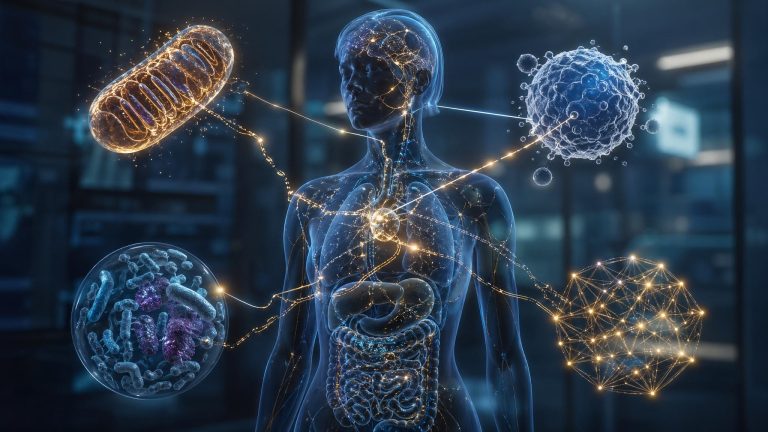
Aging Is a Communication Failure: The New Science Redefining Longevity Medicine
At the 2nd World Congress on Targeting Longevity in Berlin, researchers are proposing a paradigm shift: aging is not a collection of molecular defects to be fixed, but a progressive…
