

The Daily Rounds: Longevity & Health Care Brief | April 7, 2026
Your daily briefing on the science of living longer, better. Covering the past 24 to 48 hours in longevity, medicine, and healthspan research.
Presented By Our Partners



🔬 CELLULAR HEALTH, SENOLYTICS & EPIGENETICS
🔬 Scientists Reframe Aging as a Loss of Biological Coordination
Researchers at the 2nd World Congress on Targeting Longevity in Berlin are reshaping the debate from “fixing aging” to preserving coordination between biological systems. New work links mitochondrial signaling, microbiota-brain interactions, and metabolic environments as interconnected drivers of how we age. The emerging framework treats aging as a systems-level challenge rather than a single correctable defect.
🔬 Senolytic Research Advances Toward Clinical Trials
A Frontiers editorial published this week outlines new priorities in cellular senescence research, including biomarkers to quantify senescent cell burden and combination therapies targeting multiple aging pathways at once. Clinical trials of senotherapeutics are expected to expand significantly through 2026.
🧠 NEUROLOGY & COGNITIVE HEALTH
🧠 AI System Interprets Brain MRIs in Seconds, Surfaces Mental Health Clues
University of Michigan researchers have built an AI system capable of interpreting brain MRI scans in seconds. Alongside this, new research finds that valence bias, or how the brain categorizes ambiguous situations as positive or negative, may flag risk factors for depression and anxiety well before clinical symptoms emerge.
🧠 Major Alzheimer’s and Multiple Sclerosis Trials Heat Up for 2026
Several high-profile neurology trials are progressing this year, including the POLARIS-AD trial testing AR1001 against amyloid-beta oligomers in Alzheimer’s and Annovis Bio’s Phase 3 buntanetap study. The FDA is also expected to rule on tolebrutinib, potentially the first Bruton Tyrosine Kinase inhibitor approved for non-relapsing secondary progressive multiple sclerosis.
❤️ CARDIOVASCULAR HEALTH
❤️ UTMB Launches Landmark Decade-Long Galveston Heart Study
The University of Texas Medical Branch has kicked off the Galveston Heart Study, an ambitious 10-year initiative tracking thousands of residents to uncover how heart health, brain health, and aging are interconnected. Data collected will include coronary calcium scores, cardiac imaging, genotypes, and cardiac biomarkers observed over years.
❤️ Type 2 Diabetes Physically Alters Heart Structure and Energy Production
University of Sydney researchers have found direct evidence that type 2 diabetes changes the heart’s physical structure and how it generates energy, offering a mechanistic explanation for why diabetic patients face dramatically elevated heart failure risk. The findings could inform new cardiac-protective therapies for people living with diabetes.
🦠 GUT MICROBIOME & IMMUNE HEALTH
🦠 Common Gut Bacteria Inject Proteins That Control Your Immune System
Scientists have discovered that many ordinary, non-harmful gut bacteria carry type III secretion systems, allowing them to inject proteins directly into human cells and actively modulate immune behavior. The March 2026 finding published in ScienceDaily fundamentally expands what we know about how the microbiome shapes immunity.
Featured Partner
Invest in the Infrastructure Behind Modern Medicine
As healthcare expands beyond hospital walls, the buildings and campuses supporting that shift are generating compelling returns for investors who move early. The Healthcare Real Estate Fund offers qualified investors direct access to a curated portfolio of medical office, outpatient, and specialty care facilities.
Learn More →
🦠 Single Gut Metabolite Doubles Lung Cancer Immunotherapy Response
UF Health Cancer Institute researchers identified a single compound, called Bac429, naturally produced by gut bacteria, that doubled the immunotherapy response rate for lung cancer in mice. The metabolite stimulated an immune response equivalent to that of six combined bacterial species, suggesting powerful potential as a treatment adjunct.
🤖 AI IN MEDICINE & DRUG DISCOVERY
🤖 Free AI Drug Discovery Platform Launches for Global Disease Research
A new platform called dd4gh (Drug Design for Global Health), developed by Medicines for Malaria Venture and deepmirror, launched this week offering free access to eligible scientists worldwide. The tool is designed to accelerate drug discovery for diseases that disproportionately impact low-income countries.
🤖 173 AI-Discovered Drug Programs Now in Clinical Development
As of early 2026, more than 173 drug programs discovered via artificial intelligence are in clinical development, including roughly 94 in Phase I, 56 in Phase II, and 15 in Phase III. Eli Lilly’s $2.75 billion licensing deal with Insilico Medicine signals deepening institutional confidence in AI-driven therapeutics for longevity medicine.
🤖 MSU Model Predicts Drug Efficacy from Molecular Structure Alone
Researchers at Michigan State University used machine learning trained on published gene expression data to predict how chemicals will influence biology based solely on their molecular structure. The study identified promising new compounds for an aggressive liver cancer and a chronic lung disease with no current curative options.
💪 MUSCLE MASS, STRENGTH & METABOLIC HEALTH
💪 47-Year Study: Fitness Decline Starts at 35, But Exercise Helps at Any Age
A landmark 47-year Swedish longitudinal study found that physical fitness and strength begin to decline as early as age 35, but that starting exercise at any point in adulthood still meaningfully boosts physical capacity and slows the trajectory of decline. The research reinforces that there is no bad time to begin resistance training.
💪 Strength Training Delivers Superior Fat Loss While Preserving Muscle
New research confirms that resistance training is the most effective strategy for high-quality weight loss, reducing body fat while preserving or growing lean muscle mass compared to other interventions. Notably, each 10% gain in muscle mass was linked to an 11% reduction in insulin resistance.
🥗 NUTRITION & METABOLIC HEALTH
🥗 Tufts Study: Children of Centenarians Follow Distinct Longevity Diets
New Tufts University research published April 6 finds that offspring of parents who lived to 100 consistently eat diets higher in fish, fruits, and vegetables, and substantially lower in sodium and sugar. The study offers dietary clues to inherited longevity patterns, pointing toward practical habits rather than genetic luck alone.
🥗 Low-Carb, High-Fat Diet Improves Metabolic Health in Older Adults with Obesity
An 8-week dietary intervention at the University of Alabama at Birmingham found that a low-carbohydrate, high-fat diet improved body composition and key metabolic markers in older adults living with obesity. Researchers observed improvements in insulin sensitivity and body fat distribution.
😴 SLEEP & CIRCADIAN HEALTH
😴 Stanford AI Model Predicts 130+ Diseases from a Single Night of Sleep
Stanford Medicine researchers developed SleepFM, an AI model trained on nearly 600,000 hours of sleep recordings, that can predict more than 130 health conditions, including cancer and cardiovascular disease, from a single overnight study. The model marks a breakthrough in using sleep as a universal early-warning health screening tool.
😴 Sleeping Under 7 Hours Linked More Strongly to Mortality Than Diet or Exercise
A large-scale analysis found that insufficient sleep is more closely tied to shortened life expectancy than diet, exercise, or loneliness, with the relationship consistent year after year and across most U.S. states. Researchers recommend 7 to 9 hours as among the highest-impact longevity habits available.
⌚ WEARABLES, BIOMARKERS & PRECISION HEALTH
⌚ New Multiplexed Wearables Track Glucose, Lactate, and Hydration Simultaneously
Advances in wearable sensor materials, detailed in a 2026 paper in Advanced Functional Materials, now allow single devices to continuously monitor multiple biomarkers including glucose, lactate, and hydration from the skin surface. AI integration is transforming these biometric streams into personalized clinical insights enabling earlier intervention.
📌 Read more → Advanced Functional Materials
🌬️ BREATHWORK & STRESS PHYSIOLOGY
🌬️ Slow Diaphragmatic Breathing Consistently Lowers Cortisol Across Clinical Trials
A comprehensive PMC review of regulated breathing research confirms that slow diaphragmatic breathing and alternate-nostril breathing consistently reduce cortisol, anxiety, and stress markers across clinical trials. The most effective protocols share key features: multiple human-guided sessions, long-term practice, and a minimum duration of 5 minutes per session.
📌 TODAY’S TOP TAKEAWAYS
- 🔬 Aging Redefined as Systems Failure: Researchers in Berlin are shifting the aging conversation toward preserving biological coordination across systems, not fixing a single defect.
- 🤖 AI Drug Discovery Reaches Scale: Over 173 AI-discovered drug programs are now in clinical trials, and a new free platform targeting global diseases launched this week.
- 😴 Sleep as a Disease Predictor: Stanford’s SleepFM AI model predicts 130+ conditions from one night of sleep data, positioning sleep as a critical longevity biomarker.
- 🦠 Gut Microbiome Controls Immunity Directly: Common gut microbes inject proteins into immune cells, and a single bacterial metabolite doubled lung cancer immunotherapy response in mice.
- ❤️ Long-Term Heart-Aging Study Begins: UTMB’s decade-long Galveston Heart Study will track thousands of participants to uncover how cardiovascular and brain health intersect with aging.
Sources compiled from EurekAlert, ScienceDaily, Stanford Report, UF Health, UTMB, NeurologyLive, Medical Xpress, Tufts Now, MSU Today, Advanced Functional Materials, PMC, MedCity News, DistilINFO, and Frontiers. Published: April 7, 2026.


Similar Posts
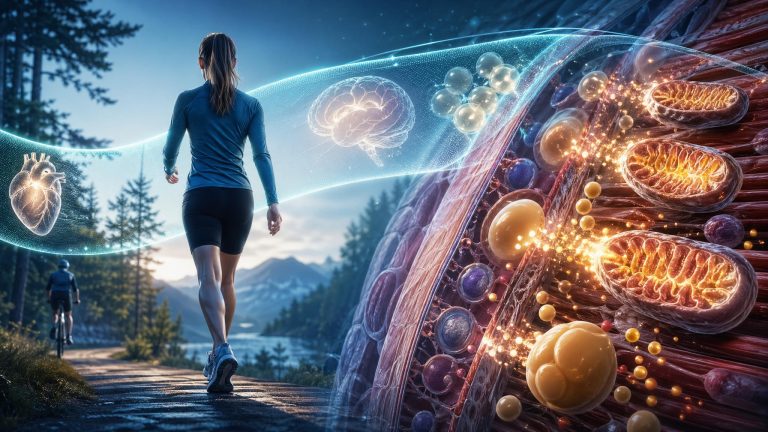
The Zone 2 Revolution: How Mitochondrial Science Is Rewriting Endurance Training for Longevity
Iñigo San Millán’s mitochondrial research, Peter Attia’s popularization, and Stephen Seiler’s polarized training data have converged into a new consensus: the easy, conversational pace most people skip may be the…

How to Shop for an MRI Without Getting Lost in the Price Maze
A practical guide to getting the right MRI at the right place without being blindsided by CPT codes, facility fees, radiologist bills, network rules, cash prices, and deductible math.

Walking Is the Most Underrated Longevity Intervention: What the Largest Step Count Studies in History Reveal About Mortality, Heart Disease, and Biological Aging
A 2025 Lancet Public Health meta-analysis of 57 studies confirms that 7,000 daily steps reduce all-cause mortality risk by nearly half, while gait speed emerges as one of the strongest…

The GLP-1 Telehealth Transparency Scorecard: What a Platform Should Show Before You Trust It
A 20-point, source-backed framework for evaluating what a GLP-1 telehealth service discloses about medication identity, clinical accountability, pharmacy source, full cost, follow-up, claims, reviews, and commercial influence.
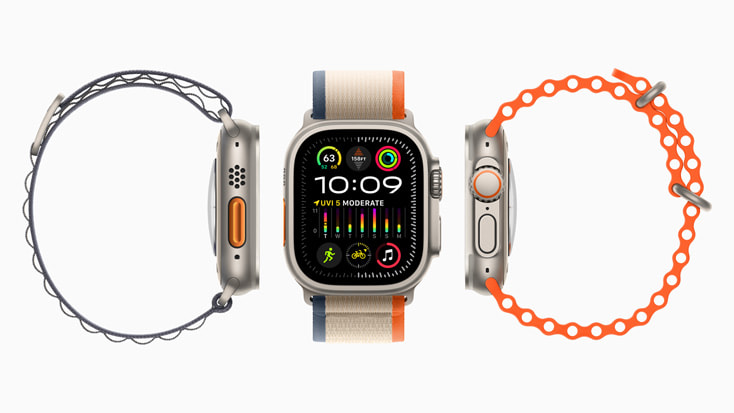
Apple Watch Ultra 2: Rugged Cardiovascular Monitoring for Extreme Environments
The athletes who push hardest against physical limits are often the last to discover cardiac abnormalities. A medical-grade heart monitor built to survive their training may be exactly what they…

Akkermansia Muciniphila and the New Science of Metabolic Health: What 2026 Research Reveals About the Gut Bacterium Redefining Insulin Sensitivity
Two decades after a Dutch researcher isolated a strange mucus eating bacterium from a healthy human gut, Akkermansia muciniphila has become one of the most studied targets in metabolic medicine….
