
What Continuous Glucose Monitors Are Revealing About Metabolic Health in People Without Diabetes
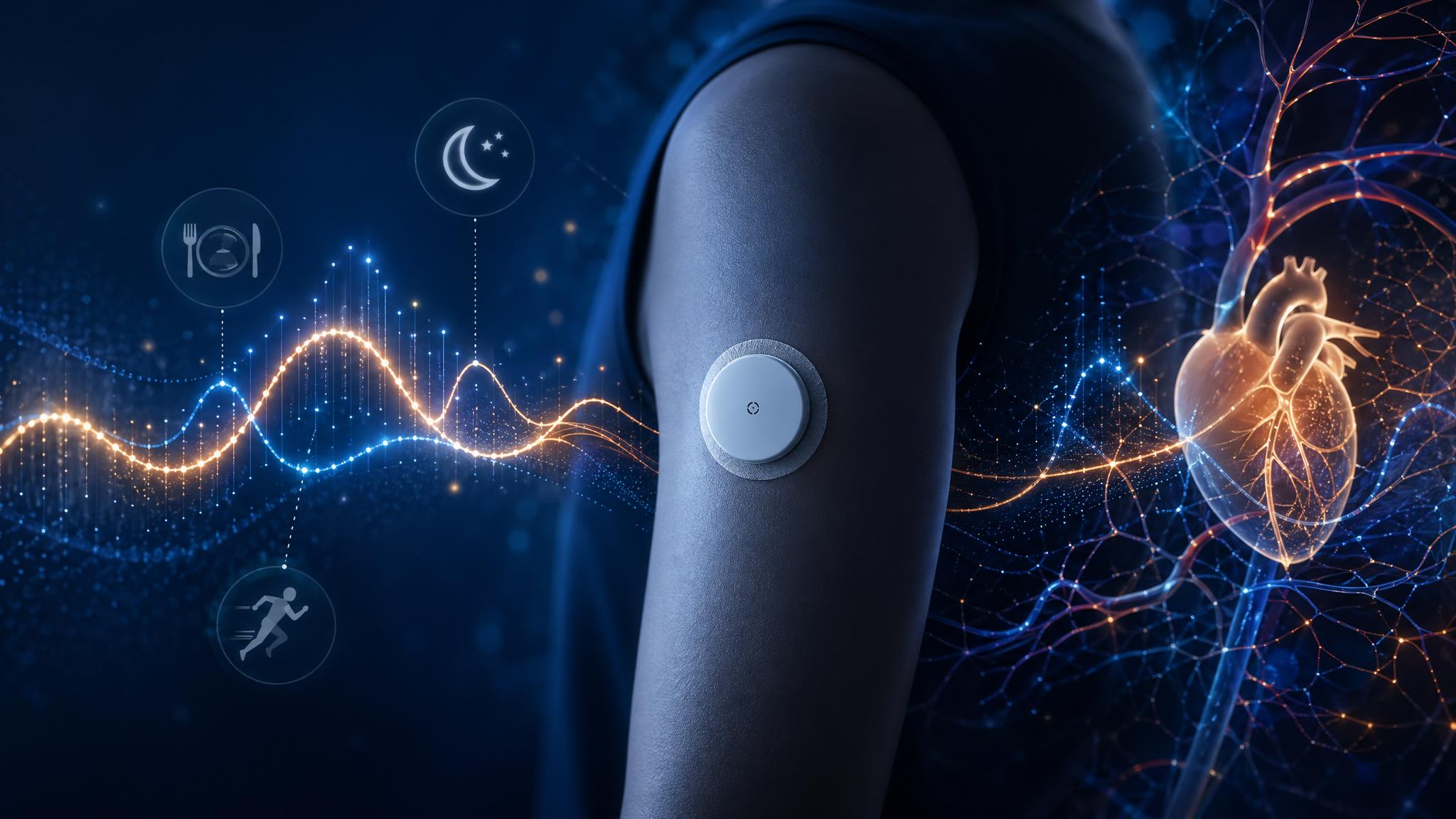
A small adhesive sensor on the back of your arm is quietly rewriting the relationship between blood sugar and long-term health. For decades, glucose monitoring belonged exclusively to people with diabetes. That era is ending. In 2026, three landmark studies involving more than 12,000 participants without diabetes have shown that continuous glucose monitors can detect hidden metabolic dysfunction years before a diagnosis, predict cardiovascular risk with surprising accuracy, and reveal how profoundly food, sleep, and movement shape glucose patterns in ways that a standard fasting blood test never could.
Presented By Our Partners



The implications extend far beyond technology. They reach into the fundamentals of how we eat, move, sleep, and recover. Here is what the latest science says and what you can start doing about it today.
The Glucose Story You Were Never Told
If you have ever had a routine physical, your doctor likely ordered a fasting glucose test or an HbA1c measurement. If those numbers fell within the normal range, you were told your metabolic health was fine. But a growing body of evidence suggests that these snapshots miss an enormous amount of metabolic information.
A fasting glucose test captures a single moment. HbA1c reflects a weighted average over roughly 90 days. Neither tells you what happens to your blood sugar after you eat a bowl of oatmeal, how your glucose behaves during sleep, or whether your body can efficiently clear a glucose spike within 60 minutes or takes three hours to return to baseline.
Continuous glucose monitors, or CGMs, fill that gap. These coin-sized sensors, worn on the arm or abdomen, sample interstitial glucose every one to five minutes, generating up to 288 data points per day. Originally developed for Type 1 and Type 2 diabetes management, they are now being studied in healthy populations, and what researchers are finding is changing the conversation about metabolic health.
Three Studies That Redefine Normal
The PREDICT Cohorts: 3,634 Healthy Adults Under the Glucose Microscope
In a study published in Nature Communications in 2026, researchers from King’s College London and ZOE analyzed CGM data from 3,634 individuals without diabetes or prediabetes across the PREDICT 1, PREDICT 2, and PREDICT 3 cohorts. These participants wore CGMs during free-living conditions while simultaneously logging their diet, physical activity, and sleep.
The researchers calculated two key metrics: time in range (TIR), defined as glucose between 3.9 and 5.6 mmol/L (roughly 70 to 100 mg/dL), and glycemic variability, measured by the coefficient of variation.
The findings were striking. Higher time in range was associated with lower HbA1c, lower oral glucose tolerance test results, lower carbohydrate intake, and higher protein intake. Sleep duration showed an inverse correlation with mean glucose, meaning people who slept more tended to have lower average blood sugar levels. And TIR provided moderate discrimination for predicting 10-year atherosclerotic cardiovascular disease risk, with an area under the curve of 0.75.
In other words, even among people whose standard lab work looked perfectly normal, continuous glucose data could identify meaningful differences in cardiovascular risk. The glucose patterns hiding beneath a normal HbA1c were telling a more detailed story.
The Communications Medicine Study: 8,025 Adults and Three Hidden Features
A second major study, published in Communications Medicine in 2026 by Sugimoto and colleagues, analyzed CGM recordings of at least seven days’ duration from 8,025 adults without diagnosed diabetes. This was one of the largest CGM studies ever conducted in a non-diabetic population.
Using exploratory factor analysis, the researchers discovered that the vast complexity of continuous glucose data could be distilled into three fundamental features: mean glucose, variance, and autocorrelation (how strongly a person’s glucose at one moment predicts their glucose at the next moment). Each of these features was independently associated with diabetes-related biomarkers.
The team then trained and validated machine-learning models on 863 participants who underwent standardized meal tests. The models could predict postprandial glucose trajectories from these three latent features, effectively creating a metabolic fingerprint for each individual.
The clinical implication is profound. Two people can have the same fasting glucose, the same HbA1c, and yet display dramatically different glucose dynamics after meals. One person might spike to 160 mg/dL after eating rice and take two hours to recover. Another might peak at 120 mg/dL and return to baseline in 45 minutes. Standard blood work treats these two individuals identically. CGM data reveals them as metabolically distinct.
The Systematic Review: CGMs as Cardiovascular Biofeedback
A systematic review published in early 2026 in Sensors examined all available evidence from January 2020 through August 2025 on CGM-guided lifestyle interventions in non-diabetic adults. The review assessed studies that reported cardiovascular risk factors or metabolic outcomes.
The conclusion was nuanced but important. CGMs showed the most benefit when used as a biofeedback tool within structured lifestyle programs, meaning they worked best when paired with actionable guidance about nutrition, movement, and sleep. As a standalone device without context or coaching, the evidence for health improvement was less convincing.
This finding aligns with what longevity researchers have been saying for years: data without interpretation is noise. A CGM that tells you your glucose spiked to 180 mg/dL after lunch is only useful if you understand why and know what to adjust.
Why Glucose Variability Matters Even When You Are Healthy
The traditional medical model treats glucose as a binary concern: either you have diabetes or you do not. But the emerging science suggests that glucose variability, the size and frequency of blood sugar swings throughout the day, matters independently of average glucose levels.
Featured Partner
Invest in the Infrastructure Behind Modern Medicine
As healthcare expands beyond hospital walls, the buildings and campuses supporting that shift are generating compelling returns for investors who move early. The Healthcare Real Estate Fund offers qualified investors direct access to a curated portfolio of medical office, outpatient, and specialty care facilities.
Learn More →
Research published in Frontiers in Cardiovascular Medicine demonstrated that postprandial glucose spikes in non-diabetic individuals independently predict cardiovascular disease. People with higher glucose excursions (150 to 194 mg/dL after meals) showed a 27 percent increased risk of cardiovascular events compared to those with the lowest spikes (69 to 107 mg/dL), even after adjusting for traditional risk factors. Notably, postprandial glucose was more predictive of cardiovascular outcomes than HbA1c.
The molecular explanation is well established. Repeated glucose spikes trigger oxidative stress, accelerate the formation of advanced glycation end products (AGEs), and cause endothelial dysfunction, the stiffening and inflammation of blood vessel walls that precedes atherosclerosis. Each spike acts as a small inflammatory insult. Over years and decades, those insults accumulate.
A 2025 study in the Journal of the Endocrine Society compared glycemic variability in healthy older and younger adults and found that age significantly amplified glucose excursions after identical meals. Older adults showed higher peak glucose, slower clearance, and greater variability, even when their fasting glucose remained in the normal range. The study also confirmed that higher carbohydrate intake was significantly associated with greater glycemic variability in both age groups, while protein intake was associated with better glycemic control.
The Metabolic Flexibility Connection
Metabolic flexibility refers to the body’s ability to efficiently switch between burning carbohydrates and fats for energy depending on what is available. It is one of the hallmarks of robust metabolic health, and researchers increasingly view it as a predictor of long-term disease risk.
CGM data is offering a real-time window into metabolic flexibility. A person with high metabolic flexibility will show a moderate glucose rise after a carbohydrate-rich meal, followed by a swift return to baseline as the body efficiently clears and utilizes the glucose. A person with poor metabolic flexibility will show prolonged elevation, sluggish clearance, and sometimes a rebound dip below baseline that triggers hunger and fatigue.
Large-scale studies from the Weizmann Institute in Israel and ongoing cohort studies in the United States are using CGMs in thousands of non-diabetic participants to understand how personalized glucose responses can predict diabetes onset and guide dietary recommendations. The Weizmann research, initially published in Cell and expanded in subsequent studies, showed that individuals respond to the same foods in dramatically different ways, a finding that CGMs make visible in real time.
This is where the fundamentals of health converge with wearable technology. The CGM does not replace good nutrition, adequate sleep, regular movement, or stress management. It makes the effects of those behaviors visible and measurable.
What CGMs Reveal About the Four Fundamentals
Nutrition: The Most Powerful Glucose Lever
The PREDICT cohort data confirmed what nutrition researchers have long suspected: macronutrient composition is the single largest modifiable determinant of glycemic variability. Higher carbohydrate intake correlated with greater variability. Higher protein intake correlated with better glucose control. But the individual variation was enormous, which is why blanket dietary guidelines often fail.
CGM research has shown that food order matters. Eating fiber and protein before carbohydrates can reduce postprandial glucose spikes by 30 to 40 percent. Pairing carbohydrates with fat and protein slows gastric emptying and glucose absorption. Even the physical form of food matters: whole grains produce lower and slower glucose responses than refined grains with identical caloric content.
Sleep: The Overnight Glucose Controller
The Nature Communications PREDICT study found that sleep duration was inversely correlated with mean glucose. This aligns with decades of sleep research showing that even a single night of short sleep (fewer than six hours) reduces insulin sensitivity by 25 to 40 percent the following day. Chronic sleep restriction pushes fasting glucose higher, amplifies postprandial spikes, and impairs the body’s ability to clear glucose efficiently.
CGM data makes this relationship visible in real time. Users frequently report that after a poor night of sleep, their glucose baseline runs 10 to 15 mg/dL higher throughout the following day, and their postmeal spikes are noticeably larger. The sensor turns an abstract concept ("sleep affects metabolic health") into a concrete, observable pattern.
Movement: The Immediate Glucose Buffer
One of the most consistent findings in CGM research is the power of postmeal movement to blunt glucose spikes. A 2026 study demonstrated that initiating a 10 to 15 minute walk before the anticipated postprandial glucose peak significantly reduced glucose, insulin, and C-peptide levels.
You do not need to run a marathon. A brisk walk after dinner, a set of bodyweight squats, or even standing and moving for 10 minutes after a meal can reduce the glucose spike by 20 to 30 percent. The muscle contractions activate glucose transporter type 4 (GLUT4) channels, pulling glucose out of the bloodstream and into muscle cells independent of insulin.
For people interested in zone 2 training for longevity, CGMs offer a complementary feedback loop. Sustained moderate-intensity exercise improves insulin sensitivity for 24 to 48 hours after the session, and the CGM captures that improvement as tighter glucose control, smaller postmeal spikes, and more time spent in the optimal range.
Stress and Recovery: The Hidden Glucose Driver
Cortisol, the primary stress hormone, directly raises blood glucose by stimulating gluconeogenesis in the liver. CGM users often notice that glucose rises during stressful meetings, arguments, or periods of anxiety, even without eating.
This makes the CGM a powerful biofeedback tool for stress management. When a five-minute breathwork session or a meditation practice produces a visible drop in glucose, it reinforces the behavior with immediate, tangible feedback. The sensor transforms an invisible physiological process into something you can see and respond to.
The Honest Limitations
CGMs are not a magic solution, and the science demands honesty about their limitations.
First, the evidence linking CGM use in healthy populations to improved long-term health outcomes is still emerging. The PREDICT and Communications Medicine studies demonstrate that CGMs can detect metabolic differences, but no randomized controlled trial has yet proven that CGM-guided lifestyle changes in non-diabetic individuals reduce heart attacks, strokes, or mortality over 10 to 20 years.
Second, cost remains a barrier. Most CGM sensors cost between $75 and $150 per month without insurance, and insurance coverage for non-diabetic use is rare. Companies like Levels, Nutrisense, and Signos are building consumer-facing CGM programs, but accessibility is far from universal.
Third, there is a real risk of over-quantification. Some users develop anxiety about normal glucose fluctuations, obsessively checking readings and restricting carbohydrates to keep their glucose flatlined. This is neither necessary nor healthy. The goal of CGM use should be learning and pattern recognition, not perfection.
The systematic review in Sensors put it clearly: CGMs deliver the most value as a biofeedback tool within structured lifestyle programs, not as a standalone solution. Without education and context, the data can create more confusion than clarity.
What This Means for Your Practice
The research points to several concrete actions you can take, regardless of whether you ever wear a CGM.
Rethink the post-meal window. The 30 to 60 minutes after a meal is the most metabolically active period of your day. A 10 to 15 minute walk after your largest meal can reduce glucose spikes by 20 to 30 percent. Make it a non-negotiable habit.
Eat protein and fiber first. When you sit down to a meal, eat your vegetables and protein before reaching for the bread, rice, or pasta. This simple food-order strategy can reduce your postprandial glucose spike by a third without changing what you eat, only when you eat it.
Protect your sleep as a metabolic strategy. Seven to eight hours of quality sleep is one of the most powerful glucose-regulating interventions available. If your sleep is consistently under six hours, your daytime glucose control is compromised regardless of how well you eat.
Use movement as medicine, especially after meals. You do not need a gym membership. Bodyweight squats, a walk around the block, or even standing while working for 15 minutes after eating activates GLUT4 transporters and improves glucose clearance independent of insulin.
Manage stress as a metabolic variable. Chronic stress elevates cortisol, which elevates glucose. A regular breathwork or meditation practice is not only a mental wellness strategy; it is a metabolic one.
Consider a short CGM trial for learning. If you are curious about your own metabolic patterns, a two to four week CGM trial can be deeply educational. Focus on learning your personal responses to different foods, sleep patterns, and exercise timing. Then apply what you learn and move on. The goal is knowledge, not permanent monitoring.
Do not fear normal glucose fluctuations. Glucose is supposed to rise after meals. A spike to 140 mg/dL after a carbohydrate-rich meal is physiologically normal. The concern is persistent, prolonged spikes above 160 mg/dL, slow clearance times, and high variability throughout the day.
The science of continuous glucose monitoring is maturing rapidly. What began as a diabetes management tool is becoming a window into metabolic health that may eventually sit alongside blood pressure, cholesterol, and body composition as a routine screening metric. The research is not yet definitive, but the direction is clear: the more we understand about individual glucose dynamics, the better we can tailor the fundamentals of nutrition, sleep, movement, and recovery to each person’s biology.
Your blood sugar is already telling a story. The question is whether you are listening.


Similar Posts
AliveCor KardiaMobile: The Most Affordable FDA Cleared Personal ECG
A credit card sized, $99 device that records a medical grade single lead ECG in 30 seconds, detects six arrhythmia types, and lets you email the results to your cardiologist…

Cracking the Undruggable Code: How Daraxonrasib Just Rewrote the Rules for Pancreatic Cancer Survival
A new KRAS-targeting oral drug called daraxonrasib has nearly doubled survival in metastatic pancreatic cancer, with median overall survival of 13.2 months versus 6.7 months on chemotherapy in the landmark…

The Daily Rounds: Longevity & Health Care Brief | May 15, 2026
🩸 Depression Detectable in Blood — Accelerated monocyte aging is a measurable biomarker for emotional and cognitive depression symptoms, moving the field toward early pre-symptomatic blood-based screening. ⭐ Astrocytes Recruited to Clear Alzheimer's Plaques — Boosting Sox9 turns brain support cells into plaque-clearing machines, preserving cognition in already-impaired mouse models and validating a new therapeutic target. 🐀 Naked Mole Rat Gene Extends Mouse Lifespan — Transferring the HMW-HA gene from the world's longest-lived rodent delivers a 4.4% lifespan extension and 34% cancer reduction in mice, validating cross-species longevity transfer. 💡 Hallucination-Free Psychedelic Antidepressants Synthesized — UV light applied to amino acids generates serotonin agonists with full antidepressant receptor activity and no hallucinogenic effects in animals, a major step for non-psychedelic mental health therapeutics. 💤 Sleep and Gut Health Form a Two-Way Reinforcing Cycle — Multiple 2026 studies confirm that sleep deprivation degrades microbiome diversity, and gut dysbiosis in turn disrupts sleep and circadian rhythms, with both deteriorating together if neither is addressed.

The Cold Plunge Reckoning: What 20 Years of Research Reveal About Cold Water Immersion, Brown Fat, and Recovery Science
Twenty years of peer reviewed research has clarified what cold water immersion actually does to the human body. Inside the Šrámek 530 percent norepinephrine study, the Søberg Danish winter swimmer…

Eko Duo: The Digital Stethoscope With Built In ECG for Dual Cardiac Screening
The most advanced digital stethoscope available, combining AI powered heart sound analysis with a single lead ECG to screen for murmurs, AFib, and structural heart disease simultaneously during routine examination….

Time-Restricted Eating in 2026: What Circadian Science Reveals About When You Eat
A new wave of circadian biology research from Satchin Panda, Courtney Peterson, and the NIH is reshaping how scientists think about meal timing. Time-restricted eating influences glucose, blood pressure, autophagy,…
