
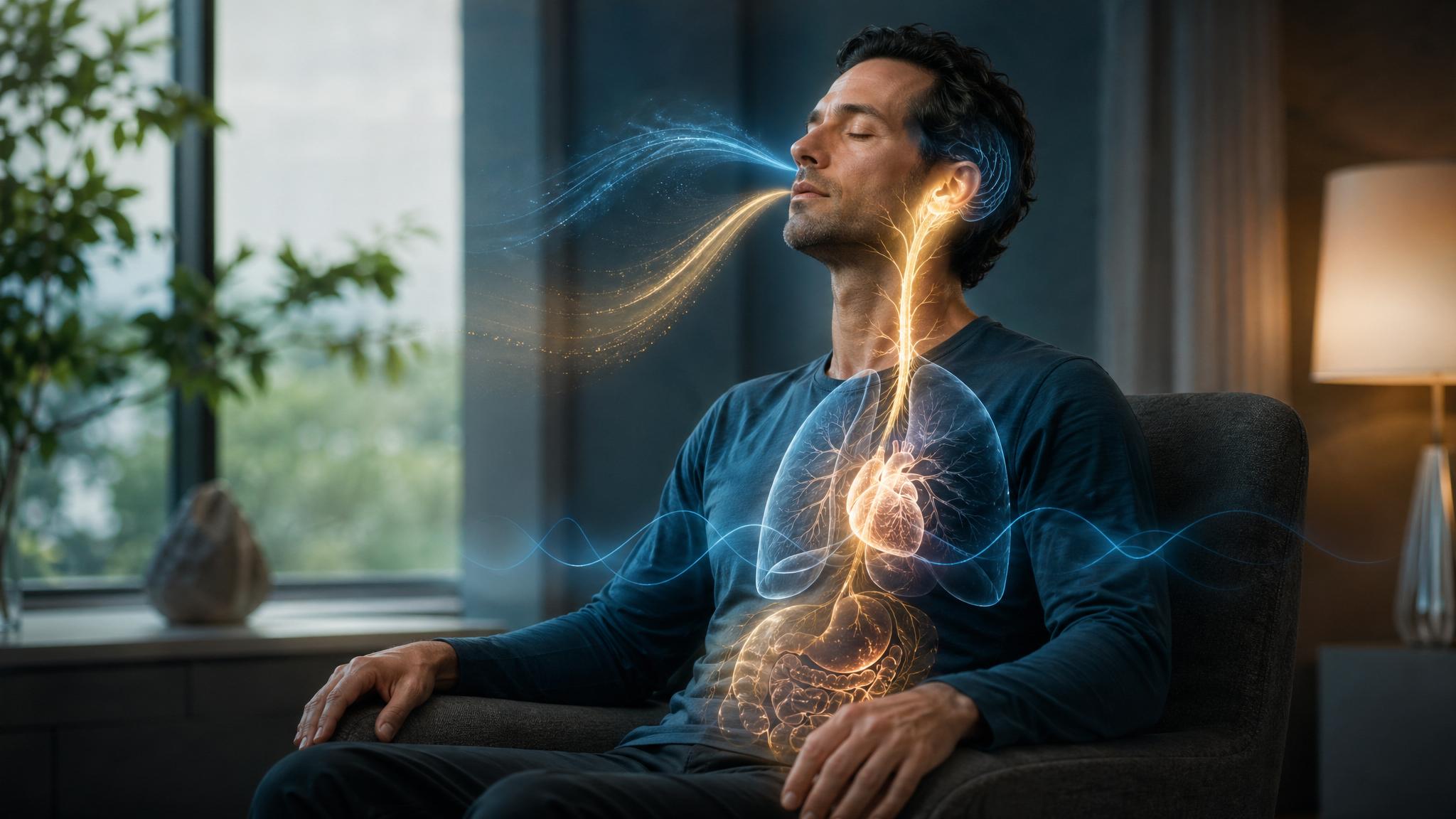
Cyclic Sighing: The Five Minute Breathwork Protocol That Outperformed Meditation in a Stanford Trial
A 2023 randomized controlled trial out of Stanford asked a deceptively simple question. If you give people five minutes a day of structured breathwork or five minutes a day of mindfulness meditation, which one moves the needle more on mood, stress, and physiological arousal?
Presented By Our Partners



The answer surprised the field. Across a 28 day intervention, all four conditions improved sleep, reduced anxiety, and raised positive affect. But one breathing pattern produced significantly larger gains than meditation on every primary outcome and drove deeper reductions in respiratory rate. That pattern, cyclic sighing, takes about five minutes a day and requires no equipment, no app subscription, and no experience.
The study, published in Cell Reports Medicine by Balban and colleagues from the Andrew Huberman lab and David Spiegel’s psychiatry group, has become one of the most cited recent papers in behavioral medicine. It also illuminates a much larger story about how slow, structured breathing changes nervous system physiology in ways that other recovery practices cannot match.
This is the science of breathwork, and the case for taking five minutes a day to do it.
The Vagus Nerve Is the Master Switch
To understand why breathing is uniquely powerful, you have to understand the vagus nerve.
The vagus is the tenth cranial nerve and the longest nerve in the autonomic nervous system. It originates in the brainstem and threads through nearly every major organ system: the heart, the lungs, the digestive tract, the spleen, the kidneys, even the immune compartments of the gut. About 80 percent of vagal fibers are afferent, meaning they carry sensory information from the body up to the brain. The remaining 20 percent are efferent, sending signals out to organs to slow heart rate, modulate inflammation, and shift the body into rest, digest, and repair states.
The vagus nerve is the primary conductor of the parasympathetic nervous system. When vagal tone is high, the body recovers faster, sleeps deeper, and regulates inflammation more efficiently. When vagal tone is low, chronic stress, hypertension, and inflammatory disease become more likely. A landmark 2010 paper in Biological Psychology by Julian Thayer and colleagues established heart rate variability, the beat to beat variation in your heartbeat, as the most reliable noninvasive marker of vagal tone. Higher HRV is associated with longer life expectancy, better cardiovascular outcomes, and improved emotional regulation.
The reason breathwork is so consequential is that the vagus nerve is one of the few autonomic systems you can directly influence with a behavior. Each inhale partially withdraws vagal activity and accelerates the heart slightly. Each exhale increases vagal activity and slows the heart. This natural rhythm is called respiratory sinus arrhythmia. By extending the exhale and slowing the breath, you are essentially exercising the vagus nerve.
What Cyclic Sighing Actually Is
Cyclic sighing, also called the physiological sigh, is a specific pattern: a deep inhale through the nose, followed by a second short top off inhale, followed by a long, slow, complete exhale through the mouth. The two stage inhale fully reinflates collapsed alveoli in the lungs. The long exhale offloads carbon dioxide and engages parasympathetic activity through the vagus nerve.
Mammals already do this involuntarily roughly every five minutes, especially during stress or hypoxia. The Stanford researchers turned the involuntary mechanism into a deliberate practice. Subjects performed cyclic sighing for five minutes each day across four weeks. Compared to box breathing, cyclic hyperventilation with retention, and mindfulness meditation, cyclic sighing produced the largest reductions in respiratory rate and the greatest improvements in self reported positive affect and anxiety.
The mechanism appears to be the dominance of exhalation. In cyclic sighing, the exhale is roughly twice as long as the combined inhales. This pattern preferentially activates the parasympathetic branch and is more efficient at carbon dioxide offloading than other slow breathing protocols. It also lowers the partial pressure of CO2 just enough to reduce sympathetic drive without inducing the lightheadedness that comes with hyperventilation.
Why Six Breaths Per Minute Is the Magic Number
Cyclic sighing is one of several slow breathing protocols backed by evidence. The broader category is called resonance frequency breathing, and the protocol is to breathe at approximately six breaths per minute, which translates to about a five second inhale and a five second exhale, or sometimes a four second inhale and a six second exhale.
Why six? At this rate, the natural oscillations of three biological systems align. The respiratory rhythm, the heart rate baroreflex, and arterial blood pressure waves all resonate at approximately 0.1 hertz. When all three lock into phase, HRV amplitude increases dramatically. This is the physiological signature of vagal stimulation.
Featured Partner
Invest in the Infrastructure Behind Modern Medicine
As healthcare expands beyond hospital walls, the buildings and campuses supporting that shift are generating compelling returns for investors who move early. The Healthcare Real Estate Fund offers qualified investors direct access to a curated portfolio of medical office, outpatient, and specialty care facilities.
Learn More →
A 2017 systematic review in Frontiers in Human Neuroscience by Roderik Gerritsen and Guido Band identified slow breathing as the common denominator across yogic pranayama, Buddhist meditation traditions, qigong, and modern HRV biofeedback. The unifying physiological pathway is increased respiratory sinus arrhythmia and parasympathetic dominance.
Studies from the HeartMath Institute, Polar Electro research labs, and clinical trials in chronic obstructive pulmonary disease, hypertension, and PTSD have repeatedly shown that ten to twenty minutes of resonance breathing per day produces measurable increases in baseline HRV after a few weeks of practice.
Box Breathing and the Special Forces Question
Box breathing, the protocol popularized in Mark Divine’s training of Navy SEALs, follows a four count for inhale, hold, exhale, and hold. It is widely used in tactical and operational settings to manage acute stress before high consequence performance.
The Stanford study did include box breathing as a comparison condition. Box breathing did improve mood and reduce anxiety, but the gains were smaller than cyclic sighing. The likely reason is that box breathing places equal weight on inhale and exhale, while cyclic sighing weighs the exhale more heavily.
This does not mean box breathing is wrong. It is a focusing technique well suited to the moment before a difficult conversation, a public talk, or a decision under pressure. But for daily nervous system conditioning, the exhale dominant patterns appear to be more efficient.
What Happens Inside the Body After Four Weeks
The most striking finding from the Stanford trial was the dose response. Effects accumulated over the four week period. Subjects who did the daily five minute breathwork practice continued to show improving mood, declining anxiety, and lower respiratory rate week over week.
This is consistent with the broader literature on vagal tone training. A 2021 meta analysis in Scientific Reports examined slow breathing interventions across 12 randomized trials. The pooled effect on HRV was robust, with effect sizes growing with practice duration. The biological interpretation is that the vagus nerve, like a muscle, responds to repeated activation by adapting. Baseline parasympathetic tone increases. Stress recovery accelerates. Inflammatory markers like C reactive protein and interleukin 6 decline.
In a separate 2022 trial published in Psychophysiology, researchers showed that 20 minutes of slow breathing per day for six weeks reduced ambulatory blood pressure in mildly hypertensive adults by an average of seven points systolic. That magnitude of effect is comparable to several first line antihypertensive medications.
The Gut Brain Connection
Recent research has extended the breathwork story into the gut. The vagus nerve is the primary communication channel between the gut microbiome and the brain. A 2023 paper in Nature Reviews Neuroscience by Premysl Bercik and colleagues mapped how vagal afferents respond to bacterial metabolites in the gut and how this signaling shapes mood, cognition, and inflammation.
Slow breathing, by activating efferent vagal output, also appears to influence gut motility, secretion of digestive enzymes, and the inflammatory tone of the gut lining. This is one mechanism by which mindfulness based interventions improve outcomes in irritable bowel syndrome, where Cleveland Clinic and Harvard groups have shown reductions in symptom severity comparable to standard pharmacological care.
The integration is mutual. A diverse, fiber rich diet supports vagal afferent signaling. Slow breathing supports vagal efferent activity. Together they reinforce the gut brain axis in a loop that nutrition science alone or breathwork alone cannot fully access.
Sleep, HRV, and the Recovery Stack
Sleep researchers have begun layering breathwork into the architecture of the wind down protocol. A 2024 paper from the University of Sao Paulo’s psychobiology group found that ten minutes of slow paced breathing immediately before bed reduced sleep onset latency by an average of eight minutes and increased the proportion of slow wave sleep recorded in polysomnography.
The mechanism is parasympathetic priming. Sleep onset depends on the body shifting out of sympathetic dominance. For most adults, the limiting factor is not the absence of melatonin or the wrong room temperature but residual cognitive and physiological arousal. Slow breathing accelerates that shift more reliably than passive activities like reading or watching low stimulation video, both of which keep the cortex engaged.
Wearables now make the effect visible. The Oura Ring, the WHOOP strap, the Garmin Vivosmart, and the Apple Watch all measure overnight HRV with adequate sensitivity to detect a meaningful increase in vagal tone after four to six weeks of consistent breathwork practice. Users in the Quantified Self community routinely report HRV gains of 10 to 20 percent on baseline within two months of daily slow breathing.
What This Means For Your Practice
You do not need an app, a wearable, or a meditation cushion to start. You need a chair, five minutes, and a willingness to do the same thing every day. Here is the protocol the evidence supports.
The five minute cyclic sighing practice. Sit upright with a relaxed spine. Inhale through the nose for about two seconds. Without exhaling, take a second short top off inhale through the nose to fully expand the lungs. Exhale slowly and completely through the mouth, taking about six to eight seconds. Repeat for five minutes. Most people can do 25 to 35 cycles in that window. Start once a day, ideally in the first hour of the morning or in the wind down before sleep.
The six breath per minute alternative. If cyclic sighing feels awkward, try resonance breathing instead. Inhale through the nose for five seconds. Exhale through pursed lips for five seconds. Continue for five to ten minutes. Apps like Awesome Breathing or Breathwrk can pace you, but a clock works just as well. The Polar H10 chest strap, the Oura Ring, the WHOOP strap, and the Apple Watch all show HRV trends that will respond to consistent practice within two to four weeks.
The acute stress reset. When you feel a spike of anxiety or irritation, perform two or three cyclic sighs. The Stanford team has shown that even a single physiological sigh can detectably lower respiratory rate and acute arousal. This is the most evidence based two minute intervention available for in the moment stress.
The discipline of the dose. The single most predictive variable in the Stanford trial was simply doing the practice on more days. Subjects who completed five or more sessions per week saw the largest gains. Two minutes a day done every day will outperform thirty minutes once a week.
The integration with the other fundamentals. Breathwork compounds when paired with the other foundations. Practice for five minutes after a Zone 2 cardio session and the parasympathetic rebound will be deeper. Practice for five minutes before bed and sleep latency will shorten. Practice in the first hour after waking and you will set a parasympathetic tone for the morning that increases your stress resilience for the rest of the day.
The longer arc of vagal training. After four to six weeks of daily practice, expect baseline HRV to rise. Resting heart rate should drift down by two to five beats per minute. Subjective stress recovery, measured as how quickly you settle after a difficult conversation or workout, should noticeably improve. These changes are not large in any single week, but they are durable. They are the markers of a nervous system that has been gradually recalibrated toward parasympathetic dominance, which is the substrate of long term cardiovascular and cognitive health.
The science is no longer ambiguous. A few minutes of structured slow breathing every day is one of the most cost effective interventions in behavioral medicine, with effects that rival pharmacology for some conditions and exceed meditation for mood. The mechanism runs through the vagus nerve, the master switch of the parasympathetic system, and the lever you can pull every morning before you even leave the chair.


Similar Posts

The Daily Rounds: Longevity & Health Care Brief | May 1, 2026
💊 Rapamycin vs. Exercise: A controlled trial found the longevity drug blunted physical gains in older adults, raising urgent questions about combining mTOR inhibition with exercise-based longevity protocols. 🧫 Harvard Pinpoints How a Gut Bacterium Triggers Depression: Morganella morganii produces an inflammation-triggering molecule when interacting with a common pollutant, providing the first mechanistic explanation for the gut-brain-depression link. 🤖 NVIDIA and Lilly Commit $1B to AI Drug Discovery Infrastructure: The San Francisco co-innovation lab marks one of the largest AI-pharma investments ever, aiming to compress the full drug development value chain with agentic AI systems. 🦠 Roseburia Bacteria Linked to 29% Greater Grip Strength in Older Adults: The gut species declines sharply with age and its restoration in mice produced a 30% strength gain, opening a new probiotic angle on sarcopenia prevention. 🧬 T Cell Senescence Drives 40% of Immune Gene Expression Changes: Senescence, not chronological age, is the primary epigenomic driver of immune aging, suggesting senolytics could restore immune function independent of broader biological age reversal strategies.

Neurosity Crown: Eight Channel EEG for Flow State and Productivity Monitoring
An eight channel EEG headset designed not for meditation or research, but for the specific challenge of measuring and sustaining deep focus during knowledge work. Presented By Our Partners The…

Medicine Has Enough AI Pilots. It Needs a Power Grid.
Healthcare AI has enough pilots, alerts, and dashboards. The harder question is whether any of them close the loop from signal to ownership, action, completed care, and measured result.
Clearblue Advanced Digital Ovulation Predictor Kit: Hormone-Based Fertile Window Detection
The biological window for conception is remarkably narrow, roughly six days per month, and most women cannot reliably identify when it opens. A urinary hormone test that detects both estrogen…
Tempo Studio: 3D Motion Capture and Real Weights for AI-Coached Strength Training
The only smart home gym that combines real weight plates with 3D body scanning and AI form correction. Does adding a depth sensor to a barbell change the equation for…
Gatorade Gx Sweat Patch: Affordable Sweat Sodium Profiling for Athletes
Professional sports teams have spent thousands testing athletes’ sweat composition in labs. A $25 patch and your phone camera now approximate the same insight. Presented By Our Partners For decades,…
