
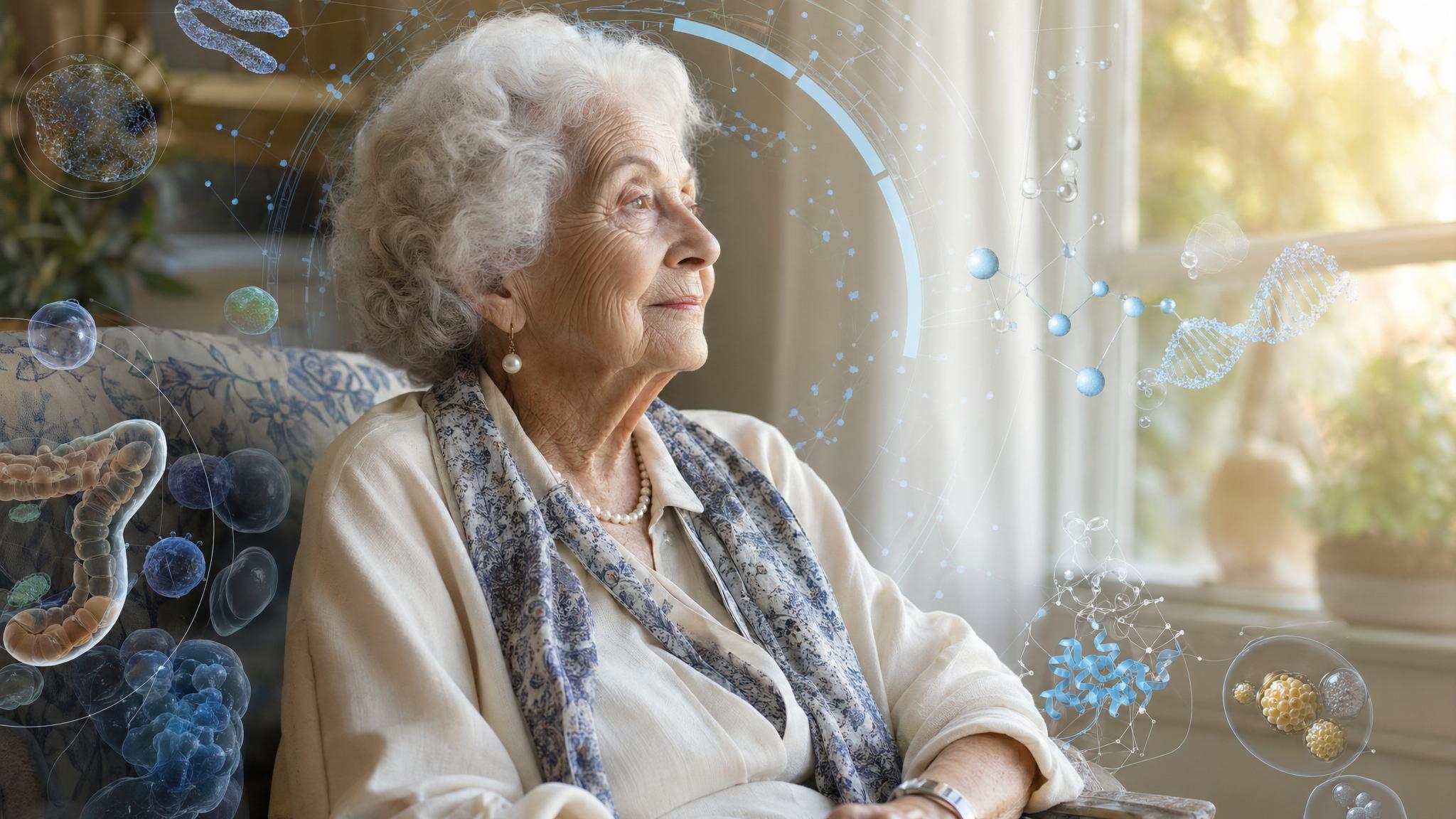
What the World’s Oldest Person Reveals About the Biology of Extreme Longevity
A landmark multi-omics study of Maria Branyas Morera, the world’s oldest verified person, reveals that advanced age and poor health are not biologically inevitable. Here is what her genome, epigenome, microbiome, and metabolome tell us about the molecular architecture of extreme longevity.
Presented By Our Partners



She survived the 1918 flu pandemic, both World Wars, and COVID-19 at age 113. Maria Branyas Morera of Catalonia, Spain, lived 117 years and 168 days, becoming the oldest verified person in human history before her death in August 2024. But her most enduring contribution to science may come from the blood, saliva, urine, and stool samples she graciously donated to researchers who wanted to know: what, precisely, keeps a body running with such extraordinary resilience for more than a century?
The answer, now published in Cell Reports Medicine by researchers led by Manel Esteller at the Josep Carreras Leukaemia Research Institute and Universitat de Barcelona, is a molecular portrait so detailed and so unexpected that it is reshaping how the field understands the relationship between biological age and calendar age. The study is the most exhaustive multi-omics analysis ever performed on a supercentenarian, integrating genomic, transcriptomic, metabolomic, proteomic, epigenomic, and microbiomic data from a single subject across multiple tissues.
The central finding is deceptively simple, and enormously consequential: extremely advanced age and poor health are not intrinsically linked. They can be distinguished and dissected at the molecular level.
The Multi-Omics Approach: Reading the Full Blueprint of a Life
For most of medical history, aging has been studied through what it destroys. Researchers catalogued the diseases that accumulate, the tissues that deteriorate, the cognitive functions that erode. What the Esteller team did instead was study what remained intact in someone who had navigated more than a century of biological wear without the usual cascade of chronic disease.
Most of the analyses were performed on blood collected when Branyas was 116 years and 74 days old. Saliva, urine, and stool provided complementary data from different tissue compartments. The multi-omics battery interrogated her genome (the fixed blueprint), transcriptome (which genes were actively being read), metabolome (the chemical signatures of cellular activity), proteome (the functional protein landscape), microbiome (the community of microorganisms in her gut), and epigenome (the layer of chemical marks that regulate gene expression without changing the DNA sequence itself).
Each of these data streams is revealing on its own. Together, they produced what the authors called the “multiomics blueprint of extreme human lifespan,” a comprehensive molecular map of what biological survival at the outer edge of human possibility actually looks like from the inside.
The Epigenome: She Was Biologically Younger Than Her Years
Perhaps no finding from the study drew more scientific attention than the epigenetic age results. Epigenetic clocks are algorithmic tools that use patterns of DNA methylation (chemical modifications to the genome that change with age) to estimate biological age independently of birth date. They have become one of the most reliable biomarkers in longevity research, with strong associations to mortality risk, disease incidence, and healthspan.
The researchers applied six different epigenetic clocks to Branyas’s tissue samples, including the Horvath clock, the Hannum clock, and several next-generation models trained on larger datasets. Across every algorithm, in every tissue examined, the result was the same: her biological age was substantially younger than her chronological age of 116. This consistency across six independent measurement systems, applied to three separate tissue types, represents an unusually strong signal in epigenetic research.
The implication is significant. Epigenetic age acceleration, the gap between biological and calendar age in the wrong direction, is associated with higher rates of cardiovascular disease, cancer, neurodegeneration, and all-cause mortality. Branyas ran the opposite direction. Her epigenome was, by every available measure, that of a much younger person. Something in her biological program had preserved the epigenetic architecture of youth even as the calendar relentlessly advanced.
A Gut That Defied Chronological Time
The microbiome findings were equally striking. Age-related changes to the gut microbiome are among the most consistent findings in geroscience. As humans age, microbial diversity typically declines, populations of beneficial bacteria such as Bifidobacterium shrink, and inflammatory bacterial species expand. This shift is associated with increased intestinal permeability, systemic inflammation, and progression of the chronic diseases that define aging.
Branyas’s microbiome looked nothing like this. It was dominated by Bifidobacterium species associated with gut barrier integrity, anti-inflammatory signaling, and cognitive protection. Researchers noted that her gut microbial profile more closely resembled that of a much younger person than that of a typical older adult. The team hypothesized that her lifelong habit of consuming yogurt daily, a practice she maintained until very late in life, may have continuously seeded her gut with beneficial bacteria and suppressed the inflammatory dysbiosis that accelerates biological aging in most people.
This is not a trivial observation. The gut-brain axis, the gut-heart axis, and the gut-metabolic axis are all active areas of longevity research, with multiple 2025 and 2026 studies connecting microbiome composition to cardiovascular outcomes, cognitive trajectories, and metabolic health. Branyas’s microbiome data offers one of the clearest human demonstrations yet that maintaining the microbial environment of youth may be a central mechanism of exceptional longevity, not a coincidental feature of it.
Lipid Metabolism: The Cardiovascular Shield
The metabolomic analysis revealed what the authors described as one of the most efficient lipid metabolisms ever reported in a study of human longevity. Branyas had low circulating triglycerides, reduced LDL cholesterol, elevated HDL cholesterol, and sharply diminished markers of systemic inflammation. This lipid profile is associated in the broader research literature with strong protection against both cardiovascular disease and dementia, the two largest contributors to aging-related death and disability in the developed world.
Featured Partner
Invest in the Infrastructure Behind Modern Medicine
As healthcare expands beyond hospital walls, the buildings and campuses supporting that shift are generating compelling returns for investors who move early. The Healthcare Real Estate Fund offers qualified investors direct access to a curated portfolio of medical office, outpatient, and specialty care facilities.
Learn More →
The research community has long debated whether exceptional lipid profiles in centenarians and supercentenarians reflect genetic programming, dietary patterns, or some interaction of both. In Branyas’s case, the answer appears to be both. The proteomic and genomic analyses identified rare genetic variants in key regulators of lipid transport and metabolism, but her diet throughout her life also aligned with what nutritional science would predict for cardiovascular protection: abundant plant foods, fermented dairy, olive oil, and minimal processed food.
What makes the metabolomic finding particularly important for longevity science is its relationship to inflammation. Chronic low-grade inflammation, sometimes called “inflammaging,” is now understood as a central driver of biological aging, accelerating cellular senescence, impairing mitochondrial function, degrading vascular integrity, and promoting the microenvironment in which cancer, neurodegeneration, and metabolic dysfunction take root. Branyas’s inflammatory markers were, by geroscience standards, remarkably low for any age, let alone 116. Her lipid metabolism and her inflammatory biology were mutually reinforcing: efficient lipid handling reduced the substrate for oxidative stress, and low oxidative stress preserved the lipid-processing machinery.
Genetic Architecture: Rare Variants for Protection
The genomic analysis identified exclusive or rare genetic variants in several categories of particular relevance to longevity. Among the most significant were variants in immune-related genes including HLA-DQB1, HLA-DRB5, and IL7R, as well as genes associated with proteostasis (the cellular system for clearing misfolded proteins) and genomic stability. These variants appear to have conferred protection at multiple levels simultaneously: more precise immune surveillance, more effective protein quality control, and greater resistance to the DNA damage that accumulates with each cellular replication cycle.
The proteostasis finding is worth dwelling on. One of the defining molecular features of aging is a gradual breakdown in the cell’s ability to identify and dispose of damaged or misfolded proteins, a process researchers call proteostatic collapse. As this quality control system degrades, misfolded proteins accumulate, triggering inflammation, impairing cellular function, and contributing to the protein aggregates characteristic of Alzheimer’s disease, Parkinson’s disease, and other neurodegenerative conditions. Branyas’s peripheral blood cells showed proteasomal activity comparable to much younger individuals, and autophagy mechanisms (the cellular recycling system) remained not only functional but upregulated, continuing to clear cellular debris with a vigor rarely seen in older adults.
Critically, the researchers observed clonal hematopoiesis and telomere shortening consistent with her chronological age. These are genuine markers of biological aging. The study is not claiming that Branyas was biologically 40. It is claiming something more nuanced and more scientifically important: that the specific molecular systems most directly linked to disease and functional decline were preserved in ways that decoupled her from the usual aging trajectory, while other aging signals proceeded more normally. She was old in some biological respects and young in the ones that mattered most for health.
Brazil’s Longevity Treasure: A Second Line of Evidence
The Branyas study arrived alongside a complementary body of work from Brazil that published in January 2026 in Genomic Psychiatry. A team led by Dr. Mayana Zatz at the Human Genome and Stem Cell Research Center, University of São Paulo, described a nationwide cohort of more than 160 centenarians, including 20 validated supercentenarians, assembled from across Brazil’s diverse geographic and ethnic landscape.
The Brazilian cohort is scientifically valuable for reasons that extend beyond its size. Brazil’s population is among the most genetically heterogeneous in the world, combining Indigenous American, European, West African, East Asian, and Middle Eastern ancestry in proportions that vary enormously by region. This diversity creates a natural experiment for identifying longevity-associated genetic variants that transcend ancestry, which are more likely to reflect fundamental biological mechanisms rather than population-specific effects.
When the São Paulo researchers conducted whole-genome sequencing on the older participants in the cohort, they identified more than 8 million genetic variants not present in existing global databases. Among the female participants, Brazilian female supercentenarians represent a disproportionately high fraction of the top 15 longest-lived women worldwide, exceeding numbers from more populous and wealthy countries including the United States. The team is now conducting multi-omics analyses on selected individuals and deriving cellular lineages for functional assays, with the explicit goal of uncovering novel protective mechanisms specific to this population that may have global relevance.
Together, the Branyas study and the Brazilian cohort represent a methodological convergence. Where previous longevity research often relied on retrospective surveys, single-omics analyses, or population-level statistics, these newer efforts are building comprehensive molecular portraits of living and recently deceased supercentenarians, creating a biological atlas of extreme longevity that did not exist a decade ago.
A Field in Transition: From Single Targets to Systems Resilience
The timing of these supercentenarian studies intersects with a broader debate now unfolding across the longevity science community. The 2nd World Congress on Targeting Longevity, convening in Berlin on April 8 and 9, 2026, has organized its agenda around a pointed question: Has the field been asking the wrong questions?
For much of the past two decades, longevity research has pursued a single-target model: identify the molecular pathway most central to aging (mTOR signaling, senescence, NAD+ metabolism, mitochondrial function) and develop interventions to modulate it. This approach has generated important insights and a rich pipeline of drug candidates. But its clinical translation has remained limited, and some researchers are now arguing that the reason may be structural, not empirical.
The Berlin congress is advancing a different model: aging as a progressive loss of coordination between biological systems, not a sequence of isolated molecular defects. Under this framework, the relevant unit of analysis is not a gene or a pathway but the dynamic relationship between mitochondrial function, immune signaling, microbial ecology, metabolic regulation, and stress response systems. When these relationships degrade, aging accelerates. When they are preserved, as appears to be the case in supercentenarians, the organism maintains what researchers are calling biological resilience: the capacity of living systems to sustain functional coordination across time.
The Branyas multi-omics data maps directly onto this framework. Her longevity was not explained by a single protective factor. It emerged from the simultaneous preservation of multiple interconnected systems: her epigenome, her microbiome, her lipid metabolism, her inflammatory regulation, her proteostasis machinery, and her immune architecture. These systems reinforce each other. A healthier microbiome reduces systemic inflammation. Lower inflammation protects the epigenome from accelerated aging. A well-functioning epigenome preserves gene expression programs that support mitochondrial integrity. And so on. The biology of exceptional longevity, the Branyas data suggests, is the biology of sustained systemic coordination.
What the Science of Supercentenarians Tells Us About Everyday Aging
The predictable temptation when reading research on supercentenarians is to conclude that their biology is simply different in ways that are not relevant to the rest of us. This is a mistake. The molecular systems that remain intact in Branyas are the same systems that all of us are degrading at different rates, and the factors associated with their preservation in her case are not exotic.
Her microbiome was dominated by anti-inflammatory bacteria consistent with fermented food consumption and lifelong dietary patterns emphasizing whole, minimally processed foods. Her lipid profile was consistent with the Mediterranean dietary pattern she followed throughout her life. Her epigenetic age was younger than her chronological age, a phenomenon now associated in the research literature with exercise, adequate sleep, stress regulation, and dietary quality. Her inflammatory markers were low, a outcome linked across hundreds of studies to the same foundational behaviors.
None of this is deterministic. Branyas also carried rare genetic variants that likely amplified the benefit of her behaviors and provided independent protection at the cellular level. Not everyone will achieve 117. But the molecular evidence from her body supports a conclusion the broader longevity science community is increasingly reaching: the biological mechanisms of exceptional aging are not separate from the mechanisms that govern everyday health. They are the same mechanisms, operating with unusual efficiency and preservation.
The research from Brazil reinforces this point. The São Paulo cohort includes people who lived past 110 while working, maintaining social relationships, and staying physically active well into their final years. Their genomic profiles, still being analyzed, appear to encode both rare protective variants and the molecular signatures of lifelong behavioral patterns consistent with the foundational pillars of health science: food quality, physical activity, sleep, stress response, and social connection.
What This Means For You
The Branyas multi-omics study is a scientific landmark, but its most important message is not about a woman who was exceptional. It is about the biology that all of us carry and the degree to which the molecular architecture of healthy aging is both measurable and modifiable.
Four specific lessons emerge from the data for anyone interested in translating this science into practical action:
First, your biological age and your calendar age are not the same number, and the gap between them is influenced by choices made over decades. Epigenetic clocks are now commercially available and becoming increasingly integrated into clinical care. The research on Branyas shows that the gap can be preserved far longer than most people assume, but it requires sustained attention to the foundational variables, not occasional intervention.
Second, the microbiome is a genuine longevity lever. The dominance of Bifidobacterium in Branyas’s gut at 116 years did not happen by accident. It reflected decades of dietary choices, including daily fermented dairy, that continuously reinforced the microbial community associated with lower inflammation and better metabolic and cognitive outcomes. This is not a supplement protocol. It is a lifetime relationship with food.
Third, lipid metabolism and systemic inflammation are deeply connected, and both respond to nutritional choices over time. The metabolomic profile of extraordinary longevity, in every human data set researchers have examined, involves efficient lipid handling and consistently low inflammatory burden. The dietary patterns associated with both, across the Mediterranean, Brazilian, and other longevity-associated populations, share recognizable features: abundant vegetables, healthy fats, fermented foods, minimal ultra-processed input.
Fourth, the Berlin paradigm shift in longevity science has practical implications beyond the laboratory. If aging is fundamentally a systems-level coordination problem rather than a collection of isolated molecular defects, then piecemeal interventions targeting single pathways are likely to have limited impact. The most effective strategy, both from the supercentenarian data and from the emerging systems resilience framework, is one that supports multiple interconnected biological systems simultaneously. That is precisely what a consistent, foundational lifestyle approach does, and what no single drug or supplement can replicate.
Maria Branyas Morera lived 117 years. The molecular evidence from her body suggests she did not achieve that through luck alone. She maintained, with unusual fidelity across more than a century, the biological conditions under which the systems that govern health and aging could continue to coordinate. That is what exceptional longevity looks like from the inside. And it begins, the evidence continues to suggest, with the fundamentals.
Sources: Santos-Pujol E, Esteller M et al., “The multiomics blueprint of the individual with the most extreme lifespan,” Cell Reports Medicine (2025); Zatz M et al., “Brazil’s genetic treasure trove: supercentenarians reveal secrets of extreme human longevity,” Genomic Psychiatry (2026); 2nd World Congress on Targeting Longevity, Berlin, April 8 to 9, 2026.


Similar Posts

The Cure Hiding in Plain Sight: How Every Cure Is Rewriting the Rules of Drug Discovery
Every Cure is a nonprofit using AI and drug repurposing to uncover treatments hidden inside existing medicines. Founded by physician-scientist David Fajgenbaum after a repurposed drug saved his own life,…

ZOE Program: Can Your Gut Microbiome Predict How You Should Eat?
A deep dive into the science, clinical evidence, and practical realities of ZOE’s at-home gut microbiome analysis and personalized nutrition platform Presented By Our Partners In 2020, a team of…

Garmin Fenix 7X Pro Sapphire Solar: Solar Powered Endurance Tracking With ECG and Advanced Navigation
Garmin’s flagship endurance watch combines solar charging, multi band GPS, FDA cleared ECG, and VO2 max estimation in a sapphire crystal package built for ultra distance athletes and backcountry expeditions….

Daraxonrasib Doubles Survival in Pancreatic Cancer: Inside ASCO 2026’s Most Consequential Result
A Phase 3 trial just cut the risk of death by 60 percent in metastatic pancreatic cancer, a disease that has resisted nearly every therapeutic advance for four decades. The…
The Daily Rounds: Longevity & Health Care Brief | April 7, 2026
🔬 Aging Redefined as Systems Failure: Researchers in Berlin are shifting the aging conversation toward preserving biological coordination across systems, not fixing a single defect. 🤖 AI Drug Discovery Reaches Scale: Over 173 AI-discovered drug programs are now in clinical trials, and a new free platform targeting global diseases launched this week. 😴 Sleep as a Disease Predictor: Stanford's SleepFM AI model predicts 130+ conditions from one night of sleep data, positioning sleep as a critical longevity biomarker. 🦠 Gut Microbiome Controls Immunity Directly: Common gut microbes inject proteins into immune cells, and a single bacterial metabolite doubled lung cancer immunotherapy response in mice. ❤️ Long-Term Heart-Aging Study Begins: UTMB's decade-long Galveston Heart Study will track thousands of participants to uncover how cardiovascular and brain health intersect with aging.

Muscle Is a Longevity Organ: What the Science of Strength Training Reveals About All-Cause Mortality
Grip strength outperforms blood pressure as a mortality predictor. A 2022 BMJ meta-analysis found that 30 to 60 minutes of resistance training per week cuts all-cause mortality by 15 percent….
