
Akkermansia muciniphila: How a Single Gut Microbe Became Longevity Science’s Most Studied Bacterium in 2026
In the human gut, a single microbe lives almost exclusively in the slick layer of mucus that coats the intestinal wall. It eats that mucus for a living, and in the process, it appears to do something remarkable. It tells the host how to maintain the very barrier it is feeding on. That microbe, Akkermansia muciniphila, has spent the last twenty years rising from an obscure bacterial isolate in a Dutch laboratory to one of the most carefully studied organisms in modern longevity science. The 2026 evidence base now spans metabolic health, cardiovascular risk, insulin sensitivity, gut barrier integrity, immune regulation, and even the response to immunotherapy. And after a 2019 Nature Medicine trial, a 2023 follow up, and a wave of late stage commercial development, Akkermansia has become the first next generation probiotic to be sold legally as a food ingredient in the United States and Europe.
Presented By Our Partners



This is a deep dive into why a mucus eating microbe ended up at the center of longevity medicine, what the controlled human evidence actually shows, where the science is still soft, and how to think about it as a practical lever for metabolic health.
## How a Mucus Eating Microbe Became a Longevity Story
Akkermansia muciniphila was first isolated and described in 2004 by Muriel Derrien and Willem de Vos at Wageningen University in the Netherlands, in a paper published in the International Journal of Systematic and Evolutionary Microbiology. The team named the organism after Antoon Akkermans, a Dutch microbiologist, and “muciniphila,” meaning mucin loving. The microbe is an oval, gram negative anaerobe in the phylum Verrucomicrobia. It does not look impressive under a microscope. What makes it interesting is where it lives and what it does there.
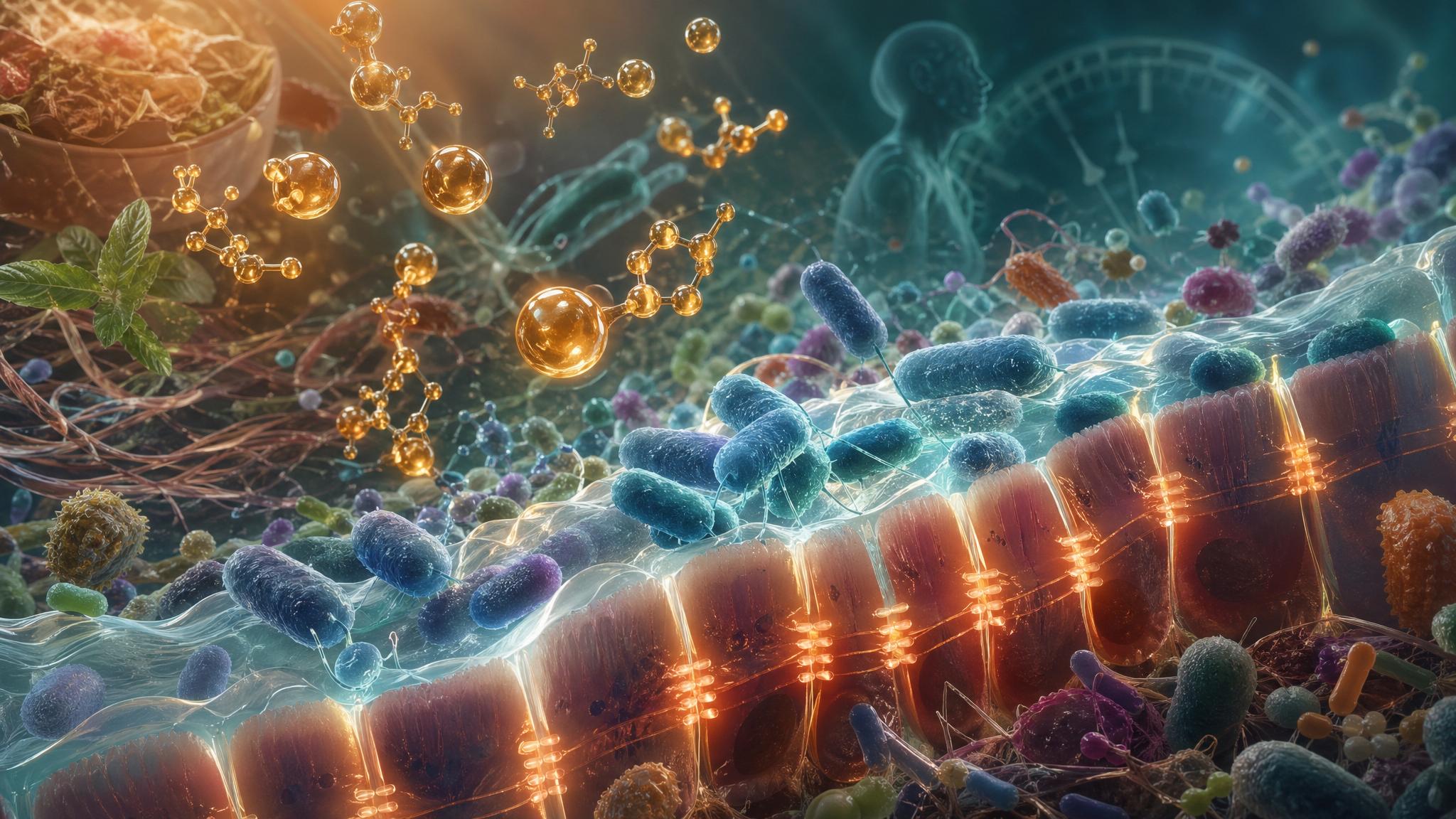
The inner gut wall is coated by a double mucus layer made primarily of MUC2 glycoproteins. The outer mucus layer is colonized by bacteria. The inner layer is supposed to be a sterile, slick, defensive moat that keeps microbes from touching the epithelial cells directly. Akkermansia is one of the few residents of the outer mucus that can metabolize the protein and sugar backbone of mucin itself, breaking it down into short chain fatty acids like acetate and propionate. In healthy adults, the species typically makes up between one and four percent of total fecal bacteria, which puts it among the dozen most abundant organisms in the gut. In a 2007 paper in Applied and Environmental Microbiology, the de Vos group showed that Akkermansia levels were dramatically reduced in patients with inflammatory bowel disease. That was the first hint that the species was tracking something important about gut barrier health.
The story turned a corner in 2013. Patrice Cani’s laboratory at UCLouvain in Belgium, working with Amandine Everard, published a paper in the Proceedings of the National Academy of Sciences showing that obese, insulin resistant mice had roughly one hundred fold less Akkermansia in their gut than lean controls. When the Cani group restored Akkermansia by oral gavage, the mice lost fat mass, reduced metabolic endotoxemia, and improved their insulin sensitivity. That paper, cited tens of thousands of times since, made Akkermansia muciniphila the most discussed gut microbe in metabolic disease research.
## The Mechanism: Mucin, Amuc_1100, and the Gut Barrier
The reason Akkermansia matters is mechanistic, not anecdotal. When the species eats mucin, it does several things at once.
First, it stimulates the host to produce more mucin. By grazing on the inner edge of the mucus layer, Akkermansia keeps goblet cells busy, and a thicker, healthier mucus layer is one of the most important defensive structures in the gut. A 2017 paper from the Cani group in Nature Communications, led by Hubert Plovier, isolated a single Akkermansia outer membrane protein called Amuc_1100. The protein, by itself, was enough to reproduce many of the metabolic benefits of the whole organism in mice. Amuc_1100 binds to the host receptor TLR2 on intestinal epithelial cells, which strengthens tight junctions between cells and reduces what researchers call gut barrier permeability, sometimes informally referred to as leaky gut.
Second, by maintaining the mucus moat, Akkermansia reduces translocation of bacterial lipopolysaccharide, or LPS, into the bloodstream. Chronic low grade LPS leakage from a damaged gut is one of the proposed drivers of inflammaging, the slow simmer of inflammation that researchers like Claudio Franceschi have argued underlies many aging related diseases.
Third, Akkermansia produces propionate, which signals to L cells in the gut to release GLP-1, the same incretin hormone targeted by semaglutide and tirzepatide. The 2017 Plovier paper showed that even pasteurized Akkermansia, with the bacterial cells dead but the membrane proteins intact, improved insulin sensitivity in obese mice. That counterintuitive finding, that you do not need a live microbe to get the benefit, is what made commercial development plausible. A live anaerobe is fragile and complicated to ship. A pasteurized, thermally killed preparation is shelf stable.
## The First Human Trial: 2019 Nature Medicine
In July 2019, Clara Depommier, Amandine Everard, and Patrice Cani published the first proof of concept human trial in Nature Medicine. Thirty two overweight and obese adults with insulin resistance and metabolic syndrome features were randomized for three months to placebo, live Akkermansia muciniphila, or pasteurized Akkermansia. The pasteurized arm was the surprise. Compared with placebo, pasteurized Akkermansia improved insulin sensitivity, reduced plasma total cholesterol, lowered fasting insulin, and lowered markers of liver dysfunction. There was no significant signal in the live Akkermansia arm at that dose. Body weight changed only modestly, but the metabolic biomarkers moved in a coherent direction. The trial was small, exploratory, and not designed for hard outcomes, but it was the first time a single bacterial species had improved a panel of metabolic biomarkers in humans in a randomized study.
A 2023 follow up by the same group in Gut Microbes extended the safety profile, and subsequent open label and observational data, including work coming out of the Tao group in China and the Karlsson group in Sweden, have built a more textured picture. Lower Akkermansia abundance has been repeatedly associated with type 2 diabetes, NAFLD now called MASLD, obesity, atherosclerosis, and several inflammatory conditions. Higher Akkermansia abundance has been correlated with better responses to immune checkpoint inhibitor therapy for melanoma and non small cell lung cancer, a finding originally reported by Bertrand Routy and Laurence Zitvogel in a 2018 Science paper that lit up the immuno oncology field.
## The Cardiovascular and Aging Signal
The Akkermansia story is not limited to glucose and insulin. A 2021 paper in Circulation Research examined Akkermansia in animal models of vascular aging and found that supplementation reduced arterial stiffness, improved endothelial function, and lowered systemic inflammation in aged mice. The proposed mechanism overlaps with the gut barrier story. Less LPS leakage means less inflammatory pressure on the vasculature.
There is also a longevity epidemiology signal worth knowing about. In long lived populations studied in Sardinia, Okinawa, and parts of China, several research groups, including the Rampelli and Brigidi laboratories in Bologna, have reported that centenarians often retain higher Akkermansia abundance than younger adults of typical health, and that the species correlates with preserved metabolic flexibility. This is correlational, not causal, but it has fueled the framing of Akkermansia as a marker of healthy aging in the human gut.
Featured Partner
Invest in the Infrastructure Behind Modern Medicine
As healthcare expands beyond hospital walls, the buildings and campuses supporting that shift are generating compelling returns for investors who move early. The Healthcare Real Estate Fund offers qualified investors direct access to a curated portfolio of medical office, outpatient, and specialty care facilities.
Learn More →
In 2024 and 2025, a series of papers from the Sonnenburg lab at Stanford, the Knight lab at UCSD, and several European consortia further documented how Akkermansia interacts with dietary fiber, polyphenols from foods like pomegranate and grapes, and prebiotics like cranberry extract. A picture is emerging in which Akkermansia is not so much a magic bullet as a marker of a well functioning gut ecosystem, and an organism that can be coaxed upward by diet long before anyone reaches for a capsule.
## The Supplement Era: From Lab Microbe to FDA No Objection
In 2022, the United States Food and Drug Administration issued a No Objection letter for a pasteurized Akkermansia muciniphila preparation developed by the Belgian company A Mansia Biotech, which spun out of the Cani laboratory. That regulatory step made the product legally sellable as a food ingredient in the United States, the first time a next generation probiotic outside of the Lactobacillus and Bifidobacterium families had cleared that bar. Pendulum Therapeutics, a US based microbiome company founded by Colleen Cutcliffe, then launched a live multi strain capsule that included Akkermansia muciniphila as one of several species. Both products are sold today, though at price points well above conventional probiotics.
What is on the market is not what was tested in the 2019 trial in every case. Live Akkermansia preparations are more recent, the matrix differs, and dosing varies. The 2019 trial used roughly ten billion pasteurized bacteria daily. Commercial doses are sometimes lower or combined with other strains. Buyers should understand that the trial data underwriting the category remains small in absolute terms, that hard cardiovascular and mortality outcomes have not been tested, and that effects on weight in the controlled trial were modest.
## What the Evidence Actually Supports in 2026
It is fair to say the following at the close of the first half of 2026.
There is good mechanistic and animal evidence that Akkermansia muciniphila strengthens the gut mucus barrier, increases tight junction integrity, reduces metabolic endotoxemia, stimulates GLP-1 secretion via propionate, and modulates immune signaling through TLR2 and Amuc_1100.
There is one peer reviewed, well controlled, randomized human trial showing improvements in insulin sensitivity, total cholesterol, and liver function markers with pasteurized Akkermansia in overweight insulin resistant adults, plus follow up safety and tolerability data.
There is consistent observational evidence that low Akkermansia abundance correlates with type 2 diabetes, MASLD, obesity, inflammatory bowel disease, and accelerated vascular aging, and that higher abundance correlates with better responses to immune checkpoint inhibitors.
There is no large outcomes trial of Akkermansia supplementation in cardiovascular events, cancer endpoints, dementia, or mortality. The product class has, in regulatory terms, food and dietary supplement status, not drug status. Claims of weight loss or disease prevention should be read with that in mind.
## How to Move Akkermansia Without a Capsule
Several dietary patterns have been shown, in human and animal studies, to increase Akkermansia abundance in the gut.
Polyphenol rich foods are the most consistent. Cranberry extract studies from the Anhe and Marette groups at Laval University in Quebec and Concord grape polyphenols studied by the Henning group at UCLA have both shown increases in Akkermansia, with parallel improvements in metabolic markers in animal and small human studies. Pomegranate extract, green tea catechins, and dark berries appear to have similar effects in pilot work.
Soluble and fermentable fiber from foods like oats, barley, legumes, apples, and flaxseed feeds the broader fiber fermenting community in the gut, which produces short chain fatty acids that support mucin secretion and indirectly favor Akkermansia. The 2018 work of the Sonnenburg lab at Stanford in Cell Host and Microbe established that low fiber diets in mice progressively erode the inner mucus layer and lead to loss of mucin specialists like Akkermansia, with effects that compound across generations.
A Mediterranean style dietary pattern, which combines polyphenols, fiber, and unsaturated fats, has been associated with higher Akkermansia abundance in several human cohorts, including analyses of the PREDIMED trial cohort and the Nu Age cohort work by Aurelia Santoro at the University of Bologna.
Time restricted eating may favor Akkermansia indirectly by giving the mucus layer recovery time between meals. The 2023 work of Satchin Panda at the Salk Institute suggested that prolonged feeding windows can compress this recovery and may shift the microbiome away from a Akkermansia favorable state.
Conversely, ultraprocessed diets high in emulsifiers like carboxymethylcellulose and polysorbate 80 erode the mucus layer in mouse models, as documented by Andrew Gewirtz at Georgia State University in a 2015 Nature paper and subsequent work, which provides a microbial mechanism for the metabolic harms increasingly seen with ultraprocessed food consumption.
## Where the Science Is Going Next
Several open questions are driving the next wave of Akkermansia research.
Strain specificity is one. Most studies have used the type strain ATCC BAA 835, originally isolated in the de Vos laboratory. Newer work, including a 2024 paper in Nature Microbiology from the Garrett group at Harvard, has begun to map functional diversity across Akkermansia substrains and to ask whether some strains are more beneficial than others, or even whether a few rare strains are mildly pro inflammatory in specific hosts.
GLP-1 drug interaction is the second. As semaglutide and tirzepatide use exploded across 2023, 2024, and 2025, researchers began asking whether gut microbial state, including Akkermansia abundance, modulates the response to GLP-1 receptor agonists, or whether GLP-1 drugs reshape the microbiome in ways that compound their benefits. Several groups, including the Pedersen laboratory at the University of Copenhagen, are now running prospective trials to disentangle that question.
Immunotherapy enhancement is the third. The original Routy and Zitvogel observation that gut microbial composition predicts checkpoint inhibitor response has progressed to small Phase 1 and 2 trials of fecal microbiota transplant and defined microbial consortia, several of which include Akkermansia, in melanoma and other cancers. Whether a single targeted Akkermansia preparation can augment immunotherapy outcomes is one of the most active translational questions in microbiome oncology in 2026.
Brain and cognition are the fourth. The gut brain axis literature has grown rapidly. A 2023 paper in Cell from the Cryan group at University College Cork showed in mice that Akkermansia abundance modulated stress responses and behavior through vagal signaling, and human work is now starting to ask whether the gut barrier and microbial composition contribute to cognitive decline, depression, and neurodegeneration.
## What This Means For You
If your goal is general metabolic and cardiovascular health and you want to think about Akkermansia muciniphila as a practical lever, the evidence supports a clear hierarchy.
First, eat in a way that favors a thick, intact gut mucus layer. That means daily polyphenol rich plants, including dark berries, pomegranate, cranberries, grapes, green tea, extra virgin olive oil, and dark chocolate in moderation. It means consistent intake of soluble and fermentable fiber from oats, barley, legumes, apples, pears, flaxseed, and a wide variety of vegetables. It means meaningful gaps between meals to let the gut recover. And it means minimizing ultraprocessed foods rich in emulsifiers, which the Gewirtz laboratory has shown can directly thin the protective mucus layer that Akkermansia depends on.
Second, treat Akkermansia supplements as a reasonable, generally safe option to consider with your clinician if you have insulin resistance, metabolic syndrome features, MASLD risk factors, or a strong family history of cardiometabolic disease, with the understanding that the human trial base is one randomized study of 32 people, not a Phase 3 outcomes program. The pasteurized preparation that cleared the FDA No Objection process has the most direct evidentiary support. Live and combination products may be reasonable but rest on thinner data. Effect sizes in trials so far have been small to moderate and not transformative.
Third, do not treat Akkermansia as a substitute for the foundational longevity interventions documented across this site, including resistance training, cardiorespiratory fitness, adequate sleep, stable circadian rhythms, lipid and blood pressure control, weight management, and avoidance of tobacco. The gut microbiome is one input into the system. It is not the system.
Fourth, if you take an Akkermansia containing product, be patient and measure what is measurable. Fasting insulin, fasting glucose, hemoglobin A1c, ApoB or LDL cholesterol, and liver enzymes are reasonable biomarkers to follow over three to six months. If the biomarkers move favorably and the cost is tolerable, continuing is reasonable. If they do not, do not chase the supplement.
The deeper story is that the mucus layer of your gut is one of the most consequential and most ignored organs in the body. A single microbial species has shown that the layer is dynamic, that it talks to insulin sensitivity, vascular biology, and immune function, and that it responds to what you eat over the course of weeks and months. The Akkermansia muciniphila line of work is one of the clearest examples in modern medicine of how a single, well chosen organism in a well chosen environment can illuminate a system level lever for healthier aging. The work is not finished, but the direction is now firmly established.
Healthcare Discovery will continue to track Akkermansia muciniphila and the broader gut microbiome longevity literature as the next wave of human trials reads out across 2026 and 2027.


Similar Posts

Withings Sleep Analyzer: Under-Mattress Sleep and Breathing Disturbance Tracking
Approximately one billion adults worldwide have obstructive sleep apnea, and more than 80% of them do not know it. A sensor hidden beneath your mattress could be the first step…

Wim Hof Method App: What the Science Actually Says About Breathwork and Cold Exposure
Separating the peer-reviewed evidence from the hype around controlled breathing, cold immersion, and voluntary immune system influence Presented By Our Partners In 2014, a study published in Proceedings of the…
The First RAS Inhibitor to Beat Pancreatic Cancer: What Daraxonrasib’s Phase 3 Survival Data Means for Oncology
Revolution Medicines’ daraxonrasib achieved a median overall survival of 13.2 months versus 6.7 months for chemotherapy in previously treated metastatic pancreatic cancer, a 60 percent reduction in the risk of…
Fitbit Air: Google’s Screenless Health Tracker with Gemini AI at $99
Google’s upcoming screenless fitness tracker combines optical heart rate, SpO2, skin temperature, and accelerometer sensors with Gemini AI-powered health insights at a leaked price point of $99, positioning it as…
BrainTap Headset Review: Audio Visual Brainwave Entrainment for Stress, Sleep, and Cognitive Performance
The BrainTap Headset uses pulsed light, binaural beats, and guided audio to drive brainwave states associated with deep relaxation, enhanced focus, and restorative sleep. Presented By Our Partners The human…

Your Gut Microbiome Is Talking to Your Brain, Heart, and Kidneys: Five 2026 Studies Reveal the Body’s Hidden Communication Network
A Stanford Nature study shows gut bacteria drive age-related memory loss through vagus nerve inflammation, while new research in Nature Communications, npj Biofilms and Microbiomes, and Microbiology Spectrum reveals that…
