

Lipoprotein(a): The Inherited Heart Risk Hiding in One in Five People, and the 2026 Drugs Built to Silence It
For more than half a century, cardiology has been a story of cholesterol. Statins, ezetimibe, and the newer PCSK9 inhibitors have driven low-density lipoprotein cholesterol to levels once thought impossible, and the payoff in prevented heart attacks and strokes has been enormous. Yet a stubborn fact has haunted preventive cardiologists the entire time: a large group of patients keep having events despite textbook-perfect LDL numbers. For many of them, the explanation has been circulating in their blood the whole time, invisible on a standard lipid panel. Its name is lipoprotein(a), written Lp(a) and spoken "L-P-little-a," and in 2026 it is finally moving from an untreatable curiosity to the center of cardiovascular medicine.
Presented By Our Partners



The shift is being driven by a wave of genetic medicines that can switch the particle off at its source, lowering it by as much as 94 percent with injections given as rarely as twice a year. The first large trials designed to prove that lowering Lp(a) prevents heart attacks are reading out this year. If they succeed, an inherited risk factor carried by roughly one in five people on Earth will become, for the first time, something a doctor can actually treat.
What Lipoprotein(a) Actually Is
Lipoprotein(a) looks deceptively like ordinary LDL cholesterol. At its core sits an LDL-like particle carrying apolipoprotein B100, the same protein that defines bad cholesterol. What makes Lp(a) different, and dangerous, is a second protein bolted onto it: apolipoprotein(a), or apo(a). This add-on changes everything about how the particle behaves.
According to a 2026 review in the European Heart Journal Supplements, apo(a) gives Lp(a) markedly enhanced atherogenic, pro-inflammatory, and prothrombotic properties compared with a plain LDL particle (DOI). In plain terms, Lp(a) is better at burrowing into artery walls, better at stoking inflammation, and better at promoting clots. The clotting effect has a striking molecular basis. Apo(a) closely resembles plasminogen, the precursor of the enzyme that dissolves blood clots. By impersonating plasminogen without doing its job, Lp(a) interferes with the body’s ability to break clots down, a mechanism detailed in a November 2025 review in the International Journal of Molecular Sciences (DOI).
Lp(a) is not just a heart attack risk. Elevated levels are independently linked to ischemic stroke and to calcific aortic valve stenosis, the progressive stiffening of the heart’s aortic valve that currently has no medical treatment and often ends in surgery. That breadth is part of why the field is paying such close attention.
An Inherited Number You Are Largely Born With
The single most important thing to understand about Lp(a) is that it is genetic. Plasma concentrations are predominantly determined by variation in the LPA gene, which controls the size of apo(a) and how much of it the liver makes. Unlike LDL cholesterol, which responds to diet, exercise, and statins, your Lp(a) level is set largely at birth and stays remarkably stable across your life.
This has two consequences. First, lifestyle changes that work wonders for other cardiovascular risk factors barely move Lp(a). Second, because the level is fixed and inherited, a single measurement can tell you your lifetime risk, and that risk can run in families silently for generations. Roughly 20 percent of the general population carries an elevated level, which translates to well over a billion people worldwide. Thresholds commonly cited as concerning are above 30 mg/dL, with risk climbing further above 50 mg/dL, equivalent to roughly 125 nmol/L.
The genetic nature of Lp(a) also makes it a uniquely clean target for the kind of precision medicine that defines modern longevity science. If a problem is caused by one overproduced particle made in the liver under the control of one gene, then a drug that quiets that gene should, in principle, remove the problem at its root.
There is also a sobering equity dimension to the genetics. Lp(a) distribution varies by ancestry, and people of African descent tend to carry higher median levels, yet they have historically been underrepresented in cardiovascular research and screening. As testing becomes more routine, closing that gap will matter for who actually benefits from the coming therapies. For now, the practical reality is that most elevated Lp(a) goes undiagnosed simply because no one ordered the test, not because the biology is mysterious.
Why Today’s Drugs Barely Touch It
Here is the frustration that defined Lp(a) for decades. The medicines that revolutionized cholesterol care do almost nothing for it. Statins, the foundation of cardiovascular prevention, have a neutral or even slightly unfavorable effect on Lp(a). Ezetimibe is largely neutral. PCSK9 inhibitors lower it modestly, on the order of 20 to 30 percent, but that reduction is a side benefit rather than a targeted effect, and it is not enough for patients with very high baseline levels.
Featured Partner
Invest in the Infrastructure Behind Modern Medicine
As healthcare expands beyond hospital walls, the buildings and campuses supporting that shift are generating compelling returns for investors who move early. The Healthcare Real Estate Fund offers qualified investors direct access to a curated portfolio of medical office, outpatient, and specialty care facilities.
Learn More →
Until recently, the only intervention capable of dramatically reducing Lp(a) was lipoprotein apheresis, a dialysis-like procedure that physically filters the particle out of the blood. It works, but it is invasive, time-consuming, expensive, and available at only a limited number of centers. For the overwhelming majority of people with high Lp(a), the standard of care has been to aggressively lower everything else, pushing LDL as low as possible to compensate for a risk factor no one could touch directly. A 2026 review in the European Heart Journal called Lp(a) one of the last untreatable frontiers of cardiovascular risk (DOI). That sentence is about to need rewriting.
The RNA Revolution Targeting the Liver
The breakthrough comes from a class of medicines that act on genetic information rather than on proteins already circulating in the blood. Instead of mopping up Lp(a) after the liver makes it, these drugs tell the liver to stop making it in the first place.
Two related technologies lead the field. Antisense oligonucleotides, or ASOs, are short strands of synthetic genetic material that bind the messenger RNA carrying the apo(a) blueprint and flag it for destruction. Small interfering RNAs, or siRNAs, harness a natural cellular pathway to silence that same message. Both are now routinely linked to a sugar molecule called GalNAc, which acts like a homing beacon delivering the drug specifically to liver cells, the exact place Lp(a) is produced. According to a May 2026 review in the journal Research, this GalNAc-conjugated approach is the same strategy already validated by inclisiran, an approved siRNA that lowers LDL by silencing PCSK9 (DOI).
The numbers these drugs produce are unlike anything in the cholesterol world. A network meta-analysis published in Pharmacological Research in April 2026, pooling 25 randomized trials and 7,715 participants, ranked the leading agents head to head (DOI). The siRNA olpasiran reduced Lp(a) by a mean of roughly 92 percent. Another siRNA, zerlasiran, achieved about 81 percent. The ASO pelacarsen lowered it by around 54 percent in that analysis, though other trials have shown higher figures depending on dose and assay. Most agents drove absolute reductions exceeding 105 nmol/L, a magnitude the authors judged clinically meaningful.
The Drugs in the Race
Several specific agents are worth knowing by name, because their trial results will dominate cardiology headlines through 2026 and beyond.
Lepodisiran, developed by Eli Lilly, produced one of the most eye-catching results so far. In the Phase 2 ALPACA trial, presented by Steven Nissen of the Cleveland Clinic at the American College of Cardiology 2025 Scientific Sessions and published simultaneously in the New England Journal of Medicine, a single 400 mg dose lowered Lp(a) by an average of 93.9 percent over the 60 to 180 day window. The reduction persisted at more than 90 percent a full year after that single injection. The trial randomized 320 participants and reported no serious adverse events related to the drug. A Phase 3 cardiovascular outcomes trial, ACCLAIM-Lp(a), is now enrolling.
Pelacarsen, the antisense oligonucleotide from Novartis, is the furthest along in proving the question that matters most. Its Phase 3 outcomes trial, Lp(a) HORIZON, enrolled 8,323 patients with established cardiovascular disease and elevated Lp(a), and Novartis has indicated Phase 3 data is expected in the first half of 2026. Because it was the first of the major outcomes trials to launch, pelacarsen may be the first to answer whether lowering Lp(a) actually prevents events.
Olpasiran, an siRNA from Amgen, lowered Lp(a) by more than 95 percent at its highest dose in the Phase 2 OCEAN(a)-DOSE study. Its large Phase 3 outcomes trial, OCEAN(a)-Outcomes, enrolled roughly 7,000 patients with established atherosclerotic disease and is expected to complete around the end of 2026.
Perhaps most intriguing for everyday patients is muvalaplin, the first oral medication in the field. Rather than silencing a gene, this small molecule physically blocks the assembly of the Lp(a) particle. In the Phase 2 KRAKEN trial, published in JAMA, muvalaplin lowered Lp(a) by up to roughly 86 percent using an assay designed to measure the intact particle, with effects appearing within 24 hours of the first dose. A daily pill that works this well could eventually reach far more people than injections ever will. A Phase 3 outcomes trial for muvalaplin began in September 2025.
The Question That Still Has to Be Answered
It is worth being precise about what these trials have and have not shown. Every result described so far measures how much the drugs lower Lp(a), and on that score the answer is emphatic. What none of them has yet proven is that lowering Lp(a) translates into fewer heart attacks, strokes, and deaths. That is the entire purpose of the Phase 3 outcomes trials now underway.
The distinction matters because cardiology has been burned before by treatments that improved a lab number without improving lives. The reason researchers are nonetheless optimistic rests on decades of human genetics. People born with naturally low Lp(a), due to their LPA gene, have lower rates of cardiovascular disease, and people born with high levels have higher rates. This kind of natural experiment, called Mendelian randomization, strongly suggests that Lp(a) is not just a marker of risk but a cause of it. If that causal logic holds, then lowering it pharmacologically should lower risk. The 2026 outcomes trials are the formal test of that hypothesis, and the field is waiting on them with rare unanimity.
What This Means For You
The most actionable takeaway from the Lp(a) story is also the simplest: ask whether you have ever had your level measured. Current expert recommendations call for every adult to be tested at least once in their lifetime, because the value is largely genetic and stable, so a single blood test gives you a lifelong answer. Most people have never had it checked, and it is not part of a routine cholesterol panel unless specifically ordered.
If your level comes back elevated, the news in 2026 is genuinely hopeful, but it requires patience. The targeted drugs described here are not yet approved for general use, and they will not be until the outcomes trials confirm they prevent events. Regulatory submissions for the most advanced agent are anticipated in the second half of 2026, so the earliest approvals would follow after that. In the meantime, knowing your number changes how you and your doctor should manage everything else. An elevated Lp(a) is a reason to be more aggressive about the risk factors you can control: driving LDL cholesterol as low as guidelines allow, controlling blood pressure, not smoking, and managing blood sugar, especially since the interaction between diabetes and Lp(a) compounds both micro- and macrovascular risk.
Family history deserves special attention. Because Lp(a) is inherited, a high level in you is a signal to encourage testing in siblings, parents, and adult children. Cardiovascular events that struck relatives at a young age, with seemingly normal cholesterol, may finally have an explanation, and identifying it early gives the next generation a head start.
Finally, keep the timeline in perspective. For most of modern medicine, a high Lp(a) was a number you could measure but not change, a piece of bad genetic luck to be worked around. The arrival of RNA-targeted therapies and an oral inhibitor, all reading out in pivotal trials this year, represents one of the clearest examples of precision medicine reaching a problem that was previously off-limits. Whether the outcomes data confirm the promise is the defining cardiovascular question of 2026. Either way, the era of treating Lp(a) as untouchable is ending.
This article is for educational purposes and does not constitute medical advice. Talk with your physician about whether Lp(a) testing is appropriate for you and how to interpret your results.


Similar Posts

The Daily Rounds: Longevity & Health Care Brief | April 29, 2026
🧫 Harvard Links Gut Bacteria to Depression via Inflammation: Morganella morganii produces a modified phospholipid that activates IL-6-driven immune inflammation, establishing a direct molecular pathway from gut bacteria to depression and creating new immune-targeted treatment targets. 🏥 FDA Launches Real-Time Clinical Trial Pilot: AstraZeneca and Amgen are feeding live trial data directly into FDA review systems in a landmark program that could compress cancer drug approval timelines by months and reshape how all clinical trials are conducted. 🌙 Fragmented Circadian Rhythms Accelerate Brain Shrinkage: Johns Hopkins researchers found that weaker daily rest-activity patterns in adults over 50 are directly tied to faster loss of memory-critical brain volume, making circadian health a modifiable and measurable neurodegeneration target. 😴 Chronic Insomnia Raises Dementia Risk by 40%: A six-year study of more than 2,700 adults links persistent insomnia to significantly greater amyloid buildup and white matter damage, reinforcing sleep quality as a primary dementia prevention strategy. 💰 Eli Lilly Bets $2.75 Billion on AI Drug Discovery: The massive Insilico Medicine commitment signals that major pharmaceutical companies now treat AI-designed drug candidates as legitimate pipeline assets, accelerating capital flow into the AI biotech sector ahead of critical Phase II readouts.

Five Minutes of Slow Breathing Rewires Your Nervous System: What a New Wave of Clinical Research Reveals About Vagal Tone, Heart Rate Variability, and the Most Underused Tool in Medicine
A 2025 scoping review confirms that slow breathing at six cycles per minute significantly improves vagal tone, heart rate variability, and autonomic flexibility. Combined with the Stanford cyclic sighing trial…
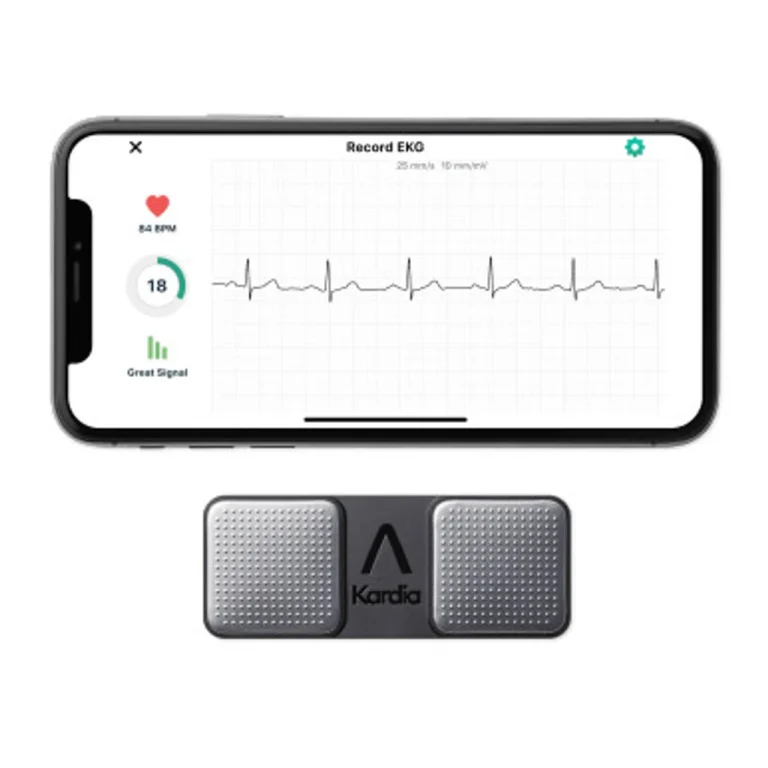
AliveCor KardiaMobile: The Most Affordable FDA Cleared Personal ECG
A credit card sized, $99 device that records a medical grade single lead ECG in 30 seconds, detects six arrhythmia types, and lets you email the results to your cardiologist…

Liquid Biopsy Is Rewriting Cancer Detection: How a Single Blood Draw May Find Dozens of Cancers Before Symptoms Appear
A convergence of cfDNA methylation analysis, multi-omics integration, and artificial intelligence is transforming cancer screening. From the PATHFINDER 2 trial showing a seven-fold increase in cancer detection to the PROMISE…

Normatec 3 Hips: Full Lower Body Pneumatic Compression for Hip and Leg Recovery
The hips are the engine of human movement. When they recover poorly, everything downstream suffers: stride mechanics, squat depth, power output, and the structural integrity that protects the lower back…
