
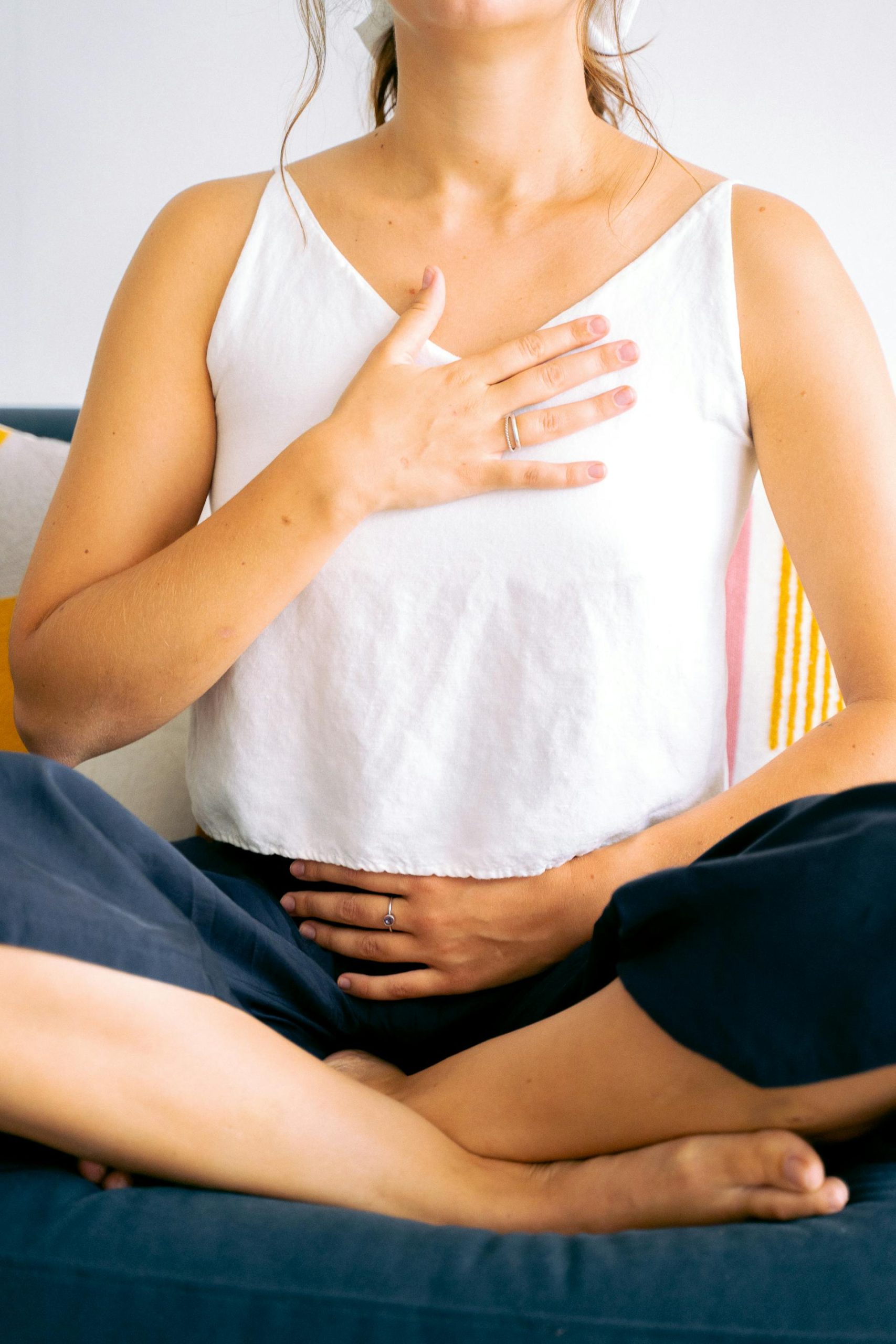
The Exhale Advantage: How Five Minutes of Slow Breathing Rewires Your Stress Response
For something that costs nothing, requires no app, and works in under five minutes, slow breathing has an unusually deep scientific paper trail. Over the past decade, researchers at Stanford, UCLA, and dozens of labs around the world have moved breathwork out of the wellness aisle and into the pages of journals like Nature and Cell Reports Medicine. What they have found is both humbling and practical. The way you breathe is one of the few automatic functions of your body that you can consciously override, and when you slow it down in the right pattern, you reach directly into the wiring that governs stress, heart rhythm, and recovery.
Presented By Our Partners



This is the bridge that makes breath one of the four fundamentals of health, alongside nutrition, movement, and sleep. Unlike most interventions, it produces measurable changes in your physiology within a single session. Here is what the research actually shows, and here is the evening protocol you can use tonight.
The Study That Put Breathwork on the Map
In early 2023, a team at Stanford Medicine published a randomized controlled trial in Cell Reports Medicine that has become a reference point for the field. The study, led by Melis Yilmaz Balban with psychiatrist David Spiegel and neuroscientist Andrew Huberman, recruited 114 participants and split them into four groups. Three groups practiced a specific breathing technique for five minutes a day over 28 days. The fourth practiced mindfulness meditation for the same duration, serving as the active comparison.
The three breathing techniques were not interchangeable. One group did cyclic sighing, which emphasizes a long, slow exhale. One did box breathing, the equal-count pattern used by the military and first responders. The third did cyclic hyperventilation, which emphasizes the inhale. All four groups improved their mood and lowered their anxiety, but the breathing groups outperformed mindfulness meditation, and one technique stood out above the rest.
Cyclic sighing produced the largest improvement in positive affect and the greatest reduction in respiratory rate. The effect was measurable after a single five-minute session and grew stronger with daily practice across the month. The detail that matters most for anyone trying to calm down is this: the breathwork that emphasized a long exhale beat the breathwork that emphasized a long inhale. The exhale, it turns out, is where the calming happens.
Why the Exhale Is the Lever
To understand why a long exhale settles the nervous system, you have to look at the vagus nerve, the main highway of the parasympathetic system that governs rest and recovery. Your heart rate is not constant. It speeds up slightly when you inhale and slows down when you exhale, a phenomenon called respiratory sinus arrhythmia. That fluctuation is the vagus nerve at work, and it is the reason a long exhale acts like a brake on arousal. When you stretch the exhale, you give the vagal brake more time to engage, and heart rate, blood pressure, and the sense of internal alarm all come down together.
This is also why heart rate variability, the beat-to-beat variation in your pulse, has become the favorite metric of wearable companies and longevity researchers alike. Higher variability generally signals a flexible, well-regulated nervous system that can shift between effort and recovery. Lower variability tends to track with chronic stress, poor sleep, and cardiovascular risk. Slow breathing is one of the most reliable ways to nudge that number in the right direction in real time.
The brainstem adds another layer to the story. In a 2016 Nature paper, researchers at UCLA and Stanford, including Jack Feldman, Mark Krasnow, and Kevin Yackle, identified roughly 200 neurons in the brainstem that convert ordinary breaths into sighs. A sigh pulls in about twice the volume of a normal breath, which physically reinflates the tiny air sacs in the lungs. More intriguingly, the team traced a circuit connecting these breathing neurons to a brain region involved in attention and arousal. When they silenced the relay in mice, the animals became unusually calm. The takeaway is that breathing and emotional state are not loosely associated, they are physically wired together, and the sigh is a built-in reset button.
The Power of Six Breaths a Minute
Cyclic sighing is the fastest tool for acute stress, but a second body of research points to a slightly different practice for building long-term resilience: resonance frequency breathing, often described as coherent or paced breathing at around six breaths per minute.
At roughly six breaths per minute, which works out to about 0.1 hertz, the rhythms of the heart and the blood pressure system synchronize. Researchers call this the resonance frequency, and breathing at this pace produces the largest possible swings in heart rate variability, with heart rate oscillations growing four to ten times larger than at rest. Each person has a slightly individual sweet spot, usually somewhere between four and a half and seven breaths per minute, but six is a reliable default that most people can settle into without measurement.
Featured Partner
Invest in the Infrastructure Behind Modern Medicine
As healthcare expands beyond hospital walls, the buildings and campuses supporting that shift are generating compelling returns for investors who move early. The Healthcare Real Estate Fund offers qualified investors direct access to a curated portfolio of medical office, outpatient, and specialty care facilities.
Learn More →
A 2017 study published in Frontiers in Public Health by Patrick Steffen and colleagues compared resonance frequency breathing against control conditions and found that the breathing group showed lower systolic blood pressure during a stress task and better mood. This pattern shows up repeatedly across the literature. Breathing at resonance frequency has been studied as a complementary approach in depression, PTSD, hypertension, and chronic pain, and it forms the core of heart rate variability biofeedback training.
What the Pooled Evidence Says
Individual studies are persuasive, but the more honest question is what happens when you combine them. A 2024 meta-analysis and systematic review published in the journal Mindfulness pulled together 31 studies with a combined 1,133 participants to quantify the effect of slow-paced breathing on the cardiovascular system and emotions.
The numbers held up. Slow-paced breathing produced an immediate reduction in systolic blood pressure with a standardized mean difference of about 0.45, an increase in the time-domain HRV measures RMSSD and SDNN, and a small reduction in heart rate. On the psychological side, it produced a modest but real reduction in negative emotion, particularly perceived stress. The effects were strongest for the cardiovascular and time-domain HRV measures, which are precisely the markers your wearable is trying to estimate.
A 2025 narrative review in the journal Stress and Health reached a complementary conclusion. Slow, nasal, diaphragmatic breathing was associated with improved vagal tone, higher HRV, greater parasympathetic activity, and better emotional control, alongside reductions in cortisol, anxiety, and stress symptoms. None of these reviews claim that breathwork replaces medical treatment. What they establish is that a free, portable practice produces consistent, measurable shifts in the systems that drive stress and cardiovascular health.
Where Breath Meets the Other Three Fundamentals
The reason breath belongs in the same conversation as nutrition, movement, and sleep is that it touches all three. The nervous system you train with slow breathing is the same one that governs how well you digest a meal, how deeply you recover from a workout, and how easily you fall asleep.
Sleep is the most direct connection. The transition into sleep requires a handoff from the sympathetic, alert branch of your nervous system to the parasympathetic, recovery branch. A racing mind at bedtime is often a nervous system that has not made that handoff. A few minutes of slow exhale-focused breathing before bed nudges the switch, which is why so many sleep protocols now open with a breathing exercise rather than a screen.
Movement is the next link. Endurance athletes have long used nasal and paced breathing to manage effort, and the same HRV that breathwork improves is the metric coaches use to decide whether an athlete is recovered enough to train hard. A higher morning HRV after a night that included some downregulation is a green light for intensity. Even nutrition has a breath connection, because eating in a calm, parasympathetic state supports digestion in a way that eating in a rushed, sympathetic state does not.
This is the practical promise of the fundamentals framework. You do not have to choose between them. Improving one tends to support the others, and breath is the fastest of the four to move, because you can change it in the next sixty seconds.
A Note on Honest Expectations
It is worth being clear about what slow breathing does and does not do. The effect sizes in the meta-analyses are real but generally moderate, and the strongest evidence is for immediate, in-the-moment changes rather than dramatic long-term transformation from a single session. Breathwork is a regulator, not a cure. For people managing diagnosed anxiety, hypertension, or cardiovascular disease, it is a useful complement to medical care, not a substitute for it. Anyone with a respiratory or cardiac condition should check with a clinician before starting intensive breathwork, and techniques involving hyperventilation deserve particular caution.
The honest framing is the encouraging one. You are not looking for a miracle. You are looking for a reliable, repeatable way to shift your physiology a meaningful amount in the direction of calm and recovery, on demand, for free. That is exactly what the evidence supports.
What This Means For Your Practice
Here is how to turn the research into a routine you can start tonight. None of this requires equipment, though a wearable can make the changes visible if you have one.
Learn the physiological sigh for acute moments. When stress spikes, take a normal inhale through the nose, then a second short sip of air on top to fully inflate the lungs, followed by a long, slow exhale through the mouth. Repeat one to three times. This is the single fastest tool in the literature, and it works in under thirty seconds because it taps the same brainstem circuit researchers mapped in 2016.
Build a five-minute cyclic sighing block. Once a day, ideally in the evening, spend five minutes doing the physiological sigh on a loop: double inhale through the nose, extended exhale through the mouth. The Stanford trial used exactly this dose, five minutes a day for 28 days, and saw mood and stress improve over the month. Consistency beat intensity.
Use six breaths a minute to wind down. For a calmer, slower practice, breathe at roughly six breaths per minute, which is about a five-second inhale and a five-second exhale. Five to ten minutes of this resonance-frequency pace is the protocol most closely tied to improved HRV and lower blood pressure. A simple breathing-pacer app or a visual breathing circle makes the timing effortless.
Anchor it to sleep. Place your breathing block in the last 20 minutes before bed, after screens are off. You are using breath to make the handoff from alert to recovery that sleep requires. This is where breath and the sleep fundamental reinforce each other most directly.
Breathe through the nose, and emphasize the exhale. Across the research, the common threads are slow, nasal, diaphragmatic breathing with an exhale that is longer than the inhale. If you remember nothing else, remember that the long exhale is the lever that engages the vagal brake.
Let your wearable show you the proof. If you own an Oura ring, a Whoop band, or a watch that tracks HRV, take a reading before and after a session. Watching your own variability climb in real time is one of the most motivating feedback loops in all of behavior change, and it turns an abstract practice into something you can see.
The science of breathing has caught up with what contemplative traditions claimed for centuries, and it has added the part those traditions could not provide: the numbers. Five minutes, one long exhale at a time, is enough to move them.


Similar Posts
Aktiia Bracelet: 24/7 Cuffless Blood Pressure Monitoring From Your Wrist
A wrist worn bracelet that measures blood pressure continuously throughout the day and night using optical sensors, CE marked in Europe and awaiting FDA clearance in the United States. Presented…

The Cure Hiding in Plain Sight: How Every Cure Is Rewriting the Rules of Drug Discovery
Every Cure is a nonprofit using AI and drug repurposing to uncover treatments hidden inside existing medicines. Founded by physician-scientist David Fajgenbaum after a repurposed drug saved his own life,…

Blood Tests Are Rewriting Alzheimer’s Detection: How P-Tau217, Finger Prick Diagnostics, and Lithium Science Are Transforming Cognitive Aging
A convergence of 2026 studies in Nature Medicine and Nature Aging is transforming Alzheimer’s detection. The p-tau217 blood test clock predicts symptom onset within three to four years, a finger…

The Daily Rounds: Longevity & Health Care Brief | May 2, 2026
🧠 Cognitive Speed Training Cuts Dementia Rate: An NIH study linked brief weeks of targeted cognitive training to a 25% lower dementia diagnosis rate over 20 years, among the strongest behavioral dementia prevention findings on record. ❤️ Menopause and Heart Disease: Virginia Tech researchers found that estrogen loss triggers broad epigenetic disruption across cardiovascular and metabolic gene regulation pathways, revealing new prevention targets beyond hormone therapy. 🤖 Open-Access AI Drug Discovery: MSU's "GPS" model identified validated candidates for liver cancer and pulmonary fibrosis using only public data, and released the tool freely to the research community. 🦠 Carbs Rewire Gut Immunity Fast: A Nature Communications study found that dietary carbohydrate type shifts gut bacteria between anti-inflammatory and pro-inflammatory states within weeks, putting food quality at the center of immune health strategy. ⌚ Smartwatch Plus Blood Test Predicts Diabetes Risk: The WEAR-ME study in Nature showed that consumer wearable data combined with routine blood panels predicts insulin resistance at 88% accuracy, enabling scalable early diabetes screening.

Vessel Health Wellness Panel: Daily Urine Testing for Metabolic Optimization
Vessel Health Wellness Panel: Daily Urine Testing for Metabolic Optimization How smartphone-powered urinalysis is bringing thousands of years of diagnostic wisdom into your daily wellness routine. Presented By Our Partners…

The Protein Threshold for Aging Muscle: Why Adults Over 40 Need More Than Government Guidelines Suggest
Twenty years of research from Stuart Phillips, Donald Layman, and the PROT-AGE consortium has produced one of the cleanest signals in nutrition science: adults over 40 need more protein than…
