
When AI Finds the Signal, Medicine Still Has to Finish the Job
The next serious test for healthcare AI is not whether it can notice something humans might miss. It is whether the health system can turn that notice into completed care.
Presented By Our Partners



A patient walks into an emergency department. The electrocardiogram is not treated as a portal into a future transplant story. It is, in most hospitals, one more urgent signal in a room full of urgent signals: chest pain, shortness of breath, dizziness, fatigue, risk, noise, time.
But in a recent Nature Medicine correspondence, clinicians described a case in which an artificial-intelligence-enhanced ECG helped surface previously unrecognized structural heart disease. The patient underwent echocardiography after the AI-ECG screening result, and the chain of care eventually led to heart transplantation.
That is the kind of story healthcare AI loves to tell about itself. The machine saw what might have been missed. The signal became a diagnosis. The diagnosis became treatment.
The more important story is quieter: nothing useful happened until the signal entered a care pathway.
An algorithm alone did not transplant a heart. It did not perform the echocardiogram, interpret the whole clinical picture, manage risk, counsel the patient, coordinate specialists, or make the transplant system available. The AI mattered because it was attached to a workflow that could absorb the signal and move the patient forward.
That distinction is where the next phase of healthcare AI will be won or lost.
The gap between detection and care
For the past decade, much of medical AI has been judged by a narrow question: can it detect, predict, classify, or summarize?
Those are real capabilities. They matter. But they are not the same as healthcare delivery.
Healthcare delivery asks harder questions:
- Who owns the signal once it appears?
- What is the next diagnostic step?
- Does the patient actually receive that step?
- Does the clinician trust the recommendation enough to act?
- Does the health system have capacity to follow through?
- Does the loop close, or does the alert become one more unread signal in a crowded chart?
HealthcareDiscovery.ai has called this the Discovery-to-Delivery Gap: the distance between finding something medically relevant and getting a patient to the right completed care.
The AI-ECG case is powerful because it shows the gap in miniature. A low-friction test generated a signal. That signal prompted more definitive imaging. The imaging changed the clinical trajectory. The clinical trajectory reached advanced treatment.
But a single sentinel case is not population-level proof. It is not evidence that every AI-ECG screening program will improve outcomes, reduce inequity, or avoid overtesting. It is a case that points to the right unit of analysis: the loop, not the model.
Structural heart disease is a workflow problem, not just a detection problem
Structural heart disease includes disorders affecting the valves, walls, or chambers of the heart. It contributes substantially to cardiovascular morbidity and mortality, and earlier diagnosis can change management. Yet it is often underdiagnosed, partly because echocardiography — the core diagnostic test — is not equally accessible, quick, or uniformly deployed.
Featured Partner
Invest in the Infrastructure Behind Modern Medicine
As healthcare expands beyond hospital walls, the buildings and campuses supporting that shift are generating compelling returns for investors who move early. The Healthcare Real Estate Fund offers qualified investors direct access to a curated portfolio of medical office, outpatient, and specialty care facilities.
Learn More →
That makes the ECG an attractive front door. ECGs are common, cheap, fast, and already embedded in emergency care. If AI can help identify patients whose routine ECG contains clues of underlying structural disease, the technology could theoretically help route more people toward echocardiography and specialist evaluation.
The word “theoretically” is doing important work.
A scalable signal can also create new problems. If screening produces too many false positives, specialty clinics and echo labs can be flooded. If it works only in already well-resourced settings, it can widen access gaps. If clinicians do not understand the threshold for action, an AI flag may be ignored or over-trusted. If no one is accountable for follow-up, the patient may leave with a risk score but no plan.
The Nature Medicine case is therefore not just a heart story. It is an implementation story.
Prediction is getting better. Action is still the bottleneck.
The same week, another Nature Medicine paper described COMPASS, a pan-cancer AI model designed to predict which patients may respond to immune checkpoint inhibitors. According to the paper and Harvard Medical School’s summary, COMPASS uses tumor gene-expression data and biologically grounded immune concepts to predict immunotherapy response across cancers and treatments. The model was trained on more than 10,000 tumors across 33 cancer types and evaluated across multiple clinical cohorts.
That is a different kind of signal, but the delivery problem is familiar.
If a model predicts that a patient is more or less likely to respond to immunotherapy, what happens next? Does the oncologist use it to choose treatment? Is the assay available? Is it reimbursed? Does the patient get the tissue test in time? Does the result arrive before the treatment window changes? Does the model perform prospectively in the messy clinic, not only retrospectively across datasets?
In other words: can the prediction enter the care pathway without becoming another beautiful stranded insight?
This is the uncomfortable truth beneath the current healthcare AI boom. The field is producing better detectors, better predictors, and better copilots. But many patients do not suffer from a lack of signals alone. They suffer from broken handoffs, delayed authorizations, unclear ownership, specialist scarcity, financial friction, and follow-up failure.
A signal that cannot move through those barriers is not yet care.
The new bar: closed-loop healthcare AI
A useful healthcare AI system should be evaluated less like a clever calculator and more like a relay team.
The baton matters. The handoff matters. The finish line matters.
For AI-enabled detection and prediction tools, the serious questions are not only technical. They are operational:
- Signal quality: Is the model accurate enough for the clinical setting and patient population?
- Workflow fit: Does the result appear where clinicians already make decisions?
- Ownership: Is someone clearly responsible for acting on the result?
- Follow-up: Is there a defined next step, such as imaging, referral, medication review, or navigation?
- Equity: Does the workflow reach people who otherwise fall through gaps, or mainly those already close to care?
- Measurement: Does the organization track completed downstream care, not just alerts fired?
- Governance: Are limitations, false positives, conflicts, and escalation rules explicit?
That is the difference between AI as a diagnostic novelty and AI as healthcare infrastructure.
It also changes how we should read dramatic cases. A transplant-linked AI story is not automatically hype. But it becomes hype if the conclusion is “AI saves lives” rather than “AI may help when embedded in a governed pathway that can turn earlier recognition into completed care.”
The hidden question: who gets the next step?
The most promising part of the AI-ECG case is not that it happened in a pristine concierge environment. The authors note that emergency departments often see patients with limited access to outpatient care. That matters.
If AI-enabled screening can identify serious disease in places where patients already show up — emergency departments, safety-net clinics, primary care visits, community screenings — it may help surface conditions before the usual access barriers prevent diagnosis.
But that possibility cuts both ways.
Screening in high-friction settings creates a moral obligation to design the next step. Finding disease in a patient who cannot afford, schedule, travel to, or understand the follow-up plan is not enough. The more powerful the signal, the more serious the follow-through burden becomes.
This is where healthcare AI has to grow up. It cannot keep selling detection as if detection were the endpoint. Detection is a promise. Delivery is whether the promise is kept.
What to watch next
The AI-ECG case belongs on the Healthcare Discovery radar because it points toward a more mature phase of clinical AI: one where the model is judged by whether it helps the health system complete a chain of care.
The next evidence bar should include:
- prospective trial results, not only sentinel cases;
- downstream echo completion rates;
- time from AI flag to definitive diagnosis;
- specialist referral completion;
- treatment initiation where appropriate;
- false-positive burden and resource use;
- patient-level equity analysis;
- clinician override and safety data;
- conflict-of-interest transparency.
That is a higher bar than accuracy. It should be.
Healthcare does not need more impressive demos that stop at the edge of the chart. It needs systems that can responsibly move from signal to ownership, from ownership to action, and from action to completed care.
The ECG may be the first whisper. The question is whether medicine is listening all the way to the end.
Sources and evidence
- Hartman H.S. et al., “A case of artificial intelligence-enhanced diagnostics leading to heart transplantation,” Nature Medicine, published June 22, 2026. DOI: 10.1038/s41591-026-04454-y.
- PubMed record PMID 42332144 notes no abstract and includes disclosed competing interests related to the AI-ECG algorithm “EchoNext” and related institutional research support/equity.
- Shen W. et al., “Generalizable AI predicts immunotherapy outcomes across cancers and treatments,” Nature Medicine, published July 3, 2026. DOI: 10.1038/s41591-026-04502-7.
- Harvard Medical School summarized COMPASS as an AI model using tumor gene-expression data to predict immune checkpoint inhibitor response, with the stated goal of eventually helping identify patients most likely to benefit.
- HIT Consultant coverage of the ZS Impact Institute 2026 Future of Health report emphasized treatment initiation/adherence gaps and the need for connected triage and pathway orchestration.


Similar Posts
The Daily Rounds: Longevity & Health Care Brief | May 9, 2026
⚖️ Weight and Brain Age — A 24-year study finds that sustained weight management may preserve brain age by up to two years, directly slowing the rate of memory and executive function decline. 💉 Gut Bacteria Inject Proteins Into Immune Cells — Scientists discover microbes use molecular injection systems to directly modulate immune cell behavior, explaining how microbiome composition drives systemic health outcomes. 🔓 OpenBind Opens AI Drug Discovery to Everyone — A UK consortium releases the first public AI model for atomic-level protein-drug binding prediction, leveling the pharmaceutical research playing field. 📊 Wearables Predict Insulin Resistance at 80% Accuracy — The WEAR-ME study shows wearable data plus standard blood tests can identify insulin resistance years before diabetes develops, using devices most people already own. 🏋️ Grip Strength Cuts Mortality Risk by 33% in Older Women — A JAMA study of 5,000 older women finds that high grip strength independently predicts survival, even among those who do not meet aerobic exercise guidelines.
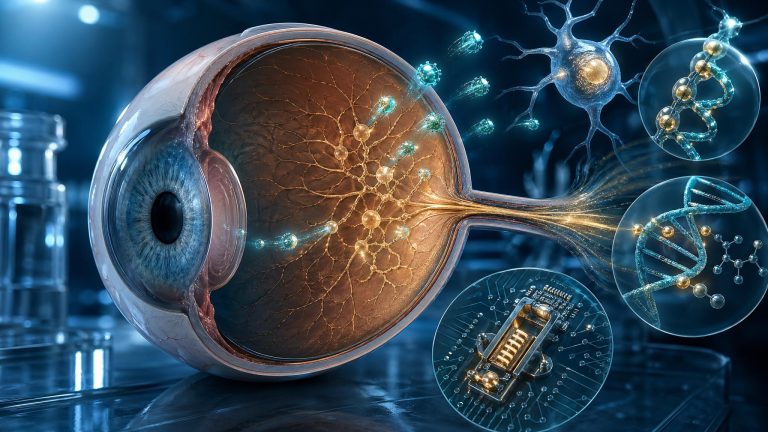
The First Human Epigenetic Reprogramming Trial Has Begun: Inside ER-100 and What It Means for the Future of Aging Medicine
For the first time in history, a therapy designed to reverse the cellular age of human tissue is being tested in living patients. Here is what the science actually shows,…
The Daily Rounds: Longevity & Health Care Brief | June 9, 2026
🤖 Pancreatic Cancer Gets Its Biggest Breakthrough in a Decade: Daraxonrasib nearly doubles median survival versus chemotherapy, earning a standing ovation at ASCO 2026 and advancing toward FDA submission. 🦠 Gut Bacteria Talk to Your Immune System in a Newly Discovered Molecular Language: A Helmholtz Munich team maps over 1,000 direct protein interactions between common gut bacteria and human cells, fundamentally reframing how the microbiome shapes immunity. ❤️ Night Owl Cardiac Risk Is Mostly Behavioral, Not Biological: AHA research shows the elevated heart disease risk for evening types is largely explained by modifiable lifestyle factors, making it genuinely actionable. 💪 Grip Strength Is a Mortality Predictor for Older Women, Period: The largest study of its kind confirms muscle strength protects women over 60 from early death regardless of how much aerobic exercise they do. 🥗 GLP-1 Success Depends on What You Keep, Not Just What You Lose: A new clinical framework urges practitioners to prioritize muscle preservation alongside weight loss in GLP-1 therapy to protect long-term function and metabolic health.
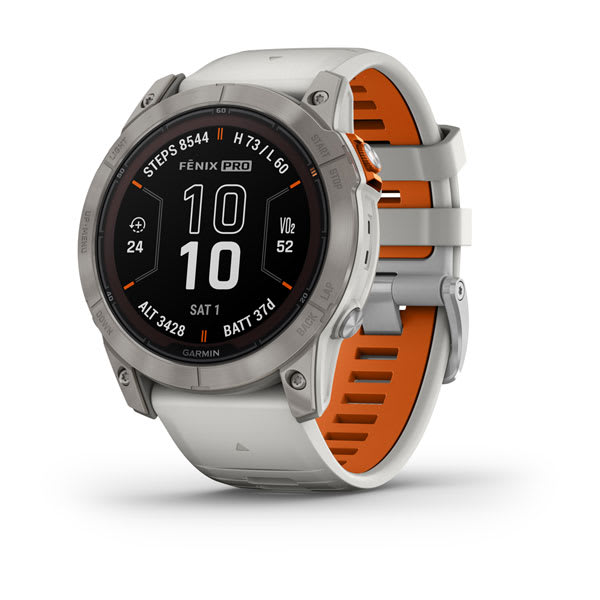
Garmin Fenix 7X Pro Sapphire Solar: Solar Powered Endurance Tracking With ECG and Advanced Navigation
Garmin’s flagship endurance watch combines solar charging, multi band GPS, FDA cleared ECG, and VO2 max estimation in a sapphire crystal package built for ultra distance athletes and backcountry expeditions….
The Complete Guide to Wearable Health Technology: 257 Devices Across 17 Categories
From FDA-cleared ECG watches to at-home brain stimulation headsets, 257 devices across 17 categories are reshaping how we monitor, measure, and improve our health. This is the most comprehensive wearable…
LetsGetChecked: At Home Blood Testing With Nurse Support and Physician Review
A comprehensive at home blood testing platform that combines finger prick convenience with CLIA certified lab analysis, dedicated nurse support, and physician reviewed results across dozens of health panels. Presented…
