
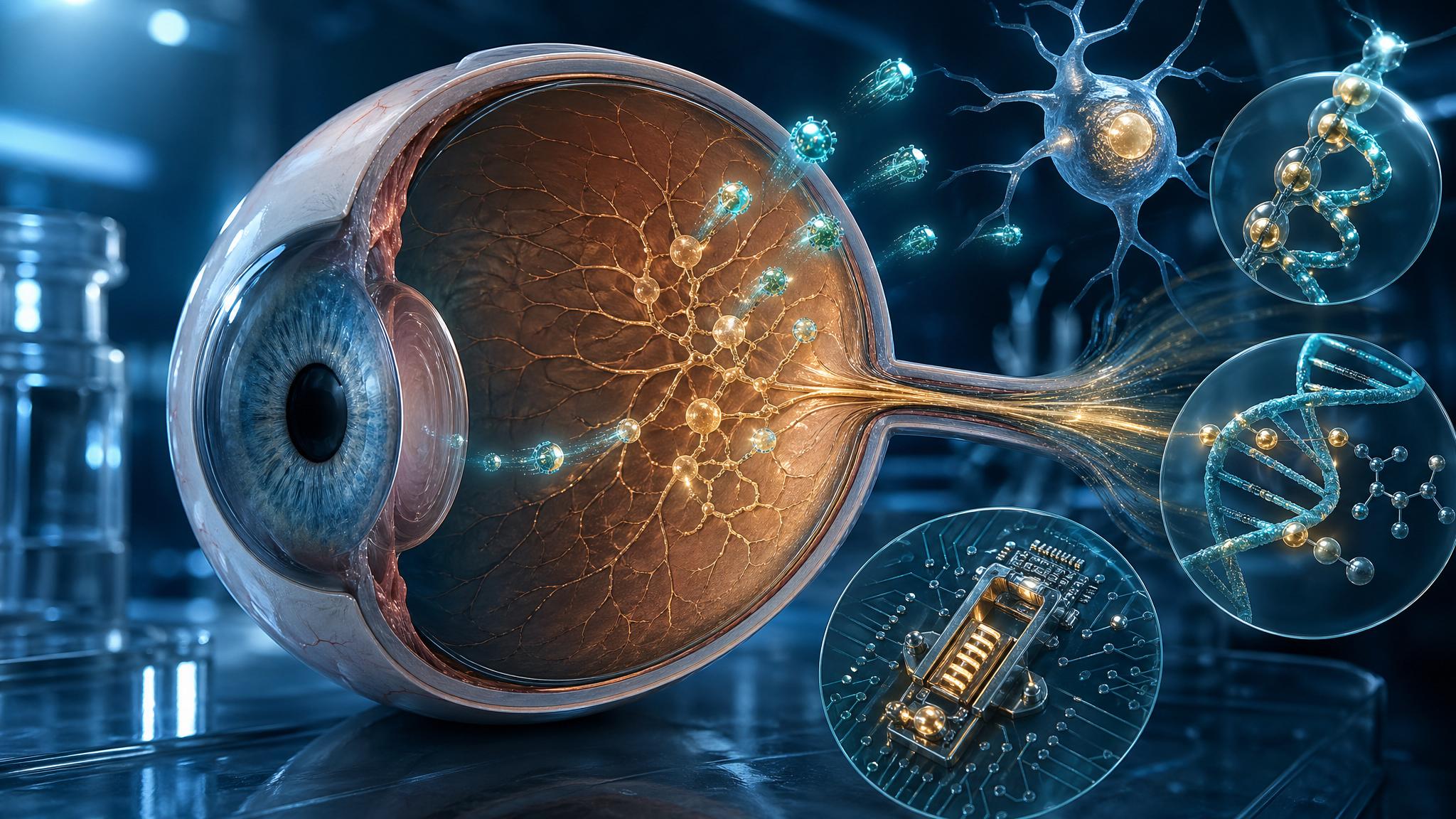
The First Human Epigenetic Reprogramming Trial Has Begun: Inside ER-100 and What It Means for the Future of Aging Medicine
For the first time in history, a therapy designed to reverse the cellular age of human tissue is being tested in living patients. Here is what the science actually shows, and why the implications extend far beyond the eye.
Presented By Our Partners



In January 2026, the U.S. Food and Drug Administration cleared Life Biosciences to begin the world’s first human trial of partial epigenetic reprogramming. The company’s lead therapy, ER-100, delivers three reprogramming genes directly into the eye using a viral vector, with a built-in molecular safety switch that keeps the process controlled. The target conditions are open-angle glaucoma and non-arteritic anterior ischemic optic neuropathy, a form of sudden vision loss sometimes called a stroke of the eye.
On the surface, this reads as a niche ophthalmology trial. In reality, it is one of the most consequential experiments in the history of biomedical science. If ER-100 works as the preclinical data suggest it should, the trial will establish something that aging researchers have been debating for decades: that epigenetic age is not fixed, that it can be reset in living human tissue, and that doing so improves biological function. The eye is simply where that question will be answered first.
The Information Theory of Aging: Why Cells Forget How to Be Young
To understand why ER-100 matters, you need to understand what aging actually is at the molecular level, according to the theoretical framework that underlies this entire line of research.
David Sinclair, a professor of genetics at Harvard Medical School and one of the co-founders of Life Biosciences, has spent more than two decades developing what he calls the information theory of aging. The core argument is this: your DNA is not the primary driver of aging. Most of your cells contain the same DNA from birth to death. What changes is the epigenome, the chemical layer of tags, marks, and folding patterns that sits on top of the DNA and tells each cell which genes to activate and which to silence.
Young cells have a clear, well-organized epigenome. Old cells accumulate epigenetic noise: marks get added where they should not be, marks get erased where they should remain, and the result is that cells gradually lose the ability to express their identity accurately. A liver cell starts expressing genes that belong to other cell types. A retinal ganglion cell loses the signals that keep it alive and functional. This progressive loss of epigenetic fidelity is, according to Sinclair’s framework, the fundamental driver of aging.
The critical insight, and the one that makes epigenetic reprogramming therapeutically interesting, is that the underlying DNA sequence remains intact throughout this process. The information is not lost; it is merely misread. If you could restore the epigenetic reading patterns to a more youthful state without altering the DNA itself, you could, in theory, restore youthful function to old or damaged tissue.
A landmark 2013 paper in Cell by Shinya Yamanaka, who would win the Nobel Prize for the work, showed that introducing four specific transcription factors into adult cells could reprogram them all the way back to a pluripotent state: essentially an embryonic state, capable of becoming any cell type. These Yamanaka factors, OCT4, SOX2, KLF4, and c-MYC, became the basis for one of the most explosive areas of modern biology. But full reprogramming creates a problem: cells that revert too far lose their identity entirely, and c-MYC in particular is a known oncogene that can drive tumor growth.
Partial reprogramming, the approach Life Biosciences is pursuing, is a more precise intervention. By using only three of the four factors (OCT4, SOX2, and KLF4, collectively abbreviated as OSK) and delivering them transiently rather than permanently, researchers can dial back the epigenetic clock without erasing cellular identity. The cell rejuvenates without forgetting what kind of cell it is.
The Preclinical Case: From Mice to Monkeys
The scientific case for OSK partial reprogramming in the eye is unusually strong for a first-in-human therapy. Research from Sinclair’s laboratory at Harvard, published in Nature in 2020, demonstrated that delivering the OSK genes via adeno-associated virus into the eyes of mice with induced glaucoma restored youthful gene expression patterns in retinal ganglion cells, regenerated damaged optic nerve fibers, and reversed measurable vision loss. The effect was tied to a restoration of DNA methylation patterns to a more youthful state, providing direct evidence for the epigenetic mechanism rather than some off-target effect.
Subsequent work extended the results. A 2023 study in Cellular Reprogramming showed that systemic delivery of an inducible OSK system in 124-week-old male mice, roughly the equivalent of late-middle age to elderly in human terms, extended median remaining lifespan by 109 percent over wild-type controls. The same animals showed reversal of multiple hallmarks of aging across tissues, including restored kidney function, improved muscle performance, and reduced inflammatory markers.
Life Biosciences also reported advances in non-human primate studies at the Aging Research and Drug Discovery meeting in 2025, presenting data showing that partial epigenetic reprogramming improved visual function in primate models without evidence of tumorigenesis or loss of cellular identity. Non-human primate data is the closest preclinical bridge to human biology, and its inclusion in the company’s regulatory package was a meaningful step toward FDA clearance.
The choice to begin in the eye is strategically important for reasons beyond the strength of the ophthalmic data. The eye is an immune-privileged tissue, meaning the immune system is less likely to mount an aggressive response to a viral vector delivered directly into the vitreous. It is also relatively accessible for direct injection, which limits systemic exposure. And it has objective, measurable endpoints: visual acuity, intraocular pressure, retinal nerve fiber layer thickness, and optic nerve head morphology are all quantifiable. The eye, in other words, is an ideal contained system for demonstrating proof of concept before moving into more complex tissues.
Featured Partner
Invest in the Infrastructure Behind Modern Medicine
As healthcare expands beyond hospital walls, the buildings and campuses supporting that shift are generating compelling returns for investors who move early. The Healthcare Real Estate Fund offers qualified investors direct access to a curated portfolio of medical office, outpatient, and specialty care facilities.
Learn More →
How ER-100 Works: The Doxycycline Safety Switch
ER-100 is delivered as a single intravitreal injection, the same route used for the VEGF inhibitors that have transformed treatment of wet macular degeneration over the past two decades. Inside the injection is an adeno-associated virus carrying the three OSK genes under the control of a tetracycline-responsive promoter. In plain terms: the reprogramming genes are present but inactive by default. They only switch on when the patient takes low doses of the antibiotic doxycycline.
This doxycycline-inducible design is the central safety innovation in ER-100. If the therapy produces unexpected effects, the patient stops the antibiotic and the reprogramming genes go quiet. The window of active reprogramming in the Phase 1 trial is approximately two months, after which patients will be monitored for safety, tolerability, immune responses, and multiple visual function assessments.
The Phase 1 trial, registered with ClinicalTrials.gov under NCT07290244, will enroll approximately 12 participants across the two indications. Open-angle glaucoma, the more common condition, causes gradual optic nerve damage through elevated intraocular pressure, ultimately resulting in irreversible vision loss if untreated. NAION, the less common but more acute indication, results from interrupted blood supply to the optic nerve and currently has no FDA-approved treatment. Both conditions represent areas of significant unmet clinical need, and both involve damage to retinal ganglion cells, the specific cell population that OSK reprogramming has demonstrated the ability to rejuvenate in preclinical models.
The trial is not powered to demonstrate efficacy; it is a Phase 1 safety study. But the secondary endpoints, measures of visual function before and after treatment, will generate the first human data on whether epigenetic reprogramming produces measurable biological changes in living people. That signal, however preliminary, will be one of the most closely watched readouts in the history of longevity medicine.
What This Means for the Four Villains: Neurodegeneration at the Cellular Root
Within the framework of the four primary chronic disease threats to longevity, cardiovascular disease, cancer, neurodegenerative disease, and metabolic dysfunction, the ER-100 trial speaks most directly to neurodegeneration. The retinal ganglion cells targeted in this trial are, embryologically, extensions of the central nervous system. The optic nerve is brain tissue. The epigenetic mechanisms that drive age-related degeneration in these cells are the same mechanisms implicated in Alzheimer’s disease, Parkinson’s disease, and ALS.
If partial reprogramming can restore function to aged retinal tissue, the scientific logic extends toward the broader neurodegenerative challenge. The barriers to treating Alzheimer’s or Parkinson’s with a similar approach are real: delivery to the central nervous system is far more complex than intravitreal injection, and the cellular populations involved are more heterogeneous. But a successful ER-100 trial would establish the foundational proof of concept that the epigenetic clock is reversible in human neural tissue, providing a platform for every subsequent application.
That is why researchers working on neurodegeneration across the spectrum are watching this trial closely. The eye is the window, in every sense.
The Broader Landscape: Where Epigenetic Reprogramming Research Stands in 2026
Life Biosciences is not the only organization pursuing epigenetic reprogramming, but it holds a meaningful first-mover advantage in human trials. Several other companies, including Altos Labs (funded by a reported $3 billion from investors including Jeff Bezos), NewLimit (co-founded by Coinbase’s Brian Armstrong), and Turn Biotechnologies are working on related approaches. None has yet reached FDA-cleared human trials as of April 2026.
At the academic level, a 2026 review published in Ageing Research Reviews describes partial reprogramming as “the most promising and mechanistically coherent strategy for addressing the root cause of multiple age-related diseases simultaneously.” The paper cites evidence from at least a dozen independent research groups showing that OSK or similar factor combinations restore youthful epigenetic signatures across multiple tissue types, including muscle, liver, kidney, and the central nervous system.
A separate 2026 study published in Science Translational Medicine demonstrated that targeted partial reprogramming of specific age-associated cell states improved multiple markers of health in mouse aging models without the safety concerns associated with full Yamanaka factor reprogramming. The finding supported the emerging consensus that OSK, when delivered transiently and in a controlled manner, operates within a therapeutic window that produces rejuvenation without dedifferentiation.
One important distinction in the current scientific debate involves chemical reprogramming versus gene therapy approaches. A 2023 study from Sinclair’s lab published in the journal Aging demonstrated that a cocktail of small molecules could induce partial reprogramming in human neurons without any viral vector, achieving measurable epigenetic age reversal measured by DNA methylation clocks. Chemical approaches could eventually be simpler to manufacture and deliver than gene therapies, but they are earlier in development. ER-100 represents the most advanced clinical translation of any reprogramming modality.
The DNA Methylation Clock: How Researchers Measure Biological Age
Central to understanding this field is the concept of epigenetic clocks, algorithms that measure biological age by analyzing DNA methylation patterns at hundreds or thousands of specific sites across the genome. First developed by biostatistician Steve Horvath at UCLA in 2013, these clocks have become the gold standard for measuring biological age in research settings, demonstrating that people of the same chronological age can vary by a decade or more in their epigenetic age, and that this gap predicts disease risk and mortality independently of other biomarkers.
In the mouse studies supporting ER-100, one of the primary outcome measures was the change in epigenetic clock readings before and after OSK treatment. Animals treated with partial reprogramming showed consistent, measurable reductions in epigenetic age, accompanied by improvements in functional outcomes. Whether ER-100 produces similar clock changes in human tissue will be among the secondary analyses from the Phase 1 trial, making this one of the first opportunities to validate epigenetic clocks as biomarkers of therapeutic response in a human intervention.
The clock data will matter enormously. If patients treated with ER-100 show measurable reductions in their epigenetic age as well as improvements in visual function, the trial will simultaneously demonstrate two things: that epigenetic reprogramming works in humans and that epigenetic clocks are valid readouts of successful intervention. Both findings would accelerate the entire field.
Challenges and What Could Limit Progress
The scientific case for epigenetic reprogramming is compelling, but responsible reporting requires acknowledging the genuine uncertainties that Phase 1 safety studies are designed to address.
The doxycycline safety switch reduces but does not eliminate the theoretical risk that prolonged OSK expression could promote dedifferentiation or, in the worst case, contribute to tumor formation. While no tumorigenesis was observed in the mouse or non-human primate studies, the transition to human biology always introduces unknowns. The 12-patient safety study will be closely monitored for any adverse signals.
Long-term durability is also an open question. AAV gene therapies can persist for years in the cells they infect, but the persistence of the reprogrammed epigenetic state, and how long any functional improvements are maintained, will require longer follow-up than Phase 1 can provide. Several gene therapies for inherited retinal diseases have shown durable effects at five or more years; whether ER-100 follows a similar pattern will emerge over time.
Finally, the leap from the eye to systemic aging is a long one. Even a perfectly successful ophthalmic trial will not immediately translate into a pill that reverses biological age. The path from ER-100’s Phase 1 readout to a broadly available aging intervention will require a decade or more of additional development across multiple tissues and indications. Managing expectations while recognizing the genuine significance of this milestone is a balance the longevity field has historically struggled to maintain.
What This Means for You
The ER-100 trial is not something you can enroll in unless you have open-angle glaucoma or NAION and meet the eligibility criteria. For the vast majority of people, its significance lies not in immediate clinical access but in what a successful outcome would change about the entire direction of medicine over the next decade.
Here is the practical takeaway: the biological processes that the ER-100 trial is designed to reverse, epigenetic noise accumulation, loss of cellular identity, and declining tissue function with age, are the same processes that your foundational health behaviors are already working to slow. The research connecting exercise, sleep quality, nutritional quality, and stress regulation to epigenetic age is extensive and consistent. People who engage in resistance training, maintain adequate sleep, eat predominantly whole foods, and practice regular stress regulation consistently show younger epigenetic ages than sedentary, sleep-deprived, or chronically stressed peers of the same chronological age.
The connection is not metaphorical. Regular aerobic exercise upregulates SIRT1 and AMPK pathways, the same longevity pathways that Sinclair’s research has identified as protective against epigenetic noise accumulation. Caloric restriction and time-restricted eating reduce the rate of epigenetic aging as measured by DNA methylation clocks in human clinical trials. Sleep deprivation, conversely, accelerates epigenetic aging at a measurable rate. The foundational pillars of health are, in a very direct sense, epigenetic interventions.
What ER-100 and the reprogramming therapies that will follow it offer is a potential reset when the epigenome has already aged significantly, a molecular undo function for decades of accumulated biological noise. But the most elegant outcome for the longevity field is a combination: foundational behaviors that slow the accumulation of epigenetic noise throughout life, paired with targeted reprogramming therapies that address the damage that accumulates despite those behaviors. The first human trial of that reset has now begun.
Sources: Life Biosciences IND clearance announcement (January 2026); Horvath et al., Nature (2020); Lu et al., Cell Reprogramming (2023); Sinclair et al., Aging (2023); Life Biosciences ARDD 2025 data presentation; Ageing Research Reviews (2026 review, partial reprogramming as aging strategy); Science Translational Medicine (2026, targeted partial reprogramming in mouse aging models); ClinicalTrials.gov NCT07290244.


Similar Posts

Withings BPM Core: Blood Pressure, ECG, and Digital Stethoscope in One Device
The most comprehensive home cardiac monitor available combines blood pressure measurement, a single lead ECG, and a digital stethoscope for valvular heart disease screening in a single arm cuff. Presented…

The Scan Found a Lung Nodule. Then the Hospital Had to Find the Patient.
A new emergency-department study shows where healthcare AI can matter: not simply spotting a signal, but helping a care team contact the patient and complete the next step.

David Sinclair and the Battle Over the Future of Aging Science
David Sinclair helped make longevity science impossible to ignore. He also became one of its most contested public figures. Part II examines the criticism, contradictory evidence, and scientific arguments that…

Willow Go Wearable Breast Pump: Affordable Hands-Free Pumping with App Tracking
The wearable breast pump category was born from a simple observation: the technology meant to help mothers sustain breastfeeding was itself a barrier to breastfeeding. Willow Go brings that innovation…

Lp(a) and Heart Disease 2026: The Genetic Risk Factor Statins Cannot Touch and the New Wave of Therapies That Could Change Cardiology
An estimated 1.4 billion people globally carry elevated lipoprotein(a), a genetically inherited cardiovascular risk factor that statins do not lower. Inside the biology of Lp(a), why the science went quiet…

Muscle Span: Why Grip Strength Now Predicts How Long You Live, and the Protein and Strength Playbook to Build It Tonight
A February 2026 JAMA Network Open study of more than 5,000 women found that a firm hand grip predicted survival even in those who fell short of exercise guidelines or…
