
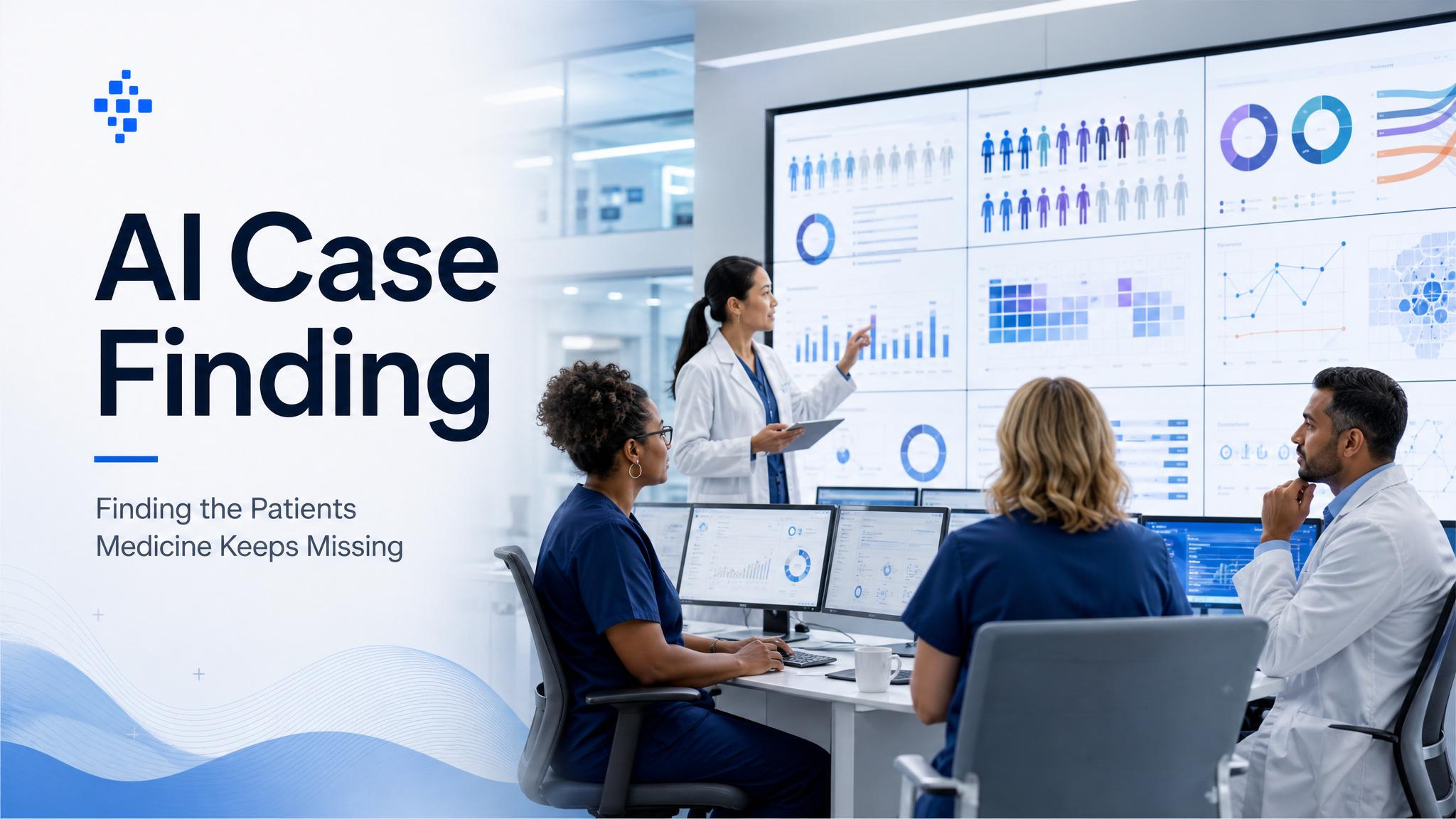
AI Case Finding: The Healthcare Delivery Use Case That Finds Patients Medicine Keeps Missing
The next phase of healthcare AI may not begin with a new cure. It may begin with finding the patients who already qualify for proven care but remain invisible to the system.
Presented By Our Partners



Healthcare often knows more than it acts on.
A scan contains a suspicious finding. A lab result suggests an untreated disease. A patient meets criteria for a screening program. A note hints at cognitive decline. A blood pressure reading signals risk. A radiology report recommends follow-up. A diagnosis exists, but treatment never starts. A referral is placed, but the appointment never happens.
In a well-functioning system, those signals would reliably become action. In the real one, many disappear.
That is why case finding is becoming one of the most important applications of artificial intelligence in healthcare delivery. It is not the most glamorous use case. It does not promise a new miracle drug or a universal diagnostic model. But it may answer one of medicine’s most frustrating questions: who is already in the data, already at risk, already eligible for care, and still being missed?
The answer matters because the future of healthcare AI will not be judged only by whether it can generate predictions. It will be judged by whether those predictions reach the right patient, trigger the right next step, and improve the odds that proven care actually gets delivered.
The No-Do Gap Starts With the Unfound Patient
At The New Wave of AI in Healthcare 2026, Dave A. Chokshi, MD, MSc, former New York City Health Commissioner, described a problem he called the “discovery-delivery gap,” or the “no-do gap.” Medicine has curative or highly effective interventions that still do not reach enough of the patients who would benefit from them.
His examples were deliberately practical: hepatitis C antivirals, HIV prevention, and hypertension control. The point was not that medicine lacks knowledge. It was that healthcare delivery keeps failing to convert knowledge into completed care.
Case finding is the front door to solving that problem.
Before a patient can be treated, the system has to know who they are. Before a care navigator can call, someone has to be on the list. Before a specialist can evaluate a suspicious finding, the finding has to be captured, routed, and owned. Before a population health team can close a gap, the gap has to be visible.
In the older healthcare IT world, this work often meant registries, manual chart review, quality reports, risk scores, and spreadsheet-driven outreach. Those tools helped, but they were slow, brittle, and incomplete. They struggled with unstructured clinical notes, radiology reports, fragmented records, changing eligibility criteria, and the messy reality of patients moving across sites of care.
AI changes the case-finding problem because healthcare’s missed signals are rarely confined to one clean field. They live across text, images, labs, claims, medications, history, scheduling, and clinician judgment.
The opportunity is to turn that fragmented trail into a prioritized, actionable map of patients who need the next step.
What AI Case Finding Actually Does
AI case finding is the use of machine learning, natural language processing, computer vision, large language models, and workflow automation to identify patients who may have an undiagnosed condition, an unresolved abnormal result, an untreated diagnosis, an overdue screening, or eligibility for a proven intervention.
That can include:
- scanning radiology reports for incidental findings that need follow-up;
- identifying patients with possible undiagnosed Alzheimer’s disease in electronic health records;
- detecting cancers missed by conventional screening workflows;
- flagging patients with signs of valvular heart disease in primary care;
- finding patients with uncontrolled hypertension, diabetes, chronic kidney disease, hepatitis C, atrial fibrillation, or pulmonary nodules;
- surfacing patients eligible for preventive therapy, specialty referral, care management, clinical trials, or medication intensification.
The best case-finding systems do not simply generate another alert. They connect detection to action: a registry, a work queue, a navigator, a clinician, a follow-up order, a trial match, a patient message, or a documented reason why no action is needed.
That last point matters. In healthcare, the unit of value is not the alert. It is the closed loop.
Breast Cancer Screening Shows the Direction
One of the clearest 2026 signals comes from breast cancer screening.
Google, Imperial College London, and the UK National Health Service published research in Nature Cancer examining how AI could support mammography workflows. Google reported that an experimental AI system identified 25% of interval cancers that had previously been missed — cancers that typically surface between screening rounds, often after symptoms appear. In a second study of more than 50,000 women, the AI system was capable of reducing screening workload by an estimated 40% when used as a second reader.
A separate report on the GEMINI study, also published in Nature Cancer and summarized by The ASCO Post, found that integrating AI into UK breast cancer screening workflows increased cancer detection by 10.4%. The study reported workload reductions of up to 31%, potential savings of 36% compared with standard processes, and a reduction in notification time for women with detected cancer from 14 days to 3 days.
Those numbers are important because they show where AI case finding is headed. The value is not only that the model can see something. The value is that screening programs may detect more disease, reduce unnecessary workload, reduce false-positive burden, notify patients sooner, and reallocate scarce radiology capacity toward the cases that need human expertise most.
This is the emerging pattern: AI as a force multiplier for constrained clinical systems.
But the breast cancer studies also show why implementation is hard. Google’s report noted that arbitration panels sometimes overruled AI-detected cancers that would otherwise have gone undetected. That is not a reason to abandon the technology. It is a reminder that case finding is a human-AI workflow problem, not a model leaderboard problem.
If the system does not know when to trust the signal, who owns the next step, and how outcomes are monitored, AI can find more risk without reliably delivering more care.
The Primary Care Signal: Hidden Heart Disease
Another 2026 example comes from a prospective study of an AI-enabled digital stethoscope for valvular heart disease screening in primary care.
According to News-Medical’s summary of the European Heart Journal Digital Health study, the AI system showed 92.3% sensitivity for detecting audible valvular heart disease, compared with 46.2% for standard care. The tool identified twice as many cases of previously undiagnosed moderate-to-severe disease, though with somewhat lower specificity.
That tradeoff is exactly what makes case finding both powerful and delicate.
Valvular heart disease often goes undetected because many patients are asymptomatic and routine auscultation can miss clinically meaningful disease. An AI stethoscope in primary care could help identify patients who need echocardiography or cardiology evaluation earlier.
But if the tool produces too many false positives, it can overload specialists, increase testing, and create anxiety. If it is too conservative, it misses the very patients it was meant to find. The operational question becomes: what threshold creates the best balance between earlier detection and sustainable follow-up?
Featured Partner
Invest in the Infrastructure Behind Modern Medicine
As healthcare expands beyond hospital walls, the buildings and campuses supporting that shift are generating compelling returns for investors who move early. The Healthcare Real Estate Fund offers qualified investors direct access to a curated portfolio of medical office, outpatient, and specialty care facilities.
Learn More →
That is where healthcare delivery discipline matters. A case-finding tool has to be paired with referral capacity, triage rules, patient communication, follow-up tracking, and outcome measurement.
The device is only the beginning. The pathway is the product.
EHR Case Finding and Diagnostic Equity
Case finding is not limited to imaging or devices. It can also work inside the electronic health record.
UCLA researchers developed an AI tool designed to identify patients with possible undiagnosed Alzheimer’s disease using electronic health records. UCLA Health reported that the model was tested on records from more than 97,000 patients and achieved sensitivity rates of 77% to 81% across non-Hispanic white, non-Hispanic African American, Hispanic/Latino, and East Asian groups, compared with 39% to 53% sensitivity for conventional supervised models.
The equity dimension is central. UCLA noted that African Americans are nearly twice as likely to have Alzheimer’s disease as non-Hispanic whites but only 1.34 times as likely to receive a diagnosis. Hispanic and Latino people are 1.5 times more likely to have the disease but only 1.18 times as likely to be diagnosed.
A case-finding model that reduces those diagnostic gaps is not just a technical advance. It is a delivery intervention.
This is where AI can either correct or compound healthcare inequality. If models are trained only on already-diagnosed patients, they may learn the biases of the current system. If they are designed to detect hidden disease across populations and audited for fairness, they may help health systems find people who have historically been overlooked.
The distinction is not academic. It determines whether AI becomes a tool for access or a tool for automating the same blind spots at higher speed.
Cancer Follow-Up Is Becoming a Platform Category
Case finding becomes especially valuable when it connects directly to care coordination.
Azra AI’s 2026 acquisition of Thynk Health is a signal of where the market is moving. The deal combined Azra’s enterprise platform for incidental findings and oncology workflow automation with Thynk Health’s lung cancer screening and incidental findings management capabilities. The combined footprint reportedly spans hundreds of hospitals, including five of the top ten health systems in the United States.
The platform processes more than half a billion clinical reports and messages annually in real time, according to the company’s announcement coverage, and supports workflows across radiology, pathology, cardiology, emergency departments, and oncology service lines. Its capabilities include incidental findings management, cancer patient identification, patient navigation and care coordination, registry case-finding, tumor board coordination, clinical trial matching, and reporting.
This is the business model of AI case finding becoming clearer.
The value is not a standalone algorithm that says “possible cancer.” The value is an enterprise workflow layer that converts imaging findings and fragmented clinical data into follow-up, diagnosis, treatment, survivorship, trial matching, and measurable closure.
That is why case finding is likely to become a serious healthcare venture capital category. It sits upstream of high-cost, high-stakes care pathways. It can produce measurable ROI. It can improve quality metrics. It can reduce leakage. It can help health systems manage risk. And if it works, it can save lives by shortening the distance between a finding and a decision.
Why 2026 Is an Inflection Point
Several forces are converging.
First, healthcare AI adoption is moving from pilots to operational use. NVIDIA’s 2026 State of AI in Healthcare and Life Sciences survey reported that 70% of respondents said their organizations are actively using AI, up from 63% in 2024. Sixty-nine percent reported using generative AI and large language models. Forty-seven percent said they are using or assessing agentic AI. Across the industry, top use cases included clinical decision support, medical imaging, workflow optimization, patient interaction, administrative tasks, and care coordination.
Second, health systems are under pressure to do more with fewer people. Radiologist shortages, primary care access gaps, administrative overload, and aging populations make manual case finding increasingly unrealistic.
Third, AI is getting better at multimodal pattern recognition. The relevant signal may be in a mammogram, a CT report, an echocardiogram, a lab trend, a claims pattern, or an unstructured note. Systems that can combine those signals may be able to find patients earlier than single-modality tools.
Fourth, the buyer is becoming more sophisticated. Health systems and payers are no longer impressed by generic “AI-powered” claims. They want evidence of workflow fit, ROI, safety, equity, governance, and measurable outcomes.
A 2026 Frontiers in Digital Health article captured the issue well: many healthcare AI initiatives fail not because models are inaccurate, but because they are misaligned with workflows, poorly integrated into decision processes, or insufficiently governed after deployment. Trustworthy AI is not an intrinsic property of the model. It is a property of the socio-technical system around it.
For case finding, that means the question is not simply, “Can the model identify risk?”
The question is: can the organization act on that risk responsibly?
The Metrics That Matter
Case-finding companies should be evaluated by a different set of metrics than traditional AI demo tools.
Model accuracy matters, but it is not enough. The real questions are operational:
- How many previously missed patients were found?
- How many findings were clinically meaningful?
- How many patients completed the next step?
- How long did it take from signal to follow-up?
- How many false positives were generated?
- How much specialist capacity was consumed?
- Did the workflow reduce or increase clinician burden?
- Did detection improve equitably across populations?
- Did the tool change treatment initiation, diagnosis stage, complications, hospitalization, cost, or survival?
This is where the next wave of case-finding AI will either prove itself or stall.
A tool that finds 10,000 possible gaps but creates no clear ownership may make healthcare worse. A tool that finds fewer patients but routes them into a reliable pathway may create far more value.
The future belongs to systems that measure completed care, not just detected risk.
Where the Market Is Heading
The direction is toward closed-loop case finding.
The first generation of AI tools often focused on detection: find the image abnormality, flag the chart, predict the risk. The next generation will have to connect detection with workflow: assign the task, route the referral, support navigation, verify completion, document the outcome, and learn from what happened.
That creates several likely market categories:
1. Incidental findings management
Radiology reports contain enormous amounts of latent risk. Pulmonary nodules, masses, vascular findings, bone lesions, and other incidental findings often require follow-up. AI can help identify, classify, track, and route these findings before they are lost.
2. Disease-specific registries
Cancer, hepatitis C, chronic kidney disease, diabetes, hypertension, atrial fibrillation, Alzheimer’s disease, and heart failure all have populations of patients who are undiagnosed, undertreated, or overdue for follow-up. AI can help build dynamic registries that are more current than manual lists.
3. Multimodal screening augmentation
Breast cancer screening and AI stethoscope studies show how AI can support frontline detection by combining image, sound, and clinical context. This will likely expand into dermatology, ophthalmology, cardiology, neurology, and GI screening.
4. Risk-bearing provider infrastructure
Accountable care organizations, Medicare Advantage groups, specialty networks, and value-based care platforms have a direct financial and clinical incentive to find care gaps early. Case finding can support risk adjustment, prevention, quality measures, and avoidable-cost reduction. The best versions will do this without reducing patients to billing codes.
5. Trial matching and precision follow-up
Once a patient is identified, the next best action may be a specialist referral, treatment pathway, genetic test, or clinical trial. Case finding can become the front end of precision medicine if it connects eligibility to action.
6. AI navigation and outreach
Finding the patient is only the first step. The patient still has to understand the issue, schedule the visit, overcome logistics, trust the system, and complete care. That is why case finding will increasingly merge with AI-enabled care navigation and human support teams.
The Venture Capital Lens
For healthcare venture capital, AI case finding is compelling because it is close to measurable value.
It can help health systems find revenue leakage, close quality gaps, improve specialty throughput, reduce delayed diagnoses, support value-based contracts, and identify patients eligible for high-value interventions. It can also help life sciences companies and clinical trial networks identify patients who match complex criteria.
But the investment discipline has to be sharp.
A defensible case-finding company needs more than a model. It needs workflow ownership, integration depth, evidence, compliance, buyer urgency, and a path to measurable outcomes. The strongest companies will likely have:
- access to high-value clinical data streams;
- specialty-specific workflow depth;
- embedded follow-up and navigation capability;
- measurable reduction in leakage or delay;
- fairness monitoring across populations;
- strong EHR and health-system integration;
- a clear economic buyer;
- proof that action follows detection.
The weak companies will sell dashboards. The strong ones will close loops.
The Risk of Finding Without Delivering
There is a danger in case finding: finding more problems than the system can handle.
If AI identifies thousands of patients with possible disease but the health system lacks capacity, the result may be longer waits, more anxiety, and clinician overload. If models are biased, they may misclassify risk in the communities they are supposed to help. If workflows are unclear, alerts can become noise. If financial incentives dominate, case finding can drift toward revenue capture instead of patient benefit.
That is why the governance layer matters.
Every case-finding system should answer four questions before deployment:
- Who owns the signal?
- What is the next action?
- How is completion measured?
- Who is harmed if the model is wrong?
Without those answers, AI case finding is not healthcare delivery. It is just surveillance with better branding.
The Patients Medicine Already Knows How to Help
The promise of AI case finding is not that it will make healthcare effortless. It will not. Care still requires trust, capacity, clinicians, navigators, payment, transportation, communication, and human judgment.
But it can make the invisible visible.
It can surface the patient with a missed cancer finding. The older adult whose record suggests undiagnosed Alzheimer’s disease. The person whose valve disease was not heard in a routine visit. The woman whose mammogram deserved a second look. The patient with hepatitis C who never received curative therapy. The person with uncontrolled blood pressure who has drifted out of care.
That is the quiet power of case finding. It starts before the breakthrough moment. It starts with noticing.
Healthcare does not only need AI that discovers new possibilities. It needs AI that helps deliver on the possibilities medicine already has.
And increasingly, that means finding the patients the system keeps missing.


Similar Posts
Why the Breakthrough You Read About Never Became a Treatment
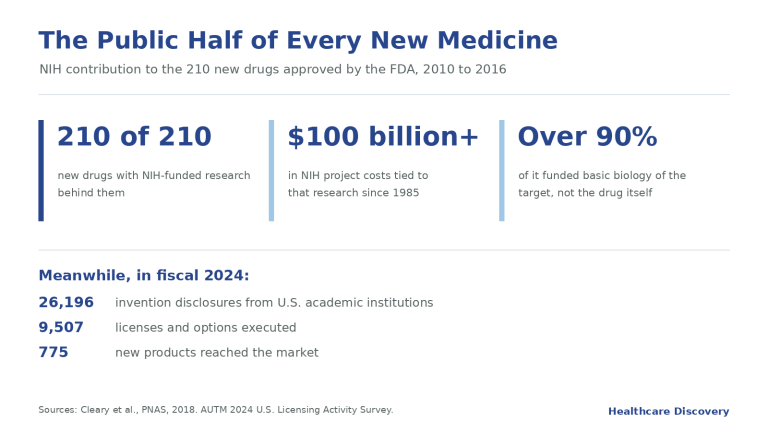
Every new drug approved in the United States between 2010 and 2016 traced back to publicly funded science. Most discoveries never travel that far, and the reason usually has nothing…
Prospective vs Retrospective
The quiet difference between two kinds of validation studies decides whether a healthcare AI product will work in the world. Most published claims live on the wrong side of it.

Harvard Scientists Just Mapped the Universal Molecular Clock of Aging
A landmark Nature study from Mass General Brigham led by Alexander Tyshkovskiy and Vadim Gladyshev identifies gene expression signatures so fundamental to biological aging that they appear nearly identically across…
Masimo W1: Clinical-Grade SpO2 Monitoring in a Wrist Wearable
The company that wrote the book on pulse oximetry accuracy brings hospital-grade oxygen monitoring to a wrist-worn form factor for the first time. Presented By Our Partners In the early…
The Daily Rounds: Longevity & Health Care Brief | April 23, 2026
🔥 Inflammation at the Core of Heart Disease: Scientific American's May 2026 cover spotlights chronic inflammation as a central cardiovascular driver, with inexpensive drugs like colchicine entering the prevention playbook. 🧠 Lifelong Learning Delays Alzheimer's by Years: Cognitive enrichment throughout life cuts Alzheimer's risk by 38% and delays onset by approximately five years compared to low-engagement peers. 🤖 GPT-Rosalind Enters Drug Discovery: OpenAI's new life sciences model is live at Amgen, Moderna, and the Allen Institute, built to compress the earliest and slowest stages of drug development. ⚡ Gut Bacteria Drive ALS and Frontotemporal Dementia: Scientists identify a gut-brain mechanism in which microbial sugars trigger immune-mediated brain cell death, with promising targets for intervention now identified. 🌙 Circadian Fragmentation Accelerates Brain Shrinkage: Johns Hopkins confirms that weak, irregular rest-activity rhythms are directly linked to faster volumetric loss in memory-related brain regions over time.
Gatorade Gx Sweat Patch: Affordable Sweat Sodium Profiling for Athletes
Professional sports teams have spent thousands testing athletes’ sweat composition in labs. A $25 patch and your phone camera now approximate the same insight. Presented By Our Partners For decades,…
