
The Scan Is Not the Finish Line
A small shadow appears on a chest scan ordered for something else. It may be harmless. It may be the first visible trace of lung cancer. Either way, the image has created a responsibility.
Presented By Our Partners



That responsibility is easy to blur. The scan may have been ordered in an emergency department. The radiologist may recommend another CT months later. The ordering clinician may assume a specialist will follow it. The patient may never understand that anything needs to happen. A technically correct finding can become a clinically unfinished sentence.
Artificial intelligence is often sold as the way to find more of these sentences. A newly published European pilot suggests that the more important design choice may be what comes after the finding.
A detector paired with an owner
The PINPOINT pilot, published online in Clinical Lung Cancer in August, placed computer-assisted detection software into the routine chest-CT workflow at six hospitals in the Netherlands, Italy, Spain and Portugal. The software analyzed scans for pulmonary nodules. Radiologists remained responsible for deciding which findings were actionable under established guidelines.
The program added a second component that matters just as much: a web-based virtual nodule clinic supervised by a designated navigator. Patients with actionable incidental pulmonary nodules could be entered into a system built to track referrals and follow-up.
Across a mean of 14 months, the program included 65,344 patients and 114,644 chest CT scans. The software returned results for 99.5 percent of scans and detected abnormalities in 40,954 patients. Radiologists placed 619 patients into virtual-clinic management. Ten were diagnosed with lung cancer, and all ten cancers were early stage.
Those numbers are encouraging, but they require discipline. This was a feasibility study using descriptive statistics, not a randomized comparison. It does not show that AI caused earlier diagnosis, improved survival or prevented a death. The investigators also reported inconsistent uptake of the virtual clinic, constrained by staffing and workflow disruptions. The number of patients managed through it may therefore understate the true pool of actionable nodules.
The study’s most useful result is not a victory lap for an algorithm. It is a view of the entire machine: detection software, radiologist judgment, referral criteria, a tracking system, a navigator and enough organizational capacity to keep the pathway moving.
The negative trial that clarifies the point
Another lung-cancer study shows why that distinction matters.
Featured Partner
Invest in the Infrastructure Behind Modern Medicine
As healthcare expands beyond hospital walls, the buildings and campuses supporting that shift are generating compelling returns for investors who move early. The Healthcare Real Estate Fund offers qualified investors direct access to a curated portfolio of medical office, outpatient, and specialty care facilities.
Learn More →
The LungIMPACT randomized trial examined 93,326 chest X-rays across five NHS hospitals in England. Its AI system flagged abnormal images so radiologists could prioritize them. Among 558 patients diagnosed with lung cancer, the median time from X-ray to diagnosis was 44 days with AI prioritization and 46 days without it. The difference was not statistically significant. The median wait from X-ray to CT was identical in both groups: 53 days.
The trial changed the order in which images were reviewed. It did not change the rest of the care pathway.
That is not a trivial distinction. A patient still had to be informed. A CT appointment still had to exist. A clinic had to accept the referral. A multidisciplinary team had to review the case. Faster recognition at the front of a congested pathway cannot, by itself, create capacity at the back.
The deeper finding was even more sobering. When both AI and the radiologist initially judged the X-ray normal, patients later found to have cancer waited a median of 177 days for diagnosis. When AI flagged an abnormality but the radiology report did not, 53 patients waited a median of 106 days. An alert that lacks a defined owner can become another piece of information the system possesses but does not act on.
Measure the journey, not the spark
Healthcare AI has inherited a measurement problem from software culture. Developers naturally count what the model does: sensitivity, specificity, alerts generated, scans processed, minutes saved. Patients experience something else: whether the call came, whether the referral was accepted, whether the test happened, whether the diagnosis was explained and whether treatment began.
The distance between those two scoreboards is the discovery-to-delivery gap.
A serious evaluation of an AI-assisted nodule program should therefore follow the patient beyond the scan. Useful measures include:
- how many actionable findings reach the responsible clinician;
- how many patients are successfully notified;
- how many recommended referrals and tests are scheduled;
- how many are completed within the intended interval;
- how often patients disappear from the pathway and why;
- whether performance differs by language, geography, insurance status or digital access;
- how often the system changes diagnosis, stage, treatment or another patient-relevant outcome;
- and who is accountable when the workflow fails.
Accuracy remains necessary. It is simply not sufficient.
The unglamorous technology of follow-through
The virtual nodule clinic in PINPOINT sounds less futuristic than an image-reading model. That may be precisely why it matters. It creates a place where an unresolved finding can live, a person who can see that it remains unresolved and a process for moving it forward.
This is the unglamorous technology of follow-through. It includes work queues, callback protocols, referral status, escalation rules, interoperable records and protected staff time. None makes an impressive demonstration reel. Together, they determine whether a prediction becomes care.
The pilot also warns against treating the navigator as a decorative human safeguard. When resources were thin or workflows were disrupted, use of the virtual clinic became inconsistent. Human oversight works only when the human has authority, time and a visible queue. “Human in the loop” is not a staffing plan.
What patients and health systems should ask
When a health system announces an AI tool for earlier cancer detection, the practical questions begin after the performance claim:
- Who owns an abnormal result after the model flags it?
- How is the patient contacted, and what happens if the first attempt fails?
- Does the system track a recommendation until the next step is completed?
- Can clinicians see unresolved cases in one reliable work queue?
- Are there enough appointments and staff to absorb the additional findings?
- Are outcomes audited across patient groups, not only averaged across the system?
- Is success defined as an alert, a diagnosis or completed appropriate care?
These questions do not diminish the algorithm. They reveal whether the organization has built anything around it.
The hopeful reading of PINPOINT is that AI can help make incidental findings visible at scale and that structured navigation can turn some of those findings into early diagnoses. The caution from LungIMPACT is that visibility alone may leave the patient’s timeline almost unchanged.
The scan is the spark. Care requires a circuit.
Sources
- Leliveld A, Willems B, Balbi M, et al. PINPOINT: Integrating Computer Assisted Detection and Virtual Nodule Clinics for Early Lung Cancer Detection in Routine Practice, a Pilot Study. Clinical Lung Cancer. Published online August 16, 2026. DOI: 10.1016/j.cllc.2026.08.006.
- University College London Hospitals. AI-driven technology does not speed up lung cancer diagnosis. March 24, 2026.
- Wang Y, Smith GE, Lipori GP, et al. Structural requirements for intelligent clinical digital twins in feedback-driven care. npj Health Systems. September 2, 2026.
- Siwicki B. How AI can improve patient access — beyond simply filling the next open slot. Healthcare IT News. September 4, 2026.
This article is for general education and does not provide medical advice. A pulmonary nodule can have many causes. Follow the recommendations of your clinician or radiology report, and seek professional guidance if you are unsure what follow-up is needed.


Similar Posts
Bloomlife Pregnancy Monitor: Wearable Contraction and Fetal Movement Tracker
Pregnant women have been told to “count the contractions” for generations, but timing contractions with a stopwatch during active labor is like measuring a hurricane with a rain gauge. A…

The $2,500 MRI Question: Why Healthcare Prices Still Hide in Plain Sight
Why the same MRI can be a medical miracle, a billing maze, and a test case for whether healthcare price transparency can actually help patients before they book care.
The Daily Rounds: Longevity & Health Care Brief | May 28, 2026
🔬 Naked Mole Rat Gene Extends Mouse Lifespan — University of Rochester researchers transferred the HMW-HA longevity gene from naked mole rats into mice, extending median lifespan by 4.4 percent while reducing tumors and systemic inflammation. 🤖 NIH AI Repurposes Three Drugs for Neurodegeneration — A deep-learning model screening 12,456 compounds identified three candidates for Alzheimer's and Parkinson's, with finerenone cutting amyloid plaque by 42 percent in mouse models. 🥗 ION224 Halts Fatty Liver Disease in 60 Percent of Trial Patients — The DGAT2-targeting drug achieved significant liver health improvement in a Phase IIb trial of 160 MASH patients with no serious adverse events, advancing toward Phase III. 🧠 Vitamin K Hybrid Compounds Drive 3x More Neurogenesis — Japanese researchers combined vitamin K with retinoic acid to produce compounds that convert neural stem cells into neurons three times more effectively than natural vitamin K, opening a regenerative pathway for Alzheimer's and Parkinson's treatment. 💪 Muscle Strength Cuts Mortality Risk by a Third in Older Women — A JAMA Network Open study of 5,472 women found grip and functional strength independently reduce all-cause mortality by 33 percent or more, establishing strength testing as a key clinical longevity marker.

First-in-Class Bispecific ADC Rewrites the Rules for Triple-Negative Breast Cancer at ASCO 2026
At ASCO 2026, izalontamab brengitecan became the first bispecific antibody-drug conjugate to improve both progression-free and overall survival in triple-negative breast cancer. Inside the EGFRxHER3 mechanism, the Phase 3 trial…
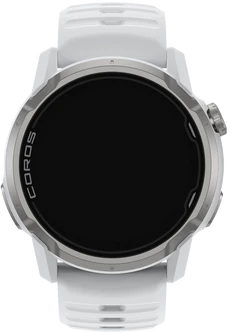
COROS APEX 4: Alpine Grade GPS Watch With Zero Lag Mapping and Mountain Sport Analytics
COROS’s mountain sport watch delivers ultra precise dual frequency GPS, instant offline map rendering, and training analytics purpose built for trail runners, climbers, and ski mountaineers at $429 to $479…
The Daily Rounds: Longevity & Health Care Brief | June 7, 2026
🤖 KRAS Drug Nearly Doubles Pancreatic Cancer Survival. The first drug to meaningfully extend survival in metastatic pancreatic cancer was presented at ASCO 2026, ending four decades of failed attempts to target the KRAS oncogene. 🦠 Protective Gut Bacteria May Shield Infants From Autism and ADHD. Specific microbes like Lachnospira colonizing the infant gut in the first year of life appear to mitigate neurodevelopmental risk linked to early epigenetic patterns. ❤️ GLP-1 Drugs Cut Breast Cancer Risk by 30% in 112,000-Person Study. A Penn Medicine study adds breast cancer prevention to the expanding catalog of benefits associated with Ozempic-class medications. 💪 Strength Training Plus Cardio Is the Optimal Longevity Combination. A 30-year study of 147,000 adults confirms that 90 to 120 minutes weekly of resistance training paired with aerobic exercise delivers the lowest all-cause mortality risk. 🔬 Multi-Target Geroscience Outperforms Single-Pathway Aging Treatments. Combining senolytics, epigenetic reprogramming, and anti-inflammatory agents produces synergistic healthspan benefits that no single intervention achieves alone.
