
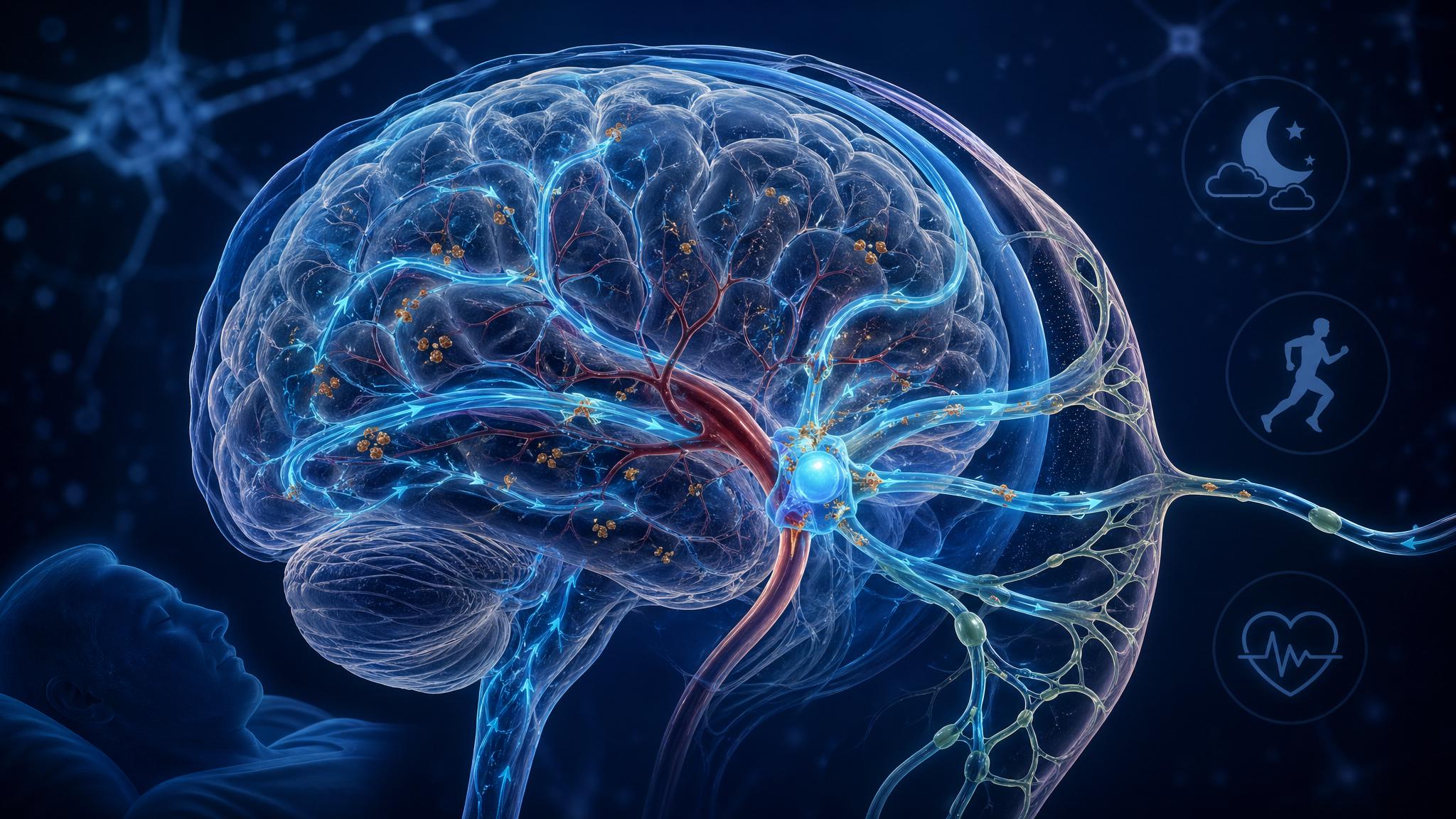
Your Brain Has a Hidden Drainage System. Scientists Just Found It — and It Could Redefine Alzheimer’s Prevention.
A landmark study from MUSC and NASA reveals a previously unknown lymphatic hub inside the human brain — and its connection to the waste-clearance failures driving Alzheimer’s disease.
Presented By Our Partners



For decades, neuroscientists believed they had a reasonably complete map of how the brain cleans itself. The glymphatic system — a network of fluid channels running alongside blood vessels — was thought to be the primary highway for flushing out the metabolic debris that accumulates during a lifetime of thinking, feeling, and remembering. That picture just changed. Researchers at the Medical University of South Carolina (MUSC), working with technology developed by NASA, have identified a previously unrecognized drainage hub deep inside the human brain: the middle meningeal artery (MMA). The discovery, published in iScience, provides the first direct evidence in living humans that this artery functions as a lymphatic clearance structure — not just a blood vessel. The implications for Alzheimer’s disease, neurodegeneration, and longevity medicine are profound.
What the Study Found: A Drain Where No One Was Looking
The research team, led by Onder Albayram, Ph.D., associate professor in the Department of Pathology and Laboratory Medicine at MUSC, used advanced real-time MRI technology developed through a partnership with NASA — tools originally designed to study how spaceflight affects fluid dynamics in the human brain. Rather than sending astronauts into orbit, Albayram’s team pointed this technology inward, tracking the movement of cerebrospinal fluid (CSF) and interstitial fluid along the middle meningeal artery in five healthy adult participants over six continuous hours.
What they observed was not what anyone expected. “We saw a flow pattern that didn’t behave like blood moving through an artery,” Albayram said. “It was slower, more like drainage, showing that this vessel is part of the brain’s cleanup system.” The fluid movement along the MMA was lymphatic in character — slow, purposeful, and directional — completely unlike the rapid pulsatile flow of arterial blood. The artery, long classified purely as a vascular structure, appeared to be doing double duty as a drainage channel.
To rule out imaging artifact and confirm the anatomical reality of what they were seeing, the team examined postmortem human brain tissue under ultra-high-resolution imaging at Cornell University. Using an advanced technique that allows multiple cell types to be visualized simultaneously, they mapped the cellular architecture surrounding the MMA. The analysis was unambiguous: the tissue lining the region around the artery contains cells characteristic of lymphatic vessels — the same specialized cells found in the body’s peripheral lymphatic system, which is responsible for clearing waste, immune cells, and large protein aggregates throughout the rest of the body. The study is published as “Meningeal lymphatic architecture and drainage dynamics surrounding the human middle meningeal artery,” iScience, 2025; 28(11): 113693.
Why This Changes the Brain Waste Map
To understand why this discovery matters, it helps to know what neuroscientists thought they already knew about brain waste clearance. The brain is metabolically one of the most active organs in the body. Neurons fire continuously, synapses release and reuptake neurotransmitters thousands of times per second, and all of that activity generates biochemical waste: misfolded proteins, oxidized lipids, inflammatory cytokines, and the specific molecular villains at the center of Alzheimer’s pathology — amyloid-beta plaques and tau tangles.
The brain has no conventional lymphatic system running through it the way the rest of the body does. Instead, it relies on a specialized fluid-clearance mechanism called the glymphatic system, first described in 2013 by Maiken Nedergaard, M.D., D.M.Sc., at the University of Rochester. The glymphatic system works by driving CSF through channels called perivascular spaces — gaps surrounding blood vessels — where it mixes with interstitial fluid and flushes metabolic waste outward toward the brain’s borders, where it can drain into the conventional lymphatic vessels of the neck and skull. The system is elegantly designed and critically dependent on adequate sleep: glymphatic flow accelerates dramatically during deep non-REM sleep, which is one of the primary reasons that chronic sleep deprivation is consistently linked to elevated amyloid-beta burden and accelerated cognitive decline.
The new MUSC findings add a previously unmapped exit ramp to this picture. The middle meningeal artery, which runs in the dura mater — the outermost protective membrane surrounding the brain — appears to serve as a dedicated drainage hub that collects and routes fluid out of the brain’s interior. Think of the glymphatic system as the internal plumbing, and the MMA as a newly discovered drain connected to it that nobody knew was there. A 2026 study published in Nature Communications, “The glymphatic system clears amyloid beta and tau from brain to plasma in humans” (Nature Communications, DOI: 10.1038/s41467-026-68374-8), further confirms that this entire waste-clearance apparatus actively moves Alzheimer’s-associated proteins from brain tissue into the bloodstream — a finding that makes every new discovery about how that clearance works clinically significant.
The NASA Angle: Space Science in the Service of Brain Health
The role of NASA in this discovery is more than a footnote. The space agency has long invested in understanding how microgravity alters fluid distribution in the human body — particularly in the brain, where CSF shifts during spaceflight are associated with vision changes and potential cognitive effects in astronauts. To study those dynamics, NASA developed and refined real-time MRI techniques capable of visualizing slow, subtle fluid movements that conventional clinical MRI misses entirely. Albayram’s team gained access to this technology through a formal research partnership, applying it to a fundamentally terrestrial problem: how does the human brain manage its own waste over time, and where does that waste go?
The fact that cutting-edge space technology was required to make a basic anatomical discovery about the human brain speaks to how technically demanding this area of research is. The fluid movements involved are slow — on the order of millimeters per hour — and occur in a mechanically complex, metabolically noisy environment. Conventional brain imaging does not resolve these dynamics. The availability of NASA-grade real-time MRI is precisely what allowed the team to observe something that was always there but never seen.
Featured Partner
Invest in the Infrastructure Behind Modern Medicine
As healthcare expands beyond hospital walls, the buildings and campuses supporting that shift are generating compelling returns for investors who move early. The Healthcare Real Estate Fund offers qualified investors direct access to a curated portfolio of medical office, outpatient, and specialty care facilities.
Learn More →
Alzheimer’s Disease and the Waste Accumulation Hypothesis
The broader significance of this discovery sits squarely within one of the most active debates in Alzheimer’s research: the degree to which the disease is driven by failed clearance of amyloid-beta and tau, versus their overproduction. The amyloid hypothesis, which has dominated Alzheimer’s drug development for decades, holds that the accumulation of misfolded amyloid-beta protein in senile plaques is the initiating event in a cascade that eventually destroys neurons. A parallel body of evidence points to tau — the protein that forms neurofibrillary tangles inside neurons — as the more proximate driver of cell death and cognitive decline.
What makes the glymphatic and now meningeal lymphatic discoveries so important is that they offer a third lens: regardless of whether amyloid or tau is the primary culprit, if the brain’s waste-clearance infrastructure is compromised, both proteins will accumulate faster. Research published in ScienceDirect in early 2026, “The glymphatic system as a brain scavenger in Alzheimer’s disease: mechanisms and therapeutic implications,” identifies two specific mechanisms by which aging impairs glymphatic function: age-related vascular stiffening that reduces the pulsatile force driving CSF through perivascular spaces, and chronic mislocalization of aquaporin-4 (AQP4) water channels in astrocyte end-feet — the cellular structures that form the walls of the perivascular drainage channels. When AQP4 is mislocalized, glymphatic flow drops significantly, and amyloid-beta clearance falls with it.
The newly identified role of the MMA adds another potential failure point. If the MMA’s lymphatic function degrades with age — as peripheral lymphatic vessels are known to do — it could represent an underappreciated bottleneck in whole-brain waste clearance, one that compounds glymphatic impairment and accelerates the toxic protein accumulation at the root of Alzheimer’s pathology. Research published in Frontiers in Immunology in 2025, “Role of meningeal lymphatic vessels in brain homeostasis,” demonstrated that meningeal lymphatic vessel function declines with normal aging in animal models and that enhancing meningeal lymphatic drainage reduces amyloid burden. The MUSC study now establishes that the MMA is a central hub in this meningeal lymphatic architecture in humans — not just in rodent models.
Sleep, Lifestyle, and the Glymphatic Connection
One of the most actionable threads running through this entire body of research is the relationship between sleep quality and brain waste clearance. Glymphatic function is not uniform across the 24-hour day. During deep slow-wave sleep, the brain’s interstitial space expands by approximately 60 percent, allowing a massive surge in CSF flow that flushes out the metabolic waste of wakefulness, including amyloid-beta and tau. Research published in Psychopharmacology in 2026, “Glymphatic system dysfunction: a link between sleep disorders and neurodegeneration,” consolidates the evidence that chronic sleep disruption — including insomnia, sleep apnea, and circadian misalignment — impairs this clearance mechanism and is associated with elevated Alzheimer’s biomarkers even in cognitively normal individuals.
This is not a speculative association. A landmark study published in Nature in 2019 by Shokri-Kojori and colleagues demonstrated that a single night of sleep deprivation increased amyloid-beta burden in the human brain by approximately 5 percent, as measured by PET imaging. A more recent human study, published in Nature Communications in 2026, confirmed that the glymphatic system directly moves amyloid-beta and tau into the plasma — meaning that blood biomarker tests for Alzheimer’s risk, including the increasingly clinically validated plasma phospho-tau 217 assay, partly reflect whether the brain’s drainage system is functioning properly.
Regular physical activity is the other lifestyle variable with the strongest evidence for supporting glymphatic function. Exercise increases the amplitude of arterial pulsatility — the pressure waves that drive CSF through perivascular spaces — and has been shown in animal models to enhance AQP4 localization, the molecular prerequisite for efficient glymphatic flow. A 2023 systematic review in the Journal of Physiology found that aerobic exercise consistently improved glymphatic markers in rodent models, with emerging human data pointing in the same direction. Resistance training and its effects on cerebrovascular pulsatility are an active research frontier with preliminary supportive data.
Therapeutic Implications: A New Target for Alzheimer’s Drugs
The identification of the MMA as a lymphatic drainage hub opens a new class of therapeutic targets. If the artery’s lymphatic function can be pharmacologically enhanced or structurally preserved, it might be possible to slow the accumulation of neurotoxic waste proteins in the aging brain. Researchers at the University of Virginia, led by Jonathan Kipnis, Ph.D., have already demonstrated in animal models that rejuvenating meningeal lymphatic vessels — using a VEGF-C gene therapy approach — reverses cognitive decline associated with aging and reduces amyloid-beta burden. Whether a comparable intervention could work in humans is not yet known, but the discovery of a specific, anatomically defined lymphatic hub in the human brain gives researchers a much more precise target to work with.
The drug development pipeline is already responding to this science. Several biotechnology companies are investigating small molecules and biologic therapies designed to enhance glymphatic clearance, AQP4 function, and meningeal lymphatic integrity. Targeting the MMA specifically — whether through interventional radiology approaches, pharmacological means, or device-based stimulation — is now a rationally grounded research priority rather than a theoretical exercise.
There is also a diagnostic angle. If the MMA serves as a clearance bottleneck, its structural and functional status might be detectable with advanced imaging — potentially providing an early biomarker of Alzheimer’s risk years before cognitive symptoms appear. A group at the University of Washington has developed a head cap device that monitors glymphatic fluid shifts using electrode arrays, with early pilot data suggesting it can detect abnormal clearance dynamics in at-risk individuals. Whether direct imaging of MMA lymphatic function proves technically feasible in a clinical setting is a question that will likely be answered within the next few years.
Connecting the Four Shadows: Why Brain Waste Clearance Is a Longevity Issue
Alzheimer’s disease and related neurodegenerative conditions represent one of the four primary threats to healthspan in the modern era, alongside cardiovascular disease, cancer, and metabolic dysfunction. What the emerging brain waste-clearance science reveals is that neurodegeneration is not simply a genetic lottery — it is deeply entangled with the same lifestyle variables that determine cardiovascular and metabolic health. Sleep quality, physical activity, cardiovascular fitness, and body composition all appear to influence how efficiently the brain clears its own waste over decades.
This convergence is important for anyone thinking about longevity in practical terms. The interventions that protect the brain’s drainage infrastructure — consistent deep sleep, regular aerobic and resistance exercise, metabolic health, and cardiovascular fitness — are the same interventions that reduce the risk of heart disease, type 2 diabetes, and several cancers. The brain is not a separately insulated system running its own independent maintenance program. It is intimately coupled to the health of the cardiovascular, metabolic, and immune systems that support it.
The MMA discovery is also a reminder of how much basic anatomy remains to be mapped in the human brain. The finding that a major arterial structure has a second, fundamentally different physiological function — one missed entirely by conventional imaging — suggests that the brain’s waste-clearance architecture is more complex, and potentially more tractable, than current models assume.
What This Means for You
You have a drainage system in your brain that science just finished describing. That is not a small thing. Every night you sleep — or fail to sleep — that system either runs efficiently or falls behind. Every run, every resistance training session, every meal that keeps your blood sugar stable is either maintaining the infrastructure of that system or quietly degrading it. The new MUSC/NASA findings do not change what optimal brain health requires: deep, consistent sleep, regular physical activity, and a cardiovascular system robust enough to drive the fluid pulsatility that powers glymphatic flow. What they change is how precisely we understand why those things matter.
For sleep: prioritize seven to nine hours in a dark, cool environment. Sleep apnea is a clinically significant impairment of glymphatic function — if you snore, stop breathing at night, or wake unrefreshed, pursuing a diagnosis is a direct investment in Alzheimer’s risk reduction. For exercise: aerobic activity that elevates heart rate and increases cardiovascular pulsatility appears to be particularly protective, with resistance training offering complementary benefits to cerebrovascular health. For metabolic health: high fasting glucose and insulin resistance are independently associated with impaired AQP4 localization and reduced glymphatic clearance — another reason why blood sugar stability is foundational.
The middle meningeal artery was always there. It was doing its job in the background, silently routing the brain’s metabolic waste toward the exit, in every brain that has ever lived. We just did not know it. Now that we do, the science of protecting it can begin.
Sources: Albayram et al., “Meningeal lymphatic architecture and drainage dynamics surrounding the human middle meningeal artery,” iScience, 2025; 28(11): 113693. Nature Communications, “The glymphatic system clears amyloid beta and tau from brain to plasma in humans,” 2026 (DOI: 10.1038/s41467-026-68374-8). Frontiers in Immunology, “Role of meningeal lymphatic vessels in brain homeostasis,” 2025. Psychopharmacology, “Glymphatic system dysfunction: a link between sleep disorders and neurodegeneration,” 2026. ScienceDirect, “The glymphatic system as a brain scavenger in Alzheimer’s disease: mechanisms and therapeutic implications,” 2026.


Similar Posts
The Daily Rounds: Longevity & Health Care Brief | April 1, 2026
🧬 Epigenetic reprogramming enters its first human trial as Life Biosciences begins treating retinal degeneration with ER-100, a cellular rejuvenation therapy that resets the biological clock without erasing cell identity. 💊 A gut bacteria compound doubles lung cancer immunotherapy response rates in preclinical models, pointing to the microbiome as a powerful and underutilized lever in oncology treatment protocols. 🤖 Over 173 AI-designed drug programs are now in human clinical trials, with 2026 marking the transition from AI-assisted research to AI-native drug discovery as a standard operating model. 🏋️ GLP-1 medications and exercise share a convergent molecular pathway through interleukin-6 signaling, meaning structured resistance and aerobic training is not just complementary to these medications but mechanistically synergistic. 😴 Consumer wearable sleep trackers have cleared the threshold for clinical validation, with the World Sleep Society formalizing recommendations that integrate these devices into clinical practice and disease management protocols.
The Daily Rounds: Longevity & Health Care Brief | May 31, 2026
🧠 Long COVID Inflammation Theory Overturned — Brain imaging finds no widespread neuroinflammation in long COVID; emotional regulation regions are overactive instead, fundamentally redirecting treatment strategy. ❤️ Inflammation Is Heart Disease's Hidden Engine — Scientific American's May cover story highlights colchicine cutting cardiac events by 31 percent in trials, shifting cardiology toward anti-inflammatory protocols. 🧠 GPNMB Protein Drives Parkinson's Spread — A Neuron study maps a self-reinforcing alpha-synuclein propagation loop and a monoclonal antibody strategy that can interrupt it. 💪 Strength Decline Starts at 35 — A 47-year Swedish study confirms muscle loss begins earlier than guidelines acknowledge, but exercise started later in life still meaningfully extends healthspan. 🔬 Senolytics Reduce Biological Age in Blood — Senolytic compounds produce measurable reductions in epigenetic age estimates, directly linking zombie-cell clearance to molecular rejuvenation signatures.

The FDA’s New AI Experiment Asks a Better Question: Did the Patient Get Better?
The FDA and CMS are testing a new bridge from AI-enabled chronic-care technology to Medicare payment, real-world evidence, and measurable patient outcomes. The promise is real. The proof is not…

Zone 2 Training and the Mitochondrial Engine of Longevity: What the Science Says About Easy Cardio
The most powerful longevity intervention in exercise science is not the hardest workout. It is the easiest. Inside the science of Zone 2 training, the lactate shuttle, Iñigo San Millán’s…

Supersapiens: Real-Time Glucose Monitoring System Built for Athletic Performance
The first continuous glucose monitoring system designed specifically for athletes, powered by Abbott’s Libre Sense biosensor, providing real-time fueling data during training and racing with integration into Garmin, Wahoo, TrainingPeaks,…
SelfDecode: AI-Powered DNA Analysis and Personalized Health Recommendations From Your Existing Genetic Data
Upload your existing genetic data from 23andMe or AncestryDNA and unlock over 100 AI-generated health reports with personalized supplement and lifestyle recommendations. But how much clinical weight should you give…
