
Myo-inositol for PCOS: What 8 Studies Show (2026 Evidence Grade)
Yes, within limits: in a 2023 meta-analysis of 26 randomized trials in 1,691 women with PCOS, inositol raised the likelihood of a regular menstrual cycle by 79% versus placebo (RR 1.79, 95% CI 1.13 to 2.85) (PMID 36703143). That is the clearest result in the myo-inositol literature, and it comes with three qualifications: the placebo comparisons rest on only 311 women, the trials ran 3 to 6 months, and the review commissioned for the international PCOS guideline reached a more cautious verdict than the pooled numbers suggest. This page walks through what the eight studies we reviewed for this question found, and what they did not measure. The full evidence profile, including doses, interactions and the HYPE Index scores for all ten marketed claims, lives on the myo-inositol review hub.
Presented By Our Partners



What the trials measured
PCOS trials of inositol track three families of outcomes: cycle regularity and ovulation, insulin resistance, and androgens. On the first, the 2023 meta-analysis found inositol non-inferior to metformin for cycle regularity and superior to placebo (PMID 36703143). A 2026 umbrella review of 13 meta-analyses found ovulation more than doubled versus placebo or folic acid (RR 2.75, 95% CI 1.71 to 4.41) and live births rose as well (RR 2.29, 95% CI 1.07 to 4.93), though none of the evidence reached high quality on GRADE and 77% of the meta-analyses rated low or very low on AMSTAR-2 (PMID 41757236). A 2023 umbrella review of 28 meta-analyses rated the ovulation and fasting insulin effects moderate certainty, the only nutritional interventions for PCOS to reach that level (PMID 36099162).
| Outcome | Effect versus comparator | Source |
|---|---|---|
| Regular menstrual cycle | RR 1.79 (95% CI 1.13 to 2.85) versus placebo, 26 trials | PMID 36703143 |
| Ovulation | RR 2.75 (95% CI 1.71 to 4.41) versus placebo or folic acid | PMID 41757236 |
| HOMA-IR | -1.14 (95% CI -1.35 to -0.94) versus placebo or folic acid | PMID 41757236 |
| Regular cycle, added to metformin | RR 1.56 (95% CI 1.01 to 2.41) versus metformin alone, 6 trials, 388 women | PMID 39331347 |
| Menstrual frequency, 40:1 combination | OR 14.70 (95% CI 2.31 to 93.58) versus metformin, network meta-analysis | PMID 34407851 |
| Cycle regularization at 12 weeks | 64.6% inositol, 39.6% metformin, 72.9% diet, 85.4% all three | PMID 42517336 |
The cautious reading
The review commissioned to inform the 2023 international PCOS guideline pooled 30 trials in 2,230 women and concluded that inositol may benefit some metabolic measures and D-chiro-inositol may help ovulation, but judged the evidence overall limited and inconclusive, with metformin possibly better for waist-to-hip ratio and hirsutism and myo-inositol causing fewer gastrointestinal side effects (PMID 38163998). Only 3 of its 13 comparisons could be meta-analyzed. The gap between that verdict and the industry-adjacent pooled analyses is the most important thing to understand about this supplement: the direction of effect is consistent, the certainty is not.
Featured Partner
Invest in the Infrastructure Behind Modern Medicine
As healthcare expands beyond hospital walls, the buildings and campuses supporting that shift are generating compelling returns for investors who move early. The Healthcare Real Estate Fund offers qualified investors direct access to a curated portfolio of medical office, outpatient, and specialty care facilities.
Learn More →
The most recent trials add texture without resolving it. A 2026 four-arm trial randomized 192 women aged 18 to 35 to myo-inositol 2 g plus D-chiro-inositol 50 mg twice daily, metformin, a 1,200 to 1,500 kcal diet, or all three for 12 weeks; every arm improved, diet alone regularized more cycles than inositol alone, and the combination reached 85.4% (PMID 42517336). A 60-woman trial of the 40:1 combination against metformin found both improved HOMA-IR, SHBG, ovarian volume, menstrual regularity and quality of life over 12 weeks, with metformin slightly ahead on insulin sensitivity (PMID 39847053). Neither trial had a placebo arm.
What we do not know
None of the eight studies we reviewed for this question tested women without PCOS, and none ran longer than 6 months. The placebo-controlled evidence rests on 311 women across the 2023 meta-analysis (PMID 36703143). Units for several hormone outcomes are not stated in the abstracts, funding is rarely disclosed, and the 40:1 combination results in the network meta-analysis carry a confidence interval from 2.31 to 93.58, which signals very few trials behind the estimate (PMID 34407851). Whether myo-inositol alone performs the same as the 40:1 combination is not settled by this set.
Doses used in studies
These are doses reported by the named sources, not recommendations.
| Source | Dose as reported | Context |
|---|---|---|
| PMID 42517336 | Myo-inositol 2 g plus D-chiro-inositol 50 mg twice daily for 12 weeks | 192 women with PCOS aged 18 to 35 |
| PMID 39847053 | 40:1 myo-inositol to D-chiro-inositol for 12 weeks; absolute dose not stated | 60 women with PCOS versus metformin |
| PMID 36703143 | Any inositol, pooled across 26 trials of 3 to 6 months | 1,691 women with PCOS |
Back to the myo-inositol review hub, or compare the head-to-head data on myo-inositol vs metformin. HDAI’s berberine review covers another insulin sensitizer graded by the same method.


Similar Posts

Cracking the Undruggable Code: How Daraxonrasib Just Rewrote the Rules for Pancreatic Cancer Survival
A new KRAS-targeting oral drug called daraxonrasib has nearly doubled survival in metastatic pancreatic cancer, with median overall survival of 13.2 months versus 6.7 months on chemotherapy in the landmark…

The Polygenic Era: How Risk Scores Built From Millions of Genetic Variants Are Reshaping Preventive Medicine in 2026
For two decades after the Human Genome Project, the promise of personalized medicine outran the data. In 2026, that gap is finally closing. Polygenic risk scores built from millions of…
Oura Ring Gen 3: What HRV, Sleep Staging, and Skin Temperature Actually Tell You About Your Health
A deep look at the science behind the metrics, the clinical validation behind the device, and whether a titanium ring on your finger can actually help you live longer. Presented…

Your Immune System Has Been Keeping Score: The Blood Test That Could Predict Alzheimer’s Risk Years in Advance
A landmark study of nearly 400,000 patients from NYU Langone and the Veterans Health Administration reveals that the neutrophil-to-lymphocyte ratio, a number on your routine blood panel, is significantly associated…
Dario Health Platform: Integrated Digital Health for Diabetes and Chronic Disease Management
Managing diabetes has always required more than a glucose number. The challenge is integrating blood sugar data with the behavioral, nutritional, and emotional factors that determine long-term outcomes. Presented By…
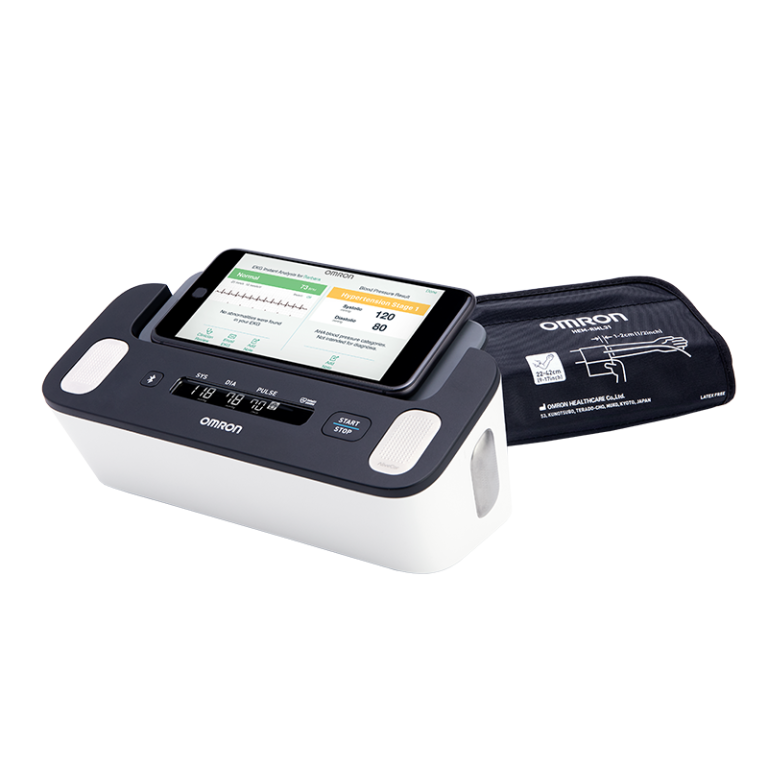
Omron Complete: FDA Cleared Blood Pressure Monitor With Built In ECG for AFib Detection
The most affordable FDA cleared device that combines upper arm blood pressure measurement with a single lead ECG for atrial fibrillation screening, built on AliveCor’s proven detection technology. Presented By…
