
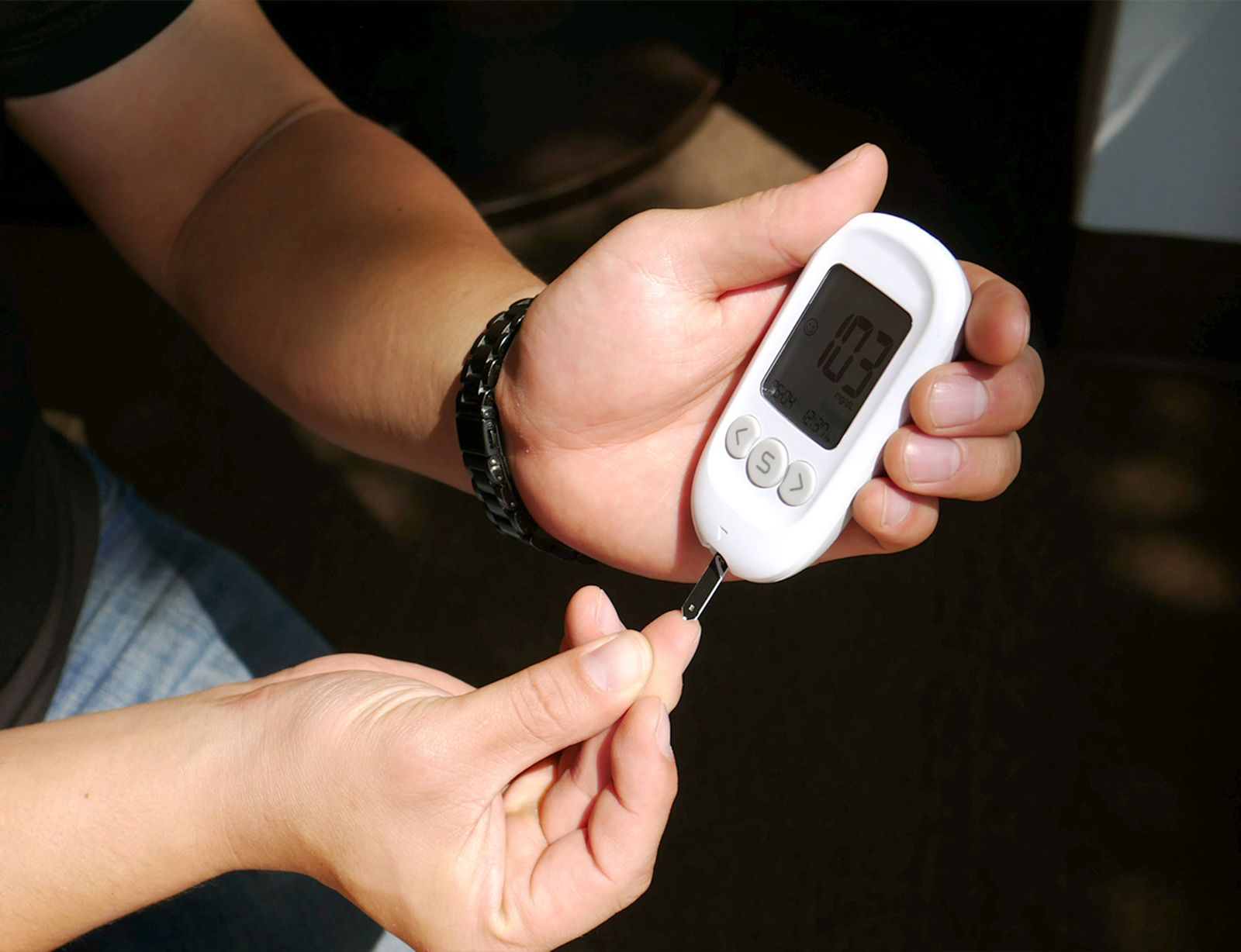
Curcumin for Blood Sugar: What 18 Trials Show (2026 Evidence Grade)
A modest, consistent glucose effect in diabetes, bundled on labels with a cholesterol effect the trials did not find.
Presented By Our Partners



In a 2024 meta-analysis of 18 trials enrolling 1,382 people with type 2 diabetes, curcumin lowered fasting glucose by 11.48 mg/dL (95% CI 14.26 to 8.70) and HbA1c by 0.54 percentage points (95% CI 0.73 to 0.35) versus placebo (PMID 39683570). That is a real change in people with diabetes, and the meta-analysts themselves called the underlying trials small and inconsistent. The same evidence set shows what retailer copy leaves out: a 2022 lipid meta-analysis found no significant change in LDL-C, total cholesterol, triglycerides or HDL-C (PMID 36264280).
What the glucose trials found
The 2024 meta-analysis is the most specific. Its authors cautioned that the included trials were inconsistent and small, and that the optimal dose, duration and formulation remain unresolved (PMID 39683570). A 2021 review of 16 studies also reported significant reductions in fasting glucose, HbA1c and BMI, with nanocurcumin additionally lowering lipids and CRP, though it pooled nothing (PMID 34012421). The 2024 umbrella review of 103 RCTs (n=7,216) rated the fasting blood sugar evidence high certainty, one of only 4 outcomes out of 42 to earn that grade (PMID 39478418). A 2024 meta-analysis of 12 spices in type 2 diabetes found turmeric among those that improved fasting glucose, but the largest falls of 17 to 27 mg/dL came from black cumin, cinnamon and ginger, and the turmeric-specific effect size was not stated (PMID 38542668).
| Outcome | Source | Finding | Population |
|---|---|---|---|
| Fasting glucose | PMID 39683570, 18 trials, n=1,382 | Fell 11.48 mg/dL (95% CI 14.26 to 8.70) | Type 2 diabetes |
| HbA1c | PMID 39683570 | Fell 0.54 percentage points (95% CI 0.73 to 0.35) | Type 2 diabetes |
| LDL-C | PMID 36264280, 2022 meta-analysis | Fell 0.17, not significant (95% CI 0.43 to 0.09, p = 0.2) | Mixed adults |
| Total cholesterol | PMID 36264280 | Fell 0.21, not significant (p = 0.22) | Mixed adults |
| BMI and body fat | PMID 39969338, 7 RCTs | BMI fell 0.72; body fat fell 2.04 percentage points | Nonalcoholic fatty liver disease, phytosomal form |
| Liver enzymes, triglycerides, HOMA-IR | PMID 36159792, polyphenol meta-analysis, n=2,173 | Reduced versus placebo; curcumin effect sizes not in abstract | Fatty liver disease |
| Diastolic blood pressure | PMID 39265778 | Fell 0.94 mmHg (95% CI 1.59 to 0.30); systolic unchanged | Mixed adults |
Liver fat and weight
The fatty liver data are more specific to formulation than the glucose data. A 2024 meta-analysis of 7 RCTs, every one using a phytosomal curcumin, found BMI fell by 0.72 (95% CI 1.11 to 0.33) and body fat by 2.04 percentage points versus placebo, with no change in hip circumference or waist-to-hip ratio (PMID 39969338). The polyphenol meta-analysis pooling 2,173 participants across eight compounds found curcumin reduced BMI, AST, ALT, triglycerides, total cholesterol and HOMA-IR, while the overall all-polyphenol analysis showed no significant positive change (PMID 36159792). The longest fatty liver RCT in this literature ran 12 months in 78 patients at a single center.
Featured Partner
Invest in the Infrastructure Behind Modern Medicine
As healthcare expands beyond hospital walls, the buildings and campuses supporting that shift are generating compelling returns for investors who move early. The Healthcare Real Estate Fund offers qualified investors direct access to a curated portfolio of medical office, outpatient, and specialty care facilities.
Learn More →
Why the cholesterol claim fails
The 2022 lipid meta-analysis is a small study in how a null result becomes a label claim. No lipid outcome reached significance, LDL-C moved by 0.17 with a confidence interval spanning zero, and the authors nonetheless concluded curcumin may be hypolipidemic (PMID 36264280). Retailer copy then bundles “cholesterol” with “blood sugar” as if both had the same support. On the HYPE Index this is an E axis failure: the strongest public claim is broader than the evidence, and the market did not revise after the null lipid result.
What we do not know
Almost no trials enrolled people with normal glucose, so the effect in the general population the supplement is sold to is untested. No trial measures diabetes incidence, cardiovascular events or any hard outcome. Dose, duration and formulation remain unresolved according to the meta-analysts themselves. The weight and liver fat effects are confined to bioavailable forms or longer trials. And curcumin modestly lowers glucose, so additive effects with metformin, sulfonylureas or insulin are plausible even though no hypoglycemia cases have been documented.
Doses used in studies
These are doses reported by the named sources, not recommendations.
| Source | Dose reported | Context |
|---|---|---|
| PMID 39969338 | Doses not stated in the abstract; all 7 trials used a phytosomal formulation | Nonalcoholic fatty liver disease |
| Examine curcumin page | Commonly 500 to 1,500 mg per day of curcuminoids, often with piperine or in enhanced forms | Metabolic marker trials |
| Thorne Meriva-SF label | 1,000 mg curcumin phytosome per day | Retail label for a phytosomal product |
Every claim, dose source and interaction is in the hub: Curcumin Review 2026: Evidence Grade, Best Form, Side Effects. For another botanical with a stronger glucose record and its own hype problem, see our berberine review.


Similar Posts
Omron HeartGuide: The First FDA Cleared Wrist Blood Pressure Watch
The first and only FDA cleared oscillometric blood pressure monitor built into a wristwatch, turning discreet on demand blood pressure readings into a daily habit rather than a clinical chore….

New Penn State Study Shows How Your Core May Help Wash Your Brain
A new Nature Neuroscience study from Penn State suggests abdominal contractions and core movement may mechanically influence brain motion and cerebrospinal fluid flow. The real story is not stronger abs…

The Sauna Prescription: What 30 Years of Finnish Research Reveal About Heat Exposure, Cardiovascular Mortality, and the Recovery Science That Rewrites Hormesis
Three decades of Finnish cohort research, anchored by the Kuopio Ischemic Heart Disease cohort and a 2015 JAMA Internal Medicine paper, have transformed sauna bathing from a cultural ritual into…
Nurvv Run Smart Insoles: Pressure-Based Gait Analysis and Injury Prevention
Every running injury begins with a biomechanical pattern the runner cannot feel. The question is whether wearable technology can detect that pattern before the injury announces itself. Presented By Our…
Theragun PRO Gen 6: Professional Grade Percussive Therapy for Deep Tissue Recovery
Muscle recovery begins at the point of contact: the precise application of force to tissue that has been stressed, damaged, and is waiting to be restored. Presented By Our Partners…
Withings Thermo Smart Thermometer: FDA-Cleared Temporal Artery Temperature Monitoring
Fever is the oldest vital sign humans have measured, yet most households still rely on technology that has barely changed in a century. A connected thermometer asks whether temperature data,…
