
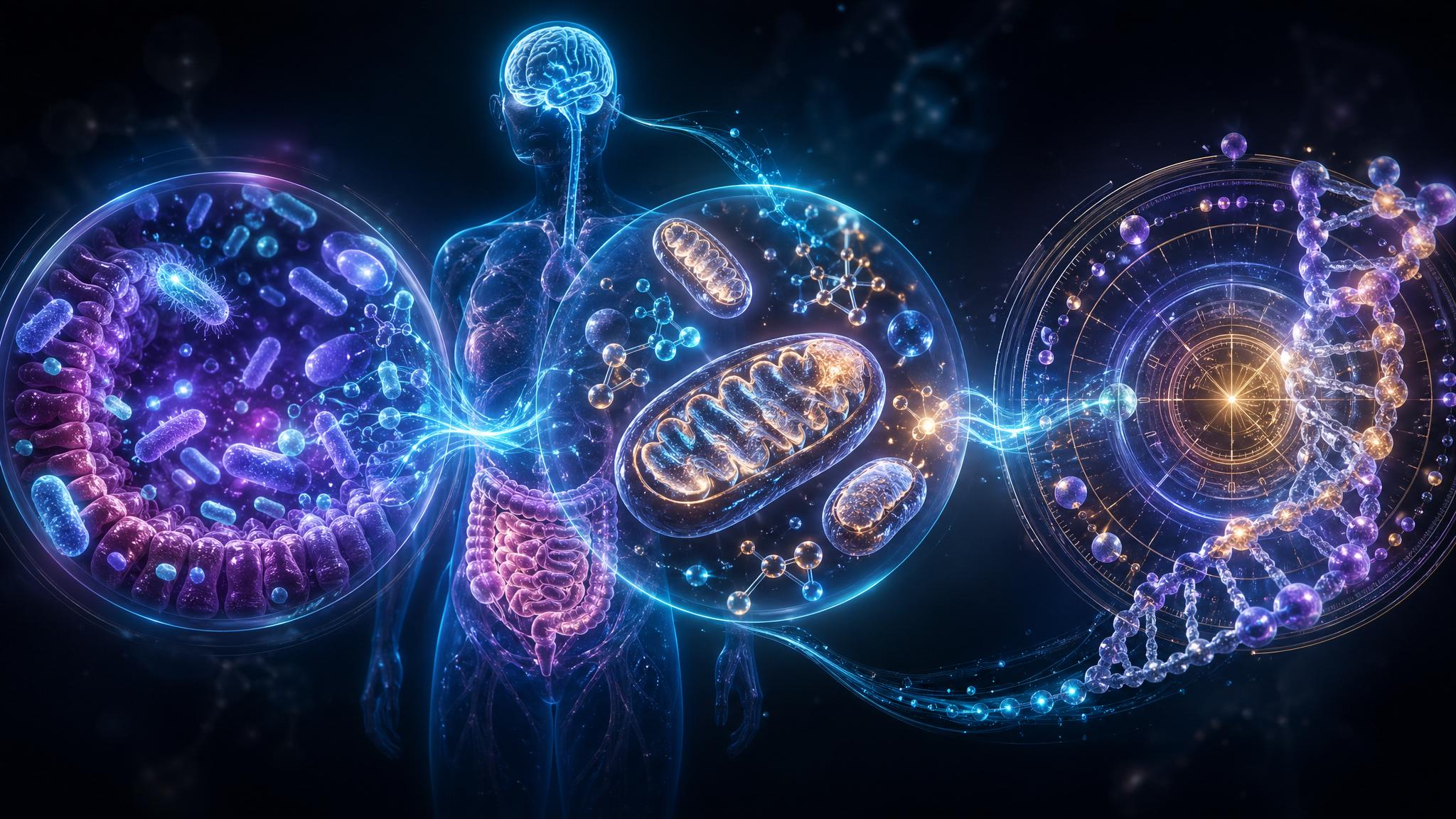
Does NMN Slow Aging? Insufficient Evidence, No Human Aging Trial
The longevity claim is the biggest promise in the NMN market and the one with the least human evidence behind it.
Presented By Our Partners


No. Not by any measure a trial has taken: a 2026 systematic review of 113 studies, 33 of them human, found NMN and NR reliably raised NAD metabolites but produced heterogeneous and often null healthspan outcomes, with no human trial of any aging endpoint (PMID 41655607). That is the whole record. Across the published NMN trials, nobody has measured mortality, disease incidence, frailty progression or a validated aging clock in people taking the supplement against people taking placebo. What exists is a blood biomarker that moves, a handful of surrogate outcomes that mostly do not, and a marketing claim that Healthcare Discovery scores at 77 out of 100 on the HYPE Index, well inside the Significant Evidence Gap tier. This page performs the autopsy: where the claim came from, what was actually tested, and where the drift happened.
What the longevity claim rests on
| Link in the chain | What was shown | How it gets retold |
|---|---|---|
| Preclinical biology | A 2020 review of 147 articles, 113 preclinical, found mostly favorable effects of NAD precursors in models of age-related disorders, alongside potential risks of tumorigenesis and senescence (PMID 31917996) | NAD declines with age, so restoring it must reverse aging |
| Biomarker trials | 12 RCTs (n=513) confirm oral NMN raises blood NAD; glucose and lipids do not change (PMID 39116016) | A higher NAD reading is presented as proof of benefit |
| Biological age | In 80 healthy adults, a proprietary blood algorithm (Aging.Ai 3.0) held steady on NMN while rising with placebo over 60 days (PMID 36482258) | A steady algorithm score becomes reversing biological age |
| Healthspan outcomes | 113-study review: heterogeneous, often null; no aging endpoint tested in humans (PMID 41655607) | Biomarker shifts become longer healthspan and lifespan |
The drift happens between the second and third rows. Raising blood NAD is real and repeatable. The 60-day dose-ranging trial found NAD rose at 300, 600 and 900 mg per day, highest at the two upper doses, in all 80 participants who completed (PMID 36482258). But the same trial’s “biological age” result came from a proprietary algorithm with no independent validation against hard outcomes, in a per-protocol analysis, over two months, in a trial co-sponsored by ABA Chemicals and Abinopharm, the companies that made the NMN tested. Retold without those limits, it becomes a claim about aging itself.
What the surrogate outcomes say
If NMN were slowing aging, the surrogates should move together. They do not. Three meta-analyses agree that fasting glucose, insulin, HbA1c and HOMA-IR are unchanged, including one of 8 RCTs (n=342) at 250 to 2,000 mg per day for 14 days to 12 weeks (PMID 39531138). Body weight and BMI did not change across 15 RCTs (PMID 42514320). Muscle mass, handgrip strength and gait speed were all null in adults over 60 in one 2025 analysis (PMID 40275690), while a second 2025 analysis found a small gait speed benefit (SMD 0.34, 95% CI 0.03 to 0.66) in 9 RCTs (PMID 39185644). Diastolic blood pressure fell by 2.15 mmHg (95% CI -3.68 to -0.61) across 10 RCTs (PMID 41901064). In 14 diabetic men over 65 with impaired physical performance, 24 weeks at 250 mg per day did not improve grip strength or walking speed, with a non-significant trend in frailty prevalence (p=0.066) (PMID 36443648). A 2 mmHg blood pressure shift and a possible walking speed gain are real findings. They are not aging reversal.
Then there is the signal pointing the other way. In 11 non-athletic young men, 7 days of NMN at 1,200 mg per day abolished the 171 percent increase in muscle mitochondrial content that followed exercise with placebo (PMID 41705654). Exercise is the best-evidenced longevity intervention available, and a 2023 meta-analysis found it raises muscle NAMPT, the rate-limiting NAD enzyme, by about 1.46-fold on its own (PMID 37954044). A supplement that blunts the training response would be working against the goal it is sold for. The finding is small and unreplicated, but it is the kind of result the longevity narrative never mentions.
Featured Partner
Invest in the Infrastructure Behind Modern Medicine
As healthcare expands beyond hospital walls, the buildings and campuses supporting that shift are generating compelling returns for investors who move early. The Healthcare Real Estate Fund offers qualified investors direct access to a curated portfolio of medical office, outpatient, and specialty care facilities.
Learn More →
What we do not know
Everything that would settle the question. No trial has run longer than 24 weeks. No trial has measured mortality, cardiovascular events, cancer incidence, dementia incidence, fracture rate or any validated epigenetic clock. No trial has enrolled people with cancer, which matters because the 2020 review raised the theoretical risk that chronic NAD elevation could feed tumor metabolism (PMID 31917996). The precedent worth knowing is antioxidant supplements, which also looked compelling at the biomarker stage: a 2012 Cochrane review of 78 randomized trials with 296,707 participants found no mortality benefit overall, and in the 56 trials at low risk of bias a small increase in mortality (RR 1.04, 95% CI 1.01 to 1.07) (PMID 22419320). NMN has not yet reached the outcome stage at all. Related Healthcare Discovery coverage includes The NAD+ Decline, The NAD+ Question and Spermidine and the Autophagy Switch.
Doses used in studies
These are doses reported by the named sources, not recommendations.
| Source | Dose reported | Context |
|---|---|---|
| PMID 36482258 | 300, 600 or 900 mg once daily for 60 days | 80 healthy middle-aged adults, dose-ranging RCT |
| PMID 36443648 | 250 mg once daily for 24 weeks | 14 men over 65 with diabetes and impaired physical performance; the longest NMN trial |
| PMID 39531138 | 250 to 2,000 mg per day for 14 days to 12 weeks | Meta-analysis of 8 RCTs, glycemic outcomes null |
The full claim-by-claim grading, the interaction table and the forms on the market are in Healthcare Discovery’s NMN evidence review. The method behind the 77 out of 100 score is at HYPE Index methodology.
Compiled by Healthcare Discovery from the cited PubMed studies. Every citation, author affiliation and trial sponsor named on this page was checked against PubMed on October 27, 2026. How claims are scored: HYPE Index methodology.
Does NMN slow aging in humans?
No human trial has tested it. A 2026 systematic review of 113 studies found NMN and NR reliably raised NAD metabolites but produced heterogeneous and often null healthspan outcomes, with no human trial of any aging endpoint (PMID 41655607).
Does NMN reverse biological age?
One 60-day trial of 80 healthy adults, co-sponsored by the companies that made the NMN tested, found a proprietary blood-based algorithm (Aging.Ai 3.0) held steady on 300 to 900 mg per day of NMN while rising with placebo (PMID 36482258). No validated epigenetic clock or clinical aging outcome has been measured.
Is there any evidence NMN could work against longevity?
In 11 non-athletic men, 7 days of NMN at 1,200 mg per day abolished the 171 percent post-exercise increase in muscle mitochondrial content seen with placebo (PMID 41705654), a small unreplicated finding that suggests NMN may blunt a training adaptation.


Similar Posts

The Scan Is Not the Finish Line
AI can spot a suspicious lung nodule. The harder question is whether the health system can carry the patient from that signal to completed care.
WHOOP 4.0 in 2026: Still Worth It, or Time to Upgrade to 5.0?
The WHOOP 4.0 is the 2021 WHOOP recovery strap. Keep it if it still works: its overnight HRV tests well. Upgrade to 5.0 for features, not proven accuracy.

Samsung Galaxy Ring Review 2026: $399 List, Deals Under $250, HSA/FSA Status
Samsung Galaxy Ring first look: current deal prices, 7-day battery, no subscription, what Galaxy Watch and smart ring studies show on sleep and heart rate, and HSA/FSA status.
Sunlighten mPulse Believe Sauna Review: Full Spectrum Infrared Therapy for Cardiovascular Health and Recovery
Full spectrum infrared sauna therapy targets cardiovascular conditioning, detoxification, and recovery through three distinct wavelength ranges in a single cabin. Presented By Our Partners In 2018, a Finnish research team…

The Blood-Brain Barrier Breakthrough: Smart Nanoparticles Just Reversed Alzheimer’s Pathology in Under an Hour
Scientists at the Institute for Bioengineering of Catalonia and West China Hospital engineered supramolecular nanoparticles that cleared 50 to 60 percent of amyloid-beta from Alzheimer’s mice within one hour, restored…
The Daily Rounds: Longevity & Health Care Brief | June 2, 2026
🧠 Blood Test Predicts Alzheimer's 3 to 4 Years Out: Washington University's p-tau217 blood model gives clinicians a non-invasive early warning window years before cognitive symptoms appear, now being incorporated into Alzheimer's Association screening guidelines. ❤️ Microplastics Under Major NIH Investigation for Heart Toxicity: UC Cincinnati receives $3.3M to map the pathways by which microplastics drive atherosclerosis, building on findings that microplastic-laden arterial plaque quadruples the risk of cardiovascular events. 🦠 Young Gut Bacteria Reverses Liver Aging in Animal Study: Fecal microbiota transplantation from young to old mice reversed hepatic aging markers and reduced cancer risk signals at Digestive Disease Week 2026, opening a new pathway for gut-based organ rejuvenation research. 🔬 Largest Human Rapamycin Trial Now Underway: 720 participants receiving two years of weekly low-dose rapamycin represent the most rigorous human longevity intervention test yet conducted, with frailty and systemic inflammation as primary endpoints. ⌚ Lab-on-Skin Wearables Enter the Market: Microneedle biosensors delivering real-time interstitial fluid biochemistry have entered commercial availability, bringing continuous metabolic monitoring out of the clinic and onto the wrist.
