
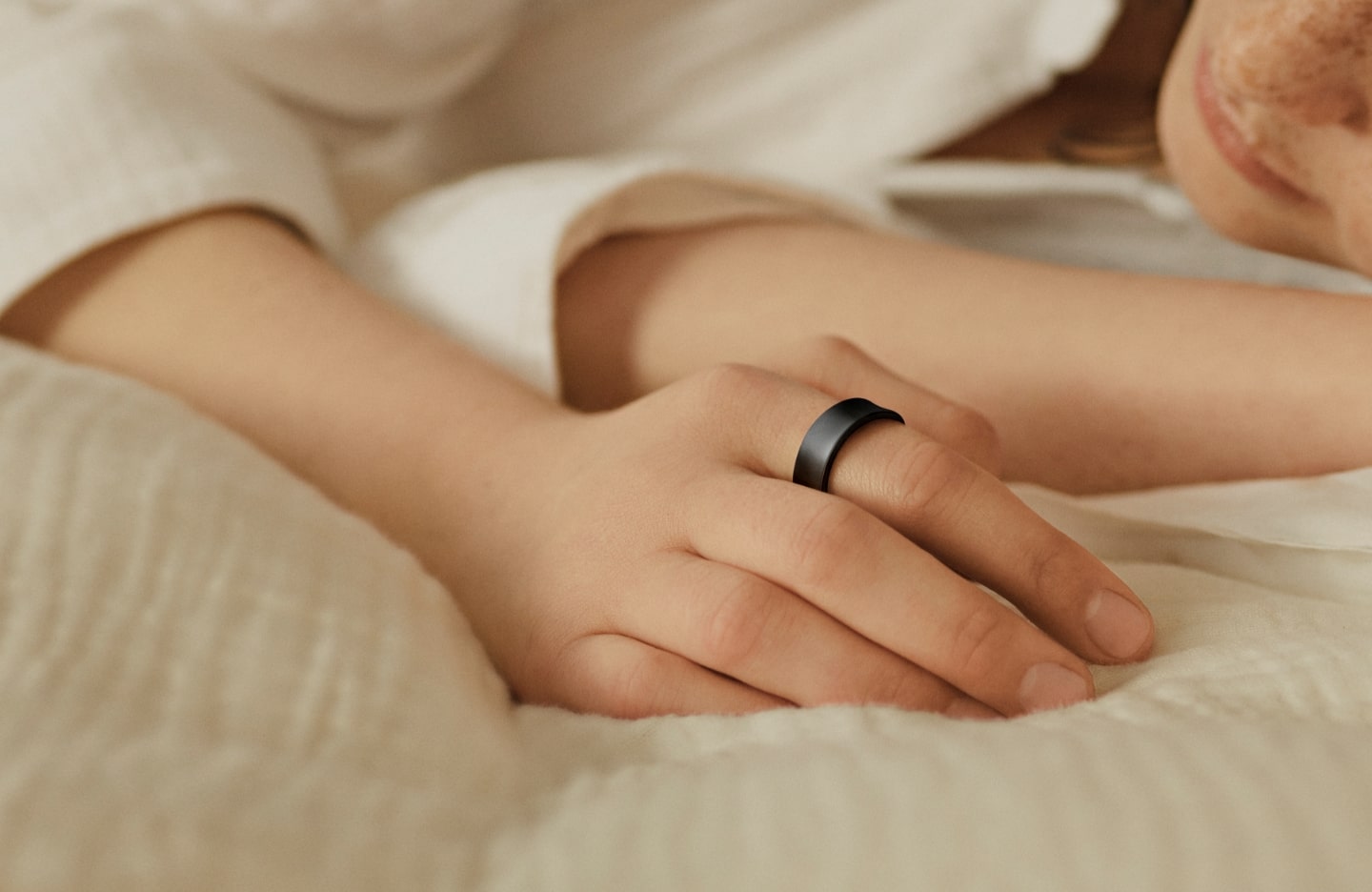
Samsung Galaxy Ring Review 2026: $399 List, Deals Under $250, HSA/FSA Status
Samsung’s first smart ring is now two years old, heavily discounted, and its successor is in doubt. No study has tested the Galaxy Ring itself, and what Samsung’s watches show about sleep and heart rate does not fully carry over to a sensor on your finger.
Presented By Our Partners


Samsung launched its first smart ring, the Galaxy Ring, in 2024 (Tom’s Guide; Shacknews; Forbes Brasil). US retail listings describe a ring with a sizing kit, no app subscription, sleep tracking and up to 7 days of battery (Slickdeals), and deal coverage through 2026 shows steep discounts (9to5Toys; Droid Life). BGR asked whether it is still worth buying in 2026 (BGR). This review looks past the listings to what Samsung’s sensors have been shown to measure in published studies.
First look. No peer-reviewed study has tested the Samsung Galaxy Ring itself yet; a PubMed search on October 28, 2026 found none. The accuracy section draws on studies of Samsung Galaxy Watch models, which use Samsung’s own sensors and health software, and on a study of the Oura Ring 3, the most-studied ring of its kind. A ring reads the finger, not the wrist, so the Galaxy Ring may perform better or simply differently.
The short answer: The Samsung Galaxy Ring is Samsung’s 2024 smart ring for sleep, heart rate and activity tracking, launched at $399 without an app subscription and now often discounted below $250. No study has tested the ring itself. Samsung’s Galaxy Watch 5 showed moderate agreement with lab sleep studies but missed about half of wake and deep sleep epochs, and Samsung’s watch heart rate was close to a chest strap on average with wide individual errors.
- Best for: Samsung phone owners who want a subscription-free ring for sleep and recovery trends and can buy it at a deal price.
- Not for: Anyone who needs a diagnosis, buyers who want the newest ring hardware, or people who want proven workout heart rate, where a chest strap or watch does better.
- Price (October 2026): Launched at $399 (Droid Life); deals seen at $249.95 and $239.99, and as low as $108 in an April 2026 promotion.
- Regulatory status: We found no FDA clearance for the Galaxy Ring in the sources reviewed for this page. Treat its readings as wellness data, not medical measurements.
- Evidence: None published for the Galaxy Ring itself; moderate for Samsung’s watch sleep staging; good on average for Samsung’s watch heart rate; limited for ring form factors in general.
What Is the Samsung Galaxy Ring?
The Samsung Galaxy Ring is a screenless smart ring, launched in 2024, that tracks sleep, heart rate and activity from the finger and reports them in Samsung’s health app, with no app subscription according to US retail listings.
A US retail listing describes the ring with a sizing kit that comes first, no app subscription, fitness and sleep tracking and up to 7 days of battery, in a titanium black finish (Slickdeals). Those details come from the listing’s headline and were not tested by Healthcare Discovery.
The Galaxy Ring’s future is uncertain. SamMobile reported in June 2025 that a Galaxy Ring 2 was coming but not in 2025 (SamMobile), Tom’s Guide reported it in the works with a long wait ahead (Tom’s Guide), and Ground News summarized reports that Samsung confirmed it while launch may slip to 2027 (Ground News). TechRadar, by contrast, reported the Galaxy Ring 2 shelved, citing an Oura patent dispute and reported underwhelming sales (TechRadar).
Can your doctor see this data? Partly, if you share it. Samsung Health is adding Xealth, the care platform Samsung bought, to move wearable data into participating health systems.
How Does the Samsung Galaxy Ring Work?
Like other smart rings, the Galaxy Ring reads the body through light and motion. An optical sensor on the inside of the band tracks each pulse for heart rate, and a motion sensor tracks movement, steps and stillness during sleep; software combines the two to estimate sleep stages and recovery.
The optical sensor does most of the work. Each heartbeat pushes blood into the small vessels of the finger, and the sensor sees the skin brighten and dim with every beat. The pattern of beats and their spacing, together with how still you are, feeds the app’s estimates of light, deep and REM sleep.
A ring sits on the finger, where the fit and blood flow differ from the wrist. That can help at night, when hands are still, and hurt during exercise, when grip and hand movement disturb the signal. It is why watch studies cannot simply be assumed to apply to a ring.
How Accurate Is the Samsung Galaxy Ring? What the Research Shows
No study has tested the Galaxy Ring yet. Samsung’s Galaxy Watch 5 showed moderate agreement with lab sleep studies but caught only about half of wake and deep sleep, and Samsung’s watch heart rate was close to a chest strap on average with wide individual errors. A study of 10 wearables found the Oura Ring 3 had larger heart rate errors than the best wrist devices.
Sleep stages. In a two-center Korean study that compared 11 consumer sleep trackers with in-lab polysomnography in 75 adults, the Galaxy Watch 5 (22 participants) classified sleep stages with 64.9 percent accuracy and moderate agreement (kappa 0.42). It detected 48.1 percent of wake epochs and 47.5 percent of deep sleep epochs, and its sleep efficiency estimate was off by only 0.4 percentage points on average. The Oura Ring 3 (53 participants) showed fair agreement (kappa 0.35), with 38.2 percent sensitivity for wake but 77.8 percent for deep sleep (PMID 37917155).
Heart rate. In 55 healthy adults on a maximal treadmill test, the Galaxy Watch 6 underestimated heart rate by 2.67 beats per minute on average compared with a Polar H10 chest strap, but individual readings ranged from 16.90 below to 11.57 above (PMID 41990212). In a 2026 study of 10 wearables, the Oura Ring Gen 3 was among the devices with larger errors, with mean absolute errors of 9 to 14 beats per minute for that group, compared with 4.5 for the Fitbit Charge 6 (PMID 41701929).
Breathing rate during sleep. In 195 sleep clinic patients with overnight polysomnography, Galaxy Watch breathing rate estimates had a root mean squared error of 1.13 breaths per minute for the overnight average. Accuracy exceeded 90 percent in people with normal breathing to moderate sleep apnea but fell to 79.45 percent in severe sleep apnea (PMID 37766031).
Featured Partner
Invest in the Infrastructure Behind Modern Medicine
As healthcare expands beyond hospital walls, the buildings and campuses supporting that shift are generating compelling returns for investors who move early. The Healthcare Real Estate Fund offers qualified investors direct access to a curated portfolio of medical office, outpatient, and specialty care facilities.
Learn More →
Sleep apnea screening. In a Stanford study of 152 adults with known or likely sleep apnea, the Galaxy Watch detected moderate to severe obstructive sleep apnea with 94.1 percent sensitivity and 66.7 percent specificity at its default threshold (PMID 42661136). That study tested the watch; we could not confirm that the Galaxy Ring offers a sleep apnea feature.
Company ties: the breathing rate study lists authors from Samsung Electronics (PMID 37766031), and the 11-tracker sleep study lists authors from Asleep Co., which makes one of the sleep apps it tested (PMID 37917155). The treadmill heart rate study lists authors from the Sidia Institute of Science and Technology in Brazil, and PubMed does not state its funding (PMID 41990212). The other studies list academic or hospital affiliations only. PubMed affiliations are not a full disclosure of funding or conflicts.
What the Samsung Galaxy Ring Gets Right
The Galaxy Ring gets the basics of a sleep ring right on paper: no app subscription, a claimed week of battery, and a much lower price than at launch, backed by Samsung health software that tested reasonably well on its watches.
No subscription. US listings describe the ring as having no app subscription (Slickdeals), which lowers the long-term cost compared with rings that charge monthly.
Samsung’s sleep software tests reasonably well. Samsung’s Galaxy Watch 5 was among the better wearables for overall sleep staging and estimated sleep efficiency within 0.4 percentage points (PMID 37917155). Whether the ring matches that is still unknown.
Deep discounts. Deal coverage has shown the ring at $239.99 (Technobezz) and as low as $108 in an April 2026 promotion (Droid Life), which changes the value calculation for an older device.
Where the Samsung Galaxy Ring Falls Short
The weaknesses are no published data on the ring itself, sleep staging that misses about half of wake and deep sleep on Samsung’s watch, a ring form factor that has shown larger heart rate errors, older hardware, and an uncertain successor.
No ring-specific evidence. Every study above tested a Samsung watch or another company’s ring. Until researchers test the Galaxy Ring, its accuracy is inferred, not shown.
Wake and deep sleep are hard. On the Galaxy Watch 5, fewer than half of wake and deep sleep epochs were caught (PMID 37917155). People with insomnia, who often lie awake but still, may see more sleep than they got.
Rings and heart rate during activity. The Oura Ring Gen 3’s larger heart rate errors in a 10-device study (PMID 41701929) are a reminder that rings are better suited to rest and sleep tracking than to workouts.
Older hardware with an unclear future. The ring launched in 2024, and reports on a Galaxy Ring 2 conflict, from delayed to shelved (TechRadar; Ground News). Buyers may get fewer new features over time than with a current model.
Samsung Galaxy Ring vs Oura Ring 5 vs Ultrahuman Ring Pro vs RingConn Gen 3
The Galaxy Ring is the subscription-free choice for Samsung phone owners, while Oura, Ultrahuman and RingConn sell newer rings. We found no published validation study of the Galaxy Ring, and we did not review studies of the newest Oura, Ultrahuman and RingConn models for this page; the Oura Ring 3 is the closest studied ring here.
| Feature | Samsung Galaxy Ring | Oura Ring 5 | Ultrahuman Ring Pro | RingConn Gen 3 |
|---|---|---|---|---|
| Form | Smart ring | Smart ring | Smart ring | Smart ring |
| App subscription | None, per US listing | Not verified for this review | Not verified for this review | Not verified for this review |
| Claimed battery | Up to 7 days | Not verified for this review | Not verified for this review | Not verified for this review |
| Closest published sleep validation | Galaxy Watch 5: moderate agreement (PMID 37917155) | Oura Ring 3: fair agreement (PMID 37917155) | Not verified for this review | Not verified for this review |
| Price (October 2026) | $399 at launch; deals from $108 to $249.95 | Not verified for this review | Not verified for this review | Not verified for this review |
For the newest Oura, see our Oura Ring 5 guide. Our Ultrahuman Ring Pro review and RingConn Gen 3 review cover the other main rings. If you would rather wear Samsung on the wrist, see our Galaxy Watch 9 review, and our sleep score essay explains what any tracker’s sleep number can and cannot tell you. Every device we track is in our healthtech wearables guide.
How Much Does the Samsung Galaxy Ring Cost, and Is It HSA or FSA Eligible?
Droid Life reported the Galaxy Ring official at $399 when it launched (Droid Life), but it rarely sells for that now. A US version has been listed at $249.95 (Slickdeals), Technobezz reported a lowest ever price of $239.99 (Technobezz), and Droid Life reported it as low as $108, which it called 73 percent off (Droid Life). In the UK, SamMobile reported a repeat £100 price cut in March 2026 (SamMobile). We found no confirmation that the Galaxy Ring is HSA or FSA eligible as a standard purchase, and insurance does not cover it as far as we found.
Some plans may accept a wearable with a letter of medical necessity from your clinician, so ask your HSA or FSA administrator before assuming it qualifies. If the ring’s sleep data worries you, the usual next step is a clinician-ordered sleep study, which is typically covered differently from a consumer device.
Who Should Buy the Samsung Galaxy Ring, and Who Should Skip It?
The Galaxy Ring suits Samsung phone owners who want subscription-free sleep and recovery trends at a deal price. It is a poor fit for people who need a diagnosis, want the newest ring hardware with a clear upgrade path, or want accurate workout heart rate.
Good candidates:
- Samsung phone owners who dislike wearing a watch to bed and want sleep trends without a monthly fee.
- Bargain buyers who can get the ring well below its early price and accept older hardware.
- People who want a simple nightly picture of sleep timing and resting heart rate trends to discuss with their doctor.
Better served by something else:
- Chest pain, fainting, or a racing heart with shortness of breath: that is an emergency. Call 911; do not wait for a ring.
- Anyone who suspects sleep apnea or insomnia now: book an appointment and a sleep study rather than relying on ring data.
- Athletes who train by heart rate zones: a chest strap is more accurate during exercise.
- iPhone users: reporting on a Galaxy Ring 2 lists iPhone support only as a possibility, so check compatibility before buying.
- Buyers who want the newest features: a current Oura, Ultrahuman or RingConn ring is a better match.
If your sleep or heart data sends you looking for a sleep specialist or cardiologist, the Healthcare Discovery doctor directory lists clinicians by state and specialty.
What This Means for You
The Galaxy Ring is a reasonable, subscription-free sleep ring for Samsung users, especially at today’s deal prices, but there is no published study of the ring itself. The best evidence comes from Samsung’s watches, which handle sleep staging and average heart rate reasonably well while missing much of the wake and deep sleep that matter most to people who sleep poorly. For the wider picture of what drives heart risk, see our heart health evidence review.
Use the sleep score, stages and readiness numbers as trends, not verdicts. Buy the Galaxy Ring for comfort, battery and price, and if you want the newest hardware or a clear upgrade path, look at a current ring instead.
Compiled by Healthcare Discovery from the cited PubMed studies and Samsung’s launch materials. Every PMID, study size and result on this page was checked against PubMed on October 28, 2026. Launch, price, specification and review details come from the named publications’ headlines and listings and were not independently tested. This is a first look; no Healthcare Discovery hands-on testing was done.
Is the Samsung Galaxy Ring accurate for sleep tracking?
No published study has tested the Galaxy Ring itself. Samsung’s Galaxy Watch 5 showed moderate agreement with lab sleep studies (kappa 0.42) but caught only 48 percent of wake and 48 percent of deep sleep epochs, while an Oura Ring 3 showed fair agreement in the same study (PMID 37917155). Treat ring sleep stages as trends.
How long does the Galaxy Ring battery last?
Retail listings describe up to 7 days of battery life. Healthcare Discovery has not tested battery life, and real use depends on ring size and settings.
Does the Galaxy Ring need a subscription?
US retail listings describe the Galaxy Ring as having no app subscription. Check Samsung’s current terms before buying, since features and terms can change.
Is there a Samsung Galaxy Ring 2?
Not yet, as of October 2026. Reports conflict: some say a Galaxy Ring 2 is in the works but could slip to 2027, while TechRadar reported it shelved amid an Oura patent dispute and reported weak sales.
Is the Galaxy Ring HSA or FSA eligible?
We found no confirmation that the Galaxy Ring qualifies as a standard HSA or FSA purchase. Some plans may accept a letter of medical necessity, so check with your plan administrator before buying with pre-tax funds.
How much does the Samsung Galaxy Ring cost?
We could not confirm Samsung’s current US list price. It launched at $399. Deal coverage has since shown it at $249.95 for a US version, $239.99 as a lowest price ever, and as low as $108 in an April 2026 promotion. Check Samsung for current pricing.
Sources
- Lee T, et al. Accuracy of 11 wearable, nearable, and airable consumer sleep trackers: prospective multicenter validation study. JMIR mHealth and uHealth, 2023. PMID 37917155
- Inoue A, et al. Heart rate estimation using the Galaxy Watch during maximal cardiopulmonary exercise testing: cross-sectional validation study. JMIR Cardio, 2026. PMID 41990212
- Gielen J, et al. Accuracy of optical heart rate measurements for 10 commercial wearables in different climate conditions and activities: instrument validation study. JMIR Formative Research, 2026. PMID 41701929
- Jung H, et al. Validating a consumer smartwatch for nocturnal respiratory rate measurements in sleep monitoring. Sensors, 2023. PMID 37766031
- Alavi A, et al. Smartwatch-based detection of moderate-to-severe and high-risk obstructive sleep apnea. Journal of Clinical Sleep Medicine, 2026. PMID 42661136
- Tom’s Guide. Samsung launches first Galaxy Ring: here’s how you can pre-order it today. Tom’s Guide
- Shacknews. Samsung announces Galaxy Ring wearable. Shacknews
- Forbes Brasil. Price, launch and details: everything we know about the Galaxy Ring in Brazil (in Portuguese), September 2024. Forbes Brasil
- Slickdeals. Samsung Galaxy Ring AI smart ring, size first with sizing kit, no app subscription, fitness monitor, sleep tracker, up to 7-day battery, US version, $249.95. Slickdeals
- Technobezz. Samsung Galaxy Ring drops to $239.99 for its lowest price ever. Technobezz
- Droid Life. Galaxy Ring official at $399, July 2024. Droid Life
- Droid Life. Galaxy Ring as low as $108 is insane (73% off), April 2026. Droid Life
- SamMobile. Samsung UK drops £100 off the Galaxy Ring price again, March 2026. SamMobile
- 9to5Toys. Samsung smart Galaxy Ring deals, January 2026. 9to5Toys
- BGR. Is a Samsung Galaxy Ring worth it in 2026?. BGR
- SamMobile. Galaxy Ring 2 is coming, but don’t hold your breath for a 2025 release, June 2025. SamMobile
- Tom’s Guide. Samsung Galaxy Ring 2 is reportedly in the works, but we could be waiting a while. Tom’s Guide
- Ground News. Samsung confirms Galaxy Ring 2 is officially on the way, iPhone support could be on the list. Ground News
- TechRadar. Samsung Galaxy Ring 2 shelved? An Oura patent dispute and reported underwhelming sales cast doubt on the smart ring’s future. TechRadar


Similar Posts

From Prediction to Navigation: The AI Shift Healthcare Has Been Waiting For
Clinical AI has spent years predicting risk. The next test is harder: whether AI can help patients and clinicians choose the right next action and complete the path to care.

The Mutations Hiding in Your Blood: How Clonal Hematopoiesis Quietly Drives Heart Disease, and the Rise of Precision Cardio-Hematology
Clonal hematopoiesis, a hidden buildup of mutated blood stem cells, raises heart disease risk independent of cholesterol and blood pressure. Inside the science of CHIP and the new field of…
Suunto Race 2 and Vertical 2 Review 2026: Price, Battery, Accuracy, HSA/FSA Status
Suunto Race 2 and Vertical 2 first look: price, battery, what studies show about Suunto heart rate, GPS and calorie accuracy, FDA status and HSA/FSA options.

Oura Ring Gen 4 Women’s Health Features: Cycle Tracking, Pregnancy, and Perimenopause
A ring that already tracked sleep, heart rate, and body temperature added cycle prediction, pregnancy insights, and perimenopause features, turning a general health wearable into something more specific: a continuous…

Anthropic Just Bought a Drug Discovery Startup for $400M. Here Is What It Means for Healthcare AI.
A foundation model company just paid $400 million in stock for a team of fewer than 10 people. The implications for drug discovery, precision medicine, and the entire healthcare AI…

Polar Loop Review 2026: Polar’s Screen Free, Subscription Free Whoop Alternative
Polar Loop costs $199.90 with no subscription and tracks heart rate, sleep, recovery and training for up to 8 days per charge. Specs, reviews, privacy, and how it compares with…
