
Everlywell Women’s Health Test: Accessible Hormone Panels for Metabolic and Reproductive Insight
The most common endocrine disorders affecting women, thyroid dysfunction and hormonal imbalance, are also among the most treatable when caught early enough to intervene.
Presented By Our Partners



Subclinical hypothyroidism affects an estimated 4% to 10% of the general population, with women disproportionately affected at rates two to five times higher than men. It often presents as vague symptoms: fatigue, weight gain, brain fog, menstrual irregularity, and cold intolerance that are easily dismissed or attributed to stress and aging. Yet untreated thyroid dysfunction has downstream effects on cardiovascular health, metabolic function, bone density, and reproductive outcomes that accumulate over years. Similarly, imbalances in cortisol, DHEA-S, and sex hormones like testosterone and estradiol can drive symptoms that affect daily quality of life while simultaneously signaling deeper metabolic disruption. The challenge has never been a lack of available tests; it has been access. Getting a comprehensive hormone panel traditionally required a physician’s order, a laboratory visit, insurance navigation, and often hundreds of dollars in out-of-pocket costs.
Everlywell has built its business on removing those barriers, offering CLIA-certified at-home hormone panels that arrive by mail, require only a finger prick or saliva sample, and return physician-reviewed results through a digital dashboard.
What Is the Everlywell Women’s Health Test?
Everlywell offers a range of at-home health tests, with its Women’s Health panels measuring hormones relevant to reproductive health, metabolic function, and stress response. Depending on the specific panel selected, hormones tested may include estradiol, progesterone, testosterone, DHEA-S, cortisol, and TSH. Everlywell also offers standalone thyroid panels, metabolism panels, and perimenopause panels that focus on specific clinical questions.
Tests cost between $149 and $249 depending on the panel. Each kit includes collection materials (finger-prick lancets for blood or saliva collection tubes), prepaid shipping, CLIA-certified laboratory processing, and physician-reviewed results delivered through the Everlywell app or website. Results typically arrive within five to seven business days and include reference ranges, interpretation guidance, and recommendations for follow-up.
Everlywell’s approach differs from daily-use fertility monitors in that it provides point-in-time hormone assessments rather than continuous tracking. The panels are designed for women seeking a baseline understanding of their hormonal health, screening for common endocrine disorders, or monitoring the effects of lifestyle changes on their hormone levels over time.
The Science Behind Multi-Hormone Screening
The clinical rationale for multi-hormone panels lies in the interconnected nature of the endocrine system. Hormones do not operate in isolation; they exist in dynamic feedback loops where changes in one axis affect others. Elevated cortisol from chronic stress suppresses thyroid function, reduces progesterone production, and shifts the testosterone-to-estrogen ratio. Thyroid dysfunction alters sex hormone binding globulin (SHBG) levels, which in turn affects the bioavailability of testosterone and estradiol. Testing a single hormone in isolation can produce misleading results because it lacks the context provided by related markers.
The Endocrine Society’s clinical guidelines emphasize that thyroid screening should be considered for all women presenting with menstrual irregularity, infertility, or unexplained fatigue. TSH is the single most informative screening test for thyroid function, and its inclusion in Everlywell’s panels means users can simultaneously assess reproductive and thyroid health, the two most common endocrine axes affected in women of reproductive age.
DHEA-S and cortisol measurement adds a stress axis assessment that most consumer reproductive tests do not include. DHEA-S is the most abundant circulating steroid hormone and serves as a precursor to both testosterone and estrogen. Declining DHEA-S levels with age are associated with loss of bone density, reduced immune function, and decreased sense of well-being. Cortisol, measured in saliva at specific times of day, reflects adrenal function and stress response. The combination of cortisol and DHEA-S provides a window into adrenal health that is clinically relevant for women experiencing fatigue, stress-related symptoms, or hormonal imbalance.
A 2024 systematic review published in the Journal of Medical Internet Research by Lyzwinski et al. noted that the convergence of laboratory-grade testing with consumer accessibility is creating new opportunities for early detection of endocrine conditions that previously went undiagnosed until symptoms became severe. The review emphasized that at-home testing platforms lower the barrier to screening, potentially capturing conditions at earlier, more treatable stages.
What the Everlywell Women’s Health Test Does Well
Everlywell’s strongest advantage is its breadth of panel options. Rather than a single one-size-fits-all test, the platform offers multiple configurations targeting different clinical questions: a Women’s Health panel for comprehensive reproductive hormone assessment, a Thyroid panel for focused thyroid screening, a Perimenopause panel for women experiencing transitional symptoms, and a Women’s Fertility panel that includes AMH for ovarian reserve assessment. This modular approach lets users select the test most relevant to their specific concerns.
The CLIA-certified laboratory processing ensures that results meet the same quality standards as physician-ordered laboratory tests. Every result is reviewed by a board-certified physician before release, adding a layer of clinical oversight that self-interpreted consumer tests lack. The digital results dashboard presents findings in clear, accessible language with visual indicators showing where each result falls within the reference range.
Everlywell’s established brand presence and wide availability make it one of the most accessible at-home testing options. The company has been operating since 2015 and has processed millions of tests, building a track record of operational reliability. Integration with telehealth services means users can connect with a healthcare provider directly from their results if follow-up is needed.
Featured Partner
Invest in the Infrastructure Behind Modern Medicine
As healthcare expands beyond hospital walls, the buildings and campuses supporting that shift are generating compelling returns for investors who move early. The Healthcare Real Estate Fund offers qualified investors direct access to a curated portfolio of medical office, outpatient, and specialty care facilities.
Learn More →
Pricing, Access, and Practical Realities
Everlywell Women’s Health panels range from $149 to $249 depending on the specific test selected. The Women’s Health Test (broad hormone panel) costs $199, the Thyroid Test costs $99, and the Perimenopause Test costs $159. No subscription is required for individual tests, though Everlywell offers membership programs that provide discounts on multiple tests. Annual retesting for trend monitoring typically costs $199 to $498 depending on the panels selected.
All Everlywell tests are HSA and FSA eligible. The company partners with CLIA-certified laboratories across the United States and provides prepaid shipping both ways, minimizing logistical friction. Results are typically available within five to seven business days.
Everlywell does not require a physician’s order, though some states have regulatory requirements that the company navigates on the user’s behalf. The physician review included with each test satisfies the medical oversight requirements that apply to clinical laboratory testing. Users should understand that Everlywell tests are screening tools, not diagnostic instruments; abnormal results should be confirmed through follow-up testing ordered by a personal healthcare provider.
Who the Everlywell Women’s Health Test Is Best For
Everlywell is ideal for women experiencing symptoms like fatigue, weight changes, menstrual irregularity, mood shifts, or low energy who want to screen for common hormonal and thyroid conditions before committing to a specialist visit. The breadth of available panels makes it suitable for a wide range of clinical questions, from fertility assessment to perimenopause screening to general hormonal wellness monitoring.
Women who prefer to arrive at a doctor’s appointment with data in hand will find Everlywell valuable as a conversation starter. Having baseline hormone levels documented before a clinical visit can streamline the diagnostic process and help providers identify which additional tests or imaging may be needed.
Women who need daily cycle tracking for ovulation timing should not rely on Everlywell as their primary fertility tool. The tests provide point-in-time snapshots, not continuous monitoring. Users actively trying to conceive should pair an Everlywell baseline assessment with a daily-use fertility monitor for cycle-specific data. Women seeking AMH specifically for ovarian reserve assessment should verify that the panel they select includes this marker, as not all Everlywell panels do.
How the Everlywell Women’s Health Test Compares
Modern Fertility ($159) offers a reproductive-focused panel that includes AMH, FSH, LH, estradiol, and thyroid hormones. Modern Fertility’s strength is its inclusion of AMH for ovarian reserve in its standard panel, while Everlywell’s advantage is its wider range of panel configurations that include stress hormones (cortisol, DHEA-S) alongside reproductive markers. The choice often depends on whether the user’s primary concern is fertility planning (favoring Modern Fertility) or broader hormonal health screening (favoring Everlywell).
LetsGetChecked ($99 to $199) offers similar at-home hormone panels with CLIA-certified processing and nurse support for results review. LetsGetChecked’s differentiator is its inclusion of nurse consultations (not just physician review of results), which provides a more personalized interpretation experience. Pricing is generally comparable, with LetsGetChecked often offering lower entry-point options for focused panels.
The DUTCH Test ($399 to $499) provides the most comprehensive hormonal assessment available at home, measuring hormone metabolites through dried urine collection. The DUTCH test captures cortisol patterns, hormone metabolites, and organic acids that blood and saliva panels do not. However, it costs two to three times more than Everlywell panels and is primarily designed for interpretation by functional medicine practitioners rather than general consumers.
Limitations and Open Questions
Everlywell’s point-in-time testing cannot capture the dynamic hormonal fluctuations of the menstrual cycle. A single estradiol or progesterone measurement provides a snapshot but does not reveal how these hormones change across follicular, ovulatory, and luteal phases. For cycle-phase-specific hormone data, daily-use monitors or serial blood draws are necessary.
Reference ranges provided with results are population-based and may not account for individual variation, age-specific expectations, or the effects of lifestyle factors on hormone levels. A result within the reference range does not necessarily mean optimal, and a result slightly outside the range does not necessarily indicate pathology. Clinical context, which requires a healthcare provider’s interpretation, is essential for translating numbers into actionable decisions.
Finger-prick and saliva collection at home introduces pre-analytical variables (hydration, collection timing, sample handling) that are controlled in laboratory settings but less controlled at home. While CLIA-certified laboratories have quality assurance processes for at-home samples, users who do not follow collection instructions carefully may receive less reliable results.
Not all Everlywell panels include the same hormones. Users must carefully select the panel that matches their clinical question, as the Women’s Health Test, Thyroid Test, Perimenopause Test, and Fertility Test each measure different marker combinations. Purchasing the wrong panel means missing the specific data points that matter most for the user’s situation.
What This Means for Your Health
Everlywell’s at-home hormone panels represent the broader trend toward consumer empowerment in preventive health screening. The ability to assess thyroid function, stress hormones, and reproductive hormones without a doctor’s order or laboratory visit removes barriers that historically delayed diagnosis of common, treatable conditions. For the estimated 60% of adults with a thyroid condition who remain undiagnosed according to the American Thyroid Association, accessible screening could meaningfully accelerate the path to treatment.
Within Healthcare Discovery‘s Five Pillars framework, the hormones Everlywell measures are downstream indicators of foundational health practices. Cortisol levels reflect sleep quality and stress management. Thyroid function is influenced by nutritional status (particularly iodine, selenium, and zinc). Sex hormones respond to body composition, exercise patterns, and metabolic health. Testing these markers provides a quantifiable feedback loop: users can observe how changes in nutrition, sleep, movement, breathwork, and mindset practices translate into measurable hormonal shifts over time.
In the context of the Four Shadows, hormonal health is intimately connected to metabolic dysfunction and cardiovascular risk. Thyroid dysfunction increases cardiovascular risk. Chronic cortisol elevation drives metabolic syndrome. Sex hormone imbalances affect body composition and insulin sensitivity. By screening these markers proactively, Everlywell users can identify and address hormonal contributors to chronic disease risk before they progress from subclinical findings to overt conditions, exactly the kind of early intervention that HealthcareDiscovery.ai’s longevity framework advocates.
Frequently Asked Questions
What hormones does the Everlywell Women’s Health Test measure?
The specific hormones depend on which panel you select. The Women’s Health Test typically includes estradiol, progesterone, testosterone, DHEA-S, cortisol, and TSH. The Thyroid Test focuses on TSH, free T4, free T3, and TPO antibodies. The Perimenopause Test includes estradiol, progesterone, FSH, LH, and TSH. Check the specific panel details before purchasing to ensure it includes the markers relevant to your health questions.
How much do Everlywell hormone tests cost?
Everlywell hormone panels range from $99 to $249. The Thyroid Test costs $99, the Women’s Health Test costs $199, and the Perimenopause Test costs $159. All tests are HSA and FSA eligible. No subscription is required, and each kit includes collection materials, prepaid shipping, CLIA-certified laboratory processing, and physician-reviewed results.
Are Everlywell results as accurate as a doctor’s blood test?
Everlywell uses CLIA-certified laboratories that meet the same quality standards as laboratories processing physician-ordered tests. Finger-prick and saliva collections have been validated for the hormones tested. However, at-home collection introduces variables (hydration, timing, sample handling) that are better controlled in clinical settings. Abnormal Everlywell results should be confirmed through follow-up testing with your healthcare provider.
Can I use Everlywell to track ovulation?
No. Everlywell provides point-in-time hormone snapshots, not continuous cycle monitoring. It cannot tell you when you are ovulating or track day-to-day hormonal changes. For ovulation tracking, use a daily fertility monitor (such as Mira or Inito) or standard ovulation predictor kits. Everlywell is best used for baseline hormonal health screening and periodic monitoring.
How often should I retake the Everlywell Women’s Health Test?
For general hormonal health monitoring, annual retesting is typically sufficient. Women making significant lifestyle changes (dietary overhauls, new exercise programs, stress management interventions) may benefit from retesting every six months to track the hormonal impact of those changes. Women with identified conditions should follow their healthcare provider’s recommended monitoring schedule.
Does Everlywell include AMH for ovarian reserve testing?
AMH is included in some Everlywell panels (such as the Women’s Fertility Test) but not all. The standard Women’s Health Test may not include AMH. If ovarian reserve assessment is your primary goal, verify that the specific panel you are purchasing includes AMH, or consider Modern Fertility, which includes AMH in its standard $159 panel.
Everlywell Women's Health Test at a glance
- Hardware price
- $149 to $249
- Subscription
- None required
- First year total
- $149
- Form factor
- At-home blood/urine test
- FDA status
- Wellness device, no clearance
- HSA/FSA
- Eligible
Measures Cortisol, DHEA-S, Estradiol, Progesterone, Testosterone, TSH
Maintained in the Healthcare Discovery device database and updated automatically.


Similar Posts

Spermidine and the Autophagy Switch: What 2026 Science Says About the Polyamine That May Mimic Caloric Restriction
Spermidine triggers autophagy, the cell’s recycling system, and a 20 year Austrian cohort linked higher dietary intake to roughly 5 fewer years of mortality. Inside the Frank Madeo Graz research,…

Eko Duo: The Digital Stethoscope With Built In ECG for Dual Cardiac Screening
The most advanced digital stethoscope available, combining AI powered heart sound analysis with a single lead ECG to screen for murmurs, AFib, and structural heart disease simultaneously during routine examination….
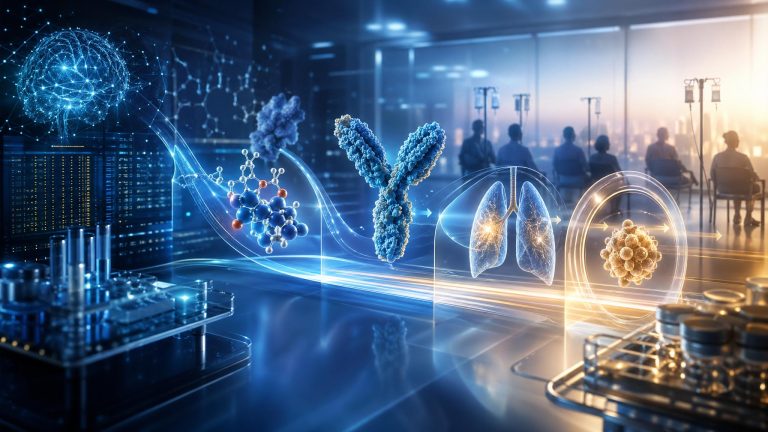
Ivonescimab Beats Immunotherapy in Lung Cancer: Inside the HARMONi-6 Trial That Rewrote the Standard of Care
A bispecific antibody that simultaneously targets PD-1 and VEGF just beat the standard immunotherapy regimen head-to-head in overall survival. It is the first time any drug has achieved this milestone…
The Daily Rounds: Longevity & Health Care Brief | May 17, 2026
🧠 Brain Training Cuts Dementia Risk by 25% — Cognitive speed training reduced dementia incidence by 25% over 20 years in a large randomized trial, the first intervention to demonstrate this effect at scale. 🧬 Naked Mole Rat Gene Extends Mouse Healthspan — Transferring a longevity-associated gene across species produced healthier, longer-lived mice, showing that species-specific aging mechanisms can be successfully transposed. ⌚ Wearables Detect Diabetes Without Blood Tests — Sleep and temperature data from consumer wearables detected diabetes with 0.880 AUROC, pointing toward passive, blood-free disease screening at population scale. 🦠 Gut Microbes Predict Heart Disease Years Early — A gut-kidney-heart axis identified by Imperial College scientists enables cardiovascular disease prediction years before symptoms appear using microbiome biomarkers. 💪 Grip Strength Predicts Longevity Independently of Exercise — Simple muscle strength tests predicted 8-year mortality risk even in women who did not meet aerobic exercise guidelines, reinforcing strength as a primary longevity target.

Liquid Biopsy Is Rewriting Cancer Detection: How a Single Blood Draw May Find Dozens of Cancers Before Symptoms Appear
A convergence of cfDNA methylation analysis, multi-omics integration, and artificial intelligence is transforming cancer screening. From the PATHFINDER 2 trial showing a seven-fold increase in cancer detection to the PROMISE…

GI-MAP: The Functional Medicine Gold Standard for Comprehensive Stool Analysis
What quantitative PCR technology reveals about gut pathogens, digestive function, and immune markers that consumer microbiome tests cannot detect Presented By Our Partners In clinical gastroenterology, the gap between consumer…
