
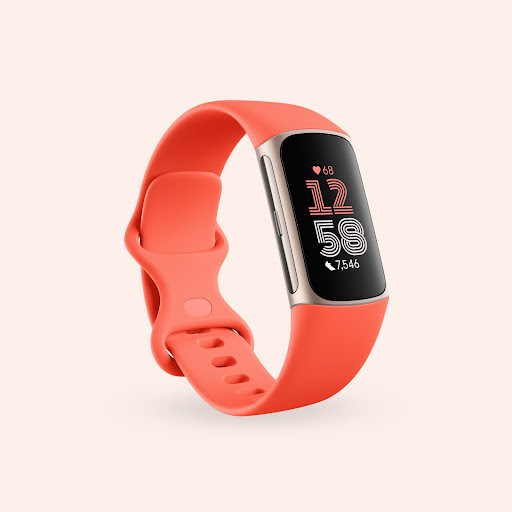
Fitbit Charge 6: The Most Affordable FDA Cleared ECG Tracker With Google Integration
At $159.95, the Fitbit Charge 6 delivers FDA cleared ECG and irregular heart rhythm detection in a slim fitness band, making clinical grade cardiac screening accessible to the widest possible audience.
Presented By Our Partners



A 2019 study published in The Lancet Digital Health by Turakhia et al. reported the results of the Apple Heart Study, the largest screening trial for atrial fibrillation ever conducted using a consumer wearable device. Among 419,297 participants, the study confirmed that wrist worn optical sensors could identify irregular heart rhythms with clinical significance, leading to new AF diagnoses in participants who had no prior symptoms. The study’s most provocative finding was not about Apple. It was about access. The participants who enrolled were disproportionately young, affluent, and male. The population most at risk for atrial fibrillation, adults over 65, was dramatically underrepresented.
The reason was not lack of interest. It was cost. At $399 to $799, the devices capable of screening for AF were priced beyond the reach or willingness of many older adults, particularly those on fixed incomes who stood to benefit most from early detection. The clinical evidence was clear: consumer wearables could screen for the arrhythmia most likely to cause stroke. The question was whether anyone would make the technology affordable enough to reach the people who needed it.
The Fitbit Charge 6, at $159.95, is the current answer to that question. It is the least expensive FDA cleared ECG device available in any form factor: not just smartwatches, but including dedicated medical devices, many of which cost $100 or more for single lead ECG recording alone. It wraps cardiac screening into a slim fitness band with seven day battery life, Google Maps integration, and YouTube Music controls, removing the trade off between affordability and functionality that has defined the consumer cardiac monitoring market.
What Is the Fitbit Charge 6?
The Fitbit Charge 6 is Google’s (Fitbit’s) premium fitness tracker, occupying the space between basic step counting bands and full featured smartwatches. The slim wristband houses a 1.04 inch grayscale OLED touchscreen, Fitbit’s optical heart rate sensor for continuous HR and HRV monitoring, SpO2 tracking, skin temperature measurement, and an electrical biosensor for on demand ECG recording.
The Charge 6 is the first Fitbit fitness tracker (as opposed to smartwatch) to include FDA cleared ECG for atrial fibrillation detection and FDA cleared irregular heart rhythm notifications (IHRN). This brings clinical cardiac screening down from the smartwatch tier into the fitness band category, a price and form factor shift that significantly expands the addressable population.
Google integration distinguishes the Charge 6 from previous Fitbit trackers. The device supports Google Maps turn by turn directions on the wrist, Google Wallet for contactless payments, and YouTube Music controls (with a YouTube Premium subscription). Built in GPS provides accurate outdoor activity tracking without requiring a paired smartphone. Health features include sleep staging with sleep score, estimated VO2 max (cardio fitness score), stress management tools, and the Daily Readiness Score (with Fitbit Premium subscription at $9.99/month or $79.99/year).
The Charge 6 retails at $159.95 with seven day battery life, making it among the longest lasting FDA cleared ECG devices on the market.
The Science Behind It: Why Affordable ECG Screening Matters
Atrial fibrillation is the most common sustained cardiac arrhythmia, affecting an estimated 33.5 million people globally. It is the single largest arrhythmic risk factor for stroke, increasing stroke risk approximately five fold. Yet a substantial portion of AF cases remain undiagnosed because the condition is often paroxysmal (intermittent) and asymptomatic. The clinical gold standard, a 12 lead ECG in a physician’s office, captures only a 10 second window. If the arrhythmia is not active during those 10 seconds, the test returns normal.
Consumer wearable ECG devices address this detection gap by extending the monitoring window from seconds to weeks and months. The BASEL Wearable Study, published in 2023 in JACC: Clinical Electrophysiology by Mannhart et al., evaluated consumer smartwatch ECG recordings in 201 hospitalized patients across five different wrist worn devices. The study found sensitivity exceeding 90% for atrial fibrillation detection, validating the clinical utility of single lead ECG recordings from consumer hardware.
According to PubMed, a 2019 study in Circulation: Arrhythmia and Electrophysiology by Wasserlauf et al. compared a consumer smartwatch ECG algorithm against clinical 12 lead ECG in cardiac monitoring patients and found 97.5% sensitivity for AF detection. While this study used Apple Watch hardware, the underlying single lead ECG methodology is technically comparable across consumer devices using similar electrical sensor architectures, including the Fitbit Charge 6’s biosensor.
The population health argument for affordable ECG screening is straightforward. Atrial fibrillation prevalence increases with age: approximately 2% of adults under 65, rising to 9% or higher above age 65. Undiagnosed AF leads to untreated stroke risk that could be mitigated with anticoagulation therapy. Every AF diagnosis made through consumer screening represents a potential stroke prevented. The cost effectiveness of this screening depends heavily on the price of the screening device, which is precisely why the Charge 6’s $159.95 price point is clinically significant.
That is the science. Here is how the Fitbit Charge 6 applies it.
What the Fitbit Charge 6 Does Well
The Charge 6’s primary achievement is bringing FDA cleared ECG to a price and form factor that eliminates the most common barriers to consumer cardiac screening: cost and complexity. At $159.95, it costs less than a single out of pocket cardiology office visit in most US markets. The fitness band form factor is simpler and less intimidating than a smartwatch for users who want health monitoring without the complexity of a full smartwatch interface.
Battery life of up to seven days addresses one of the most persistent complaints about ECG capable devices. The Apple Watch Series 9 requires daily charging. The Samsung Galaxy Watch 7 lasts approximately 30 hours. Even the Fitbit Sense 2 manages only about six days. The Charge 6’s seven day battery means less time on the charger and more continuous health monitoring data, particularly important for overnight sleep tracking and HRV measurement.
Built in GPS is a meaningful upgrade from previous Charge models that relied on connected GPS via a paired phone. Users can now track outdoor runs, walks, and bike rides with accurate distance and pace data without carrying their smartphone. For fitness focused users who want accurate exercise tracking alongside health monitoring, this removes a friction point that made earlier Charge models less useful for outdoor activities.
Featured Partner
Invest in the Infrastructure Behind Modern Medicine
As healthcare expands beyond hospital walls, the buildings and campuses supporting that shift are generating compelling returns for investors who move early. The Healthcare Real Estate Fund offers qualified investors direct access to a curated portfolio of medical office, outpatient, and specialty care facilities.
Learn More →
Google ecosystem integration transforms the Charge 6 from a health tracker into a lightweight wrist companion. Google Maps directions are genuinely useful for navigating unfamiliar walking or cycling routes. Google Wallet contactless payments eliminate the need to carry a phone or physical card for quick purchases. For Android users already embedded in the Google ecosystem, these integrations add practical daily value beyond health monitoring.
Pricing, Access, and Practical Realities
The Fitbit Charge 6 retails at $159.95. Fitbit Premium, which unlocks Daily Readiness Score, detailed sleep analysis, guided workouts, and wellness reports, costs $9.99/month or $79.99/year. First year total cost of ownership is $159.95 without Premium or $239.94 with the annual subscription. Even with Premium, the Charge 6 remains the most affordable FDA cleared ECG wearable available.
For context: the next most affordable FDA cleared ECG wearable is the Fitbit Sense 2 at $249.95. The Apple Watch SE (which does not include ECG) starts at $249. The most affordable Apple Watch with ECG (Series 9) starts at $399. The Samsung Galaxy Watch 7 with ECG starts at $299.99. The Charge 6 is roughly 60% less expensive than the cheapest Apple ECG option.
The device is compatible with both iOS and Android smartphones. All FDA cleared features (ECG, IHRN) work on both platforms. Google features (Maps, Wallet, YouTube Music) function on both platforms as well, though the experience is slightly more seamless on Android.
Regarding regulatory status: the Charge 6 carries FDA clearance for ECG (atrial fibrillation detection and normal sinus rhythm classification) and FDA clearance for irregular heart rhythm notifications. All other features (HR, HRV, SpO2, sleep staging, skin temperature, stress tracking) are classified as general wellness tools. The ECG feature is a screening tool and does not replace clinical cardiac evaluation.
HSA/FSA eligibility is possible with a Letter of Medical Necessity. The Charge 6’s FDA cleared ECG feature strengthens the case for medical necessity documentation compared to general wellness devices without FDA clearances.
Who the Fitbit Charge 6 Is Best For
The Charge 6 is ideal for budget conscious consumers who want FDA cleared cardiac screening without spending $300 or more on a smartwatch. It is particularly well suited for adults over 50 who want affordable AF screening, health conscious individuals who prefer a slim fitness band over a bulky smartwatch, Google ecosystem users who want Maps and Wallet on their wrist, and anyone who values week long battery life for uninterrupted sleep and health monitoring.
It also serves as an excellent entry point for people new to wearable health monitoring. The Fitbit app’s interface is intuitive and less overwhelming than Garmin Connect or Apple Health for users unfamiliar with health data analytics.
Who may want to skip it: serious athletes and runners will find the Charge 6’s training analytics shallow compared to Garmin or even Apple Watch. There are no training load metrics, no advanced running dynamics, and no structured workout guidance beyond Fitbit Premium’s basic guided workouts. Users who want continuous stress monitoring via EDA should choose the Fitbit Sense 2, which adds the cEDA sensor not available on the Charge 6. Anyone who wants a full smartwatch experience with apps, calls, and messaging should consider the Apple Watch SE, Google Pixel Watch 2, or Samsung Galaxy Watch FE instead.
How It Compares
Against the Fitbit Sense 2 ($249.95), the Charge 6 saves $90 while retaining the FDA cleared ECG and IHRN that define the Sense 2’s clinical value. The Sense 2 adds continuous EDA stress monitoring, a larger AMOLED display, and slightly more detailed health analytics. For users who do not need EDA monitoring and prefer the fitness band form factor, the Charge 6 is the better value. For stress biology awareness, the Sense 2 justifies its premium.
Compared to the Apple Watch SE ($249), the Charge 6 is $90 less expensive and includes FDA cleared ECG that the Apple Watch SE lacks entirely. Apple’s SE offers a full smartwatch experience with apps, Siri, crash detection, and a larger display. For health monitoring focus at the lowest cost, the Charge 6 wins. For smartwatch functionality, Apple wins.
Against the Garmin Vivosmart 5 ($149.99), the Charge 6 adds FDA cleared ECG, built in GPS, and Google ecosystem integration at essentially the same price. Garmin’s advantage is its Body Battery energy monitoring and integration with the broader Garmin Connect ecosystem for users who own other Garmin devices. For cardiac screening at the fitness band price point, the Charge 6 is the clear leader.
Limitations and Open Questions
The Charge 6’s grayscale OLED display is functional but not beautiful. Users accustomed to the vibrant AMOLED screens on modern smartwatches will find the Charge 6’s display noticeably less appealing. Data visualization, particularly for heart rate zones and sleep graphs, is limited by the small screen real estate and monochrome palette.
The Fitbit Premium paywall affects the Charge 6 just as it does the Sense 2. Daily Readiness Score, detailed sleep profiles, and guided workouts require the $79.99/year subscription. Without Premium, the Charge 6’s analytics depth drops below what free platforms like Garmin Connect provide with their hardware. Users should budget for Premium when evaluating the total cost of ownership.
The Charge 6’s ECG, while FDA cleared, provides the same single lead recording limitations as all consumer wearable ECGs. It can detect atrial fibrillation and classify normal sinus rhythm but cannot identify other arrhythmias, conduction abnormalities, or structural heart conditions. It is a screening tool, not a diagnostic device.
Long term software support under Google’s ownership remains uncertain. Google’s track record with acquired hardware brands includes both successes (Nest) and discontinuations (various others). The Fitbit brand and Fitbit Premium service may evolve, merge with Google services, or face changes that affect the Charge 6’s long term value proposition.
What This Means for Your Health
Cardiovascular disease, the first of the Four Villains, kills more people globally than any other cause. Atrial fibrillation, its most common arrhythmic predecessor, is treatable once diagnosed. The gap between these two facts is detection. Millions of people carry undiagnosed AF because the traditional screening infrastructure, physician offices, ECG machines, Holter monitors, requires them to be in the right place at the right time while their heart happens to be in the wrong rhythm.
The Fitbit Charge 6 is not the most capable health device on the market. It is not the most accurate, the most feature rich, or the most clinically validated. But it may be the most important, because it places FDA cleared cardiac screening into a form factor and price point that removes the primary barriers to adoption: cost and complexity. At $159.95 with seven day battery life, it meets the population that needs cardiac screening most (older adults, budget conscious consumers, technology averse individuals) where they are.
This connects to two of the Five Pillars: Movement, through its activity and fitness tracking capabilities, and Mindset, through the psychological impact of knowing that your cardiac rhythm is being monitored. For many people, the simple awareness that they are wearing a device capable of detecting a dangerous heart rhythm reduces health anxiety and increases engagement with preventive health behaviors.
The fundamentals still come first. No wearable replaces sleep hygiene, whole food nutrition, consistent exercise, stress management through breathwork and meditation, and meaningful human connection. But when the fundamentals are in place and you want an affordable safety net that watches your heart rhythm while you live your life, the Charge 6 is the lowest barrier to entry available today.

Explore the full wearable guide
See how the Fitbit Charge 6 compares with smart rings, watches, ECG devices, and other connected health hardware across the full Healthcare Discovery wearables guide.
Frequently Asked Questions
Does the Fitbit Charge 6 have ECG?
Yes. The Charge 6 is the most affordable FDA cleared ECG device available at $159.95. It records a 30 second single lead ECG that detects atrial fibrillation and classifies normal sinus rhythm. Users touch the metal side plates on the device to complete the electrical circuit. Results are stored in the Fitbit app and exportable as PDFs for physician review.
Does the Fitbit Charge 6 have built in GPS?
Yes. The Charge 6 includes built in GPS for accurate outdoor activity tracking without requiring a paired smartphone. This is an upgrade from previous Charge models that relied on connected GPS. The built in GPS tracks distance, pace, route mapping, and elevation for outdoor runs, walks, and cycling activities.
How long does the Fitbit Charge 6 battery last?
Up to seven days on a single charge under typical usage conditions. Battery life varies based on GPS usage, notification frequency, and always on display settings. The seven day rating makes the Charge 6 one of the longest lasting FDA cleared ECG wearables available, compared to one to two days for Apple Watch and two to three days for most Samsung Galaxy Watch models.
Is the Fitbit Charge 6 waterproof?
The Charge 6 is water resistant to 50 meters (5 ATM), making it suitable for swimming, showering, and rain exposure. It can track pool swimming with lap count and stroke type detection. However, it should not be used for high velocity water sports, scuba diving, or prolonged submersion beyond recreational swimming depth.
Do I need Fitbit Premium with the Charge 6?
No. The Charge 6’s core features, including ECG, irregular heart rhythm notifications, heart rate tracking, sleep staging, SpO2, built in GPS, and Google integrations, all work without a subscription. Fitbit Premium ($9.99/month or $79.99/year) adds Daily Readiness Score, detailed sleep analysis, guided workouts, and wellness reports. The base experience is functional without Premium, but analytical depth is noticeably limited compared to what competitors like Garmin include for free.
Can the Fitbit Charge 6 detect stress?
The Charge 6 includes basic stress management tracking based on heart rate, heart rate variability, and activity patterns. However, it does not include the continuous electrodermal activity (cEDA) sensor found in the Fitbit Sense 2. Stress insights on the Charge 6 are less detailed and less physiologically specific than the Sense 2’s EDA based Body Response notifications. Users who prioritize stress biology monitoring should upgrade to the Sense 2.
Fitbit Charge 6 at a glance
- Hardware price
- $159.95
- Subscription
- $119.88 per year
- First year total
- $279.83
- Form factor
- Fitness tracker (wrist)
- FDA status
- Has FDA clearance
- HSA/FSA
- Possibly, with a letter of medical necessity
Measures ECG, HR, Skin temp, Sleep Score, SpO2, Stress, VO2max
Pricing verified August 5, 2026. Maintained in the Healthcare Discovery device database and updated automatically.


Similar Posts

Your Blood Sugar Is Aging You Faster Than You Think: What CGM Data From 10,000 Healthy Adults Reveals About Hidden Metabolic Decline
A landmark Nature study trained an AI model on over 10 million glucose readings from healthy adults and discovered that short-term blood sugar patterns predict diabetes and cardiovascular death up…

BrainCo FocusCalm: EEG Neurofeedback Headband for Attention Training and Focus
A consumer EEG headband designed around a single premise: that focused attention is a trainable skill, and gamified neurofeedback can build it faster than willpower alone. Presented By Our Partners…
Vessel Health Wellness Panel: Daily Urine Testing for Metabolic Optimization
Vessel Health Wellness Panel: Daily Urine Testing for Metabolic Optimization How smartphone-powered urinalysis is bringing thousands of years of diagnostic wisdom into your daily wellness routine. Presented By Our Partners…
WatchPAT One: The Most Comfortable FDA-Cleared Home Sleep Apnea Test
An estimated 80% of moderate to severe obstructive sleep apnea cases remain undiagnosed. A wrist-worn device that requires no nasal cannula is changing the diagnostic calculus. Presented By Our Partners…
PowerBreathe Plus: Inspiratory Muscle Training for Cardiovascular and Respiratory Performance
The muscles you use to breathe can be trained like any other muscle in your body. The evidence suggests doing so may lower blood pressure, improve exercise endurance, and reshape…

The Universal Code of Aging: How a Nature Study Mapping 11,000 Gene Profiles Is Rewriting Longevity Science
A landmark Nature study from Mass General Brigham analyzed 11,000+ gene expression profiles across four mammalian species and found that aging leaves the same molecular fingerprint in virtually every tissue…
