
The Gut-Liver Axis: How a Younger Microbiome Reversed Hepatic Aging in 2026
For the first time in a controlled experimental setting, scientists have shown that giving an older animal back its own younger gut bacteria can reverse the molecular signatures of liver aging and stop liver cancer before it starts. The result, presented in May 2026 at Digestive Disease Week in San Diego, lands in the middle of a quiet revolution in longevity biology: the recognition that the gut microbiome is not a passenger in aging, but a driver of it.
Presented By Our Partners



The study, led by Qingjie Li, PhD, associate professor in the Division of Gastroenterology and Hepatology at the University of Texas Medical Branch, is titled "Restoration of a youthful gut microbiome reduced liver aging and suppressed tumorigenesis in older mice." It was presented on Saturday, May 2, 2026, and reported by DDW News, ScienceDaily, Medscape, Nature World News, and Hep Magazine within days. The headline number was simple and striking. Zero of the eight mice that received a transplant of their own younger gut microbiota developed liver cancer. Two of the eight age-matched controls did. The mice that received the microbiome rescue showed lower serum alanine aminotransferase and aspartate aminotransferase, the two canonical markers of hepatocyte injury, along with reduced inflammation, reduced fibrosis, restored mitochondrial activity, longer telomeres, and less DNA damage than untreated controls.
This is not a story about a single drug or a single biomarker. It is a story about the gut-liver axis, an anatomical and biochemical highway that has been quietly reshaping how researchers think about aging, metabolic disease, and cancer.
Why the Liver Is the Microbiome’s First Customer
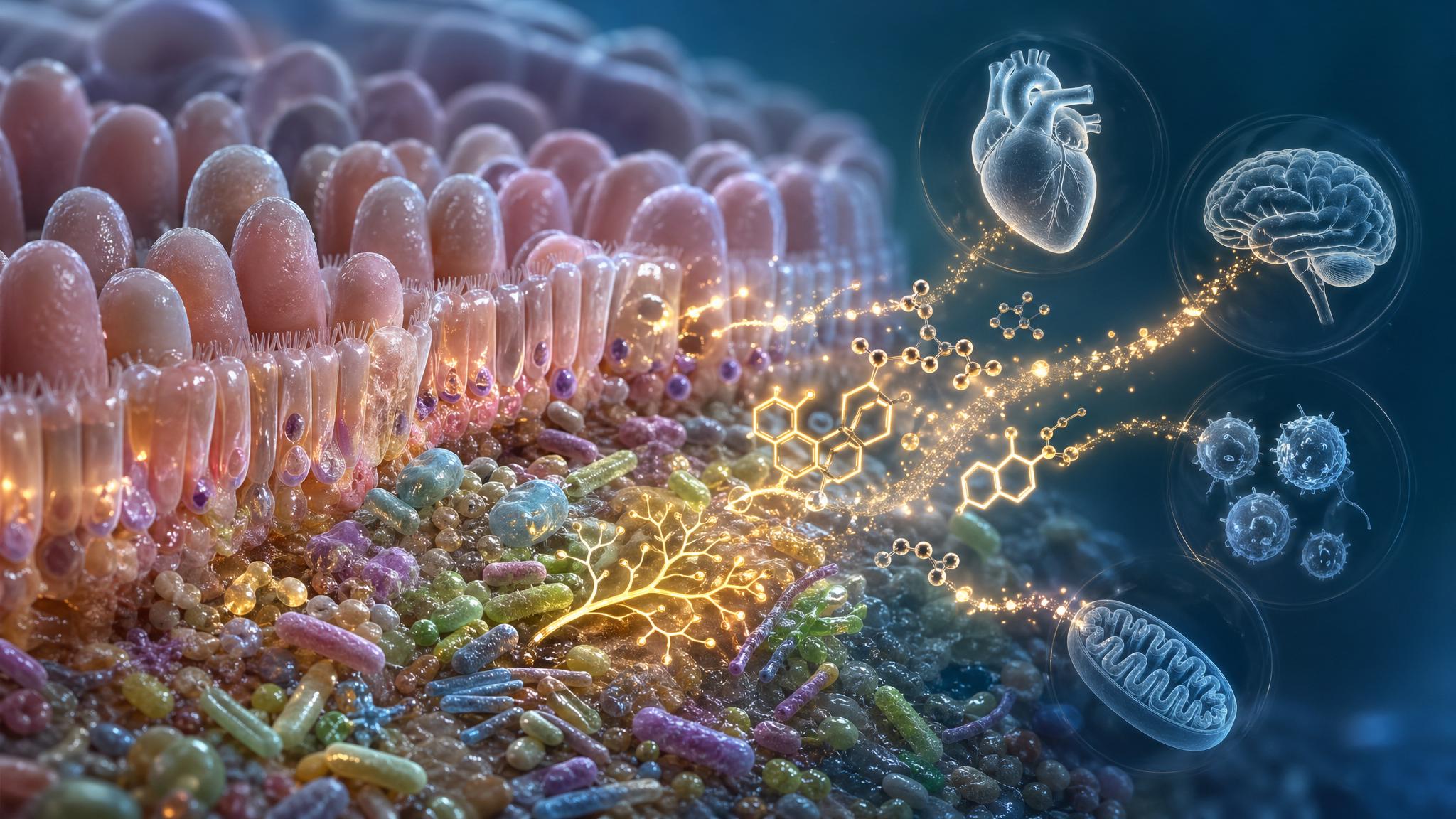
Of every organ in the human body, the liver sits closest, biologically speaking, to the contents of the gut. Roughly 75 percent of the liver’s blood supply arrives not from the heart through the hepatic artery, but from the intestines through the portal vein. That portal blood carries everything the gut absorbs: nutrients, drugs, hormones, immune signals, and a constant flow of microbial metabolites and fragments of microbial cell walls. The liver is the body’s first chemical filter, and the microbiome writes much of what arrives at its door.
That anatomy is why hepatologists have invested so heavily in the gut-liver axis over the last decade. A 2019 review in Hepatology Communications by Albillos and colleagues, and a more recent 2025 review in Frontiers in Cellular and Infection Microbiology, both describe the same three core mechanisms by which gut bacteria shape liver fate: dysregulation of microbial metabolites, impairment of the gut barrier, and imbalance in bile acid signaling. When those three systems are healthy, the liver thrives. When they drift, the liver inflames, fibroses, accumulates fat, and over decades becomes a substrate for cancer.
The new DDW 2026 work is so notable because it treats the microbiome itself as the lever. Instead of attacking liver disease at the level of hepatocytes, the researchers reset the upstream community of microbes and watched the downstream organ recover.
The Study, In Detail
Dr. Li’s team collected fecal samples from eight young mice and stored them under controlled conditions. As those same mice aged, the researchers reintroduced each animal’s own younger microbial fingerprint through fecal microbiota transplantation, or FMT. Eight age-matched controls received no transplant. The design is elegant because it eliminates donor mismatch as a confounder. Each animal served as both its own donor and its own recipient, separated only by time.
The endpoints crossed three biological scales.
At the community level, the FMT mice regained significantly greater bacterial diversity than controls. Aging tends to compress microbial diversity, narrow the metabolic repertoire of the gut, and shift the balance toward pro-inflammatory species. The intervention reversed that compression.
At the organ level, ALT and AST, both reliable serum markers of hepatocyte stress, fell back toward youthful levels in treated animals. Histology showed less inflammation and less fibrosis. None of the eight FMT mice developed hepatocellular tumors by the end of the study. In the control arm, the 25 percent cancer incidence is consistent with what is seen in aged mouse populations and approximates the trajectory researchers worry about in humans with low-grade chronic liver injury.
At the molecular level, the treated mice showed reductions in several recognized hallmarks of aging within the liver: chronic inflammation, mitochondrial decline, telomere attrition, and accumulated DNA damage. These are the same hallmarks that Carlos Lopez-Otin and colleagues catalogued in their seminal 2013 and updated 2023 Cell papers on the biology of aging. The microbiome, in this experiment, was acting on the same machinery that researchers have spent the last decade trying to manipulate with senolytics, NAD precursors, rapamycin, and partial reprogramming.
How a Microbe Reaches a Hepatocyte
To understand why this works, it helps to follow a single molecule from a microbe in the colon to a hepatocyte in the liver.
Picture a fragment of bacterial lipopolysaccharide, or LPS, released as a gut bacterium dies. In a healthy gut, the intestinal barrier is tight, mucus is thick, and tight junction proteins between epithelial cells hold the line. Very little LPS slips through. With age, that barrier loosens. Researchers call the resulting condition "leaky gut" in popular language and "increased intestinal permeability" in journals. More LPS reaches the portal circulation and travels straight to the liver.
There, LPS binds to TLR4 receptors on Kupffer cells, the resident macrophages of the liver, and on hepatic stellate cells, the connective tissue specialists that drive fibrosis. The binding triggers a cascade of pro-inflammatory cytokines, including TNF-alpha, IL-6, and IL-1-beta. Chronic, low-grade exposure to these cytokines drives the slow drift toward hepatic inflammation, insulin resistance, and over time the deposition of scar tissue that defines fibrosis. Fibrosis, in turn, is one of the strongest predictors of mortality across virtually every form of chronic liver disease, including metabolic dysfunction-associated steatotic liver disease, the new name for what was long called nonalcoholic fatty liver disease.
Now reverse the picture. A youthful microbiome, dominated by fiber-fermenting commensals, produces large amounts of short-chain fatty acids like butyrate, acetate, and propionate. Butyrate is the primary fuel for colonocytes and helps maintain the tightness of the gut barrier. It also acts as a histone deacetylase inhibitor and supports the development of regulatory T cells, which dampen systemic inflammation through epigenetic mechanisms documented in landmark papers by Yasmine Belkaid, Kenya Honda, and Wendy Garrett. Less LPS reaches the liver. Less TLR4 signaling. Less stellate cell activation. Less fibrosis.
Featured Partner
Invest in the Infrastructure Behind Modern Medicine
As healthcare expands beyond hospital walls, the buildings and campuses supporting that shift are generating compelling returns for investors who move early. The Healthcare Real Estate Fund offers qualified investors direct access to a curated portfolio of medical office, outpatient, and specialty care facilities.
Learn More →
A youthful microbiome also produces a healthier mix of secondary bile acids. Bile acids are not just digestive detergents. They are hormones that signal through the FXR receptor in the liver and the gut and the TGR5 receptor on immune and metabolic tissues. Through FXR, bile acid signaling regulates lipid metabolism, gluconeogenesis, and inflammation. Dysbiosis tilts the bile acid pool toward forms that drive inflammation and tumorigenesis. Restoring a youthful microbial community restores the youthful bile acid pool, and with it, healthier signaling at FXR and TGR5.
Mitochondria respond to these same cues. The PPAR-alpha and PGC-1-alpha signaling axis, which controls hepatic mitochondrial biogenesis and fatty acid oxidation, is responsive to bile acid signaling and to circulating SCFA levels. When the microbiome is healthy, the liver burns fat efficiently, generates ATP cleanly, and produces less reactive oxygen species. When the microbiome is aged, mitochondrial efficiency declines, fat accumulates, oxidative stress climbs, and the cell starts to look old.
The DDW 2026 results map onto exactly these pathways. The improvements in inflammation, fibrosis, and mitochondrial activity are the predictable downstream consequences of restoring a community of microbes that produces the right metabolites in the right ratios.
Not a Bolt From the Blue
The Li lab’s work does not stand alone. It is the latest entry in a steady accumulation of evidence that microbial age and host age are tightly linked, and that the relationship is bidirectional and modifiable.
A 2022 paper in Microbiome by Parker and colleagues showed that fecal transfer between young and aged mice reversed hallmarks of aging in the gut, eye, and brain, not just the liver. A 2022 paper in EMBO Reports led by Pascale Belenguer demonstrated that young microbiota improved physical fitness in aged mice. A 2024 Ageing Research Reviews paper framed FMT as a tool to transfer healthy longevity. Centenarian microbiome studies from Italy, Sardinia, Okinawa, and China have repeatedly identified bacterial signatures, often enriched in Akkermansia muciniphila, Christensenellaceae, and Bifidobacterium, that distinguish exceptional agers from age-matched controls.
A January 2026 medicalxpress feature on anti-aging microbiomes summarized work from multiple labs showing that gut bacteria, exposed in one case to the antibiotic cephaloridine, produced higher levels of colanic acids that extended lifespan in C. elegans. A February 2026 ScienceDaily piece described scientists engineering gut bacteria to function as miniature anti-aging factories, secreting metabolites on demand.
The DDW 2026 result is the cleanest demonstration so far that the relationship is causal in mammals, that the effect spans organs, and that it can be tested in a same-animal, before-and-after design.
Where This Sits in the Broader Longevity Picture
Longevity science in 2026 is converging on a small set of operating principles. Aging is not one process. It is the simultaneous drift of roughly a dozen interlocking systems, each of which has its own clock, its own modifiers, and its own potential point of intervention. The microbiome is increasingly understood as a meta-hallmark, a system that sits upstream of inflammation, immune function, mitochondrial health, and metabolic regulation, and whose health amplifies or buffers the others.
This places gut-focused interventions in conversation with the year’s other major longevity stories. Recombinant Klotho is in Phase 1 trials. Senolytics like dasatinib plus quercetin and fisetin continue to accumulate human data. NAD precursors are now being tested in larger and longer trials. Partial epigenetic reprogramming is moving toward primate work. Continuous cardiovascular monitoring, exemplified by Sky Labs’ CART ring receiving UK medical device authorization, is rewriting how cardiovascular risk is tracked across the lifespan. GLP-1 receptor agonists are being studied not just for weight and glycemia, but for their broader anti-inflammatory and cardiometabolic effects in older adults.
In that landscape, the microbiome is a particularly accessible lever. Unlike a Phase 1 biologic, the gut bacteria of an older adult can in principle be reshaped with diet, prebiotics, targeted probiotics, antibiotic stewardship, and in the limit, FMT. The DDW 2026 result adds urgency to the question: how close are we to a clinical strategy that does in humans what the Li lab did in mice?
What the Mouse Result Does and Does Not Tell Us
It is worth being precise about what was and was not shown.
The study used mice, not humans. Mouse aging compresses on a different timescale, and rodent immune systems, microbiomes, and liver biology are not perfect proxies for human counterparts. The cancer endpoint, while striking, came from a study with eight animals per group, which is appropriate for a hypothesis-generating preclinical readout but not for population-scale inference. The autologous design, in which each mouse received its own younger microbiota, is biologically clean but operationally demanding. Few humans will have a vial of their own twenty-year-old stool waiting in a freezer.
These caveats matter. They also do not erase the result. The molecular fingerprint of the reversal, less inflammation, less fibrosis, restored mitochondrial activity, preserved telomere length, reduced DNA damage, is consistent across multiple readouts and aligns with the broader literature on what a youthful microbiome does mechanistically. Replication in larger cohorts, in different mouse strains, with allogeneic donors, and ultimately in humans, is the obvious next step.
Several human studies are already moving in that direction. Researchers in Israel and the Netherlands have piloted FMT for steatotic liver disease with mixed but encouraging signals. The Mayo Clinic has run FMT trials for hepatic encephalopathy with documented benefit, leading to FDA approval of two microbiota-based therapeutics for recurrent C. difficile infection. The infrastructure for clinical FMT exists. Extending it from infection control to aging biology is a regulatory and design problem, not a fundamental scientific one.
Open Questions for the Next Wave
Several questions remain before this becomes a clinical strategy.
Which specific microbial taxa or metabolites drive the rejuvenation? Is it Akkermansia, Christensenellaceae, Bifidobacterium, a particular SCFA profile, a particular bile acid signature, or some combination? Knowing the active ingredients would allow next-generation interventions that bypass the logistical complexity of full microbial transplant.
How durable is the effect? In mice, the microbiome will drift back toward an aged composition unless reinforced. The same is likely true in humans, particularly in the context of a Western diet.
How do diet, exercise, sleep, and medications interact with a transplanted microbiome? An FMT delivered into a host eating an ultraprocessed, low-fiber diet may be undone within weeks.
Is there a window of opportunity in midlife when the cost-benefit of microbiome intervention is most favorable? Some hallmarks of aging may be reversible early and less so late.
And finally, what is the right comparator? FMT versus high-fiber diet, FMT versus targeted probiotics, FMT versus GLP-1, FMT plus exercise. These are not academic questions. They are the trial design choices that will determine whether the gut microbiome becomes a routine target in preventive medicine in the late 2020s.
What This Means For You
If you are reading this as a clinician, the practical takeaways are concrete. Liver injury markers like ALT and AST deserve more weight in preventive screening, particularly in patients with metabolic syndrome, obesity, or rising body composition concerns. Dietary fiber and fermented foods remain the cheapest, best-studied way to support microbial diversity. Antibiotic stewardship matters not just for resistance but for long-term microbiome resilience.
If you are reading this as a patient or as someone curious about your own longevity, the actionable framework today is unglamorous and effective. Eat 30 grams of dietary fiber a day from a wide variety of plants. Include fermented foods such as yogurt, kefir, kimchi, sauerkraut, and miso, ideally daily. Limit ultraprocessed foods, which compress microbial diversity. Sleep seven to nine hours. Move every day. Avoid unnecessary antibiotics. Get your liver enzymes checked annually after age 40 and ask your physician whether a FibroScan or a noninvasive fibrosis score makes sense for your profile. If you have known fatty liver disease, ask about the role of weight loss, GLP-1 receptor agonists, and emerging therapies like resmetirom.
If you are reading this as an investor or operator in longevity science, the signal is that the microbiome has moved from a soft target into a mechanistically validated lever. Companies building rationally designed live biotherapeutic products, microbial metabolite mimetics, and microbiome diagnostic panels are sitting in front of a research base that just got a great deal stronger. The DDW 2026 result is the kind of preclinical data that opens trial protocols, term sheets, and grant lines.
The deeper point is the one Dr. Li and her colleagues are making implicitly. Aging in the liver is not destiny. It is a downstream readout of an upstream system that is far more modifiable than the medical community has historically assumed. The gut-liver axis is one of the clearest examples of a longevity lever hiding in plain sight, in the trillions of microbes most of us inherit, neglect, and carry with us for life.
In the next several years, the question will not be whether the microbiome shapes how the liver ages. That has now been demonstrated cleanly enough that most hepatologists will accept it. The question will be how to translate that fact into a clinical playbook. The mice are already there. The humans are catching up.


Similar Posts

Magnesium and the Quiet Deficiency: What the Science Says About the Mineral Behind Sleep, Heart Rhythm, and Cellular Energy
Roughly half of US adults fall short of the recommended intake of magnesium, a mineral required for more than three hundred enzymes, every cell’s ATP, sleep regulation, heart rhythm, and…

Imaware At-Home Blood Tests: Autoimmune and Metabolic Screening Made Accessible
Twenty-four million Americans have autoimmune disease. On average, it takes 4.5 years and five doctor visits to get a diagnosis. What if the first test could be done at home?…
SiPhox Health Core Panel: Fingerstick ApoB and Advanced Lipid Testing at Home
A microfluidics-powered fingerstick blood panel that brings advanced cardiometabolic markers like ApoB, hsCRP, and HbA1c to your kitchen table at a fraction of the cost of traditional lab panels. Presented…

The AI Stool Test That Could Replace Colonoscopy: Inside the Gut Microbiome Science Changing Cancer Screening
Researchers at the University of Geneva used machine learning to map gut bacteria at the subspecies level and detect 90% of colorectal cancers from a simple stool sample. The test…
Elvie Trainer: Premium Pelvic Floor Biofeedback Device with Real-Time Visualization
Half of all women who attempt Kegel exercises perform them incorrectly. The most common error, bearing down instead of lifting, can actually worsen the pelvic floor dysfunction the exercises are…
The Zone 2 Revolution: How Mitochondrial Science Is Rewriting Endurance Training for Longevity
Iñigo San Millán’s mitochondrial research, Peter Attia’s popularization, and Stephen Seiler’s polarized training data have converged into a new consensus: the easy, conversational pace most people skip may be the…
