

Longevity Escape Velocity, Explained Through Isomorphic Labs
A quiet prediction from a former Google engineer says that within five years, every additional year you live will give you back more than a year of life expectancy. A lab in London may be part of why he is right, and why the foundational practices in your own life matter more than they have in generations.
Presented By Our Partners



The math Ray Kurzweil has been describing for most of the last twenty years goes something like this. Right now, for every year you live, medical and scientific progress is adding approximately four months to your remaining life expectancy. You lose a year, you get back a third of one. The ledger runs in the wrong direction.
By 2029, Kurzweil argues, the exponential curves of biotechnology, artificial intelligence, and medicine will have bent enough that the ratio reverses. You will lose a year. You will get back a full year. By 2030 and beyond, he insists, the diligent and the informed will begin gaining more than a year back for every year that passes. The sand in the hourglass will start running the other direction.
He calls this moment longevity escape velocity. “After 2029, you’ll gain more than a year back,” Kurzweil told Bessemer Venture Partners in 2024. “You’ll go backward in time.” The term itself is not originally his. It was conceived by David Gobel of the Methuselah Foundation and coined by the British biogerontologist Aubrey de Grey in a 2004 paper. But it is Kurzweil who has spent the last two decades putting numbers on the idea and arguing, with an enthusiasm that his critics find alarming and his supporters find galvanizing, that it is coming.
The claim sounds like science fiction. Much of Kurzweil’s writing does, and he has been accused of it for forty years. What makes the prediction worth taking seriously now, however, is not Kurzweil’s rhetoric or his reported 86 percent accuracy rate on past predictions. It is what has been happening, quietly, in a specific set of buildings in London, Cambridge, and the Bay Area, where the machinery of his prediction is being built.
The thesis, in plain language
Longevity escape velocity is an arithmetical idea, not a mystical one. For most of human history, improvements in medicine and public health have added small amounts of life expectancy per year. Vaccines, antibiotics, clean water, surgery, cancer screening, statins, each produced gains. But those gains have always been smaller than the year that passes while they accrue.
The thesis of longevity escape velocity is that this ratio is not fixed. If medical progress accelerates, particularly in the categories of disease that do most of the killing, the gain per year can eventually overtake the year itself. Once that happens, a person alive at the moment of crossover keeps gaining additional life expectancy as long as progress continues. The term “escape velocity” is borrowed from physics, where it describes the speed required to leave a gravitational field behind entirely. In longevity terms, it describes the rate of medical progress required to leave mortality, as we have known it, behind.
Kurzweil’s figure of roughly four months of life expectancy gained per year does not come from nowhere. Life expectancy at older ages has been rising steadily for decades in most developed countries. The Global Burden of Disease Study 2021, published by the Institute for Health Metrics and Evaluation, documented a 20 percent decline between 2000 and 2019 in the probability of dying between the ages of 30 and 70 from the four primary chronic disease categories. The curve is bending. The question is whether it can bend faster.
The argument rests on an empirical claim. For the ratio to reverse, the pace of medical discovery for the diseases of aging has to increase substantially. It is not enough to find one more cholesterol drug or one more cancer immunotherapy. What is required is a compression of the entire drug discovery timeline, applied systematically across the diseases that account for the bulk of premature deaths.
That compression is what Isomorphic Labs is trying to build.
The Iso bet
Isomorphic Labs was spun out of Google DeepMind in 2021 by Demis Hassabis, who would go on to share the 2024 Nobel Prize in Chemistry for AlphaFold. The company’s scientific advisory board includes four additional Nobel laureates: Jennifer Doudna (CRISPR, 2020 Chemistry), Sir Venki Ramakrishnan (ribosome structure, 2009 Chemistry), Sir Paul Nurse (cell cycle regulation, 2001 Physiology or Medicine), and Sir David MacMillan (asymmetric organocatalysis, 2021 Chemistry). The combination is not common. As of early 2026, no other biotechnology company in the world had a scientific roster like it.
The mission, as the company describes it, is to apply artificial intelligence to drug discovery at a scale and pace that traditional pharmaceutical development has never achieved. In a 2026 interview with Fortune, Hassabis described the target: “A biotech startup might do one or two drugs its entire corporate life. But we’re trying to build a system, a process, and all the technology to do maybe dozens of drugs each year.” The goal, in his phrasing, is a process that can “find these needles in a haystack,” applied to disease after disease after disease.
Featured Partner
Invest in the Infrastructure Behind Modern Medicine
As healthcare expands beyond hospital walls, the buildings and campuses supporting that shift are generating compelling returns for investors who move early. The Healthcare Real Estate Fund offers qualified investors direct access to a curated portfolio of medical office, outpatient, and specialty care facilities.
Learn More →
The economic stakes reflect the ambition. In January 2024, Isomorphic announced partnerships with Eli Lilly and Novartis worth a combined sum approaching $3 billion in upfront payments and potential milestone payouts. Novartis expanded its deal in February 2025 to add three additional research programs. In March 2025, Isomorphic raised $600 million in its first external financing round, led by Joshua Kushner’s Thrive Capital. By early 2026, the company’s pipeline included 17 active drug development programs spanning oncology, immunology, and cardiovascular disease. A new unified drug design engine, released in February 2026, reportedly more than doubled AlphaFold 3’s performance on the hardest protein-ligand prediction cases.
Fiona Marshall, president of biomedical research at Novartis, framed the partnership as a wager that pairing AI and data science with medicinal chemistry would reach targets neither side could hit alone. Both pharmaceutical giants, in effect, are betting that Isomorphic’s computational approach is going to reach proteins their traditional discovery engines cannot. The first AI-designed drug from Isomorphic’s pipeline is expected to enter human clinical trials by the end of 2026. The first approval, if the trials succeed, is probably somewhere in the early 2030s.
The four categories that matter
Whether longevity escape velocity arrives on Kurzweil’s schedule depends, in large part, on progress against a specific set of diseases. According to World Health Organization data, noncommunicable diseases kill more than 40 million people each year, accounting for roughly 74 percent of global deaths. Four categories dominate. Cardiovascular disease leads with at least 19 million deaths annually. Cancer follows at roughly 10 million. Chronic respiratory diseases contribute about 4 million. Diabetes and its complications account for more than 2 million. Together, these four groups drive approximately 80 percent of premature deaths from chronic illness worldwide.
These are the diseases that determine the slope of the longevity curve. If medical progress against them accelerates, life expectancy at older ages rises. If it stalls, the curve flattens.
Isomorphic’s publicly disclosed pipeline targets three of the four. The oncology programs address cancer, including targets historically classified as undruggable. The immunology programs touch the inflammatory and autoimmune processes that underlie a significant portion of chronic disease. The cardiovascular programs go after pathways where traditional small-molecule chemistry has struggled for decades.
The company is not alone in this space. Recursion Pharmaceuticals, Insitro, Xaira Therapeutics, BenevolentAI, and a growing number of others are applying AI to drug discovery in various forms. Traditional pharmaceutical giants have built their own internal AI groups. Alphabet’s investment in Isomorphic sits within a broader tide of capital and talent flowing into the same basic thesis: that the rate of medical discovery can be accelerated, by a meaningful multiple, through computational tools.
If the bet lands, the implications for longevity escape velocity are direct. Every year that AI compresses drug discovery timelines, and every year that the compressed timelines deliver new therapies against the four primary causes of premature death, the ratio Kurzweil has been tracking shifts. Four months gained per year becomes five. Five becomes six. The approach to the crossover accelerates.
The caveats that matter
Not everyone thinks the schedule Kurzweil has described is plausible. The arguments against are substantive.
The first is biological. Aging is not a single disease. It is a constellation of interacting processes, some of which are well understood and many of which are not. Solving cancer and cardiovascular disease, even fully, would extend average lifespan by a meaningful amount, but it would not eliminate the cellular, mitochondrial, and epigenetic processes that make older bodies fail. Kurzweil acknowledges this. In the same 2024 Bessemer interview, he noted that reaching longevity escape velocity does not guarantee anyone will live forever. It means only that the ratio has flipped.
The second caveat is clinical. AI can generate drug candidates faster than traditional methods. It cannot shorten Phase 1, Phase 2, or Phase 3 trials, which together consume most of the ten-to-fifteen-year timeline from discovery to approval. The regulatory and biological realities of human trials have not changed. As Hassabis himself confirmed in Davos this January, Isomorphic has already pushed its first clinical trial timeline back by a year, from end of 2025 to end of 2026.
The third is systemic. Even if breakthrough drugs arrive on schedule, they have to be manufactured, distributed, priced, and prescribed. Access to frontier medicine has historically lagged its invention by years or decades. A drug that exists and a drug that reaches you are different things.
None of these caveats demolish the thesis. They delineate it. The honest version of longevity escape velocity is not that everyone alive today will live indefinitely. It is that the curve is bending, that the bending is accelerating in measurable ways, and that individuals who remain healthy enough, long enough, may benefit meaningfully from what arrives.
The half of the equation you control
The practical question for any reader of Kurzweil, or any reader of this article, is what any of it means for decisions you could make this week.
The answer is simple, and it has been available for decades. Kurzweil’s 2004 book on the subject, co-authored with physician Terry Grossman, is titled Fantastic Voyage: Live Long Enough to Live Forever. The operative phrase is the first half of the subtitle. The thesis does not reward people who believe in it. It rewards people who remain in good enough health to benefit from medical progress as it arrives. The question is not whether you accept the longevity escape velocity prediction. The question is whether you will be alive, and healthy, when and if it comes true.
The five foundational pillars of health, nutrition, sleep, movement, breathwork, and mindset, are what determine the answer. Decades of epidemiological research have documented that adherence to a combination of healthy behaviors is associated with substantially lower risk of premature mortality across cardiovascular disease, cancer, and metabolic disease, the same categories being targeted by the new wave of AI-designed drugs. The pillars are not a replacement for pharmaceuticals. They are a bridge to them.
The concrete implication is something like this. Whatever your age right now, the probability that you personally benefit from an AI-designed drug depends on two things: the speed at which medicine reaches the targets it is aiming at, and the speed at which your own body deteriorates in the meantime. You control one of those variables. You do not control the other. The foundational pillars are how you slow the variable you control.
What this means for you
Longevity escape velocity is, at its core, an argument about timing. It is not an argument about miracles. It is an argument that the pace of medical progress is increasing, that the categories of disease most responsive to that progress are the ones that determine most human deaths, and that the people who will benefit most from what is coming are the people who remain healthy enough, long enough, to intersect with it.
Isomorphic Labs is one data point in that argument. Its pipeline, its partnerships, its scientific advisory board, and its timeline do not by themselves prove the longevity escape velocity thesis. They are, however, among the most concrete examples available of the thing Kurzweil has been describing in the abstract for two decades. A Nobel-laureate ensemble, backed by a pharmaceutical industry that is taking it seriously, applying AI to the drug discovery problem at industrial scale. Whether it delivers on schedule is an open question. That it is trying, and that the capital and talent flowing toward it are unprecedented, is not.
The question for any individual reader is not whether to believe the prediction. It is what to do in the meantime. Sleep adequately. Eat in ways that keep metabolic markers in a healthy range. Move every day, and lift things heavier than you think necessary. Practice stress regulation. Maintain your social and cognitive engagement. None of these practices are new. None of them depend on Ray Kurzweil being right.
They simply give you the best available chance of being around, and in good enough condition to notice, if he is.
This is the third piece in our ongoing series on AI drug discovery. Read The Nobel Ensemble: Inside the Lab Trying to End Disease for the profile of the scientific advisory board behind Isomorphic Labs. Read The Undruggable 80 Percent for the story of the proteins medicine could not touch and how AI is finally reaching them. For more on the foundational practices that support healthy aging, explore the HealthcareDiscovery.ai library.


Similar Posts

Ombre Gut Health Test: An Affordable Entry Point to Microbiome Testing
What a $99 stool test can and cannot tell you about the trillions of microbes shaping your digestion, metabolism, and immune function Presented By Our Partners The human gut harbors…
The Daily Rounds: Longevity & Health Care Brief | May 29, 2026
🧠 Blocking Parkinson's Spread Protein — Penn Medicine researchers identified GPNMB as the key driver of alpha-synuclein propagation in Parkinson's disease, with monoclonal antibodies successfully halting the spread in preclinical models and opening the first potential disease-modifying treatment pathway. 🔬 FDA Approves First Epigenetic Reprogramming Trials — The FDA greenlit the first human trials testing partial epigenetic reprogramming as an anti-aging intervention, marking the most significant regulatory milestone for longevity medicine in years. 🤖 GLP-1 Drugs Show Cancer Prevention Signal at ASCO 2026 — Opening-day research at the world's largest oncology conference showed GLP-1 receptor agonists reduce breast cancer incidence in high-risk women, extending the drugs' clinical case well beyond weight management. 🧠 Long COVID Is Not Brain Inflammation — A landmark neuroimaging study found no widespread brain inflammation in long COVID patients, redirecting research and treatment toward stress-response and emotional regulation pathways instead. 🥗 Microbiome Ranking Links Gut Species to Longevity — A 34,000-person study produced the first species-level gut microbiome ranking tied to longevity markers, providing a precision nutrition framework for designing diets that specifically promote healthspan.
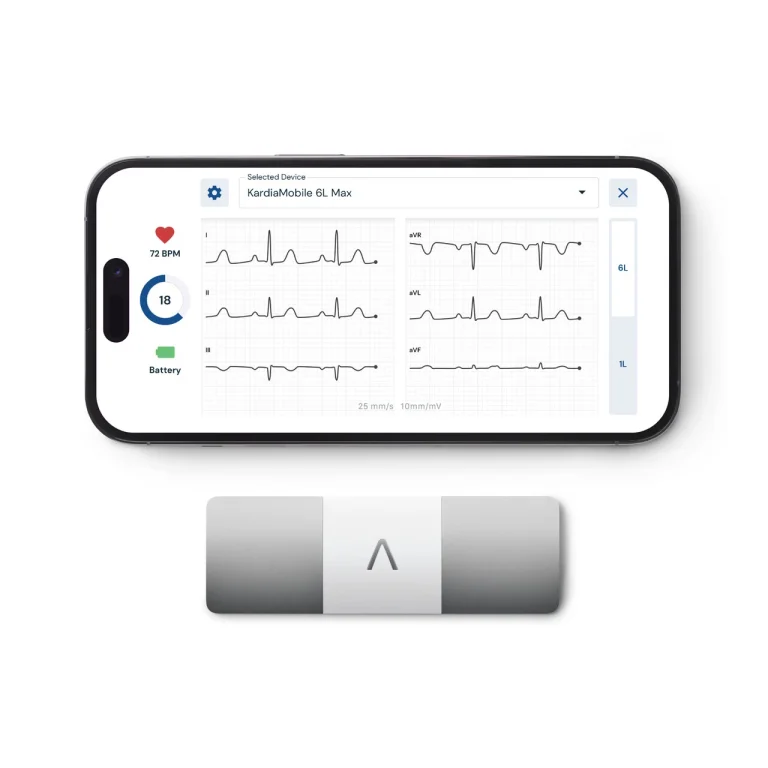
AliveCor KardiaMobile 6L: The Most Clinically Advanced Consumer ECG Device
A pocket sized, six lead ECG that captures half the diagnostic information of a full clinical 12 lead, FDA cleared for six arrhythmia determinations, and priced at $149 with no…
The Daily Rounds: Longevity & Health Care Brief | June 7, 2026
🤖 KRAS Drug Nearly Doubles Pancreatic Cancer Survival. The first drug to meaningfully extend survival in metastatic pancreatic cancer was presented at ASCO 2026, ending four decades of failed attempts to target the KRAS oncogene. 🦠 Protective Gut Bacteria May Shield Infants From Autism and ADHD. Specific microbes like Lachnospira colonizing the infant gut in the first year of life appear to mitigate neurodevelopmental risk linked to early epigenetic patterns. ❤️ GLP-1 Drugs Cut Breast Cancer Risk by 30% in 112,000-Person Study. A Penn Medicine study adds breast cancer prevention to the expanding catalog of benefits associated with Ozempic-class medications. 💪 Strength Training Plus Cardio Is the Optimal Longevity Combination. A 30-year study of 147,000 adults confirms that 90 to 120 minutes weekly of resistance training paired with aerobic exercise delivers the lowest all-cause mortality risk. 🔬 Multi-Target Geroscience Outperforms Single-Pathway Aging Treatments. Combining senolytics, epigenetic reprogramming, and anti-inflammatory agents produces synergistic healthspan benefits that no single intervention achieves alone.

The Brain Has Its Own Immune System. Rejuvenating It May Be the Next Frontier in Cognitive Aging
A deep dive into neuroinflammageing and the 2025 to 2026 research showing the brain’s resident immune cells, the microglia, drive cognitive aging, and how scientists at Cedars-Sinai, UC Irvine, and…
The Daily Rounds: Longevity & Health Care Brief | April 28, 2026
🧬 SuperAgers Grow 2.5x More New Neurons Than Their Peers — Northwestern researchers found that exceptional cognitive aging in adults over 80 is driven by dramatically elevated neurogenesis, offering a new biological target for brain longevity therapies. 🦠 Hidden Gut Virus Linked to Colorectal Cancer Risk — A previously unknown bacteriophage inside common gut bacteria appears at significantly higher rates in colorectal cancer patients, pointing to a new microbiome-based cancer screening opportunity. 💊 Novo Nordisk and OpenAI Join Forces for Drug Discovery — The partnership deploys AI across R&D, manufacturing, and commercial operations as pharmaceutical giants accelerate the race to AI-native drug pipelines. 🍽️ Fasting's Lifespan Benefit Lives in the Refeeding, Not the Fast Itself — UT Southwestern researchers traced the 60%-plus lifespan extension of fasting to the metabolic reset during refeeding, reframing how intermittent fasting protocols should be designed and studied. ⚡ Muscle Power Outperforms Strength as a Mortality Predictor — Mayo Clinic researchers found that the ability to generate force quickly is a stronger predictor of all-cause mortality than raw strength, arguing for power training as a core longevity medicine intervention.
