

The Nobel Ensemble: Inside the Lab Trying to End Disease
Five of the most consequential scientific minds of the last half century are now quietly orbiting a single company near King’s Cross in London. What they are trying to build would have been science fiction a decade ago.
Presented By Our Partners



A short walk from the trains at King’s Cross, in a building that gives away nothing of what happens inside, a company with an almost absurdly ambitious mission statement is trying to compress one of the longest, costliest processes in modern civilization into something closer to a search query. Isomorphic Labs was spun out of Google DeepMind in 2021 with a single declared goal: to use artificial intelligence to solve disease. Not to treat it. Not to manage it. To solve it.
The sentence lands differently depending on who you are. A pharmaceutical executive might hear it as marketing. A venture capitalist might hear it as a thesis. A cancer patient, or the family member of one, might hear it as something harder to categorize. What is unusual about Isomorphic is not that someone said the words. What is unusual is who is standing behind them.
Five people currently in the company’s orbit have, among them, won five Nobel Prizes. The founder and chief executive, Sir Demis Hassabis, shared the 2024 Nobel Prize in Chemistry for AlphaFold, the system that solved a problem biologists had chased for half a century. The scientific advisory board includes Jennifer Doudna, who won the same prize in 2020 for CRISPR. Sir Venki Ramakrishnan, who won it in 2009 for the structure of the ribosome. Sir Paul Nurse, who won the 2001 Nobel in Physiology or Medicine for discovering the molecular engine of the cell cycle. And Sir David MacMillan, who won the 2021 Chemistry prize for a discovery that quietly revolutionized how drugs are manufactured.
No other biotechnology company in the world has a roster like this. The question is what they are actually doing together, and why this particular configuration of minds is arranged in this particular room at this particular moment.
The cathedral, and its load-bearing pillars
To understand why these five Nobel Prizes, in this configuration, are the ones that matter for Isomorphic’s mission, it helps to think of drug discovery as a cathedral. The cathedral has been under construction for two centuries. Each of the five laureates laid down one of its load-bearing pillars. Until recently, the pillars stood apart, separated by a distance too wide for any single team to span. What Isomorphic is attempting, in essence, is to bring them into a single interior.
Begin with Sir Paul Nurse, because his discovery sits closest to the heart of the oldest question in medicine: why do cells go wrong. In the 1970s, working at the University of Edinburgh with fission yeast, a humble single-celled organism most people have never heard of, Nurse identified a family of genes, now known as cyclin-dependent kinases, that regulate when and how cells divide. The same genes exist in nearly every living thing, including in you. When they misfire, cells divide when they should not, and you get cancer. When they stall, tissues fail to regenerate. Nurse’s work, along with that of his co-laureates Leland Hartwell and Tim Hunt, gave modern oncology one of its foundational mechanisms. It explained, in the most literal molecular sense, what cancer is.
Now add Sir Venki Ramakrishnan. In 2009, working at the MRC Laboratory of Molecular Biology in Cambridge, he and his co-laureates resolved the atomic structure of the ribosome, the molecular machine inside every cell that reads genetic code and assembles proteins from it. To call the ribosome important is an understatement. It is the factory floor of biology. Most antibiotics work by jamming one version of it. Ramakrishnan’s structure, painstakingly extracted through X-ray crystallography, gave drug designers, for the first time, a map of the factory they were trying to engineer against.
Then there is Jennifer Doudna. In 2012, with Emmanuelle Charpentier, she described a system borrowed from bacteria that could be repurposed to edit the genome of any organism with unprecedented precision. CRISPR-Cas9, as the tool became known, did not just hand biologists a new technique. It rewrote their expectations. Genetic diseases that had been untouchable for generations suddenly had a plausible address. Sickle cell disease, a condition that had defied serious treatment for more than a century, now has an FDA-approved CRISPR therapy, Casgevy, which the agency approved in late 2023. A tool that did not exist when today’s senior physicians were in medical school is now reshaping how they think about inheritance.
Sir David MacMillan’s contribution is more subtle but arguably the most economically consequential of the five. In 2000, he described asymmetric organocatalysis, a method of using small organic molecules to drive chemical reactions that produce one mirror image of a compound but not the other. That distinction matters more than it sounds. Most drugs have a “handedness,” a three-dimensional orientation in space, and often only one version of the molecule is therapeutic while the other is inert or dangerous. Before MacMillan’s work, producing the right-handed version at scale was expensive and frequently impossible. After it, entire classes of drugs became manufacturable. Something like a third of the top-selling medicines on the market today were made possible, or made cheaper, by the technique.
Featured Partner
Invest in the Infrastructure Behind Modern Medicine
As healthcare expands beyond hospital walls, the buildings and campuses supporting that shift are generating compelling returns for investors who move early. The Healthcare Real Estate Fund offers qualified investors direct access to a curated portfolio of medical office, outpatient, and specialty care facilities.
Learn More →
And then there is the pillar that Hassabis himself laid down. In 2020, DeepMind’s AlphaFold system, and in 2024, its more powerful successor AlphaFold 3, did something biologists had considered a decades-long open problem. It predicted, with near-experimental accuracy, the three-dimensional shape of a protein from its underlying sequence of amino acids. Proteins are the workers of biology. Everything that happens inside a cell, from digestion to immune defense to the replication of DNA, is carried out by proteins whose function depends entirely on their shape. Before AlphaFold, determining a single protein’s structure often took a postdoctoral researcher years and hundreds of thousands of dollars of experimental time. Today, the AlphaFold database contains predicted structures for more than two hundred million proteins, nearly every one known to science, and the data is freely available to researchers worldwide. The original AlphaFold paper, published in Nature in 2021, has already become one of the most cited papers of the decade.
Why these five, and why now
Each of these discoveries, on its own, was a category-defining event. Laid alongside each other, they describe something more useful. They describe the complete conceptual infrastructure you would need to design a drug from scratch, using nothing but a computer.
Start with Nurse’s cell cycle. That tells you, at the molecular level, what goes wrong in cancer and how the machinery should be interrupted. Add Ramakrishnan’s ribosome, and Doudna’s CRISPR, and the rest of the expanding toolkit of structural and genetic biology. Now you know which proteins you want to target and why. Add AlphaFold, and you can finally see the shape of those proteins in three dimensions, which is the shape that actually determines whether a drug will fit. Add organocatalysis, and you can manufacture the drug you have designed, in the form you need, at a price that makes it available to patients.
This is, in a loose sense, what Isomorphic Labs is doing. The company has declared its intent to build what it calls a “unified drug design engine,” a set of interconnected AI models capable of working across multiple therapeutic areas and multiple drug modalities. In February 2026, the company released an updated version of that engine, which independent analysts noted more than doubled the performance of AlphaFold 3 on the most difficult protein-ligand interactions. These are the interactions, between a target protein and a candidate drug, that determine whether the drug will actually work.
The commercial stakes are equally concrete. In January 2024, Isomorphic announced partnerships with Eli Lilly and Novartis worth a combined sum approaching three billion dollars in upfront payments and potential milestone payouts. Novartis expanded its deal in February 2025, adding three further research programs. In March 2025, Isomorphic raised six hundred million dollars in its first external financing round, led by Thrive Capital. By the beginning of 2026, the company’s pipeline included seventeen active drug development programs, spanning oncology, immunology, and cardiovascular disease. At the World Economic Forum in Davos this January, Hassabis confirmed that the company expected to begin its first human clinical trials by the end of 2026.
The problem of undruggable targets
The reason the industry is watching this configuration of talent so closely has to do with a problem that traditional pharmacology has struggled with for decades. Biologists can now identify, with increasing precision, the proteins that drive disease. A significant fraction of those proteins, however, are what the field calls “undruggable.” Their surfaces are too smooth, too flat, or too dynamic for conventional small molecules to bind. Some estimates suggest that more than eighty percent of disease-causing proteins fall into this category. It is, in effect, the list of targets that biology has handed to medicine and that medicine has largely been unable to act on.
AlphaFold 3, and the design engines being built on top of it, are beginning to change that. By modeling not just the static shape of a protein but its dynamic motion, its interactions with other molecules, its shifting conformations in the presence of a candidate drug, the new generation of AI models offers a way into targets that were previously out of reach. The 2024 Nature paper describing AlphaFold 3 detailed how the system can predict the structure of complexes involving proteins, DNA, RNA, and small-molecule ligands in a single unified framework. This is the type of modeling that drug design actually requires, and that was not possible at scale before.
If this works at even a modest fraction of what Isomorphic is aiming for, it will change what kinds of diseases are considered treatable. Cancers driven by mutations in proteins like KRAS and MYC, historically off-limits to small-molecule therapy, are suddenly plausible targets. The same is true for the protein aggregates implicated in neurodegenerative diseases such as Alzheimer’s and Parkinson’s. And the same is true for rare genetic disorders that have never had enough patients to justify a traditional pharmaceutical program.
The ensemble and its unspoken argument
There is a reason Isomorphic’s scientific advisory board reads the way it does, and it is not primarily for credibility, though the credibility is considerable. Each of these laureates represents one side of the argument the company is implicitly making. The argument is that drug discovery is no longer a single-discipline problem. It requires chemistry, biology, structural biology, genetics, and computation, braided together so tightly that it is hard to say where one ends and the next begins.
Nurse brings the language of cell biology and the decades of institutional knowledge that come with it. Ramakrishnan brings structural biology. Doudna brings gene editing and the revolution in precision medicine it spawned. MacMillan brings synthetic chemistry and the industrial realities of manufacturing at scale. Hassabis brings computation. No single person on the team could do what the team, assembled, can at least attempt.
Whether the attempt will succeed on the timeline its founders have promised is a separate question. Hassabis originally said Isomorphic would have AI-designed drugs in clinical trials by the end of 2025. That target slipped to the end of 2026. It would not be the first ambitious biotech to discover that the distance between a promising preclinical candidate and a drug that works in human beings is measured in humility as much as in time. The history of medicine is littered with technologies that worked beautifully in silico and failed quietly in the body.
What makes this effort different, and what makes it worth paying attention to, is not the certainty of outcome. It is the structure of the bet. For the first time, a single company has assembled, in one ensemble, the full conceptual toolkit that the last half century of Nobel-grade biology has produced. If the bet loses, it will lose for reasons that will teach medicine something. If the bet wins, even partially, it will change the economics of drug discovery for every disease on the list.
What this means for you
It is tempting, reading a piece like this, to conclude that the future arrives on someone else’s schedule. The laboratories are in London and Cambridge and the Bay Area. The trials are years away. The drugs, if they work, will not reach most pharmacies until late in the decade.
That conclusion is only half right. The other half is that the arrival of AI-designed medicine does not change the most important variable in your own healthspan, which is how long you remain alive and healthy enough to receive what is coming. The research thesis known as Longevity Escape Velocity, popularized by Ray Kurzweil and increasingly embraced by serious voices in longevity science, rests on a simple idea. If you can extend your healthy years by one year for every year that passes, you bridge yourself to the next wave of medical breakthroughs. The five pillars of foundational wellness, nutrition, sleep, movement, breathwork, and mindset, are not in competition with what Isomorphic Labs is building. They are the mechanism by which you stay in the game long enough for it to matter to you personally.
The four categories of chronic disease that account for the majority of premature deaths in developed countries, cardiovascular disease, cancer, neurodegenerative disease, and metabolic dysfunction, are the same four categories that the new generation of AI-designed drugs is being pointed at. The overlap is not coincidental. It reflects the fact that serious medicine and serious wellness are converging on the same targets from opposite directions. One wave is coming toward you from the laboratory. The other is available to you tonight, in the form of what you eat, how you sleep, and how you move.
The Nobel ensemble at Isomorphic Labs is one of the most consequential experiments in modern medicine. Whether it delivers on the timeline its founders have promised is beyond the control of any reader of this article. What is in your control is the set of foundational practices that determine whether you will be around, and in good enough shape to benefit, when the first of these drugs reaches the clinic. That is the work in front of all of us, and it has been for a long time. The Nobel ensemble is simply a reminder of what is coming on the other side.
For more on the science of longevity, the four primary chronic disease categories, and the foundational practices that support healthy aging, explore the HealthcareDiscovery.ai library.


Similar Posts

The Ten Second Test: Why Balance Predicts How Long You Live, and Why Walking Alone Will Not Save It
A ten second one legged stance predicts survival. Cochrane rates balance training high certainty for cutting falls by 24 percent. Walking programs remain unproven, and in some trials they increase…
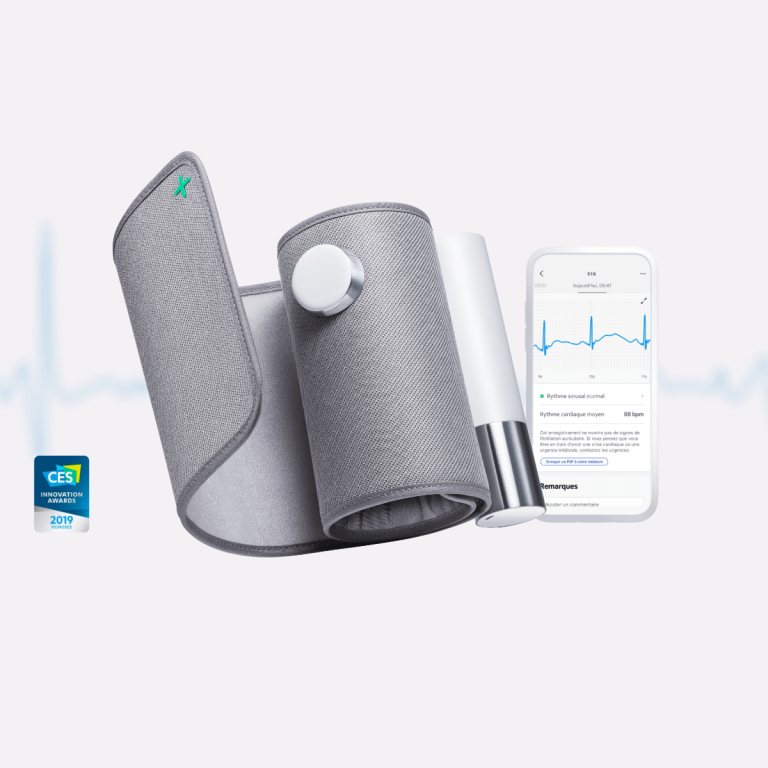
Withings BPM Core: Blood Pressure, ECG, and Digital Stethoscope in One Device
The most comprehensive home cardiac monitor available combines blood pressure measurement, a single lead ECG, and a digital stethoscope for valvular heart disease screening in a single arm cuff. Presented…
Keyto Breath Sensor: Budget Breath Acetone Tracking for Keto Dieters
A pocket sensor that reads fat metabolism through your breath, promising to replace urine strips and finger pricks for anyone following a ketogenic diet. Presented By Our Partners In healthy…

The GLP-1 Trust Test: What an Online Provider Should Be Willing to Show You
Eight source-backed questions for checking an online GLP-1 provider’s clinical accountability, medication category, pharmacy, follow-up, claims, price, and commercial influence.

Nature Is Medicine: What 108 Brain-Imaging Studies Just Proved About Your Mind
New research synthesizing 108 neuroimaging studies reveals a precise cascade of measurable brain changes that begin in as little as three minutes outdoors — and the implications for your health…
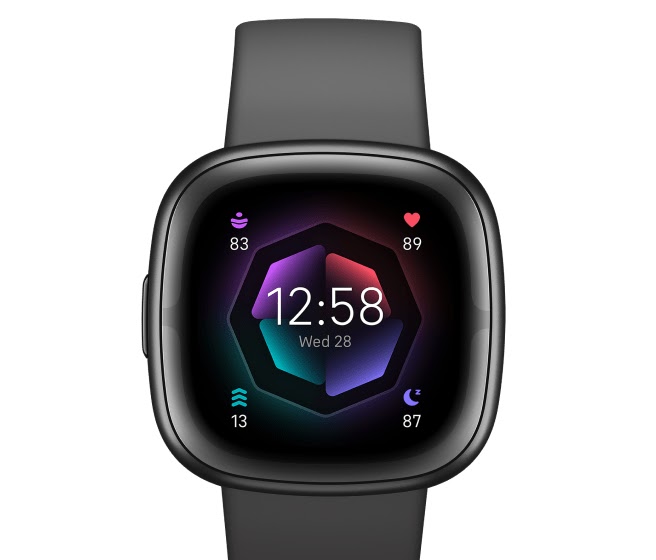
Fitbit Sense 2 Sleep Tracking: Sleep Score, Snore Detection, and Smart Wake Alarm
An accessible smartwatch that pairs sleep staging with SpO2, skin temperature, snore detection, and a smart wake alarm, building one of the most complete consumer sleep monitoring suites at a…
