
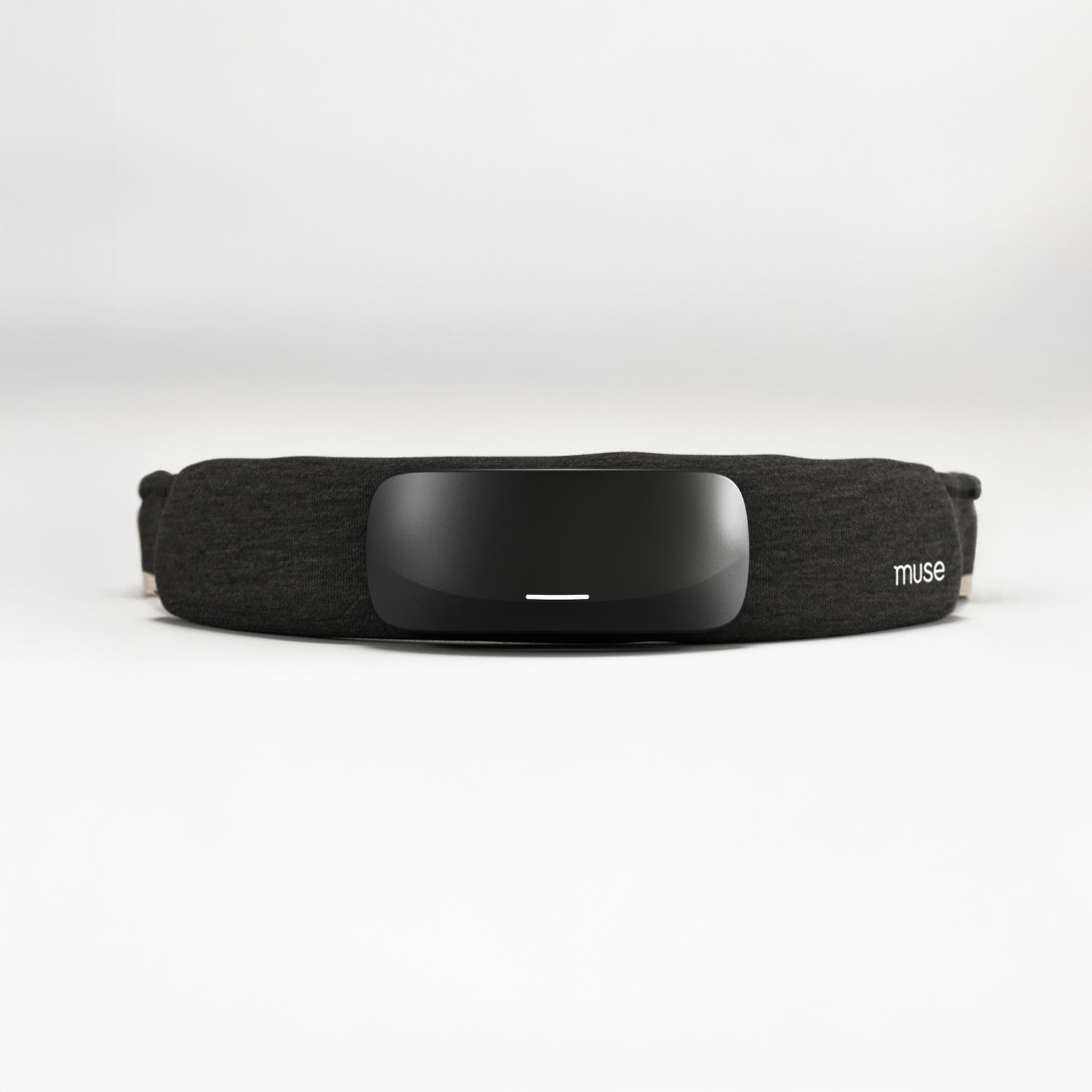
Muse S Athena Review: Sleep Accuracy, Price, and Verdict
The Muse S Athena reads your brain’s electricity and its oxygen supply through the night; the best independent test of a Muse headband says the electrical part works remarkably well, and the rest is still an open question.
Presented By Our Partners


In 2019, researchers at Boston University and Massachusetts General Hospital recorded the brains of sleeping volunteers with EEG while a fast MRI scanner watched what was happening deep inside their heads. They found a rhythm in three movements. First came slow electrical waves, the large, rolling signature of deep sleep. Then came a swell in blood flow. Then, coupled to that swell, a pulse of cerebrospinal fluid washing through the brain (Science, 2019). Six years earlier, a team at the University of Rochester had shown in mice that sleep expands the space between brain cells by about 60 percent and speeds the clearance of beta-amyloid, the protein that clumps in Alzheimer’s disease (Science, 2013).
Electricity, then blood, then fluid. Sleep is not the brain powering down. It is a maintenance shift, and its schedule is written in brain rhythms that no wristband can hear directly.
The Muse S Athena is a soft sleep and meditation headband made by InteraXon, the Toronto company behind the Muse line, that tries to read the first two movements of that rhythm at home. Announced in March 2025 as the successor to the Muse S Gen 2, it combines electroencephalography (EEG), which records the brain’s electrical activity, with brain oxygen measurements, a capability launch coverage highlighted. As of October 2026, it lists at $474.99 on Muse’s US store. The question worth that money is simple: can a headband you sleep in tell you what a sleep lab would?
The short answer: The Muse S Athena is one of the most credible consumer routes to brain-based sleep staging. An earlier Muse S headband showed substantial agreement with lab polysomnography in an independent 2025 study, especially for REM sleep and wake. But the Athena itself, its brain-oxygen sensors, and its sleep-stimulation features have not been independently validated. It is a sharp tracker, not a diagnosis.
- Best for: people who want EEG-based sleep stages at home across many nights, meditators who want brain feedback, and researchers who need portable sleep EEG.
- Not for: diagnosing sleep apnea, insomnia, or narcolepsy; people who cannot sleep with a band on their head; anyone prone to fixating on nightly scores.
- Price (October 2026): $474.99 list on Muse’s US store; a Premium subscription is sold separately, and we could not verify its current price.
- Regulatory status: not FDA regulated as a medical device; we found no FDA clearance. Muse has described its AI platform as “clinical-grade,” a marketing phrase, not a regulatory status.
- Evidence: Moderate for Muse S EEG sleep staging, based on one independent 56-person lab study; Limited for the Athena’s brain-oxygen and stimulation features.
What is the Muse S Athena?
The Muse S Athena is a consumer headband made by InteraXon that measures brain activity with EEG and also measures brain oxygen, then uses the Muse app to report sleep stages, guide meditation, and run sleep features such as deep sleep stimulation and a smart alarm. It needs no prescription and is not a medical device.
Muse began as a meditation tool. Researchers describe the Muse S as originally developed to support meditation biofeedback, and that heritage still shapes the product: during a session, the app gives you feedback on your brain activity. The Athena is the latest chapter of that story and the most ambitious, because Muse has spent the past year turning it into a sleep platform.
The sequence of announcements is worth knowing, because it shows how much of the Athena’s value now lives in software. Muse introduced the Athena in March 2025. In June 2025 it described its AI platform as delivering “clinical-grade sleep and brain health intelligence.” In October 2025 it expanded that platform with what it called sleep interventions across the full sleep cycle. In February 2026 it announced deep sleep stimulation at home, a feature it calls Deep Sleep Boost, and in April 2026 it added Smart Wakeup, which it describes as an alarm that wakes your brain at the right time. Those features build on Muse’s earlier EEG-powered “Digital Sleeping Pills,” launched in 2021 to help users fall asleep and return to sleep after waking at night.
The companion app is listed in Apple’s App Store as Muse: Brain Health and Sleep. We could not confirm the Athena’s full sensor layout from a primary source in this review. The earlier Muse S tested in the study described below recorded four EEG channels, two on the forehead and two behind the ears, at 256 samples per second, alongside a photoplethysmography heart sensor and an accelerometer (Sleep Advances, 2025).
How does the Muse S Athena work?
The Athena’s EEG sensors pick up the voltage patterns that different sleep stages produce, and software sorts the night into wake, light, deep, and REM sleep; in validation testing, the Muse algorithm was scored in 30-second epochs, the same unit a sleep technologist uses in the lab. Its brain-oxygen sensing adds a second, slower signal: changes in blood oxygenation.
Sleep has a sound, if you know how to listen. As you drift off, the busy electrical chatter of wakefulness flattens into low, mixed frequencies; this is stage N1, the shallow doorway that even experts struggle to score. In stage N2, the brain begins to punctuate that background with sleep spindles, brief bursts of fast waves, and K-complexes, single large spikes that look like a gavel striking. Then comes N3, deep sleep, when millions of cortical neurons fall into lockstep and the trace swells into slow, towering waves. The dominant rhythm there, the slow oscillation, runs at less than one cycle per second and is critical to consolidating memory (Neuron, 2013). Finally there is REM sleep, electrically restless and close to waking, when the eyes dart beneath closed lids. Eugene Aserinsky and Nathaniel Kleitman reported it in a 1953 paper in Science on regularly occurring periods of eye motility during sleep.
A clinical sleep study captures all of this with a full kit: in the validation study below, polysomnography used at least three scalp EEG channels plus sensors for eye movements, chin and leg muscles, and the heart. A headband has fewer channels and dry electrodes, so it leans on software to make up the difference. Yet the signatures that matter most are large. In the Ottawa study, visual inspection showed K-complexes, spindles, and slow waves in the Muse signal itself, matching the same moments on the lab recording (Sleep Advances, 2025). And as the numbers below show, the dramatic stages, REM and deep sleep, proved far easier for the headband to score than the subtle drift of N1, a pattern the authors note is consistent with other portable EEG devices.
Brain oxygen is measured on a different principle. Noninvasive sensors typically use near-infrared light, which passes through skin and bone, and oxygen-rich and oxygen-poor hemoglobin absorb it differently, so changes in the light that returns reveal shifts in local blood oxygenation, an indirect window onto how hard nearby tissue is working. Sleep does show up in this signal. In a 2011 study in Brain Research that monitored the prefrontal cortex with near-infrared spectroscopy alongside polysomnography, all eight volunteers who reached REM sleep showed a clear rise in oxygenation when the first rapid eye movements appeared. And the 2019 Science study above showed that blood flow oscillations follow the slow waves of deep sleep. The physiology is real. Whether a consumer headband’s brain-oxygen readings add anything useful to sleep staging is, as far as we found, untested.
Deep Sleep Boost rests on a striking idea from the research literature. In a 2013 study in Neuron, sounds played in time with the up phase of a sleeper’s slow oscillations strengthened those waves, increased the spindles locked to them, and improved overnight consolidation of declarative memory, the kind of facts you can state; the same sounds played out of phase did nothing. Timing was everything. We could not confirm from a primary source exactly how Muse’s version works, or find a peer-reviewed trial of it.
How accurate is the Muse S Athena for sleep? What the research shows
The best evidence comes from an earlier model. In an independent 2025 study of 56 adults, the Muse S matched lab polysomnography with substantial agreement overall and near-perfect agreement for REM and wake, while struggling with light N1 sleep. No published study has yet tested the Athena itself or its brain-oxygen sensors for sleep.
The key study. At the University of Ottawa’s Institute of Mental Health Research, 56 adults slept one night in the lab wearing a Muse S and full level 1 polysomnography at the same time (Sleep Advances, 2025). A registered sleep technologist scored the lab recordings without seeing the Muse results, and InteraXon’s automated algorithm scored the headband data blind to the lab recordings, apart from lights-off and lights-on times used to align them. Nine recordings, 16 percent, were discarded for poor headband signal quality, leaving 47 participants aged 20 to 71. The sample was not a group of perfect sleepers: 80 percent scored above the cutoff for significant sleep disturbance on the Pittsburgh Sleep Quality Index, and 17 percent had sleep-related breathing disorder.
The numbers. Across all 30-second epochs, agreement measured by Cohen’s kappa, a statistic that corrects for agreement by chance, was 0.76, conventionally labeled substantial. By stage, kappa was 0.85 for REM, 0.84 for wake, 0.77 for deep N3 sleep, 0.75 for N2, and 0.41 for N1. Accuracy ranged from 88 to 96 percent across stages. On average the headband slightly flattered the night: compared with the lab, it reported 6.7 more minutes of total sleep, 15.2 more minutes of deep sleep, and 6.4 more minutes of REM, with 14.9 fewer minutes of light sleep. Even so, 93.6 percent of recordings fell within accepted error margins for total sleep time, and agreement held up in the subgroup with breathing disorders (kappa 0.74). The authors described the study as an independent assessment; their caveats were that technicians, not participants, put the headbands on, and that each lab recording was scored only once.
How that compares. A 2023 study in Sleep Health tested six trackers against lab polysomnography in 60 adults. An EEG headband, the Dreem 3, performed best, with four-stage kappa of 0.76 to 0.86, followed by the Oura Ring Gen 3 at 0.55 to 0.70 and the Fitbit Sense at 0.45 to 0.60; low-cost trackers fell below 0.33. Different samples make cross-study comparison imperfect, but the Muse S result sits in the same range as the best EEG headband. A 2021 study in Sleep of seven non-EEG consumer devices in 34 adults found the opposite weakness: they detected sleep well, with sensitivity of 0.93 or higher, but specificity for catching wake was only 0.18 to 0.54, and stage estimates were inconsistent. Movement and heart rate are good at telling you that you were still. They are much worse at telling you whether your brain was asleep.
Harder sleepers, harder scoring. Headbands lose ground when sleep gets messy. In 31 adults with insomnia disorder, the Dreem 3 correctly identified only 29.79 percent of N1 epochs and 65.65 percent of N3 epochs, though REM detection stayed high at 89.88 percent (Sleep Medicine, 2025). In 62 older adults, including 12 with Alzheimer’s disease, the Dreem headband overestimated REM by about 25 minutes, and only 73 percent of recordings were usable for detailed EEG analysis after artifact removal (Sleep, 2025). The Muse study authors themselves call for validation across more ages, sexes, neurological conditions, and sleep profiles.
Featured Partner
Invest in the Infrastructure Behind Modern Medicine
As healthcare expands beyond hospital walls, the buildings and campuses supporting that shift are generating compelling returns for investors who move early. The Healthcare Real Estate Fund offers qualified investors direct access to a curated portfolio of medical office, outpatient, and specialty care facilities.
Learn More →
One night is noise. A 2026 study in Sleep followed 49 older adults for eight nights each with an EEG headband. The percentage of deep N3 sleep swung wildly from night to night, with a coefficient of variation of 47 percent, while a more continuous measure, slow-wave activity, stayed stable and was the only sleep metric robustly linked to cognitive performance (r = 0.55). If your app’s deep sleep number jumps around, that may be biology, not malfunction. Trends across weeks mean more than any single morning.
Read together, the evidence supports a clear but bounded claim. A Muse S headband can measure the architecture of a night, its wake, light, deep, and REM sleep, with accuracy in the range of the best EEG headband tested and above what rings and watches have shown in lab comparisons. What it cannot yet claim is validation for the Athena’s newer sensors and features, or for people with complex sleep disorders. For a broader guide to what any sleep score can and cannot tell you, read our explainer, the sleep score is not sleep.
What the Muse S Athena gets right
The Athena’s core strength is that it measures the brain itself. Its lineage has strong independent sleep-staging validation, it shows the fine structure of sleep, and it makes repeated, at-home EEG practical in a way a sleep lab never can.
It measures the organ that sleeps. Rings and watches infer sleep from movement and heart rhythm, which is why they struggle to spot quiet wakefulness. A headband reads the brain’s own signal, and the payoff shows up in the numbers: near-perfect agreement on wake and REM in the Ottawa study.
It sees the fine print. Spindles, K-complexes, and slow waves were visible in the Muse signal, not just inferred from it (Sleep Advances, 2025). That matters for anyone who cares less about a single score and more about how sleep is built.
Many nights beat one. As the Ottawa authors point out, single-night lab studies are distorted by the first-night effect, the poor sleep many people get in a strange bed with wires attached. A headband you can wear at home for weeks catches your real sleep and its night-to-night swings, which the 2026 Sleep study shows are large.
Researchers can get the raw signal. Muse technology gives researchers access to EEG signals in European Data Format, the standard file type for sleep recordings, so the data can be scored by hand rather than trusted to the app (Sleep Advances, 2025).
The meditation roots are real. A 2017 study in Frontiers in Neuroscience showed that the original Muse could capture classic brain responses to rare and rewarding events, the N200, P300, and reward positivity, establishing it as a legitimate low-cost research tool rather than a toy.
Where the Muse S Athena falls short
The Athena’s limits are mostly about what has not been proven. Its own validation is borrowed from an earlier model, its brain-oxygen sensors and sleep stimulation lack published trials, it still misreads light sleep and slightly inflates deep sleep, signal quality can fail, and it cannot diagnose a sleep disorder.
The validation is borrowed. The Ottawa study tested an earlier Muse S, without the Athena’s brain-oxygen sensors, using InteraXon’s sleep staging algorithm version 2. Muse’s software has changed since. The results are an encouraging guide to the Athena’s EEG staging, not proof of it.
New features, no trials. We found no peer-reviewed study of the Athena’s brain-oxygen readings during sleep, of Deep Sleep Boost, or of Smart Wakeup. The closed-loop stimulation research is genuinely promising, but it also shows that mistimed sound does nothing (Neuron, 2013), so the quality of the engineering is the whole question. Muse’s “clinical-grade” language describes its AI platform; it is a marketing description, not an FDA status.
Light sleep and deep sleep are the soft spots. N1 agreement was only fair (kappa 0.41), and the headband counted an average of 15.2 extra minutes of deep sleep (Sleep Advances, 2025). If you are chasing deep sleep minutes, know that the number runs slightly high.
Signal quality is not guaranteed. One in six Ottawa recordings was unusable, even with technicians fitting the headbands. The researchers also saw signal quality decline after 14 to 20 nights of use, from poor skin contact or wear and tear; dampening the electrodes or applying EEG paste sometimes helped.
It is not a diagnostic test. Lab polysomnography measures breathing, muscle activity, and heart rhythm to diagnose disorders such as sleep apnea and narcolepsy. A normal-looking night on a headband does not rule them out.
Data can feed anxiety. Sleep clinicians have described orthosomnia: patients who develop a perfectionistic quest for ideal sleep after seeing light or restless periods on their trackers, and who sometimes trust the tracker over validated tests (Journal of Clinical Sleep Medicine, 2017). A more accurate tracker does not make that trap less likely.
The cost does not stop at the headband. At $474.99, plus a separately sold Premium subscription, it is an expensive way to learn whether you sleep well.
Muse S Athena vs Oura Ring vs SleepScore Max vs lab polysomnography
The Athena measures brain activity directly, which gives it an accuracy edge over rings and bedside sensors in published head-to-head testing. Lab polysomnography remains the only option that can diagnose sleep disorders. A ring or bedside device is cheaper and easier to live with if you mainly want sleep duration and trends.
| Feature | Muse S Athena | Oura Ring | SleepScore Max | Lab polysomnography |
|---|---|---|---|---|
| How it senses sleep | EEG headband plus brain-oxygen sensing | Finger ring with non-EEG sensors | Bedside device, nothing worn | Multiple EEG channels plus eye, muscle, heart, and breathing sensors |
| Reads brain activity directly | Yes | No | No | Yes |
| Best published agreement with lab staging | Earlier Muse S: kappa 0.76 overall, 0.85 for REM | Gen 3: four-stage kappa 0.55 to 0.70 | Matched or beat research actigraphy for sleep and wake | The reference standard |
| Can diagnose sleep disorders | No | No | No | Yes, when ordered and read by a clinician |
| Best for | Brain-based sleep stages at home; meditation feedback | Comfortable all-day tracking and long-term trends | Hands-off tracking with nothing to wear | Suspected apnea, narcolepsy, or other disorders |
Table sources: Muse S data from Sleep Advances (2025); Oura Ring Gen 3 data from Sleep Health (2023); SleepScore Max data from a 2021 study in Sleep; polysomnography setup as described in the 2025 Ottawa study.
If you want the comfort of a ring, our Oura Ring Gen 3 review covers the model that was tested head to head, and our SleepScore Max review covers the contact-free route. If you mainly want to meditate rather than track sleep, the Muse 2 headband is the Athena’s meditation-first sibling. And if you need the real thing, our review of the Alice 6 LDx polysomnography system explains what a full sleep study measures. Browse everything we cover in sleep and recovery reviews.
How much does the Muse S Athena cost, and is it HSA/FSA eligible?
As of October 2026, the Muse S Athena lists at $474.99 on Muse’s US store. Muse sells a Premium subscription separately and in bundles with the headband; we could not verify the subscription’s current price or exactly which features require it, so check before you buy.
Do not expect insurance to cover a consumer sleep headband, and because the Athena is not a prescribed medical device, do not assume it qualifies for HSA or FSA funds; confirm with your plan administrator. A clinical sleep study is a different matter: when a clinician orders one for a suspected disorder, it is a medical test, and your plan can tell you what it covers.
For value, think about the question you are asking. If you want to know roughly how long you sleep and whether it is trending better or worse, a ring or bedside device does that for less. If you want to see your sleep architecture, or you meditate and want brain feedback too, the Athena is one of the most credible consumer tools for the job.
Who should buy the Muse S Athena, and who should skip it?
The Athena suits people who want brain-level sleep data at home and will use it for weeks, along with meditators who want feedback and researchers who need portable EEG. Skip it if you need a diagnosis, cannot sleep in a headband, or are likely to be made anxious by nightly sleep scores.
Good candidates:
- Data-minded sleepers who have outgrown ring or watch estimates and want to see wake, light, deep, and REM sleep from the brain itself.
- Meditators who want both a sleep tracker and real-time brain feedback in one device.
- Researchers and clinicians running at-home studies who need multi-night EEG with raw data access.
Better served by something else:
- Anyone with loud snoring, gasping or choking at night, or heavy daytime sleepiness: see a clinician about sleep apnea testing. A clinician-ordered home sleep apnea test or a lab study is the right tool, and the Healthcare Discovery doctor directory lists sleep medicine specialists by state.
- People with chronic insomnia: ask a clinician about cognitive behavioral therapy for insomnia, and be wary of nightly scores that feed worry.
- Anyone who sleeps poorly with something on their head, or who wants all-day activity tracking from one device.
What this means for you
Of the Four Villains of Health and Longevity, sleep speaks most directly to the Mind Thief, neurodegenerative disease. In the Framingham Heart Study, 321 adults over 60 had their sleep recorded at home and were followed for up to 19 years. Each one-percentage-point drop in REM sleep was associated with roughly a 9 percent higher risk of dementia, while the non-REM stages showed no association (Neurology, 2017). Add the evidence that sleep accelerates the clearance of beta-amyloid in mice (Science, 2013) and that deep sleep’s slow waves are coupled to waves of cerebrospinal fluid in the human brain (Science, 2019), and sleep architecture starts to look less like a curiosity and more like infrastructure. Those findings are associations and mechanisms, not proof that tracking your REM will protect your memory, but they explain why measuring sleep well matters. Read more about how we frame these threats in the Four Villains of Health and Longevity.
The Athena is a Sleep pillar tool first, and a good one: it can show you, with lab-like accuracy for most stages, how your nights are built and how they change with caffeine, alcohol, late meals, or stress. It is also a Mindset and Breath tool, because the meditation feedback that made Muse famous remains part of the package. What it cannot do is sleep for you. The levers that move sleep architecture, a regular schedule, a dark and cool room, daytime light and movement, and less alcohol, cost nothing, and the device’s best use is as a mirror for those habits.
Return to that rhythm in three movements: electricity, then blood, then fluid. The Muse S Athena reads the first movement well and attempts the second. The third, the brain quietly rinsing itself, happens whether or not you are measuring it. The point of a good sleep tracker is not a perfect score. It is to help you protect the conditions under which that maintenance shift runs, night after night.
Frequently asked questions
Is the Muse S Athena worth it?
It is worth it if you want brain-based sleep staging at home and will use it across many nights. An earlier Muse S showed substantial agreement with lab sleep studies in an independent 2025 study, comparable to the best EEG headband and above what rings have shown in separate lab tests. But the Athena’s brain-oxygen and stimulation features are unvalidated, it lists at $474.99 plus a subscription, and it cannot diagnose sleep disorders.
How accurate is the Muse S Athena for sleep tracking?
The best evidence comes from its predecessor. In a 2025 University of Ottawa study of 56 adults, the Muse S matched lab polysomnography with a kappa of 0.76 overall, 0.85 for REM sleep and 0.84 for wake, but only 0.41 for light N1 sleep, and it overcounted deep sleep by about 15 minutes. No published study has yet validated the Athena model itself.
What does the brain-oxygen sensor on the Muse S Athena do?
The Athena adds brain oxygen measurement to EEG. Noninvasive brain oxygen sensing, usually done with near-infrared light, tracks changes in blood oxygenation, and research shows prefrontal oxygenation rises when rapid eye movements begin in REM sleep. However, we found no peer-reviewed study showing that the Athena’s brain-oxygen readings improve sleep tracking, so treat that data as experimental for now.
Muse S Athena vs Oura Ring: which is better for sleep?
For sleep stage accuracy, an EEG headband has the edge. In head-to-head lab testing, an EEG headband reached four-stage kappa of 0.76 to 0.86 versus 0.55 to 0.70 for the Oura Ring Gen 3, and the Muse S scored 0.76 in its own study. The Oura Ring is far more comfortable and tracks all day, so many people will prefer it for long-term trends.
Can the Muse S Athena detect sleep apnea?
No. We found no FDA clearance for the Muse S Athena, and it is not designed to diagnose sleep apnea or any other sleep disorder. Diagnosing apnea requires measuring breathing, which a clinician-ordered home sleep apnea test or lab polysomnography provides. If you snore loudly, gasp at night, or feel very sleepy during the day, talk with a clinician about testing.
How much does the Muse S Athena cost?
As of October 2026, the Muse S Athena lists at $474.99 on Muse’s US store. Muse also sells a Premium subscription separately and in bundles with the headband; we could not verify the current subscription price. Do not expect insurance to cover it, and HSA or FSA eligibility is not guaranteed, so check with your plan administrator before buying.
Sources
- Fultz NE, et al. Coupled electrophysiological, hemodynamic, and cerebrospinal fluid oscillations in human sleep. Science, 2019. DOI
- Xie L, et al. Sleep drives metabolite clearance from the adult brain. Science, 2013. DOI
- Lanthier M, et al. Assessing the performance of a portable electroencephalographic sleep monitor against level 1 polysomnography. Sleep Advances, 2025. DOI
- Ngo HV, Martinetz T, Born J, Mölle M. Auditory closed-loop stimulation of the sleep slow oscillation enhances memory. Neuron, 2013. DOI
- Aserinsky E, Kleitman N. Regularly occurring periods of eye motility, and concomitant phenomena, during sleep. Science, 1953. DOI
- Kubota Y, et al. Dorsolateral prefrontal cortical oxygenation during REM sleep in humans. Brain Research, 2011. DOI
- Ong JL, et al. Selecting a sleep tracker from EEG-based, iteratively improved, low-cost multisensor, and actigraphy-only devices. Sleep Health, 2023. DOI
- Chinoy ED, et al. Performance of seven consumer sleep-tracking devices compared with polysomnography. Sleep, 2021. DOI
- Beau QAL, et al. Dreem headband performance in insomnia disorder: an in-lab comparison to polysomnography. Sleep Medicine, 2025. DOI
- G Ravindran KK, et al. Evaluation of Dreem headband for sleep staging and EEG spectral analysis in people living with Alzheimer’s disease and older adults. Sleep, 2025. DOI
- Qin S, et al. Association between slow-wave activity from multi-night at-home wireless EEG records and cognitive performance in older adults. Sleep, 2026. DOI
- Krigolson OE, et al. Choosing MUSE: validation of a low-cost, portable EEG system for ERP research. Frontiers in Neuroscience, 2017. DOI
- Baron KG, et al. Orthosomnia: are some patients taking the quantified self too far? Journal of Clinical Sleep Medicine, 2017. DOI
- Pase MP, et al. Sleep architecture and the risk of incident dementia in the community. Neurology, 2017. DOI
- Muse. Muse S Athena product page ($474.99 USD). choosemuse.com
- Muse. Athena vs. Muse S G2: the biggest brain tech upgrade yet. choosemuse.com
- Business Wire. Introducing Muse S Athena: the next evolution in cognitive fitness, March 18, 2025. businesswire.com
- Business Wire. Muse’s AI platform delivers clinical-grade sleep and brain health intelligence, June 3, 2025. businesswire.com
- Business Wire. Sleep, by Design: Muse expands AI sleep platform with sleep interventions across the full sleep cycle, October 13, 2025. businesswire.com
- Business Wire. Muse brings deep sleep stimulation home, February 9, 2026. businesswire.com
- Business Wire. Muse completes “Sleep, by Design” platform with Smart Wakeup, April 7, 2026. businesswire.com
- GamesBeat. Muse unveils wearable that combines brainwave tracking and brain oxygen measurements, 2025. gamesbeat.com
Muse S Athena Headband at a glance
- Hardware price
- $474.99
- Subscription
- $95 per year
- First year total
- $569.99
- Form factor
- EEG+fNIRS headband
- FDA status
- Has FDA clearance
- HSA/FSA
- Not confirmed
Measures EEG brainwaves, fNIRS, HR, HRV, Movement, Sleep stages
Pricing verified October 20, 2026. Maintained in the Healthcare Discovery device database and updated automatically.


Similar Posts

The First Longevity Board: How Insilico Medicine Is Using AI to Target the Biology of Aging Itself
Insilico Medicine has formed the industry’s first Longevity Board, chaired by Eli Lilly’s Group VP of Molecular Discovery and featuring Nobel laureate Michael Levitt. Inside the AI strategy, dual-purpose targets,…
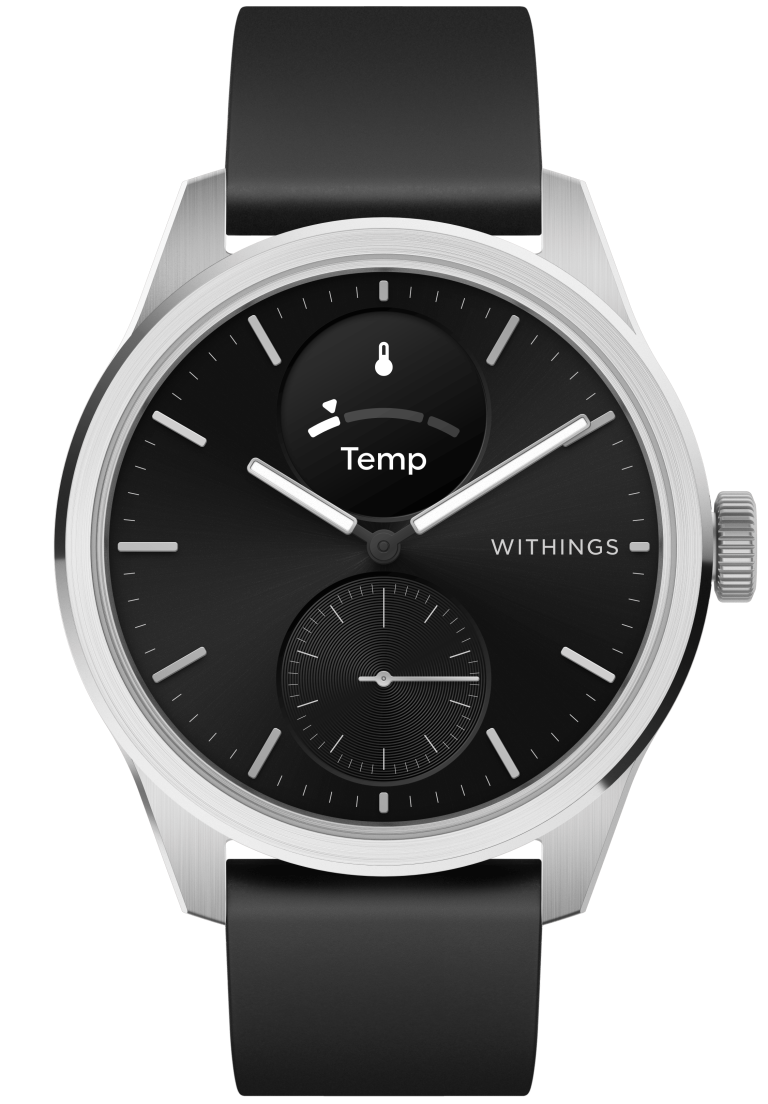
Withings ScanWatch: FDA Cleared ECG and SpO2 in a Classic Watch Design
An FDA cleared electrocardiogram and pulse oximeter built into a watch that actually looks like a watch, not a miniature computer strapped to your wrist. Presented By Our Partners Product…

The Daily Rounds: Longevity & Health Care Brief | May 8, 2026
🥚 Eggs and Alzheimer's Risk — A 15-year, nearly 40,000-person study finds eating eggs five or more times weekly is linked to a 27% reduction in Alzheimer's risk, driven by choline, lutein, and zeaxanthin content. 🫀 AI Reads Hidden Heart Fat in Routine Scans — Mayo Clinic's AI tool extracts pericardial fat data from standard CAC scans to significantly improve cardiovascular risk prediction with no added cost or testing burden. 🧠 Gut Controls Brain Aging Timeline — Stanford and Arc Institute researchers show that gut microbiome composition actively modulates when memory decline begins, reframing cognitive aging as a microbiome-modifiable process. 🏃 Exercise Variety Beats Single-Mode Training for Longevity — A Harvard 30-year study of 111,000 adults finds that varied exercise routines cut premature mortality risk by 19%, with just 60 minutes of weekly resistance training as the optimal dose. 😴 Sleep Regularity Predicts Disease Risk More Than Duration — A global study of 88,000 adults finds that irregular sleep timing raises risk for liver cirrhosis, gangrene, and cardiovascular disease independently of total hours slept.
Halo Sport 2 Review: Transcranial Direct Current Stimulation for Motor Learning and Athletic Performance
The Halo Sport 2 applies mild electrical stimulation to the motor cortex before training, claiming to accelerate skill acquisition and strength development through enhanced neuroplasticity. Presented By Our Partners In…
Everlywell Women’s Health Test: Accessible Hormone Panels for Metabolic and Reproductive Insight
The most common endocrine disorders affecting women, thyroid dysfunction and hormonal imbalance, are also among the most treatable when caught early enough to intervene. Presented By Our Partners Subclinical hypothyroidism…
Signal Ring Blood Pressure Wearable: What the $399 Ring Actually Does
Signal Ring promises cuffless, calibration-free blood-pressure readings from a $399 titanium ring. Here is what it does, what the evidence shows, its FDA status, and what remains unproven.
