
Oura Is Buying Counsel Health: What It Means for Your Oura Ring
Oura announced on November 10, 2026 that it will pay $625 million in cash for Counsel Health, the AI and physician service already running inside the Oura app. For the people wearing the ring, a partnership becomes a permanent part of the product. Here is what you get today, what it costs, where it works, and where the evidence is still thin.
Presented By Our Partners



The Short Answer
If you wear an Oura Ring in the United States, Counsel is the “Connect to Care” option in the Oura app. A medical AI answers your health questions using your ring data, and when you need more, board-certified physicians can diagnose, prescribe and follow up by message. Right now it is optional and billed separately by Counsel. Once the deal closes, Counsel becomes part of Oura instead of an outside partner.
Neither company has said yet how pricing, branding or data handling will change after closing. Everything below describes the service as it works today.
What Oura Is Buying
Counsel Health was founded in 2023 by Muthu Alagappan, a Stanford-trained physician and former chief medical officer at Notable, with cofounder Rishi Kerkar. It launched in October 2024 with an $11 million seed round led by Andreessen Horowitz Bio + Health, then raised a $25 million Series A in October 2025 led by Andreessen Horowitz and GV. That is $36 million in disclosed funding, which makes the $625 million price roughly 17 times what investors put in.
The product is AI first and physician backed. Counsel’s medical AI collects your history and answers initial questions, then hands the conversation to an in-house doctor when a diagnosis, prescription or referral is needed. Before Oura, Counsel sold mainly to health plans and employers, and by October 2025 it reported more than 100,000 members across those partnerships. In April 2026 it expanded into treating lifestyle conditions such as hair loss, acne and sexual health, with chronic conditions like hypertension, high cholesterol and obesity to follow through the year.
How Counsel Works Inside the Oura App
You can reach Counsel from the plus button on the Today tab by tapping Connect to Care, or the app may suggest it. Oura Advisor offers Counsel when you ask a question that needs medical guidance, and prompts can also appear from Symptom Radar alerts, Health Panels or Blood Pressure Signals, depending on your data.
- AI first. Counsel’s medical AI gathers context and gives initial guidance at any hour.
- Doctor when needed. You can escalate to a licensed Counsel physician by message inside the Oura app. Physicians can assess concerns, write treatment plans and prescribe.
- Your trends, with consent. If you choose to share, Counsel physicians see your sleep, cardiovascular and reproductive health trends in their clinical workflow instead of starting from a blank intake form.
- Records flow back. If you direct it, Counsel visit summaries, including diagnoses and treatment plans, can be added to your Oura record.
Both companies are clear that this is for everyday medical needs, not emergencies. Chest pain, stroke symptoms or trouble breathing still mean calling 911.
What It Costs
- Free trial: 30 days of Counsel’s medical AI after you connect.
- Paid tier: $159 a year for unlimited medical AI and licensed doctors inside the Oura app, billed by Counsel.
- Insurance: Oura says insurance does not cover the Counsel subscription, though it may cover prescriptions or treatments that come out of a Counsel visit.
- Oura membership: Oura’s own membership is $5.99 a month or $69.99 a year in the United States.
Outside the Oura app, Counsel has charged $29 for a condition-specific consultation that includes follow-up care. Whether Oura folds Counsel into its membership price after the acquisition is the biggest open question for members.
Featured Partner
Invest in the Infrastructure Behind Modern Medicine
As healthcare expands beyond hospital walls, the buildings and campuses supporting that shift are generating compelling returns for investors who move early. The Healthcare Real Estate Fund offers qualified investors direct access to a curated portfolio of medical office, outpatient, and specialty care facilities.
Learn More →
Where It Works
Counsel is available to Oura members in 43 states. It is not available in Arkansas, the District of Columbia, Kansas, Mississippi, New Mexico, Rhode Island, Washington or West Virginia. Oura says those states require a video call to establish a doctor and patient relationship, and Counsel does not support video visits yet.
What the Early Numbers Show
In the first nine weeks after launch, 36,000 Oura members completed onboarding to Counsel, and 70 percent said they were satisfied, according to Oura’s chief medical officer, Ricky Bloomfield. Members who saw a physician rated their care 4.6 out of 5.
Those are company-reported adoption and satisfaction figures. They are not clinical outcomes. No peer-reviewed study has yet shown whether pairing Oura data with Counsel care improves blood pressure, weight, sleep or anything else that matters to your long-term health.
What the Research Says About Wearable Alerts Leading to Care
The idea of moving from a wearable signal to a clinician has been tested before, and the results are useful context.
The Apple Heart Study enrolled 419,297 smartwatch users. Over a median of 117 days, 0.52 percent received an irregular pulse notification, and each was offered a telemedicine visit and a mailed ECG patch. Among people who returned usable patches, 34 percent had atrial fibrillation on the patch, and 57 percent of notified participants who answered a later survey sought care outside the study (Perez et al., New England Journal of Medicine, 2019, doi:10.1056/NEJMoa1901183). The lesson: alert-to-doctor pathways can work at scale, but most alerts need confirmation, and every alert generates downstream care.
The TemPredict study, which used the Oura Ring, found that illness-related rises in finger temperature were visible in the ring data and tracked with self-reported fever in people who later reported COVID-19 infections (Smarr et al., Scientific Reports, 2020, doi:10.1038/s41598-020-78355-6). The authors concluded wearables may be able to flag illness before people recognize symptoms.
Put together, a ring can notice that something has changed, but a signal is not a diagnosis. Counsel is meant to fill exactly that gap, which is also where false alarms and unnecessary treatment can creep in.
The Privacy Question
During the partnership, your Oura data reached Counsel only if you consented. Counsel is HIPAA compliant and SOC 2 certified, and both companies said they would never sell your data. After the acquisition, your ring data and your medical visit records sit inside the same corporate family. Watch for updated privacy terms when the deal closes, and decide deliberately what you share.
It also helps to remember what the hardware is. Oura states that the Oura Ring and Oura Advisor are not medical devices and are not intended to diagnose, treat or monitor disease. The doctors are Counsel’s, not Oura’s.
Medicare Members: The 2027 Program
Counsel is joining Medicare’s ACCESS model, a 10-year chronic care program, in its early cardio-kidney-metabolic track. Starting in early 2027, eligible Medicare beneficiaries with conditions such as hypertension and obesity can get Counsel’s AI-supported chronic care with no out-of-pocket cost, with Oura as the preferred wearable partner. A Counsel physician confirms eligibility. If you are 65 or older and already wear an Oura Ring, this may become the most valuable part of the deal for you.
Who Should Use It, and Who Should Not
A good fit: everyday questions, interpreting an alert or a trend that worries you, minor acute problems, prescription questions, and people who lack quick access to a primary care doctor.
Not a fit: emergencies, anything that needs a physical exam or imaging, and ongoing specialty care. Counsel works best alongside your own doctor, not instead of one. If you need an in-person physician, the Healthcare Discovery doctor directory lists clinicians by location and specialty.
What This Means for You
The ring already measures the foundations: sleep, movement, recovery and the stress signals that shape them. What Counsel adds is a clinician who can see those trends. Used well, that shortens the path from “something feels off” to a real answer.
- Use the free trial first. See whether the AI answers are useful to you before paying $159.
- Choose what you share. Sharing trends makes the doctor’s job easier, but it is your call, category by category.
- Close the loop with your own doctor. Bring Counsel visit summaries to your regular physician so your records stay in one place.
- Treat alerts as questions, not answers. A temperature or heart rate change is a reason to look closer, not a diagnosis.
Related on Healthcare Discovery
- Oura Ring 5: price and Blood Pressure Signals
- How to share wearable data with your doctor: which devices connect
- Oura Ring Gen 4: readiness, HRV and recovery
- GLP-1 telehealth transparency scorecard
- The deal behind it: Oura and Counsel Health dossier on Healthcare Venture Capital Fund
Sources
- STAT News, “Oura to acquire Counsel Health for $625 million, placing a big bet on AI care,” November 10, 2026.
- Reuters brief, “Oura says to acquire Counsel Health for $625 million in cash,” November 10, 2026.
- Oura Support, “Oura Labs: Counsel Health,” pricing, trial and state availability, October 2026.
- Oura blog, “Counsel integration in the Oura App,” June 2026.
- Fierce Healthcare, “Oura, Counsel Health join CMS ACCESS model,” September 17, 2026.
- Business Wire, “Counsel Health Joins ACCESS Model,” September 17, 2026, and “Counsel Health Expands Clinical Care,” April 7, 2026.
- Fierce Healthcare, “Counsel Health raises $25M series A,” October 2025; MobiHealthNews, “Counsel Health secures $11M in seed funding led by a16z,” October 2024.
- Perez MV, et al. Large-Scale Assessment of a Smartwatch to Identify Atrial Fibrillation. N Engl J Med. 2019;381(20):1909-1917. doi:10.1056/NEJMoa1901183
- Smarr BL, et al. Feasibility of continuous fever monitoring using wearable devices. Sci Rep. 2020;10(1):21640. doi:10.1038/s41598-020-78355-6


Similar Posts
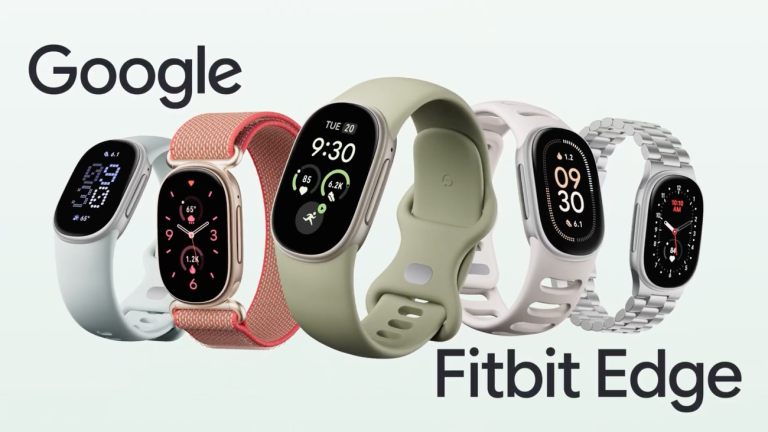
Fitbit Edge Review 2026: $179.99 Price, 7-Day Battery, HSA/FSA Status
Fitbit Edge first look: $179.99 price, 7-day replaceable battery, what studies of earlier Fitbits show about AFib alerts, ECG, heart rate and sleep, and HSA/FSA status.

From Epigenetic Speedometers to AI Drug Design, Science Is Learning to Reverse Aging at Its Source
Three landmark studies are transforming how scientists understand biological aging in 2026. From epigenetic clock data predicting mortality over 24 years, to brain training that reverses a decade of neural…

WHOOP MG Review 2026: $359 Price, FDA-Cleared ECG, HSA/FSA Status
WHOOP MG first look: $359 Life membership, FDA-cleared ECG, the blood pressure warning letter, what studies show on WHOOP heart rate, HRV and sleep, and HSA/FSA status.

How to Read a Healthcare AI Press Release
The healthcare AI press release is often the version of a claim most people ever encounter. This field guide shows how to read one in under ten minutes, using eight…
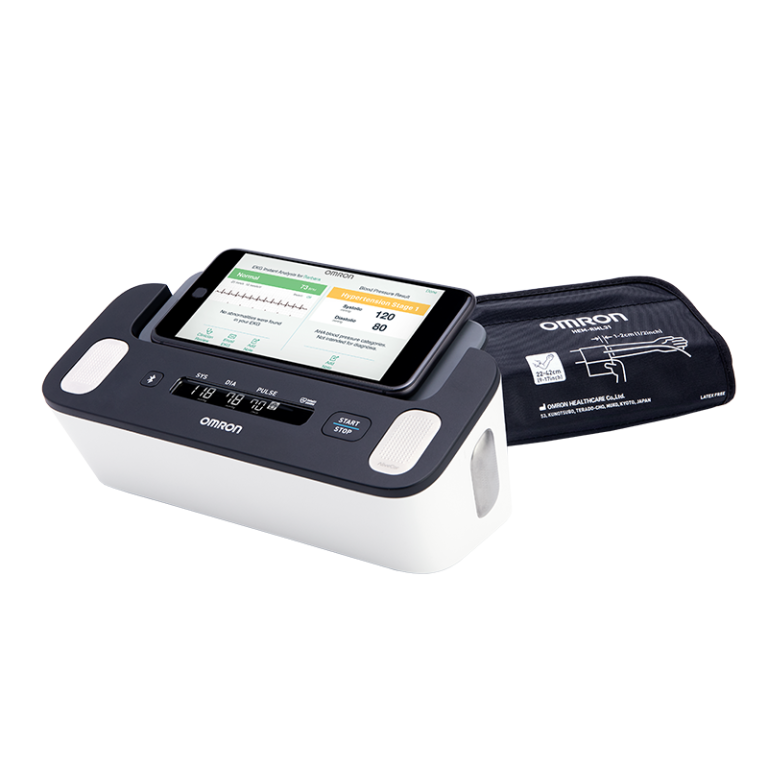
Omron Complete: FDA Cleared Blood Pressure Monitor With Built In ECG for AFib Detection
The most affordable FDA cleared device that combines upper arm blood pressure measurement with a single lead ECG for atrial fibrillation screening, built on AliveCor’s proven detection technology. Presented By…

NuvoAir Home Spirometer Review: FDA Cleared At Home Lung Function Monitoring for Asthma and COPD
The NuvoAir Home Spirometer brings clinical grade lung function testing out of the pulmonologist’s office and into daily home monitoring for the 300 million people worldwide living with respiratory disease….