
The Daily Rounds: Longevity & Health Care Brief | May 18, 2026
Your daily briefing on the science of living longer, better. Covering the past 24 to 48 hours in longevity, medicine, and healthspan research.
Presented By Our Partners



🧠 NEUROLOGY & COGNITIVE HEALTH
🧠 Low Brain Choline Levels Linked to Anxiety Disorders in Meta-Analysis
A meta-analysis of 25 studies found that people with anxiety disorders have approximately 8% lower levels of choline in the brain compared to healthy controls, with the strongest signal appearing in the prefrontal cortex, the region governing emotional control and decision-making. Researchers believe the chronic fight-or-flight activation characteristic of anxiety disorders may deplete the brain’s available choline stores faster than the body can replenish them. Scientists say the finding is the first clear chemical brain pattern associated with anxiety and could point toward nutrition-based therapeutic approaches.
🧠 Everyday Speech Pauses Linked to Executive Function Decline
New research finds that everyday speech patterns, including hesitations and word-finding failures, correlate closely with executive function scores and could serve as an early passive biomarker for cognitive decline in aging populations. The findings suggest that speech-based monitoring tools, increasingly accessible via smartphones and voice assistants, could enable continuous, low-burden cognitive tracking without formal neuropsychological assessments. Researchers say speech analysis may help detect subtle cognitive changes months before they become clinically apparent.
📌 Read more → EAN Research Highlights
❤️ CARDIOVASCULAR HEALTH
❤️ Inflammation Confirmed as Primary Heart Disease Driver, Colchicine Cuts Events by 31%
Scientific American’s May 2026 cover story consolidates years of clinical trial evidence confirming that chronic inflammation, not just cholesterol, is a central driver of heart attacks and strokes, with data showing that low-dose colchicine reduces cardiac events by up to 31% in eligible patients. Up to a quarter of heart attack patients have no traditional risk factors, and inflammation may explain much of this residual risk that statins and blood pressure drugs do not address. Cardiologists say the evidence is strong enough to consider inflammation-based risk stratification and anti-inflammatory treatment in broader patient populations.
📌 Read more → Scientific American
❤️ Osteopontin Protein in Immune Cells Drives Atrial Fibrillation via Fibrosis
Research published in Nature Cardiovascular Research identifies osteopontin, produced by TREM2+ macrophages, as a key driver of atrial fibrosis and uneven electrical conduction that increases atrial fibrillation susceptibility, with antibody-based silencing of the Spp1 gene reducing fibrotic remodeling in animal models. The study maps a specific immune-fibrosis pathway in cardiac tissue that could be targeted with antibody therapeutics already in development for other indications. Scientists say the finding may open a targeted prevention strategy for the world’s most common cardiac arrhythmia.
📌 Read more → Nature Cardiovascular Research
❤️ Stanford’s My Heart Counts Reaches 100,000 Participants With New AI Coaching Feature
Stanford Medicine’s My Heart Counts platform has enrolled more than 100,000 participants and launched an AI coaching layer that delivers personalized heart health guidance based on continuous activity and cardiovascular data, transforming passive monitoring into interactive longitudinal research at unprecedented scale. The platform is now among the largest real-world cardiovascular studies ever conducted via a smartphone app, with data informing researchers on activity, sleep, and cardiac biomarkers across diverse populations. Scientists say integrating AI coaching into digital research platforms may improve participant engagement, data quality, and adherence over multi-year study windows.
📌 Read more → Stanford Medicine
🔬 CELLULAR HEALTH, SENOLYTICS & EPIGENETICS
🔬 FDA Clears First Human Trial of Partial Epigenetic Reprogramming Therapy
The FDA cleared ER-100, the first partial epigenetic reprogramming therapy to enter human clinical trials, designed to rejuvenate damaged retinal cells in patients with age-related macular degeneration by partially resetting epigenetic age signatures in target tissue. The clearance marks a historic milestone for the reprogramming field, which has spent a decade demonstrating in animal models that partial methylation clock resets can restore function to aged and damaged tissues. Scientists say success in this initial trial would validate the platform and accelerate reprogramming programs aimed at other aging-related conditions.
Featured Partner
Invest in the Infrastructure Behind Modern Medicine
As healthcare expands beyond hospital walls, the buildings and campuses supporting that shift are generating compelling returns for investors who move early. The Healthcare Real Estate Fund offers qualified investors direct access to a curated portfolio of medical office, outpatient, and specialty care facilities.
Learn More →
📌 Read more → Longevity Technology
🔬 Precision Senotherapy Review Maps Three Next-Generation Strategies Beyond First-Wave Senolytics
A major review in npj Aging synthesizes the emerging field of precision senotherapy, identifying three post-first-generation strategies: immune-based senolysis using CAR T cells engineered to target senescent cell surface markers, tissue-precision PROTACs that selectively degrade anti-apoptotic proteins in specific organs, and microbiome-epigenetic modulation via the gut-liver axis using butyrate to enhance senolytic drug activity. The review argues that broad-spectrum senolytics like dasatinib-quercetin have demonstrated proof-of-concept but suffer from systemic toxicity and tissue non-specificity that precision approaches can overcome. Scientists say the field is entering a phase where targeted senescent cell elimination becomes clinically tractable for specific aging pathologies.
🤖 AI IN MEDICINE & DRUG DISCOVERY
🤖 Insilico Medicine Launches PandaClaw Autonomous Agent for Drug Target Discovery
Insilico Medicine released PandaClaw, an autonomous AI agent with a natural language interface that helps researchers identify drug targets, uncover new disease indications, and build disease hypotheses without manual data query and synthesis, drawing on the company’s generative biology platform. The launch coincides with Insilico’s first fully AI-designed drug, INS018_055, advancing through Phase II clinical trials, providing real-world validation that AI-generated candidates can survive clinical scrutiny. PandaClaw represents a step toward fully agentic drug discovery workflows that dramatically compress the hypothesis-to-candidate timeline.
🤖 AI Drug Discovery Market Set to Double by 2031 as Clinical Candidates Multiply
The global AI in Drug Discovery Market is forecast to grow from USD 1.13 billion in 2025 to USD 2.29 billion by 2031 at a 12.49% CAGR, as AI-designed clinical candidates from companies including Insilico, Iambic, and Generate multiply across oncology, neurodegeneration, and aging. Pfizer’s AI-accelerated pipeline has scanned millions of compounds and identified viable candidates within 30 days, exemplifying the speed advantage AI-driven discovery delivers at scale. Analysts say the transition from AI as a discovery accelerant to AI as a primary drug generator is now underway, with multiple fully AI-designed molecules already in Phase II trials.
⌚ WEARABLES, BIOMARKERS & PRECISION HEALTH
⌚ Skin-Interfaced Neck Patch Continuously Monitors Respiratory Sleep Biomarkers
Researchers published results in PNAS on a wireless wearable patch adhering to the base of the neck that uses low-power multimodal mechanoacoustic sensors to continuously measure respiratory rate, snoring patterns, and body orientation during sleep, enabling at-home sleep disorder assessment without polysomnography. The device demonstrated accuracy comparable to clinical-grade overnight monitoring in early validation studies and transmits data wirelessly to a companion app. Scientists say skin-interfaced respiratory monitors could expand sleep apnea screening to populations who lack access to clinical sleep labs or decline overnight facility stays.
⌚ Apple Heart Study Insights Highlight Equity Gaps in Digital Atrial Fibrillation Screening
A News & Views analysis in Nature Cardiovascular Research examines findings from the Apple Heart Study on digital screening for atrial fibrillation and raises important equity concerns, noting that wearable-based AFib detection programs disproportionately enroll higher-income, younger, and whiter populations, potentially missing high-risk groups. The commentary calls for deliberate equity-by-design frameworks in digital health screening programs that ensure new detection technologies reach the patients most likely to benefit. Scientists say the issue extends well beyond AFib to virtually every wearable-based disease screening initiative.
📌 Read more → Nature Cardiovascular Research
🦠 GUT MICROBIOME & IMMUNE HEALTH
🦠 Gut Bacteria Determine Whether Dietary Asparagine Feeds Tumors or Activates Immunity
Research from Weill Cornell Medicine found that specific gut bacteria determine whether dietary asparagine, an amino acid abundant in protein-rich foods, is directed toward fueling tumor growth or activating immune cells against cancer, suggesting microbiome composition is a critical variable in immunotherapy response. The findings indicate that future cancer protocols could pair immunotherapy with personalized dietary plans or targeted probiotics that shift the gut environment to favor immune activation over tumor nourishment. Scientists say the work opens a new axis connecting gut ecology, amino acid metabolism, and cancer immunology with direct clinical implications.
📌 Read more → Weill Cornell Medicine
🦠 GMFH Summit 2026: Personalized Microbiome-Based Nutrition Now Clinically Actionable
The Gut Microbiota for Health World Summit 2026 highlighted that personalized dietary interventions based on an individual’s metabolome and gut microbiome composition are transitioning from research settings to clinically actionable strategies, with data confirming that people respond to identical foods in vastly different ways based on their microbial ecosystem. Summit research also showed that cardiovascular benefits of high-fiber diets are fiber-structure-specific and mediated through microbiome shifts, not simply fiber quantity, with isolated synthetic fiber supplements failing to replicate whole-food effects in over 80% of interventions. Organizers said the field is mature enough to support microbiome-guided dietary prescriptions in primary care.
📌 Read more → Gut Microbiota for Health
🥗 NUTRITION & METABOLIC HEALTH
🥗 Time-Restricted Eating Combined With Exercise Outperforms Exercise Alone in 19-RCT Meta-Analysis
A meta-analysis of 19 randomized controlled trials published by the American Society for Nutrition found that combining time-restricted eating with exercise was significantly more effective than exercise alone at reducing body weight, fat mass, and improving lipid profiles including triglycerides and LDL cholesterol. The findings suggest that meal timing interacts synergistically with exercise-induced metabolic adaptations, and that neither intervention in isolation produces the metabolic improvements achieved by their combination. Researchers say the results support incorporating meal timing protocols alongside exercise prescriptions for patients managing obesity, insulin resistance, or metabolic syndrome.
📌 Read more → American Society for Nutrition
🥗 12-Week Exercise Study Reveals Metabolic Compensation Limits Weight Loss but Preserves Benefits
A study published in Communications Medicine mapping multilevel metabolic adaptations to aerobic exercise training found that 12 weeks of supervised walking induced energy compensation through reduced resting metabolic rate, improved movement efficiency, and selective shrinkage of highly metabolic organs including the liver and kidneys, limiting net weight loss while still producing substantial improvements in insulin sensitivity and lipid metabolism. The research provides a mechanistic explanation for why exercise alone often underperforms weight loss expectations while still delivering significant metabolic health benefits. Scientists say the findings reinforce combined nutritional and exercise strategies to overcome metabolic compensation and achieve durable body composition changes.
📌 Read more → Communications Medicine
📌 TODAY’S TOP TAKEAWAYS
- 🧠 Brain Choline Deficit Drives Anxiety — A 25-study meta-analysis finds 8% lower brain choline in anxiety disorder patients, the first chemical brain pattern clearly linked to anxiety.
- ❤️ Inflammation Cuts Cardiac Events by 31% — Scientific American confirms chronic inflammation is a primary heart disease driver and colchicine reduces events by nearly a third in clinical trials.
- 🔬 First Epigenetic Reprogramming Trial Enters Humans — FDA clearance of ER-100 marks the first human test of partial epigenetic reprogramming to rejuvenate aged tissue.
- 🦠 Gut Microbiome Redirects Amino Acids Against Cancer — Weill Cornell research shows microbiome composition determines whether dietary asparagine feeds tumors or boosts immune defense.
- 🥗 Meal Timing Amplifies Exercise Metabolic Benefits — A 19-RCT meta-analysis confirms time-restricted eating plus exercise outperforms exercise alone for fat loss and cardiometabolic health.
Sources compiled from ScienceDaily, Scientific American, Nature Cardiovascular Research, Longevity Technology, npj Aging, pharmaphorum, GlobeNewswire, Stanford Medicine, PNAS, Weill Cornell Medicine, Gut Microbiota for Health, American Society for Nutrition, Communications Medicine. Published: May 18, 2026.


Similar Posts
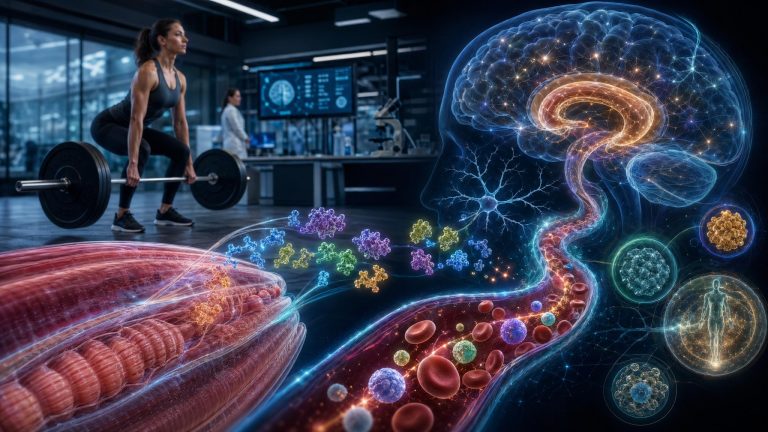
The Brain-Strength Connection: Why 2026 Research Is Making Resistance Training a Front-Line Therapy for Cognitive Aging
A new generation of human trials and mechanistic studies is converging on a striking conclusion: resistance training does not merely preserve muscle. It signals the brain. Inside the myokine biology,…
Upright GO 2 Posture Trainer: Wearable Biofeedback for Spinal Alignment
The average office worker spends over 10 hours per day seated. The cumulative biomechanical toll of that posture, compounded across years and decades, is one of the most underappreciated threats…

The NAD+ Renaissance: How a Cellular Fuel Molecule Is Rewriting the Science of Brain Aging, Sleep, and Neurodegeneration
A landmark Nature Aging expert review by 25 scientists, a Science Advances study showing NAD+ reverses Alzheimer’s memory deficits through RNA splicing, and the first human evidence that oral NAD+…

Move More, Sit Smarter, Sleep Better: How Three Lifestyle Shifts Can Cut Your Dementia Risk by 25%
Two landmark studies published in April 2026, drawing on data from millions of adults, have converged on a striking finding: the daily decisions you make about moving, sitting, and sleeping…

AI Is Now Building Drugs That Target Aging Itself: Inside the Longevity Board and the New Science of Healthspan Medicine
A Nobel laureate on its board. The world’s largest pharmaceutical company as a founding partner. And a scientific mission to build drugs that target aging itself. Inside Insilico Medicine’s Longevity…

The GLP-1 Telehealth Transparency Scorecard: What a Platform Should Show Before You Trust It
A 20-point, source-backed framework for evaluating what a GLP-1 telehealth service discloses about medication identity, clinical accountability, pharmacy source, full cost, follow-up, claims, reviews, and commercial influence.
