
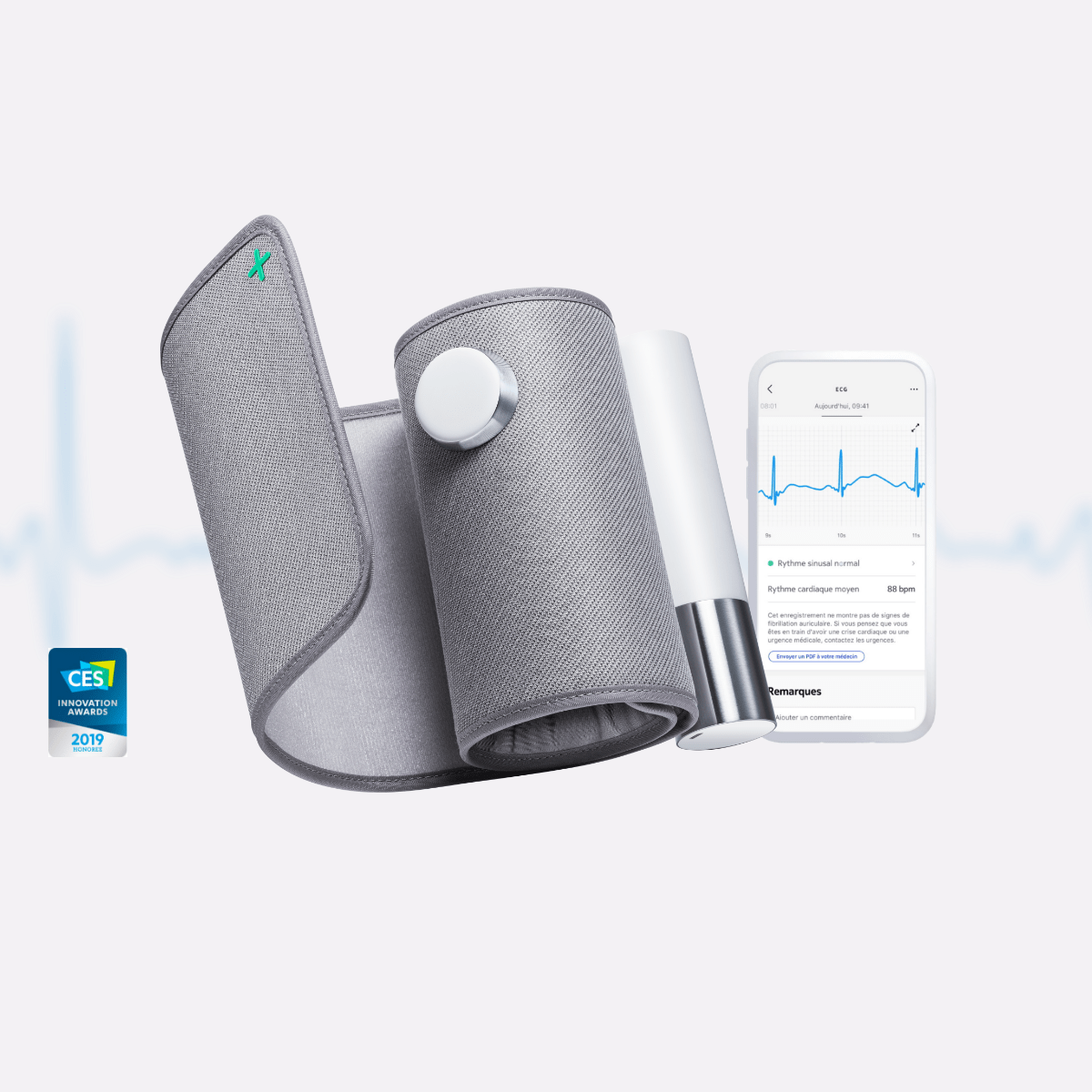
Withings BPM Core: Blood Pressure, ECG, and Digital Stethoscope in One Device
The most comprehensive home cardiac monitor available combines blood pressure measurement, a single lead ECG, and a digital stethoscope for valvular heart disease screening in a single arm cuff.
Presented By Our Partners



Valvular heart disease affects approximately 2.5% of the general population, but prevalence rises sharply with age, reaching 13% in adults over 75. Most cases develop slowly and silently, often going undetected until they produce symptoms significant enough to prompt clinical evaluation. The diagnostic gold standard remains echocardiography, but access to routine cardiac imaging is limited by cost, availability, and the simple fact that most patients do not present for evaluation until disease has progressed substantially.
A 2022 review published in Nature Reviews Cardiology by Schutte, Kollias, and Stergiou examined the evolution of blood pressure measurement and monitoring technologies, noting that while traditional cuff based monitors remain the evidence based reference for blood pressure assessment, the integration of additional cardiac sensors into home monitoring devices represents a meaningful expansion of what patients can track between clinical visits. The question driving this category is straightforward: can a device used at home for routine blood pressure checks also screen for conditions that typically require a clinical visit to detect?
The Withings BPM Core is the most ambitious attempt to answer that question. It combines three distinct cardiac assessments, blood pressure, electrocardiogram, and digital auscultation, into a single arm cuff device designed for home use.
What Is the Withings BPM Core?
The Withings BPM Core is a connected upper arm blood pressure monitor that integrates a single lead ECG sensor and a digital stethoscope into its cuff housing. In a single measurement session lasting approximately 90 seconds, the device captures blood pressure (systolic and diastolic), pulse rate, a 30 second single lead electrocardiogram for atrial fibrillation screening, and a phonocardiogram recording analyzed for signs of valvular heart disease, specifically the most common heart valve conditions.
The device holds FDA clearance for its blood pressure monitoring function. Its ECG and digital stethoscope capabilities carry CE marking for the European market, where the device is positioned as a three in one cardiac screening tool. In the United States, the ECG and stethoscope functions are available but marketed under general wellness positioning rather than specific FDA cleared diagnostic claims.
The BPM Core syncs via Wi-Fi and Bluetooth to the Withings Health Mate app, which stores all three types of measurements, provides trend analysis, and generates physician ready PDF reports. Like the BPM Connect, it requires no subscription for full functionality. It supports multiple user profiles and features a built in LED display for immediate blood pressure readout. The device retails at $249.95 and is confirmed HSA and FSA eligible.
The Science Behind Combined Cardiac Monitoring
The clinical rationale for combining blood pressure, ECG, and auscultation in a single device rests on the interconnection of these measurements in cardiovascular risk assessment.
Hypertension is the most prevalent modifiable risk factor for cardiovascular disease. Atrial fibrillation is the most common sustained cardiac arrhythmia, affecting an estimated 37.6 million people globally, and is a leading cause of stroke. Valvular heart disease, while less prevalent in younger populations, becomes increasingly common with age and represents a significant source of morbidity in older adults.
These three conditions frequently coexist. Hypertension is a major risk factor for developing atrial fibrillation. Atrial fibrillation can both cause and result from valvular heart disease. And all three independently increase cardiovascular mortality risk. A device that screens for all three simultaneously addresses a broader cardiovascular risk profile than any single measurement can capture.
The BASEL Wearable Study published in 2023 in JACC: Clinical Electrophysiology by Mannhart et al. validated the concept of consumer device ECG screening by testing five smart devices in 201 patients. While the study focused on wrist worn devices rather than arm cuff monitors, it established that consumer grade single lead ECG hardware can produce clinically interpretable tracings. Sensitivity for atrial fibrillation detection ranged from 58% to 85% across devices, with 17% to 26% of tracings flagged as inconclusive by automated algorithms. Importantly, manual physician review could determine the rhythm in 99% of inconclusive cases.
A 2020 study published in PLoS One by Lown et al. demonstrated that machine learning algorithms applied to consumer wearable heart rate data could achieve 100% sensitivity and 97.6% specificity for atrial fibrillation detection in a validation cohort, underscoring the technical potential for consumer grade cardiac screening when sophisticated algorithms are applied to raw sensor data.
The digital stethoscope component adds a dimension that no other consumer home monitoring device currently offers. While digital stethoscopes have been used in clinical settings for years, embedding one in a blood pressure cuff that patients use at home represents a novel approach to longitudinal cardiac auscultation. The clinical validation data for this specific application in a home setting remains limited compared to the more established evidence base for consumer ECG screening.
What the Withings BPM Core Does Well
The BPM Core’s defining strength is consolidation. Rather than requiring three separate devices or clinical visits to assess blood pressure, heart rhythm, and heart sounds, the BPM Core captures all three in a single 90 second session. This consolidation reduces the number of separate monitoring tasks a patient must remember, which is a meaningful compliance advantage for older adults managing multiple cardiovascular risk factors.
The blood pressure measurement function uses the same validated oscillometric technology found in clinical arm cuff monitors, delivered through a cuff that fits arm circumferences of 22 to 42 cm. The built in LED display provides immediate blood pressure results, while the ECG and stethoscope data are analyzed in the Health Mate app.
Featured Partner
Invest in the Infrastructure Behind Modern Medicine
As healthcare expands beyond hospital walls, the buildings and campuses supporting that shift are generating compelling returns for investors who move early. The Healthcare Real Estate Fund offers qualified investors direct access to a curated portfolio of medical office, outpatient, and specialty care facilities.
Learn More →
The Health Mate integration creates a unified timeline of all three measurement types, making it possible to observe correlations over time: does blood pressure elevation coincide with rhythm changes? Do heart sound patterns shift in parallel with other cardiovascular markers? This longitudinal, multi parameter view is something that episodic clinical visits cannot easily replicate.
For patients already using other Withings products (the Body Scan scale, ScanWatch, BPM Connect), the BPM Core feeds into the same Health Mate ecosystem, creating a comprehensive cardiovascular dashboard from multiple data sources. The physician PDF report consolidates all of this data into a format designed for clinical review.
Pricing, Access, and Practical Realities
The Withings BPM Core retails at $249.95 with no subscription requirement. This positions it at roughly 2.5 times the cost of the BPM Connect ($99.95), with the premium covering the integrated ECG and digital stethoscope capabilities. Total first year cost is the purchase price alone.
The device is confirmed HSA and FSA eligible, allowing eligible purchasers to use pre tax healthcare dollars. For patients prescribed home cardiac monitoring by their cardiologist, the reimbursement pathway through HSA/FSA accounts makes the device more accessible than the retail price suggests.
The regulatory status requires careful explanation. The BPM Core’s blood pressure monitoring function is FDA cleared. The ECG and digital stethoscope functions carry CE marking for the European market. In the United States, these additional functions are available to users but are not marketed with specific FDA cleared diagnostic claims. This means the ECG and stethoscope data can be shared with and interpreted by a physician, but the device itself does not make autonomous diagnostic determinations for these functions in the US market.
The device uses a rechargeable battery and charges via micro USB. Withings does not publish specific battery life estimates for the BPM Core, but users generally report several months of use between charges with regular daily measurements.
Who the Withings BPM Core Is Best For
The BPM Core is best suited for patients with known cardiovascular disease or multiple cardiovascular risk factors who want comprehensive home monitoring beyond blood pressure alone. Patients with a history of atrial fibrillation who also need blood pressure monitoring will find the combined device particularly efficient. Older adults at increased risk for valvular heart disease who want longitudinal screening between clinical visits represent another core audience.
Cardiologists who prescribe home monitoring for their patients may find the BPM Core’s three in one approach useful for increasing the scope of data available between office visits. The physician report feature creates a practical pathway for incorporating home collected data into clinical decision making.
Users who need blood pressure monitoring only should save $150 by choosing the Withings BPM Connect instead. Users seeking continuous, wrist worn ECG monitoring may prefer the Withings ScanWatch or Apple Watch, which provide passive rhythm monitoring throughout the day rather than requiring an active measurement session. Users who want a dedicated, clinical grade ECG recorder should consider AliveCor’s KardiaMobile line, which focuses exclusively on ECG with deeper clinical validation for arrhythmia detection.
How the Withings BPM Core Compares
Against the Withings BPM Connect ($99.95), the BPM Core adds ECG and digital stethoscope capabilities at a $150 premium. Both share the same blood pressure measurement methodology, Wi-Fi and Bluetooth connectivity, Health Mate integration, and HSA/FSA eligibility. The choice between them depends on whether the additional cardiac screening functions justify the higher price for the individual user’s clinical situation.
Against the Omron Complete ($99.99), which combines blood pressure monitoring with a single lead ECG, the BPM Core adds the digital stethoscope for valvular screening but costs $150 more. The Omron Complete holds FDA clearance for both its blood pressure and ECG functions in the US, which gives it a regulatory advantage for the ECG component over the BPM Core’s CE marking only status for ECG in the US market.
Against the AliveCor KardiaMobile 6L ($149), the comparison shifts entirely. The KardiaMobile 6L provides a six lead ECG with FDA clearance for six arrhythmia determinations, making it the more clinically advanced consumer ECG device. However, it does not measure blood pressure or heart sounds. The BPM Core offers breadth of measurement; the KardiaMobile 6L offers depth of ECG capability.
Limitations and Open Questions
The split regulatory status is the BPM Core’s primary limitation for US consumers. While the blood pressure function is FDA cleared, the ECG and stethoscope functions rely on CE marking rather than FDA clearance in the US. This means the two features that most differentiate the BPM Core from a standard connected blood pressure monitor lack the specific regulatory validation that US consumers may expect at this price point.
Published clinical validation data specific to the BPM Core’s digital stethoscope function in home settings is limited. While digital stethoscopes are well established in clinical use, the specific accuracy and clinical utility of embedded stethoscope screening during home blood pressure measurement has not been extensively studied in large scale trials.
Like all arm cuff monitors, the BPM Core requires intentional measurement sessions. It cannot provide continuous monitoring, nighttime readings, or capture events that occur between active measurement sessions. The device is also larger and less portable than wrist worn alternatives, making it a home use device rather than a travel or daily carry option.
The micro USB charging interface is a minor but notable limitation, as the industry has largely transitioned to USB C. Future device revisions will likely address this.
What This Means for Your Health
Cardiovascular disease represents one of the Four Villains threatening human longevity, and its primary precursors, hypertension, atrial fibrillation, and valvular heart disease, develop quietly over years before producing obvious symptoms. The Withings BPM Core addresses this reality by consolidating three distinct cardiac screening functions into a single home device, making it possible to monitor multiple cardiovascular risk markers with a single 90 second daily routine.
Within Healthcare Discovery‘s Five Pillars framework, the BPM Core serves the Movement and Breathwork pillars by providing feedback on how exercise and stress management practices affect blood pressure and heart rhythm over time. It also supports the Nutrition pillar by enabling users to observe how dietary changes, particularly sodium reduction and metabolic health improvements, translate into measurable blood pressure changes.
The longevity principle at work here is early detection through consistent monitoring. Cardiovascular conditions detected early respond far better to intervention than conditions discovered after significant damage has accumulated. A device that screens for hypertension, arrhythmia, and valvular abnormalities during a routine morning check creates opportunities for early clinical intervention that waiting for symptoms simply cannot match.
If you are over 50, have a family history of cardiovascular disease, or manage multiple risk factors, the comprehensive monitoring approach of the BPM Core may offer meaningful clinical value beyond what a standard blood pressure cuff provides. Discuss the device with your cardiologist, share the data it generates, and use it as a bridge between home monitoring and clinical care rather than a replacement for professional evaluation.

Explore the full wearable guide
See how the Withings BPM Core compares with smart rings, watches, ECG devices, and other connected health hardware across the full Healthcare Discovery wearables guide.
Frequently Asked Questions
Is the Withings BPM Core FDA cleared?
The BPM Core’s blood pressure monitoring function is FDA cleared. Its ECG and digital stethoscope functions carry CE marking for the European market. In the United States, these additional functions are available to users but are positioned under general wellness rather than specific FDA cleared diagnostic claims. The blood pressure measurement uses the same validated oscillometric technology found in clinical grade monitors.
What does the digital stethoscope in the BPM Core detect?
The BPM Core’s integrated digital stethoscope records heart sounds (phonocardiogram) during each measurement session and analyzes them for signs of valvular heart disease, specifically the most common valve conditions. The analysis is presented in the Health Mate app and can be shared with a physician. It is a screening tool, not a diagnostic instrument; abnormal findings should prompt follow up clinical evaluation including echocardiography.
Does the Withings BPM Core require a subscription?
No. All features, including blood pressure measurement, ECG recording, digital stethoscope analysis, Wi-Fi and Bluetooth sync, multi user support, and physician PDF report generation, work without any subscription. The total cost is the $249.95 purchase price with no ongoing fees.
Is the Withings BPM Core HSA or FSA eligible?
Yes. Withings confirms HSA and FSA eligibility for the BPM Core through a Letter of Medical Necessity. This allows eligible purchasers to use pre tax healthcare dollars, which can reduce the effective cost significantly depending on the user’s tax bracket.
How does the BPM Core compare to the BPM Connect?
Both devices share the same FDA cleared blood pressure measurement technology, Wi-Fi and Bluetooth connectivity, Health Mate integration, and no subscription requirement. The BPM Core adds a single lead ECG for atrial fibrillation screening and a digital stethoscope for valvular heart disease screening at a $150 premium ($249.95 vs $99.95). Users who need blood pressure monitoring only should choose the BPM Connect; users with broader cardiovascular monitoring needs may benefit from the BPM Core’s additional capabilities.
Withings BPM Core at a glance
- Hardware price
- $249.95
- Subscription
- None required
- First year total
- $249.95
- Form factor
- Connected BP monitor + ECG (arm cuff)
- FDA status
- Has FDA clearance
- HSA/FSA
- Possibly, with a letter of medical necessity
Measures Blood pressure, Digital stethoscope, ECG, Pulse
Maintained in the Healthcare Discovery device database and updated automatically.


Similar Posts

The First Human Reprogramming Trial Is an Eye Study—Not Proof of Age Reversal
ER-100 has entered an 18-person Phase 1 eye trial. Here is what partial epigenetic reprogramming has—and has not—shown in humans.

Fora 6 Connect: The Multi-Parameter Meter for Glucose, Ketones, and Uric Acid
A single handheld meter that measures five biomarkers from a fingerstick: blood glucose, blood ketones, uric acid, hemoglobin, and hematocrit, making it the most versatile point-of-care device available to consumers….

The First Human Epigenetic Reprogramming Trial Has Begun: Inside ER-100 and What It Means for the Future of Aging Medicine
For the first time in history, a therapy designed to reverse the cellular age of human tissue is being tested in living patients. Here is what the science actually shows,…

Collagen Review 2026: Evidence Grade, Best Form, Side Effects
Collagen earns a modest, well-documented place in osteoarthritis care, a contested one in skin care, and almost nothing at all for the gut, hair, nails and weight claims that sell…
Tempdrop 2.0 Fertility Monitor: Wearable BBT Tracking for Cycle Intelligence
Continuous overnight temperature sensing is transforming how women understand their cycles, but the science behind basal body temperature reveals both remarkable potential and persistent gaps. Presented By Our Partners Every…
InsideTracker InnerAge 2.0: Blood Biomarker Testing for Biological Age
A blood biomarker testing platform that calculates your biological age from 20 blood markers, then delivers personalized nutrition and lifestyle recommendations to close the gap between your chronological and biological…
