
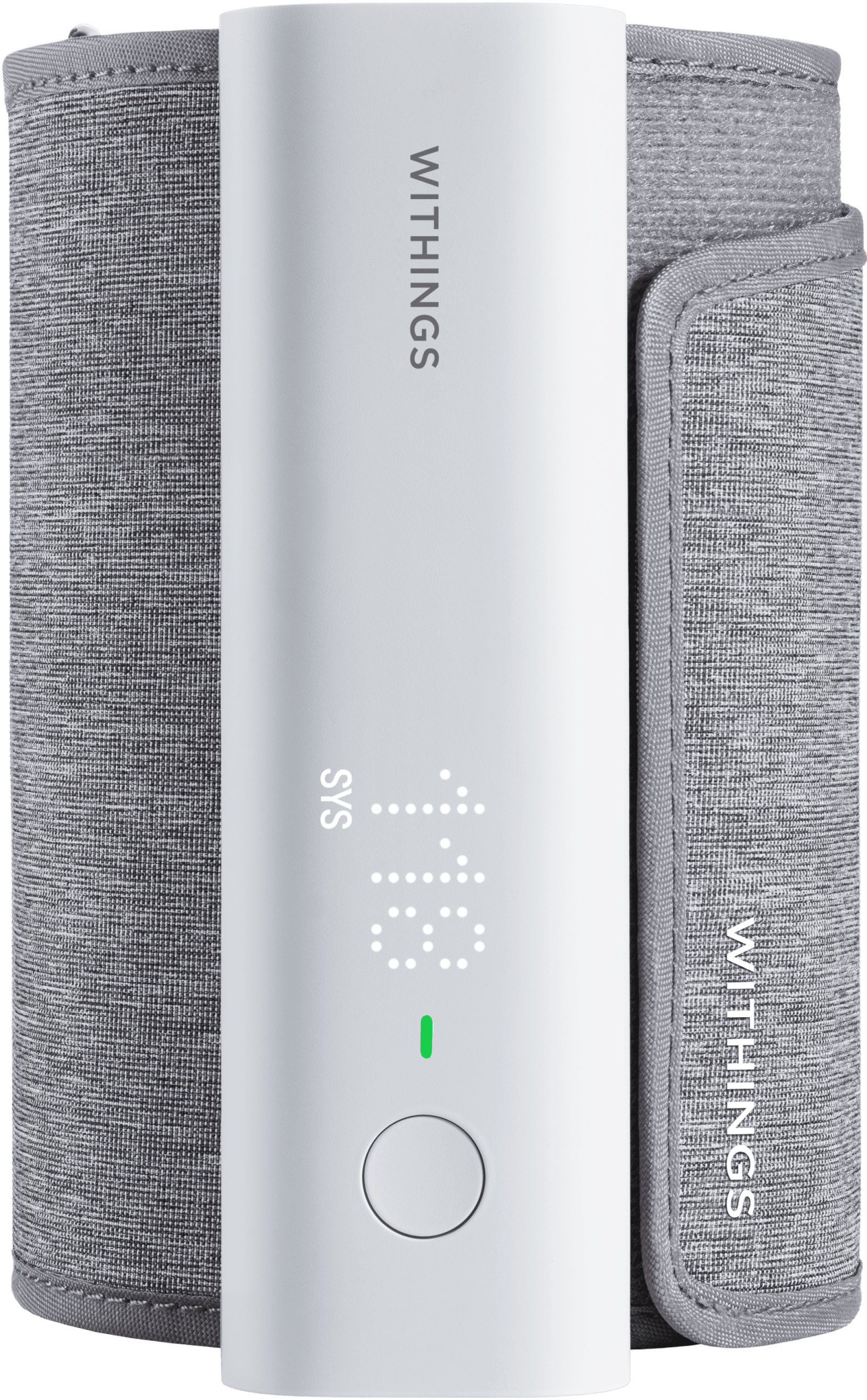
Withings BPM Connect Review: Validated Accuracy, Price, and Wi-Fi
Most home blood pressure monitors sold online have never been proven accurate; the Withings BPM Connect has, twice, and that matters more than its Wi-Fi.
Presented By Our Partners



Researchers in Tasmania once went shopping, on paper. They searched 59 online stores that would ship a home blood pressure monitor to Australia and catalogued every device they found: 972 in all. Then they checked each one against the published record of independent accuracy testing. Of the 278 upper-arm cuffs, 18.3 percent had been validated. Of the 532 wrist-band wearables, none had. Across the big international marketplaces that stocked most of the devices, only 5.5 percent had passed a recognized accuracy protocol (Hypertension, 2020).
That is the hidden problem with home blood pressure monitoring. A habit doctors widely recommend often rests on machines no one has checked.
The Withings BPM Connect, a Wi-Fi and Bluetooth upper-arm blood pressure monitor made by the French company Withings and launched in 2019, sits on the right side of that divide. It has passed the international accuracy standard in two independent studies, one in the general population and one in pregnancy, and it appears on the American Medical Association’s US Validated Device Listing. As of October 2026 it is still sold, now alongside Withings’ newer BPM Vision.
The short answer: The Withings BPM Connect (2019) is an FDA cleared upper-arm blood pressure cuff that syncs readings over Wi-Fi or Bluetooth. Unlike most monitors sold online, it has passed the international ISO 81060-2 accuracy standard in two independent studies and is on the AMA’s US Validated Device Listing. It is a good, accurate home monitor; the connectivity is a convenience, not the reason to trust it.
- Best for: adults with high or borderline blood pressure who want validated readings that log themselves and can be shared with a clinician.
- Not for: people whose arms fall outside the cuff’s size range, anyone wanting continuous or overnight readings, or buyers who only want the cheapest validated cuff.
- Price (October 2026): listed at $99.95 on Withings’ US store; retailer prices vary.
- Regulatory status: FDA cleared and CE marked blood pressure monitor (Withings).
- Evidence: Strong for accuracy; it passed the ISO 81060-2:2018 standard in 85 adults and in 45 pregnant women, though both studies were run by the same research group.
What is the Withings BPM Connect?
The Withings BPM Connect is an upper-arm, oscillometric blood pressure monitor made by Withings that measures systolic and diastolic pressure and heart rate, shows the result on a built-in display, and syncs it automatically to the Withings app over Wi-Fi or Bluetooth. Withings launched it in 2019 alongside the BPM Core, and it remains on sale as of October 2026.
You wrap the cuff around your upper arm, press the button, and the reading appears on the device’s own display. If the monitor is on your home Wi-Fi, the reading uploads to the Withings app without your phone nearby. That design targets a quiet problem with home monitoring: people stop writing numbers down.
Withings describes the BPM Connect as CE marked and FDA cleared. It sits in the middle of the company’s blood pressure line. Above it is the BPM Core, which adds an ECG and a digital stethoscope. Newer is the BPM Vision, which Withings unveiled at CES in January 2025 and launched in the US at about $150.
One change in October 2026 matters for anyone who uses Apple Health or Google Health Connect. Withings began requiring its paid Withings+ subscription to sync data to those platforms, at least for new customers, a move widely reported in tech coverage that month. Readings still sync to the Withings app itself, but if you planned to see your blood pressure in Apple Health alongside your other data, check the current subscription terms before you buy.
How does the Withings BPM Connect measure blood pressure?
The BPM Connect inflates its cuff until it squeezes the brachial artery in your upper arm shut, then slowly lets the pressure out. As blood begins to force its way through, the artery wall vibrates against the cuff, and those vibrations grow and fade in a pattern. The device’s algorithm reads that pattern to estimate systolic and diastolic pressure.
Every heartbeat sends a surge of blood into the arteries, and the pressure of that surge, the systolic number, pushes against the vessel walls. Between beats, the pressure falls to its lowest point, the diastolic number. A healthy artery is elastic; it stretches with each surge and recoils between them, a little like a garden hose that swells when you open the tap. In hypertension, the pressure stays high, and over years the arteries stiffen and thicken in response, which in turn pushes pressure higher still.
The classic way to measure that pressure is to listen. A clinician inflates a cuff, places a stethoscope over the artery at the elbow, and lets the air out slowly. The first tapping sound, as blood squeezes through a nearly closed artery, marks the systolic pressure; the moment the sounds disappear marks the diastolic. This auscultatory method, used with a mercury column, is the reference against which home monitors are judged.
Oscillometric monitors like the BPM Connect skip the stethoscope and feel instead of listen. As the cuff deflates, the pulsing artery makes the air pressure inside the cuff wobble, and those oscillations peak at roughly the mean arterial pressure. Each manufacturer uses its own algorithm to work back from that peak to systolic and diastolic values. That is why two oscillometric cuffs can give different readings on the same arm, and why each model has to be tested on its own. The method is sound. Any given algorithm still has to prove itself.
That proof is exactly what most devices on the market lack, and what the BPM Connect has.
How accurate is the Withings BPM Connect? What the research shows
The BPM Connect has passed the international ISO 81060-2:2018 accuracy standard in two independent studies. In 85 adults from the general population, its readings differed from trained observers using a mercury reference by an average of 0.6 mmHg systolic and 2.1 mmHg diastolic. It also passed in 45 pregnant women, including 15 with pre-eclampsia.
General population: comfortably inside the limits. The first study, published in Vascular Health and Risk Management in 2022, tested the BPM Connect using the Universal Standard (ISO 81060-2:2018), developed jointly by the Association for the Advancement of Medical Instrumentation, the European Society of Hypertension, and the International Organization for Standardization. The protocol is strict about who gets enrolled: participants must span set ranges of age, sex, blood pressure, and arm size, so a device cannot pass by being tested only on easy cases. Of 92 people screened, 85 were included. Two trained observers measured each participant’s blood pressure on the same arm with a mercury sphygmomanometer, alternating with the device.
The standard sets two pass marks. Under criterion 1, the device’s average error must be no more than 5 mmHg, with a standard deviation no greater than 8 mmHg. The BPM Connect’s mean difference was 0.6 plus or minus 5.3 mmHg for systolic pressure and 2.1 plus or minus 4.3 mmHg for diastolic. Under criterion 2, which looks at how consistent the error is within each person, the limit is about 6.9 mmHg for systolic and 6.6 for diastolic; the BPM Connect scored 4.2 and 3.6. It passed both with room to spare.
Pregnancy and pre-eclampsia: a harder test, also passed. Blood pressure behaves differently in pregnancy, and pre-eclampsia, a dangerous condition of high blood pressure and organ strain in the second half of pregnancy, raises the stakes for every reading. Validation experts recommend that devices be tested separately in special populations such as pregnant women, rather than assumed to work there. The same research group tested the BPM Connect in 45 women in the second and third trimesters: 15 with pre-eclampsia, 15 with gestational hypertension, and 15 with normal blood pressure (Vascular Health and Risk Management, 2022). Mean differences from the mercury reference were minus 0.5 plus or minus 5.7 mmHg systolic and minus 0.8 plus or minus 3.8 mmHg diastolic across all 45 women, and 0.14 plus or minus 5.5 and 0.39 plus or minus 3.7 mmHg in the women with pre-eclampsia. Both met the protocol’s limits.
Featured Partner
Invest in the Infrastructure Behind Modern Medicine
As healthcare expands beyond hospital walls, the buildings and campuses supporting that shift are generating compelling returns for investors who move early. The Healthcare Real Estate Fund offers qualified investors direct access to a curated portfolio of medical office, outpatient, and specialty care facilities.
Learn More →
Listed, not just published. Passing a study is the first step; being recognized by an independent registry is the second. The BPM Connect appears on the American Medical Association’s US Validated Device Listing at validatebp.org, a public registry of home monitors that meet its validation criteria. Internationally, STRIDE BP plays a similar role; the authors of the Tasmanian marketplace study urged buyers to check it before purchasing any blood pressure device.
The honest caveats. Both BPM Connect studies came from the same group of investigators, based in Armenia, France, and Switzerland, who have also validated other Withings monitors, including the BPM Core in 2023 and the BPM Pro 2 in 2026. The abstracts do not disclose funding, and independent replication by a second group would strengthen the case. The studies tested accuracy in a controlled setting, with trained observers and correct cuff placement; real-world readings depend on how you sit, how the cuff fits, and when you measure. And like every validation protocol for automated cuffs, these did not test people with atrial fibrillation, whose irregular rhythm can confuse oscillometric algorithms. For a framework on judging device claims like these, see our explainer on what “clinically validated” actually means.
What the Withings BPM Connect gets right
The BPM Connect gets the most important thing right: it is accurate by the standard that matters, and it is listed on the AMA’s validated device registry. Its connected design then removes the friction that makes most people give up on home monitoring.
Proven accuracy, in more than one population. Passing ISO 81060-2 in the general population puts it in the minority of devices for sale. Passing again in pregnancy and pre-eclampsia puts it in a smaller group still. For pregnant women whose clinicians want home readings, that second study is a genuine reason to choose it.
Readings that record themselves. The value of home monitoring comes from patterns over weeks, not single numbers. A monitor that timestamps and uploads every reading without a notebook or a phone in hand removes the step where most people quietly stop.
Data your clinician can use. The Withings app keeps a running record you can show your clinician. A clean record of morning and evening readings across a few weeks is exactly what a clinician needs to confirm a diagnosis or adjust treatment.
A display on the device. The reading appears on the monitor itself, so you get the number even when the app is not open.
Where the Withings BPM Connect falls short
The BPM Connect cannot measure continuously or during sleep, its accuracy data come from one research group, it was not validated for people with atrial fibrillation, and its cuff fits only a set range of arm sizes. Since October 2026, syncing to Apple Health or Google Health Connect has required a paid Withings+ subscription.
One moment at a time. Like every cuff monitor, it measures only when you press the button. It cannot capture blood pressure while you sleep or during spikes of stress. For a full 24-hour picture, clinicians use ambulatory monitors.
Cuff fit is everything. In the Cuff(SZ) randomized crossover trial of 195 adults at Johns Hopkins, using a regular-size cuff on people who needed a large cuff overestimated systolic pressure by 4.8 mmHg, and on people who needed an extra-large cuff by 19.5 mmHg (JAMA Internal Medicine, 2023). Using a regular cuff on smaller arms underestimated it by 3.6 mmHg. Check that your mid-upper-arm circumference falls within the BPM Connect’s stated cuff range before you buy; if it does not, a validated monitor with the right cuff size is the better choice.
Not validated in atrial fibrillation. Standard validation protocols exclude people with AFib. A 2019 meta-analysis of 13 studies found automated devices varied widely in AFib, and devices with irregular-rhythm detection measured no more accurately than others (Journal of Human Hypertension, 2019). If you have AFib, ask your clinician how to measure, and expect to average several readings.
A subscription for the sync many people wanted. Withings’ October 2026 change means Apple Health and Google Health Connect sync now requires Withings+. The core readings and the Withings app still work, but buyers who wanted their blood pressure in a single health dashboard should factor in the cost.
Monitoring alone does not lower blood pressure. In an individual patient data meta-analysis of randomized trials, self-monitoring by itself was not associated with lower blood pressure at 12 months; combined with intensive support such as medication adjustment by a clinician or pharmacist, it lowered systolic pressure by 6.1 mmHg (PLoS Medicine, 2017). The device gives you numbers. A plan turns them into change.
Withings BPM Connect vs BPM Core vs Omron Complete vs Hilo Core
The BPM Core adds an ECG and stethoscope and has its own ISO validation. The Omron Complete pairs a cuff with an ECG. The Hilo Core, the US successor to the Aktiia cuffless bracelet, estimates blood pressure through the day without inflating, but a 2026 European scientific statement does not recommend cuffless devices for clinical decisions.
| Feature | Withings BPM Connect | Withings BPM Core | Omron Complete | Hilo Core (cuffless) |
|---|---|---|---|---|
| Measurement | Upper-arm cuff, oscillometric | Upper-arm cuff, oscillometric | Upper-arm cuff, oscillometric | Optical wrist bracelet, calibrated by a cuff |
| ISO 81060-2 validation found | Yes, general population and pregnancy (2022) | Yes, general population (2023) | Not found in our search | Not applicable; cuffless devices need different protocols |
| Extra features | Wi-Fi and Bluetooth sync, display | ECG and digital stethoscope | ECG | Readings through the day and night |
| Recommended for diagnosis | Yes, as a validated home cuff | Yes, as a validated home cuff | Check the validated device registry | No; guidelines do not recommend cuffless devices for diagnosis |
If you also want an on-demand ECG, our Withings BPM Core review covers Withings’ premium cuff, and our Omron Complete review covers the main rival with an ECG. For a wrist alternative, see our Omron HeartGuide review. If you are curious about blood pressure without a cuff, our Hilo Core review explains what cuffless wearables can and cannot do, and our Aktiia Bracelet review covers the technology’s history. Browse all our cardiology device reviews.
How much does the Withings BPM Connect cost, and is it covered or HSA/FSA eligible?
As of October 2026, Withings’ US store lists the BPM Connect at $99.95; retailer prices vary. The monitor and the Withings app work without a subscription, but syncing to Apple Health or Google Health Connect now requires Withings+. We could not verify HSA or FSA eligibility, so check with your plan.
Practically, as of October 2026, the price question is about what you value. Validated upper-arm cuffs can cost less, and in the Tasmanian marketplace study the median validated cuff sold for about 101 Australian dollars, versus about 67 for unvalidated ones: accuracy tends to cost a little more. The BPM Connect’s premium over a basic validated cuff buys automatic logging, a display on the cuff, and Wi-Fi sync. For people who will reliably write readings down, a cheaper validated cuff is fine. For the many who will not, the automation is worth paying for.
We could not verify the BPM Connect’s HSA or FSA status, so confirm with your plan administrator. If a clinician recommends home monitoring, ask your insurer whether a monitor is covered before paying full price.
Who should use the Withings BPM Connect, and who should skip it?
The BPM Connect suits adults with high or borderline blood pressure, and pregnant women whose clinicians want home readings, who will benefit from automatic logging. It is the wrong choice for people whose arms fall outside its cuff range, those who want continuous monitoring, and buyers who only want the cheapest validated cuff.
Good candidates:
- Adults diagnosed with hypertension, or told their office readings are borderline, who need weeks of home readings to confirm or adjust treatment.
- Pregnant women whose clinicians want home monitoring, given its validation in pregnancy and pre-eclampsia.
- People who have tried manual logging and given up.
Better served by something else:
- Anyone with a very high reading together with chest pain, shortness of breath, weakness, vision changes, or trouble speaking: that is an emergency. Call 911.
- People whose arm circumference falls outside the cuff’s range: choose a validated monitor with the right cuff size.
- People who need overnight or 24-hour readings: ask a clinician about ambulatory monitoring.
- People with atrial fibrillation: talk to a clinician about how to measure, since automated cuffs are not validated in AFib.
If your home readings run high, the Healthcare Discovery doctor directory lists primary care physicians and cardiologists by state.
What this means for you
High blood pressure is the most common weapon of the Silent Assassin, cardiovascular disease, and one of the most treatable. In a 2016 Lancet meta-analysis of 123 trials and 613,815 people, every 10 mmHg reduction in systolic blood pressure cut the risk of major cardiovascular events by 20 percent, stroke by 27 percent, heart failure by 28 percent, and death from any cause by 13 percent. That is why a trustworthy number at home matters, and why blood pressure sits at the center of the story we tell in the Four Villains of Health and Longevity.
The American Heart Association and American Medical Association recommend validated home monitors, and their 2020 joint statement notes that home monitoring works best alongside co-interventions such as medication adjustment and lifestyle counseling. The BPM Connect handles the measurement. The Five Pillars handle much of the rest: Nutrition, especially sodium and potassium, shapes blood pressure directly; Movement lowers it; Sleep and Breath work on the stress hormones that push it up; and Mindset keeps you measuring long after the novelty wears off.
The Tasmanian researchers ended with simple advice: before you buy a blood pressure monitor, check that it has been validated. The BPM Connect clears that bar. Now the work is consistency: sit quietly for five minutes, rest your arm at heart level, measure morning and evening for a week, and bring the numbers to your clinician. An accurate number is the beginning of control, not the end of it.
Frequently asked questions
Is the Withings BPM Connect accurate?
Yes. In a 2022 study of 85 adults using the international ISO 81060-2:2018 standard, its readings differed from trained observers using a mercury reference by an average of 0.6 mmHg systolic and 2.1 mmHg diastolic, well within the limits. It also passed in 45 pregnant women, including 15 with pre-eclampsia. Accuracy at home still depends on correct cuff fit and measurement technique.
Is the Withings BPM Connect clinically validated?
Yes. It has passed the AAMI/ESH/ISO Universal Standard (ISO 81060-2:2018) in two independent studies, one in the general population and one in pregnancy, both published in 2022. It also appears on the American Medical Association’s US Validated Device Listing at validatebp.org, a registry clinicians and patients can use to check home blood pressure monitors. Both studies came from the same research group.
Does the Withings BPM Connect need a subscription?
Not for taking readings or using the Withings app. Since October 2026, however, syncing Withings data to Apple Health or Google Health Connect has required a paid Withings+ subscription, at least for new customers, according to widespread tech coverage of the change. If you want your blood pressure readings in Apple Health or another platform alongside your other data, check the current Withings+ terms before buying.
Can I use the Withings BPM Connect during pregnancy?
It has been validated for use in pregnancy. A 2022 study of 45 women in the second and third trimesters, including 15 with pre-eclampsia and 15 with gestational hypertension, found it met the international accuracy standard. Pregnancy blood pressure should always be managed with your obstetric clinician, who can tell you how often to measure and which readings need a call.
Withings BPM Connect vs BPM Core: which should you buy?
Buy the BPM Connect if you only need accurate, automatically logged blood pressure readings. Buy the BPM Core if you also want an on-demand ECG and digital stethoscope in the same device. Both have passed the ISO 81060-2 accuracy standard in independent studies, in 2022 and 2023 respectively, so the choice comes down to features and price rather than accuracy.
How do I check if a blood pressure monitor is validated?
In the US, search the American Medical Association’s US Validated Device Listing at validatebp.org; internationally, check STRIDE BP at stridebp.org. A 2020 study of 972 home monitors sold online found only 18.3 percent of upper-arm cuffs and none of 532 wrist-band wearables had been validated. “FDA cleared” alone does not mean a device passed an independent accuracy protocol.
Sources
- Picone DS, et al. Nonvalidated home blood pressure devices dominate the online marketplace in Australia: major implications for cardiovascular risk management. Hypertension, 2020. DOI
- Topouchian J, et al. Accuracy of the Withings BPM Connect device for self-blood pressure measurements in general population: validation according to the AAMI/ESH/ISO Universal Standard. Vascular Health and Risk Management, 2022. DOI
- Zelveian P, et al. Clinical accuracy of the Withings BPM Connect for self-blood pressure measurements in pregnancy and pre-eclampsia. Vascular Health and Risk Management, 2022. DOI
- Hakobyan Z, et al. Validation of the Withings BPM Core device for self-blood pressure measurements in general population. Vascular Health and Risk Management, 2023. DOI
- Zelveian P, et al. Accuracy of the Withings BPM Pro 2 (WPM07) device for self-blood pressure measurements in the general populations. Vascular Health and Risk Management, 2026. DOI
- Ishigami J, et al. Effects of cuff size on the accuracy of blood pressure readings: the Cuff(SZ) randomized crossover trial. JAMA Internal Medicine, 2023. DOI
- Clark CE, et al. Accuracy of automated blood pressure measurements in the presence of atrial fibrillation: systematic review and meta-analysis. Journal of Human Hypertension, 2019. DOI
- Tucker KL, et al. Self-monitoring of blood pressure in hypertension: a systematic review and individual patient data meta-analysis. PLoS Medicine, 2017. DOI
- Ettehad D, et al. Blood pressure lowering for prevention of cardiovascular disease and death: a systematic review and meta-analysis. Lancet, 2016. DOI
- Shimbo D, et al. Self-measured blood pressure monitoring at home: a joint policy statement from the American Heart Association and American Medical Association. Circulation, 2020. DOI
- American Medical Association. US Validated Device Listing: Withings BPM Connect. validatebp.org
- Withings. BPM Connect (product page, CE marked and FDA cleared). Withings
- Parati G, et al. Cuffless blood pressure monitoring devices: technical foundations and clinical implications. European Journal of Preventive Cardiology, 2026. DOI
- Withings. BPM Vision launch (press release), 2025. Withings
Withings BPM Connect at a glance
- Hardware price
- $99.95
- Subscription
- None required
- First year total
- $99.95
- Form factor
- Connected BP monitor (arm cuff)
- FDA status
- Has FDA clearance
- HSA/FSA
- Possibly, with a letter of medical necessity
Measures Blood pressure, Irregular heartbeat detection, Pulse
Pricing verified October 20, 2026. Maintained in the Healthcare Discovery device database and updated automatically.


Similar Posts
The Daily Rounds: Longevity & Health Care Brief | June 10, 2026
🧠 Ultra-Processed Foods Steal Your Focus: Even among healthy eaters, each 10% increase in ultra-processed food intake measurably impairs attention in a 2,100-person study. 🔬 A Single Gene Proves Evolution's Aging Trade-Off: Hebrew University's CRISPR study of vgll3 provides the first vertebrate experimental proof that fast early growth directly accelerates aging and cancer risk. ❤️ Finerenone Expands Protection to Millions More Patients: Three ERA Congress 2026 trials show the drug delivers significant heart and kidney protection to non-diabetic CKD patients with previously limited options. 🧠 ETH Zurich Discovers New Alzheimer's Mechanism: Compound 10 blocks a newly identified GRK2 aggregation process that damages mitochondria and promotes amyloid formation in brain cells. 🥗 Vegetable Nitrates Deliver Targeted Heart Protection: Source matters; vegetable-derived nitrates cut cardiovascular disease risk 15% in 54,000 adults while processed meat nitrates show no comparable benefit.

The GLP-1 Telehealth Transparency Scorecard: What a Platform Should Show Before You Trust It
A 20-point, source-backed framework for evaluating what a GLP-1 telehealth service discloses about medication identity, clinical accountability, pharmacy source, full cost, follow-up, claims, reviews, and commercial influence.

Withings Body Scan: The Smart Scale With a 6 Lead ECG and Segmental Body Composition
An FDA cleared smart scale that measures segmental body composition, detects atrial fibrillation via 6 lead ECG, and assesses nerve health, turning a daily weigh in into a comprehensive health…

Klotho’s First Human Trial: Inside the 2026 Cognitive Aging Bet
Almost three decades after Makoto Kuro-o named the protein after the Greek Fate of life, UCSF’s Dena Dubal has launched the first human trial of klotho. Inside the cell biology,…
AliveCor KardiaMobile: The Most Affordable FDA Cleared Personal ECG
A credit card sized, $99 device that records a medical grade single lead ECG in 30 seconds, detects six arrhythmia types, and lets you email the results to your cardiologist…
The Daily Rounds: Longevity & Health Care Brief | May 4, 2026
💊 Semaglutide's Psychiatric Signal — A 100,000-person Lancet study found GLP-1 drugs are associated with 44% lower depression risk, 42% fewer psychiatric hospitalizations, and 47% fewer substance use disorder admissions. ☕ Coffee as a Gut-Brain Intervention — A Nature Communications trial confirmed daily coffee, including decaf, reshapes the gut microbiome in ways that demonstrably improve mood, lower anxiety, and enhance memory. ⚠️ Pesticide Mixtures Exceed Safe Thresholds — Individually non-carcinogenic pesticides combine to raise cancer risk by 150% in high-exposure regions, demanding mixture-based regulatory evaluation. 🧬 MLKL Death Protein Drives Immune Aging — A death protein damages stem cell mitochondria without killing cells, progressively weakening immune resilience with age, and can be targeted to preserve regenerative capacity. 💰 AI Drug Pipelines Hit Commercial Scale — Eli Lilly's $2.75 billion Insilico deal and the NVIDIA-Lilly AI lab mark the pharmaceutical industry's decisive shift from AI experiments to AI-native drug development at scale.
