

The Wearable That Rewires Walking: How Cionic’s Neural Sleeve 2 Is Redefining Neurological Mobility
A father watches his eight-year-old daughter walk in a controlled straight line across a gait lab, her body covered in optical markers and EMG sensors. An hour of setup produces a one-page report. The technology exists to understand precisely how her muscles fire, where the signals break down, and what electrical patterns could restore fluid motion. But when the session ends, she goes home with the same crutches she arrived with.
Presented By Our Partners



That disconnect between what technology could do and what was actually available to patients is the origin story of Cionic, the San Francisco company behind the Neural Sleeve 2, now recognized by Fast Company as the fourth most innovative medical device company of 2026 and by TIME as one of the best inventions of 2025.
The girl with cerebral palsy is the daughter of Jeremiah Robison, a Stanford computer science graduate who spent twenty years driving innovation at Apple, Jawbone, Slide, and Openwave before founding Cionic in 2018. His frustration was specific and personal: we have reusable rockets and autonomous vehicles, but the best options for people with neurological mobility impairments are tools that have barely changed in centuries.
The Problem That 35 Million Americans Live With Every Day
Roughly 14 percent of U.S. adults live with mobility impairments. The conditions behind those numbers span a wide spectrum, from multiple sclerosis and cerebral palsy to stroke recovery and spinal cord injury, but many share a common and often debilitating barrier: spasticity. This involuntary muscle tightness affects an estimated 97 percent of stroke survivors with motor deficits and 84 percent of people living with MS. It restricts movement, causes pain, disrupts sleep, and dramatically increases fall risk.
For decades, the clinical toolkit for spasticity management has relied on oral medications (which often cause sedation and cognitive fog), injectable botulinum toxin (which weakens muscles to reduce tightness), and surgical interventions. None of these approaches actively reteach the muscles how to fire correctly. They manage the symptom without addressing the underlying neuromuscular breakdown.
Traditional mobility devices like ankle-foot orthoses (AFOs), walkers, and wheelchairs follow a similar logic: they compensate for lost function rather than working to restore it. The AFO, for example, passively holds the foot in position to prevent drop foot, but it does nothing to strengthen the muscles or retrain the neurological timing that governs a natural step.
What the Neural Sleeve 2 Actually Does
The Cionic Neural Sleeve 2 is a full-leg wearable constructed from two layers of sports performance fabric (84 percent Nylon, 16 percent Lycra) with integrated electronic components. It looks and feels more like athletic compression gear than a medical device, a deliberate design choice made in partnership with fuseproject, the award-winning industrial design firm behind products for companies like Jawbone and Herman Miller.
Underneath the fabric, the sleeve houses an array of electrodes and smart sensors powered by what Cionic calls MultiStim technology. This is the core innovation: it is the first and only FDA-cleared system that simultaneously activates functional muscle movement and relaxes muscle spasms. Previous functional electrical stimulation (FES) devices could do one or the other, not both at the same time.
The science behind MultiStim combines two distinct stimulation modalities. Triggered motor stimulation activates specific muscle groups at precisely the right moment during the gait cycle, targeting eversion (to help the foot land flat), dorsiflexion and knee flexion (for proper clearance), knee extension (for stability), and plantarflexion (for a stronger push off). Continuous sensory stimulation runs simultaneously, working to relax spastic muscles through sustained low-level input that modulates the stretch reflex.
Adaptive AI algorithms analyze the user’s movement in real time using integrated sensors that track muscle activity and limb positioning. The system predicts what comes next and adjusts stimulation patterns accordingly, whether the user is walking on flat ground, climbing stairs, or navigating uneven terrain. Over time, the repetition of correctly timed muscle activation during daily activities promotes neuroplasticity, the brain’s ability to rewire motor pathways through experience.
Featured Partner
Invest in the Infrastructure Behind Modern Medicine
As healthcare expands beyond hospital walls, the buildings and campuses supporting that shift are generating compelling returns for investors who move early. The Healthcare Real Estate Fund offers qualified investors direct access to a curated portfolio of medical office, outpatient, and specialty care facilities.
Learn More →
The Clinical Evidence
The Neural Sleeve 2 received FDA clearance in September 2025 as a Class II medical device, expanding the indications beyond gait improvement to include muscle spasm relaxation, a significant regulatory milestone.
The clinical data supporting the device comes from multiple research sites and partnerships with 35 clinical, research, and advocacy organizations, including the Shirley Ryan AbilityLab (consistently ranked the top rehabilitation hospital in the United States), Stanford University, the University of Washington, the National Multiple Sclerosis Society, and the Multiple Sclerosis Society of America.
In a multi-site study on fall risk, 94 percent of participants wearing the Neural Sleeve demonstrated measurable improvements in gait. Specific metrics included a 68 percent increase in foot clearance and a 44 percent improvement in ankle stability. Home trial participants using the second-generation sleeve reported a 30 percent improvement in spasticity over motor stimulation alone.
A pilot study conducted at Cleveland State University, presented at the 2024 Consortium of Multiple Sclerosis Centers Annual Meeting, provided more granular kinematic data. Eight individuals with MS who had no prior experience with the Neural Sleeve showed statistically significant improvements in dorsiflexion angles at heel strike (an average increase of 8.2 degrees, p < 0.001) and significant reduction in foot inversion during swing (5.7 degrees, p = 0.013). These are precisely the ankle mechanics that determine whether someone can walk safely or is at high risk for falls.
Dr. Barry Singer, Director of The MS Center for Innovations in Care at Missouri Baptist Medical Center in St. Louis, has observed the real-world impact firsthand. His patients using the Neural Sleeve are able to stay active longer throughout the day, with the device actively building muscle strength through repeated contraction during walking.
The Science of Functional Electrical Stimulation: Why It Matters for Longevity
The concept of using electrical stimulation to restore movement is not new. Functional electrical stimulation (FES) has been studied extensively in rehabilitation medicine for decades, with systematic reviews in PubMed documenting its efficacy across stroke, spinal cord injury, and cerebral palsy populations.
What makes the current generation of wearable FES technology transformative is the convergence of three advances. First, array-based electrode placement allows stimulation to be tuned to specific locations on the leg, achieving far more precise and functional activation than older single-channel systems. Second, AI-driven adaptive algorithms enable the device to respond to changing conditions in real time rather than delivering fixed stimulation patterns. Third, consumer-grade design and materials make it practical for all-day use in daily life, not just in a clinical setting.
This last point connects directly to one of the foundational principles of any evidence-based longevity framework: movement is medicine, but only if it is consistent and sustained. A therapy session twice a week in a rehabilitation clinic is valuable, but a device that promotes correct muscle activation during every step of every day, at home, at work, and in the community, has the potential to fundamentally change outcomes over time.
The research literature on neuroplasticity supports this approach. Repeated, correctly patterned motor activity drives cortical reorganization and strengthens neural pathways. Wearable FES devices that function during daily activities effectively turn the user’s entire day into a continuous rehabilitation session, compounding the therapeutic benefit in ways that clinic-based interventions alone cannot match.
For the broader longevity conversation, this matters because mobility is not a secondary concern. It is a foundational pillar. Loss of independent mobility accelerates cognitive decline, increases cardiovascular risk, contributes to depression and social isolation, and dramatically reduces quality of life and lifespan. Any technology that can preserve or restore walking function has downstream effects that ripple across virtually every domain of health.
Who It Serves and How to Access It
The Neural Sleeve 2 is currently indicated for individuals with upper motor neuron conditions affecting mobility, spanning more than 20 neurological diagnoses. The most common include multiple sclerosis, cerebral palsy, stroke, spinal cord injury, and traumatic brain injury. More than 1,500 prescribers nationwide are currently writing prescriptions for the device, and Cionic operates 28 Centers of Excellence across the country where patients can experience the technology firsthand.
The first-generation Neural Sleeve launched in 2023 and has since logged over 2 million hours of real-world use and stimulated more than 500 million steps. Thousands of individuals across those 20-plus conditions are currently using the device as part of their daily routine.
Pricing follows a subscription model. Year one costs $260 per month, which includes the hardware, onboarding with a dedicated mobility specialist, replacement electrode pads, access to the companion app, and ongoing support. After the first year, users transition to an all-inclusive subscription rate. The device is eligible for payment through FSA, HSA, and HRA accounts. Veterans can access coverage through VA benefits by contacting Cionic directly. Traditional insurance coverage is still developing on a case-by-case basis, with Cionic actively supporting reimbursement efforts.
Cionic also offers a Step Together Guarantee: if the sleeve is not providing sufficient benefit, users can return it and cancel at any time during the first twelve months, paying only for the time they used it.
What This Signals for the Future of Wearable Neurotechnology
The Neural Sleeve 2 represents a broader inflection point in how we think about assistive technology. The shift from compensatory devices (canes, braces, wheelchairs) to restorative technology (AI-driven systems that actively retrain the body) is not incremental. It is a paradigm change. Robison has described his long-term vision as one where every item of clothing we wear will eventually be embedded with intelligent, assistive technology, and where the concept of disability itself is redefined by what augmentation makes possible.
The company has raised $25 million in Series A financing (including a $12 million extension in October 2023), with strategic backing from JobsOhio Ventures and significant clinical infrastructure in Ohio, home to the Cleveland Clinic and Cincinnati Children’s Hospital. The research pipeline is active, with ongoing studies examining home-use outcomes, expanded condition coverage, and the long-term effects of daily FES-driven neuroplasticity training.
For the millions of people worldwide who have been told that their mobility limitations are permanent, or who have been offered only tools that compensate for loss rather than working to reverse it, the Neural Sleeve 2 offers something that has been in short supply: a technology that meets them where they are and actively works to take them further.
That eight-year-old girl in the gait lab? Her name is Sofia. And the technology her father built to help her walk is now helping thousands of people across the country do the same.


Similar Posts
PowerDot 2.0 Duo: Smart EMS and TENS for Recovery, Pain Relief, and Muscle Activation
Your muscles respond to electrical signals. Whether those signals come from your brain or from a well-designed electrode pad, the contraction that drives recovery is the same. Presented By Our…
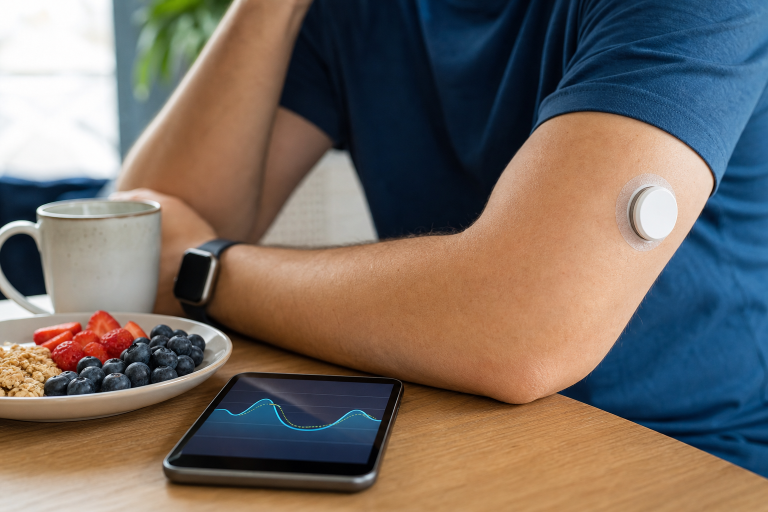
The Future of Wearable Blood Sugar Monitoring: From Glucose Tracking to Metabolic Intelligence
Wearable glucose monitoring is moving beyond diabetes management toward a broader era of metabolic intelligence, where CGMs, rings, watches, and AI begin to connect food, sleep, stress, and exercise into…
Google Nest Hub 2nd Gen: Radar-Based Sleep Tracking in a Smart Display
Google quietly embedded a sleep laboratory’s most basic measurement principle inside a $99 alarm clock. The question is whether convenience can compensate for clinical depth. Presented By Our Partners The…

Liquid Biopsy Is Rewriting Cancer Detection: How a Single Blood Draw May Find Dozens of Cancers Before Symptoms Appear
A convergence of cfDNA methylation analysis, multi-omics integration, and artificial intelligence is transforming cancer screening. From the PATHFINDER 2 trial showing a seven-fold increase in cancer detection to the PROMISE…

The VO2 Max Verdict: Why Cardiorespiratory Fitness Is the Single Strongest Predictor of How Long You Will Live
A 122,000-person Cleveland Clinic study found that low cardiorespiratory fitness carries a greater mortality risk than smoking, diabetes, or coronary artery disease, with no upper limit of benefit. Inside the…

The Post-Meal Walk: Why a 10-Minute Stroll After Dinner Is Becoming the Most Practical Metabolic Tool of 2026
New 2026 research is converging on a quiet conclusion: a ten-minute walk after dinner blunts the postprandial glucose spike, protects blood vessels, sharpens cognition, and improves sleep. Inside the science,…
