
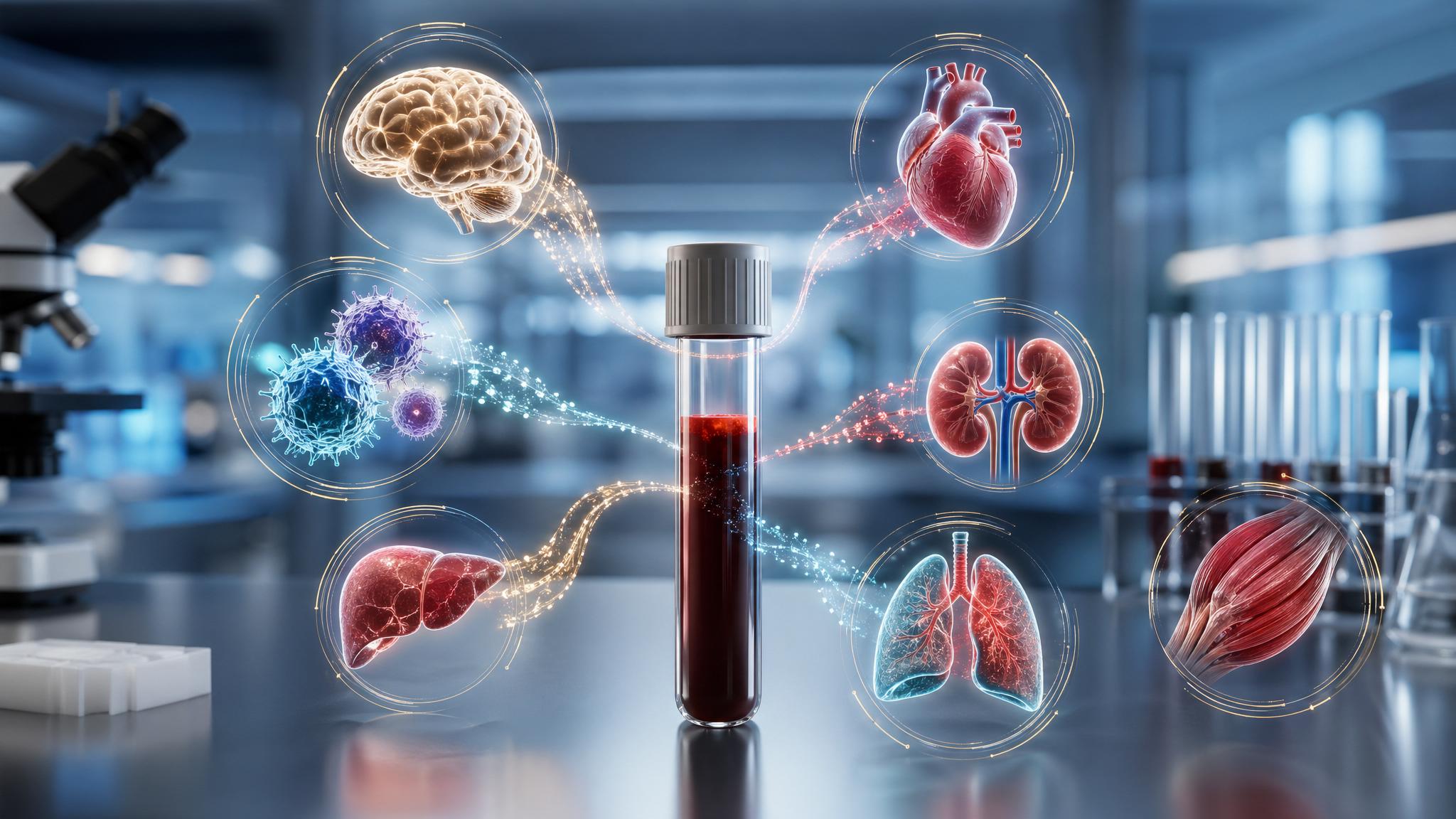
Your Organs Are Not Aging at the Same Rate: What 2,916 Blood Proteins Reveal About Your Longevity Clock
A landmark Nature Medicine study of 44,498 people has used nearly 3,000 blood proteins to measure the biological age of 11 separate organs, revealing that your brain and immune system hold the most powerful keys to how long you live.
Presented By Our Partners



You are not one age. You are eleven.
That is the emerging picture from one of the most ambitious aging studies ever conducted, published in Nature Medicine by researchers at Stanford, the UK Biobank consortium, and collaborating institutions. The study measured nearly 3,000 proteins in the blood of 44,498 people and used those measurements to calculate the biological age of 11 distinct organs: the brain, immune system, heart, liver, kidney, lung, intestine, muscle, fat tissue, pancreas, and vasculature. The findings fundamentally change how scientists and clinicians think about aging and longevity.
The central discovery is striking: an organ’s biological age is not tightly coupled to your chronological age, it diverges in ways that predict disease and death years and even decades in advance. And among all 11 organs, the brain and the immune system stand apart as the two most powerful predictors of how long and how well you will live.
The Biology Behind Organ-Specific Aging
For decades, biological age was treated as a single number. Early epigenetic clocks developed by scientists like Steve Horvath used DNA methylation patterns to estimate how fast a person was aging overall. These tools were groundbreaking, but they averaged signals from across the entire body. They could tell you that you were aging faster or slower than your calendar years, but not which tissue was driving the gap.
Plasma proteomics has changed the equation. Blood circulates through every organ in the body, and as it does, each organ sheds characteristic proteins into the bloodstream. By measuring the concentrations of thousands of these proteins simultaneously, researchers can reconstruct an organ-level biological age with remarkable precision.
The Nature Medicine study analyzed 2,916 proteins from the Olink platform in 44,498 UK Biobank participants between the ages of 40 and 70. Using machine learning, the team trained separate aging clocks for each of the 11 organ systems, then tracked those participants for up to 17 years, recording disease diagnoses, hospitalizations, and deaths.
What emerged was a mosaic of aging. Two people of the same chronological age could have dramatically different profiles: one might have a brain that tests 10 years younger than expected while their liver runs 8 years older. Another might show an aged immune system paired with a youthful heart. The combinations were nearly endless, and each pattern carried its own distinct risk signature.
The Brain and Immune System: The Two Longevity Anchors
Of all 11 organ systems studied, the brain and the immune system emerged as the most consequential for both healthspan and lifespan. The data here is not subtle: it is among the strongest associations between a biological measurement and longevity outcomes that has ever been reported in a large human cohort.
Consider the Alzheimer’s disease findings. Carrying one copy of the APOE4 gene, the single strongest known genetic risk factor for sporadic Alzheimer’s, roughly triples a person’s risk of developing the disease. In the proteomics study, having an aged brain as measured by the protein clock produced a nearly identical hazard ratio of 3.1. Conversely, a youthful brain generated a hazard ratio of 0.26, a protective effect comparable to carrying two copies of the rare APOE2 variant, the gene most strongly associated with Alzheimer’s protection. This protective benefit held independent of a person’s actual APOE genotype.
In other words, a blood test measuring brain-associated proteins may be able to stratify Alzheimer’s risk as effectively as one of the most consequential genetic tests in medicine, and it does so in a way that potentially reflects modifiable biology.
The mortality data is equally compelling. Participants with a youthful brain age showed a 40 percent reduction in all-cause mortality risk (hazard ratio 0.60). A youthful immune system showed a 42 percent reduction (hazard ratio 0.58). When both organs tested as biologically young simultaneously, mortality risk dropped by 56 percent (hazard ratio 0.44).
The flip side of this equation is sobering. As organ aging accumulated across the body, mortality risk escalated in a dose-response pattern: having two to four aged organs raised mortality risk by 130 percent. Five to seven aged organs raised it by 350 percent. Participants with eight or more biologically aged organs faced a mortality hazard ratio of 8.3, representing more than an eightfold increase in mortality risk relative to those with the most youthful organ profiles.
Featured Partner
Invest in the Infrastructure Behind Modern Medicine
As healthcare expands beyond hospital walls, the buildings and campuses supporting that shift are generating compelling returns for investors who move early. The Healthcare Real Estate Fund offers qualified investors direct access to a curated portfolio of medical office, outpatient, and specialty care facilities.
Learn More →
Every Organ Tells a Different Story
While the brain and immune system dominated the longevity signal, each organ system in the study predicted a distinct set of downstream diseases, creating a detailed map between biological aging patterns and clinical outcomes.
Heart biological age was the strongest predictor of heart failure and atrial fibrillation. Lung biological age tracked most closely with COPD and pulmonary fibrosis. Liver biological age predicted metabolic dysfunction-associated steatohepatitis, better known as fatty liver disease. Kidney biological age predicted chronic kidney disease progression. Pancreatic age tracked with type 2 diabetes onset.
This organ-specific resolution opens the door to a fundamentally different approach to preventive medicine. Rather than treating aging as a single variable to be slowed uniformly, clinicians could, in theory, use proteomics panels to identify which of a patient’s organs is aging fastest and target interventions precisely.
A related study published simultaneously in Nature Aging by researchers at Stanford, Peking University, and the University of California San Francisco validated organ-specific aging clocks across three diverse populations: the UK Biobank, a Chinese cohort, and a US cohort. The consistency of the findings across radically different populations, genetic backgrounds, and health systems substantially strengthens the case that these protein signatures are capturing real biological processes, not statistical artifacts of a single dataset.
Why Lifestyle Factors May Be the Most Actionable Finding
Perhaps the most practically important aspect of the study is what it reveals about modifiable influences on organ biological age. The researchers examined associations with a range of lifestyle variables, including physical activity levels, smoking status, alcohol consumption, sleep duration, sedentary time, fruit and vegetable intake, oily fish consumption, and red and processed meat consumption.
Organ biological ages were sensitive to these lifestyle factors. Smoking, for instance, was associated with accelerated biological aging across multiple organ systems, with particularly strong effects in lung, immune, and vascular clocks. Regular physical activity was associated with younger biological ages, most notably in muscle, metabolic, and cardiovascular organ clocks.
A complementary paper published in npj Aging specifically examined exercise and proteomic aging in the UK Biobank and found that higher physical activity was associated with significantly lower ProtAgeGap values, the gap between biological and chronological protein age, across multiple organ systems. A separate 12-week controlled exercise intervention confirmed that structured training produced measurable shifts in the protein signatures of aging within a timeframe that is clinically relevant.
Sleep also registered as a significant modifier. Both short sleep duration and long sleep duration were associated with accelerated biological aging in multiple organ clocks, reinforcing what circadian biologists have argued for years: there is an optimal sleep window, roughly seven to nine hours, within which biological repair processes operate most efficiently.
Diet patterns mapped predictably onto organ aging profiles. Higher fruit and vegetable intake correlated with younger biological organ ages. Higher processed meat consumption correlated with older organ ages, particularly in the immune and metabolic systems. Oily fish consumption, a proxy for omega-3 fatty acid intake, was associated with more favorable brain and vascular aging profiles.
Connecting to the Four Shadows of Chronic Disease
The organ-specific aging findings from this research map directly onto the four primary chronic disease threats to longevity: cardiovascular disease, cancer, neurodegenerative disease, and metabolic dysfunction. Each of the Four Shadows has a distinct organ aging signature that now, for the first time, can be estimated with a blood draw.
Cardiovascular disease, the leading cause of death globally, shows its earliest biological fingerprint in aged vascular and cardiac protein clocks, years before clinical symptoms appear. Neurodegenerative disease, including Alzheimer’s, maps most powerfully to the brain aging clock, where a single standard deviation of accelerated aging carries risk comparable to a major genetic variant. Metabolic dysfunction, the root of type 2 diabetes and a driver of cancer and cardiovascular disease, registers across liver, pancreatic, and adipose tissue clocks. Immune system aging, now clearly identified as a longevity anchor in its own right, connects to cancer susceptibility, infection resilience, and the low-grade chronic inflammation that accelerates all Four Shadows simultaneously.
The study does not yet establish direct causal mechanisms between organ aging clocks and each disease pathway. Biological age clocks are predictive tools, not mechanistic proofs. But the depth of the associations, measured prospectively across a 17-year follow-up in nearly 45,000 people, leaves little doubt that these protein signatures are tracking something biologically real and clinically consequential.
The Emerging Landscape of Proteomics-Based Medicine
The study is part of a broader shift in preventive and longevity medicine toward high-dimensional molecular profiling. The same Olink proteomics platform used here is now being integrated into clinical longevity assessments at specialized clinics. Competing platforms, including SomaScan, which can measure more than 7,000 proteins simultaneously, are pushing the resolution even further.
The clinical translation question is no longer whether these tools work. The 44,498-person UK Biobank study, combined with validation across three independent international cohorts, establishes that organ biological age measured by blood proteomics is a robust predictor of disease and death. The questions now are about cost, access, and actionability.
Proteomic panels of this scale currently cost several hundred to a few thousand dollars depending on the platform and provider. That cost is dropping rapidly. Companies including Alkahest, Bioatla, and several of the major diagnostic platforms are developing clinically practical panels that can estimate biological organ ages at a price point comparable to advanced lipid panels. Within three to five years, organ-level biological age testing may be a standard component of an annual preventive health assessment.
When that happens, the implication is clear: preventive medicine will no longer treat a 55-year-old as simply a 55-year-old. It will treat them as someone with a 48-year-old heart, a 61-year-old brain, and a 57-year-old immune system, and design interventions accordingly.
What This Means For You
If you take one thing from this research, let it be this: your brain and your immune system are, by a considerable margin, the two most important organ systems to protect if longevity is your goal. A youthful brain and a youthful immune system together were associated with a 56 percent reduction in all-cause mortality in a nearly 45,000-person study followed for 17 years. That is not a marginal effect. That is a life-defining effect.
Protecting your brain means prioritizing cognitive challenge and novelty, cardiovascular exercise which drives blood flow and BDNF production, deep sleep during which the glymphatic system clears metabolic waste including amyloid proteins, and anti-inflammatory nutrition built around vegetables, omega-3 rich fish, and minimally processed whole foods. The study found that brain aging is sensitive to lifestyle, meaning the choices you make today are registered in your brain’s protein signature.
Protecting your immune system means avoiding its two greatest accelerators: chronic inflammation and chronic stress. Smoking was among the strongest drivers of immune system aging in this study. Processed food, poor sleep, physical inactivity, and unmanaged psychological stress all accelerate immune aging through overlapping inflammatory pathways. Conversely, regular moderate exercise, adequate sleep, and an anti-inflammatory diet are the most evidence-supported tools for maintaining a biologically younger immune profile.
The good news embedded in this research is profound. Unlike your APOE genotype, which you cannot change, your organ biological ages are sensitive to the choices you make. The lifestyle factors that drove younger organ clocks in this study are the same five foundational pillars that decades of epidemiology have consistently identified: nutrition, sleep, movement, stress regulation, and social connection. This study does not overturn that framework. It deepens it, giving each pillar a molecular readout and quantifying the stakes in some of the clearest terms that large-scale human research has ever produced.
A blood test cannot yet be ordered at your primary care clinic to measure your organ-specific biological ages with the precision used in this study. But the clinical translation is arriving quickly. In the meantime, the behaviors that this study shows will keep your brain and immune system young are available to you today, without a prescription, without a clinic visit, and at no cost.
The longevity game is not won by a single intervention. It is won by accumulating biological youth, organ by organ, year by year, through the compounding effect of choices made consistently over time.
Sources: “Plasma proteomics links brain and immune system aging with healthspan and longevity,” Nature Medicine (2025), DOI: 10.1038/s41591-025-03798-1. “Organ-specific proteomic aging clocks predict disease and longevity across diverse populations,” Nature Aging (2025), DOI: 10.1038/s43587-025-01016-8. “Reversal of proteomic aging with exercise,” npj Aging (2025), DOI: 10.1038/s41514-025-00318-w. UK Biobank cohort data, n=44,498.


Similar Posts
The Daily Rounds: Longevity & Health Care Brief | May 9, 2026
⚖️ Weight and Brain Age — A 24-year study finds that sustained weight management may preserve brain age by up to two years, directly slowing the rate of memory and executive function decline. 💉 Gut Bacteria Inject Proteins Into Immune Cells — Scientists discover microbes use molecular injection systems to directly modulate immune cell behavior, explaining how microbiome composition drives systemic health outcomes. 🔓 OpenBind Opens AI Drug Discovery to Everyone — A UK consortium releases the first public AI model for atomic-level protein-drug binding prediction, leveling the pharmaceutical research playing field. 📊 Wearables Predict Insulin Resistance at 80% Accuracy — The WEAR-ME study shows wearable data plus standard blood tests can identify insulin resistance years before diabetes develops, using devices most people already own. 🏋️ Grip Strength Cuts Mortality Risk by 33% in Older Women — A JAMA study of 5,000 older women finds that high grip strength independently predicts survival, even among those who do not meet aerobic exercise guidelines.
The Centenarian Gut: How Bacterial Bile Acids From the World’s Oldest People Are Rewriting Longevity Science
A 2021 Nature paper from Kenya Honda’s lab at Keio University identified a chemically distinct bile acid called isoalloLCA in the stool of Japanese centenarians. Five years of follow up…

First-in-Class Bispecific ADC Rewrites the Rules for Triple-Negative Breast Cancer at ASCO 2026
At ASCO 2026, izalontamab brengitecan became the first bispecific antibody-drug conjugate to improve both progression-free and overall survival in triple-negative breast cancer. Inside the EGFRxHER3 mechanism, the Phase 3 trial…
Four Weeks to a Younger Body: New Research Shows Diet Can Reverse Biological Age in Adults Over 65
A University of Sydney trial published in Aging Cell found that just four weeks of eating differently produced measurable reductions in biological age among adults between 65 and 75. The…
The Resolution Gap
Most healthcare AI claims rest on a data layer that is, by the standards of the biology it is meant to describe, decades out of date. The fix is the…

Hyperice Hypervolt 2 Pro: Smart Percussive Therapy with HyperSmart Sensor Technology
The best massage gun is the one that adapts to what your body needs, not the one that simply delivers the most force. Presented By Our Partners Percussive therapy has…
