
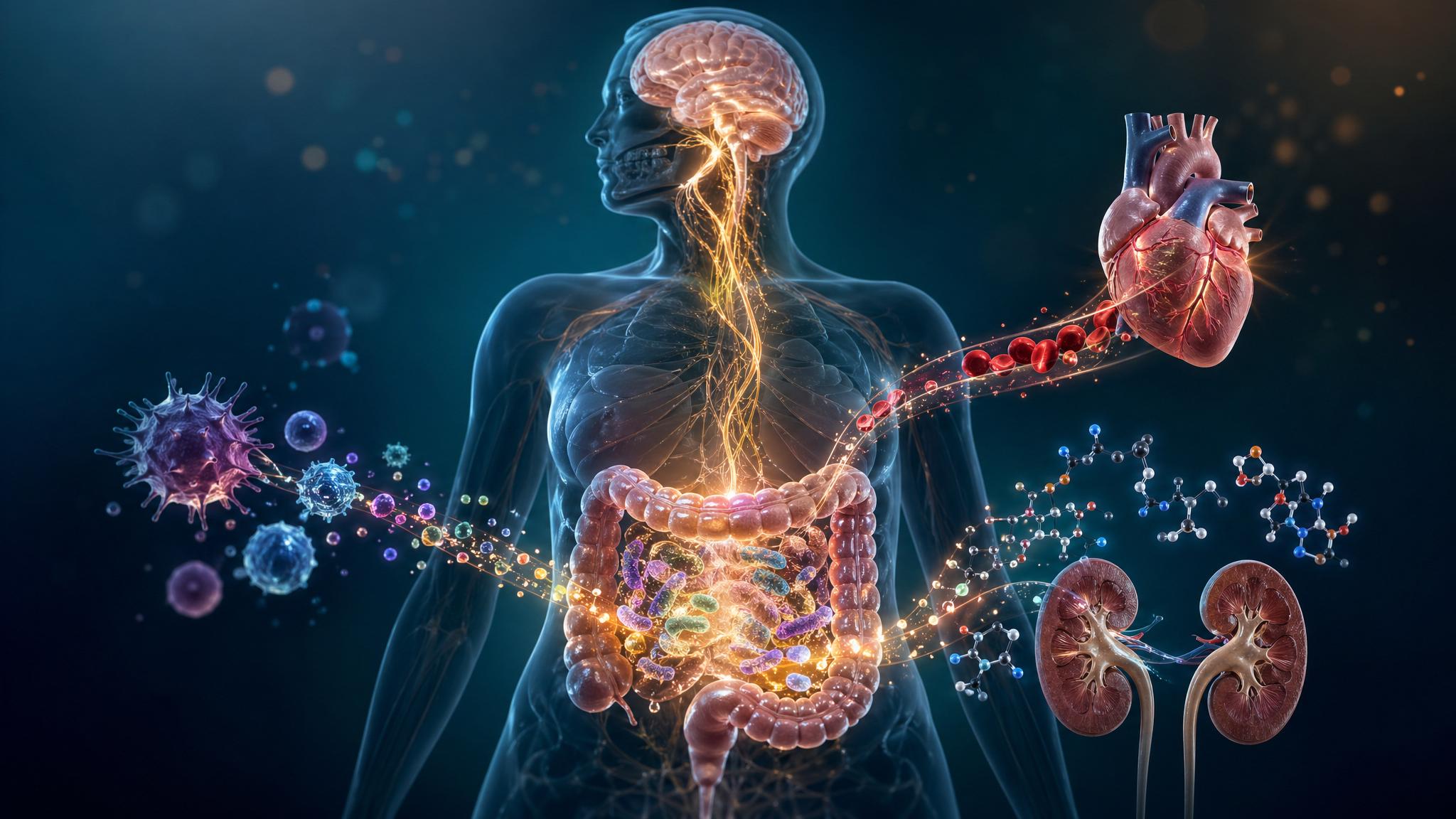
The Hidden Inflammation Trigger: How Harvard’s Morganella morganii Discovery Is Rewriting the Biology of Depression
For more than two decades, psychiatric researchers have circled an uncomfortable possibility: that depression is not, or is not only, a brain disease. Patients with chronic inflammation get depressed at unusual rates. Cancer patients given immune stimulating drugs develop depressive symptoms within hours. Stool samples from people with major depressive disorder show consistent shifts in microbial composition. The pieces of a gut, immune, brain story have been on the table for years, but the central piece, an actual molecular mechanism showing how a specific gut microbe could send a signal that ends in depressed mood, has been missing.
Presented By Our Partners



This month, a team at Harvard Medical School published what may be the most concrete answer to date. Writing in the Journal of the American Chemical Society, researchers led by Jon Clardy, the Christopher T. Walsh Professor of Biological Chemistry and Molecular Pharmacology in the Blavatnik Institute at Harvard Medical School, identified an unusual class of phospholipids made by the gut bacterium Morganella morganii. The molecules sit at the intersection of two pathways nobody had thought to connect: bacterial lipid biosynthesis and an industrial micropollutant called diethanolamine. When the two collide inside the gut, they create a chemical hybrid that activates the immune system and pushes pro inflammatory cytokines, especially interleukin 6 (IL 6), into circulation. IL 6, in turn, is one of the most consistently elevated cytokines in patients with major depressive disorder.
The implications are large. The finding gives the inflammatory hypothesis of depression a specific molecular target. It implicates an environmental contaminant in shaping who gets sick. It points toward a new generation of psychiatric diagnostics that begin with a stool test rather than a structured interview. And it suggests that for at least a subset of patients, the right intervention may not be an antidepressant at all but something that interrupts the gut, immune signal at its source.
A Long Suspected Link, Finally with a Mechanism
For most of the twentieth century, depression was understood as a disorder of brain chemistry. The serotonin hypothesis, popularized by the success of SSRIs in the 1990s, framed the illness as a deficit of neurotransmitters that the right drug could top up. By the late 2000s, however, that picture had cracked. Meta analyses showed serotonin levels in depressed patients were not consistently low. Many patients did not respond to first line antidepressants. And a quieter line of research, dating back to work by Belgian psychiatrist Michael Maes in the early 1990s, kept finding the same thing: depressed patients had elevated levels of inflammatory markers in their blood.
By 2010, this had hardened into the cytokine hypothesis of depression. Andrew Miller and Charles Raison, then at Emory University, showed that interferon alpha, given to patients with hepatitis C, induced clinically significant depression in a substantial fraction of recipients within weeks of starting therapy. Multiple meta analyses, including a widely cited 2010 study in Biological Psychiatry by Yekta Dowlati and colleagues at the University of Toronto, documented elevated levels of IL 6, tumor necrosis factor alpha, and C reactive protein in patients with major depression. By the late 2010s, several Phase 2 trials of anti inflammatory drugs as adjuncts to antidepressants showed signal in subgroups with elevated baseline inflammation, even if the overall results were mixed.
What was missing was the upstream story. Why were these patients inflamed in the first place? Some researchers pointed to chronic stress, others to obesity and metabolic disease, others to the gut. Studies from John Cryan’s lab at University College Cork and Emeran Mayer at UCLA had shown that the gut microbiome talks to the brain through three main channels: the vagus nerve, microbial metabolites in circulation, and the immune system. The Harvard finding fills in a piece of the third channel with unprecedented molecular detail.
The Molecule at the Center of the Story
Morganella morganii is not a flashy organism. It is a Gram negative bacterium of the Morganellaceae family, normally a minor component of the human gut microbiome, more often discussed in clinical microbiology textbooks as a cause of urinary tract and wound infections than as a player in psychiatric disease. But by 2019, a series of microbiome studies, including a large analysis of stool samples from individuals with major depressive disorder, had repeatedly flagged M. morganii as one of a small set of bacteria that were enriched in depressed patients compared with healthy controls.
The Clardy lab spent several years asking a different question: what are these bacteria actually making? Using a bioassay guided approach, the team isolated cultures of M. morganii grown in conditions that simulated the gut environment and screened the resulting molecules for immune stimulating activity. They were looking for compounds that could activate Toll like receptors, the family of innate immune sensors that allow human cells to recognize bacterial structures.
What they found was unusual. The bioactive molecules looked like cardiolipins, a well known class of phospholipids built around a central glycerol backbone. But in these versions, the glycerol had been replaced by diethanolamine, an industrial chemical that has no place in normal human or microbial biochemistry. The team named the new compounds MmDEACLs, short for M. morganii diethanolamine cardiolipins.
How did diethanolamine end up in a bacterial lipid? The answer is one of the most striking parts of the paper. M. morganii uses an enzyme called cardiolipin synthase to assemble its membrane lipids. The enzyme is what biochemists call promiscuous: it does its job well most of the time, but if a structurally similar molecule shows up in the cell, it will sometimes use that one instead. Diethanolamine, an amine alcohol with two hydroxyl groups, fits the active site closely enough to occasionally substitute for the natural substrate. Once that happens, the bacterium ends up making a molecular chimera, half normal phospholipid, half industrial contaminant.
How a Chimeric Lipid Talks to the Immune System
The next set of experiments showed why MmDEACLs matter. The researchers exposed human and mouse immune cells to the new molecules and measured the response. The MmDEACLs activated two specific receptors, TLR2 and TLR1, which form a heterodimer on the surface of immune cells. Once activated, the receptors triggered a signaling cascade that culminated in the release of pro inflammatory cytokines, with IL 6 production being especially pronounced.
Crucially, the conventional cardiolipins made by M. morganii did not produce this effect. Only the DEA modified versions activated the TLR2/TLR1 receptor. The presence of the environmental contaminant was what flipped a normally silent bacterial lipid into an inflammatory signal.
Featured Partner
Invest in the Infrastructure Behind Modern Medicine
As healthcare expands beyond hospital walls, the buildings and campuses supporting that shift are generating compelling returns for investors who move early. The Healthcare Real Estate Fund offers qualified investors direct access to a curated portfolio of medical office, outpatient, and specialty care facilities.
Learn More →
To test whether this signal could leave the gut, the team studied gnotobiotic mice colonized with M. morganii under conditions that included physiological exposure to diethanolamine. The mice developed elevated systemic IL 6, mirroring the cytokine profile that has long been observed in human patients with depression. While the study did not directly measure depression like behavior in these animals, the matching cytokine signature is highly suggestive and sets up an obvious next set of experiments.
Where Diethanolamine Comes From, and Why It Matters
The role of diethanolamine in the story is what gives the finding its public health charge. DEA is an industrial chemical produced in large volumes for use as a surfactant, emulsifier, and pH adjuster. It is a building block in many cosmetic and personal care products, including some shampoos, soaps, and lotions, where it is used to thicken or stabilize formulations. It is also widely used in industrial processes, agricultural chemicals, and the formulation of metalworking fluids. The U.S. Environmental Protection Agency and the National Toxicology Program have studied DEA primarily for its potential toxicity at high doses. The Harvard study reframes the chemistry: at the much lower doses humans typically encounter, DEA may not need to be directly toxic to do harm. It may simply have to slip into a bacterial enzyme.
This is the kind of mechanism that environmental health researchers have long suspected exists, the so called gene by environment interactions that show up in epidemiology but rarely get pinned down at the molecular level. Here the interaction is not gene by environment but microbe by environment. Whether or not the M. morganii in your gut produces inflammatory MmDEACLs may depend on how much DEA your body is exposed to from cosmetics, water, food packaging, and industrial sources, and on whether your microbiome happens to host the specific strain capable of doing the chemistry.
It is a reminder that the gut microbiome is not just a passive consumer of what we eat. It is a metabolic factory that takes in molecules from food, drugs, and the environment, and outputs entirely new compounds that did not exist when the original substrate was swallowed. The implications for everything from drug metabolism to chronic disease risk are still being worked out. The MmDEACL story is one of the cleaner examples to date of how that metabolic factory can produce signals with direct consequences for human physiology.
Why IL 6 Keeps Showing Up in Depression
To appreciate the punch of the Harvard finding, it helps to understand why IL 6 specifically matters. Interleukin 6 is a small protein produced by immune cells, fat cells, and certain neurons. It is one of the body’s general purpose inflammatory signals, elevated in everything from infections to obesity to autoimmune disease. It is also one of the most thoroughly studied cytokines in psychiatric medicine.
A 2014 study in JAMA Psychiatry led by Golam Khandaker at the University of Cambridge looked at participants in the Avon Longitudinal Study of Parents and Children and found that elevated IL 6 levels at age nine predicted significantly higher rates of depression and psychosis at age eighteen. A 2020 Mendelian randomization study, also led by Khandaker, used genetic variants that increase IL 6 signaling as a natural experiment and found support for a causal relationship between IL 6 and depression. Several recent trials have tested IL 6 receptor antagonists, including tocilizumab and sirukumab, as adjunct treatments in depression, with mixed but not negligible signals in the subgroup of patients with elevated baseline inflammation.
If MmDEACLs are a meaningful source of IL 6 production in some patients, then the Harvard work may explain a slice of the heterogeneity that has frustrated psychiatric trials for decades. Not every depressed patient has elevated inflammation. Maybe not every depressed patient is depressed for the same reason. The work moves the field one step closer to a precision medicine framework in which the right treatment depends on identifying which biological pathway is driving illness in which patient.
What This Changes for Diagnostics and Drug Development
The most immediate translational opportunity is diagnostic. M. morganii can be detected and quantified in stool samples using standard 16S ribosomal RNA sequencing. MmDEACLs themselves can be identified by mass spectrometry. It is plausible that within several years a clinical assay could measure both the bacteria and the inflammatory metabolite in patients presenting with depression, especially treatment resistant depression. A patient with high MmDEACL levels would in principle be a candidate for interventions that target the gut, immune axis rather than, or in addition to, conventional psychiatric treatment.
The second opportunity is therapeutic. The pathway suggests several intervention points. A drug that selectively inhibits the cardiolipin synthase variant responsible for incorporating DEA could prevent MmDEACL formation without disrupting normal bacterial physiology. A small molecule that blocks the TLR2/TLR1 receptor activation by these specific lipids could short circuit the inflammatory signal. A dietary or environmental intervention that reduces DEA exposure could lower the substrate available for the chemistry. None of these are imminent, but each is a tractable target for the kind of drug discovery work that AI driven platforms like Insilico Medicine and Recursion are increasingly able to take on at scale.
The third opportunity is preventive. If repeated low dose exposure to DEA in cosmetics and other consumer products is in fact contributing to chronic low grade inflammation in genetically and microbially susceptible individuals, the regulatory implications could be substantial. The current EPA assessment of DEA was last updated in the late twentieth century and focused on direct toxicity at much higher exposures than typical consumer use. A reassessment in light of the new mechanistic data is not unreasonable.
Caveats: What the Study Did Not Show
It is important to keep the story honest. The Harvard work is a beautifully detailed mechanistic study, but it is not a clinical trial. It does not prove that MmDEACLs cause depression in humans. It shows that they can produce the cytokine response associated with depression in laboratory and animal models, and it offers a chemically specific explanation for an association that epidemiology has flagged for years. That is a major step, but it is one step.
Several questions remain open. How prevalent is M. morganii at clinically meaningful levels in the general population? What fraction of M. morganii strains carry the promiscuous cardiolipin synthase variant? What are the typical levels of DEA exposure in different populations, and how do they correlate with MmDEACL production in vivo? How much of the elevated IL 6 in depression is driven by this pathway versus by other sources of inflammation, including obesity, sleep disruption, and chronic stress? Each question is empirically tractable, and each will need its own studies before the clinical picture is complete.
It is also worth noting that depression is a heterogeneous illness. The cytokine pathway is unlikely to explain everything. For many patients, family history, psychological trauma, and chronic stress will remain dominant drivers. The most likely future is one in which inflammation is recognized as one of several biologically distinct subtypes, each with its own optimal treatment.
The Bigger Picture: Depression as a Systems Disease
Step back, and the Harvard paper is part of a broader shift that is reshaping psychiatric thinking. The brain is no longer being studied as a closed organ. It is being studied as part of a network that includes the gut microbiome, the immune system, the cardiovascular system, and the endocrine system. The 2024 to 2026 wave of microbiome research, from the Akkermansia muciniphila clinical trials to the centenarian microbiome work, has reframed gut bacteria as full participants in human physiology, not passive bystanders. The cytokine work in depression has done the same for the immune system. The Clardy lab’s contribution is to give one specific gut, immune, brain pathway a molecular face.
This is the same shift now playing out in cardiovascular medicine, where clonal hematopoiesis, lipoprotein(a), and inflammation are reshaping risk models. It is the same shift in neurology, where the glymphatic system has put sleep and brain plumbing into the Alzheimer’s conversation. Depression, like aging itself, is increasingly being understood as a disease of network failure rather than single organ dysfunction.
The therapeutic consequences will take years to play out, but the research strategy is already changing. Drug discovery for psychiatric disease is moving away from the search for a single brain molecule and toward the mapping of multi system pathways. The Harvard finding is a textbook example of where the field is going. A bacterium in the gut, an industrial chemical in the environment, a promiscuous enzyme, a chimeric lipid, an immune receptor, a cytokine, and finally a clinical phenotype. Each step is in principle measurable, intervenable, and quantifiable. That is what precision psychiatry is supposed to look like.
What This Means For You
For someone reading this who lives with depression, or who cares for someone who does, here is the practical translation. The Harvard finding is not a treatment. It is the early molecular outline of one. But the broader frame it supports, that inflammation, gut health, and environmental exposures may meaningfully shape mental health for some people, is already actionable in modest ways.
First, consider asking your physician about inflammatory markers. High sensitivity C reactive protein and, if available, IL 6 are inexpensive blood tests. Persistently elevated values in someone with mood symptoms are worth a conversation about possible underlying drivers, from sleep disruption to metabolic disease to gut health, rather than only about which antidepressant to try next.
Second, think about the things that lower systemic inflammation across the board. Regular sleep on a stable schedule, the kind described in our recent piece on the Sleep Regularity Index, has been repeatedly shown to lower inflammatory markers. Cardiorespiratory fitness, particularly Zone 2 training that builds mitochondrial capacity, lowers IL 6. A diet rich in fermented foods, the subject of the Stanford fermented foods study, raises gut microbial diversity and reduces inflammatory cytokines.
Third, take a closer look at chronic environmental exposures, including the personal care products you use most frequently. Diethanolamine and related compounds are not the only chemicals worth a label check, but if your morning shampoo, body wash, and lotion all contain DEA related ingredients, lower impact alternatives are easy to find. The Clardy paper does not prove that any individual exposure is harmful at the population level, but it gives a plausible mechanism by which the cumulative load could matter.
Fourth, do not stop or change any psychiatric medication based on a single mechanistic study. The most useful thing the Morganella morganii finding does for patients today is broaden the conversation. Depression is not one disease. The biology that drives it is heterogeneous. The future of treatment is going to look more like a panel of options matched to a patient’s biology than a single first line drug. The Harvard work is one of the clearest signals yet that one of those options may begin in the gut.
The brain is not an island. It never was. The science is now catching up to that fact, one molecule at a time.


Similar Posts

Nutrisense: CGM with Registered Dietitian Coaching for Metabolic Optimization
Data without interpretation is noise. Nutrisense bridges the gap between continuous glucose monitoring and meaningful health change by pairing sensors with registered dietitians. Presented By Our Partners The wearable health…
PUSH Band 2.0: Velocity-Based Training for Data-Driven Strength Development
The barbell does not lie, but it does not tell the whole truth either. How much weight you lifted is only half the equation. How fast you moved it reveals…
Longevity Escape Velocity, Explained Through Isomorphic Labs
Ray Kurzweil has spent two decades arguing that by 2029, medical progress will add more than a year to your remaining life expectancy for every year that passes. A Nobel-laureate…

The Unexpected Cancer Shield: ASCO 2026 Data Shows GLP-1 Drugs Cut Advanced Tumor Progression by Up to 50%
A major study being presented this week at the American Society of Clinical Oncology’s annual meeting found that patients with early-stage cancer who took GLP-1 receptor agonists were 38 to…
Elysium Index: An Accessible Entry Point to Epigenetic Age Testing
Backed by Nobel Prize-winning science and priced at $299, the Elysium Index measures biological age through DNA methylation. Is this the most accessible on-ramp to epigenetic health tracking? Presented By…

Your Organs Are Not Aging at the Same Rate: What 2,916 Blood Proteins Reveal About Your Longevity Clock
A Nature Medicine study of 44,498 people used 2,916 blood proteins to measure the biological age of 11 separate organs, finding that a biologically young brain and immune system together…
