

The Risk Score Arrived. Now What?
An FDA-authorized AI can estimate five-year breast-cancer risk from a mammogram you already had. The harder problem begins after the prediction.
Presented By Our Partners



For most of its history, a mammogram has asked a tense, immediate question: Is there a cancer here now?
A new kind of artificial intelligence asks a different one. It studies the same image and estimates the chance that cancer will be diagnosed or develop over the next five years. In October, Clairity Breast became available nationwide through Everlywell to women with a qualifying mammogram from the previous 12 months. The self-pay price is $249.
The appeal is easy to understand. No new scan. No blood draw. No long questionnaire about every aunt and grandmother. An image that once looked only for today’s disease is asked to disclose something about tomorrow.
But prediction creates a peculiar form of medical responsibility. A number can arrive in seconds. A useful response may require a radiologist, a primary-care clinician, a high-risk breast clinic, an insurer, another appointment and a patient who understands that risk is not destiny. The AI can produce the signal. It cannot, by itself, complete the care.
That distinction is the real story of Clairity’s consumer launch.
What the FDA actually authorized
The Food and Drug Administration reviewed the software under the name Allix5 and authorized it in 2025 as a Class II device. Its job is narrowly defined: analyze compatible bilateral 2D screening mammograms and produce a percentage estimate of a person’s five-year risk of breast cancer.
The FDA’s language is unusually useful because it also says what the software is not. It does not detect or diagnose breast cancer. It does not provide care recommendations. It is not meant to replace clinical judgment or serve as the sole basis for a decision. Its output is supposed to be considered only after a radiologist has interpreted the mammogram.
The pivotal study was substantial but retrospective. It included 77,511 exams from 44,112 patients at five sites in Georgia, Texas and California. Across the full study population, the model’s five-year area under the curve, a measure of how well it separated people who would and would not develop or be diagnosed with cancer, was 0.70. When researchers excluded cancers already present around the time of the original mammogram, performance fell to 0.66.
Those figures indicate useful discrimination, not clairvoyance. The FDA also identified practical boundaries. The system was validated only on directly acquired 2D images from two Hologic mammography systems, not every mammogram in circulation. Scores above 5% should be interpreted cautiously because the model may overestimate risk, particularly above 10%. Effectiveness was not demonstrated for patients with breast implants.
Featured Partner
Invest in the Infrastructure Behind Modern Medicine
As healthcare expands beyond hospital walls, the buildings and campuses supporting that shift are generating compelling returns for investors who move early. The Healthcare Real Estate Fund offers qualified investors direct access to a curated portfolio of medical office, outpatient, and specialty care facilities.
Learn More →
The validation population was notably diverse: 37% of exams were from Black patients and 45% from White patients. But diversity in a retrospective dataset is not the same as proof of equal real-world benefit. Benefit depends on what people can do after learning their score.
The missing middle between information and prevention
Clairity and Everlywell have not simply posted an algorithm on the open internet. The nationwide service includes an order and review by a licensed provider, and results are released with suggested next steps. That is an important safeguard.
It is also only the beginning of a pathway.
At Beth Israel Deaconess Medical Center, where the assessment has been offered clinically, a result below 1.7% is described as average risk, a result above 1.7% but below 3% as increased risk, and 3% or above as high risk. A higher score does not mean that cancer is present. Depending on the full clinical picture, a clinician might discuss additional imaging, genetic counseling or other preventive options.
Notice the verbs: might discuss. The score does not choose the next step. Age, family history, genetics, breast density, prior biopsies, other health conditions and personal preferences still matter. So do the limits of the evidence. The U.S. Preventive Services Task Force, for example, has said evidence remains insufficient to determine the balance of benefits and harms of supplemental ultrasound or MRI for women with dense breasts after an otherwise negative mammogram.
A result can therefore open several doors without proving which one a particular person should walk through. That ambiguity is not a flaw unique to AI. Risk medicine has always lived in probabilities. What AI changes is the scale and speed at which those probabilities can be delivered, including outside the health system that holds the rest of the patient’s record.
Direct access solves one delay and may create another
Clairity’s move to Everlywell is a bet that patients should not have to wait for every imaging center, health system and insurer to adopt a new technology. There is a democratic logic to that choice. People can request analysis of a recent mammogram and bring new information to their doctor.
There is also an equity problem hiding inside the convenience. The $249 price may be manageable for some and prohibitive for others. A patient with an elevated score may still face insurance rules, limited specialist capacity, travel, time off work or confusing guidance about what comes next. Someone with a lower score may mistake it for an all-clear, even though the device does not detect current cancer and does not replace routine screening.
This is where AI’s most seductive promise can become its most familiar failure. Healthcare already produces many signals: an abnormal lab result, a suspicious image, a referral order, a portal message. Patients are harmed not only when the signal is missed, but when nobody owns the next step.
A responsible rollout should therefore measure more than how many scores are sold or how quickly they are returned. It should report how often eligible mammograms are successfully retrieved and analyzed; how often patients understand the result; how many higher-risk patients reach appropriate counseling; how many complete recommended follow-up; and whether those rates differ by race, income, geography, language or insurance status. It should also count harms: anxiety, unnecessary imaging, avoidable biopsies, medication side effects and false reassurance.
Without those denominators, nationwide availability is distribution, not completed prevention.
Five questions to ask before acting on an AI risk score
If you receive a result from this or any similar tool, the safest next move is not to treat the percentage as a diagnosis. Use it to start a more precise conversation.
- Was my mammogram technically eligible for this specific model? Ask whether the image type and equipment match the device’s authorized use.
- What does this percentage mean alongside my other risk factors? A score drawn from pixels is one part of a larger clinical picture.
- Could the result be overestimating or underestimating my risk? The FDA specifically cautions about higher scores and identifies populations in which performance was not demonstrated.
- Would another test or referral change care, and what are its downsides? Additional screening can find disease, but it can also produce false positives, biopsies, cost and anxiety.
- Who owns the follow-up? Know which clinician will interpret the result, order any next step and make sure it is completed.
These are not arguments against prediction. They are the conditions that make prediction useful.
The test AI must eventually pass
Clairity Breast represents a genuine technical and regulatory milestone. It extracts a forward-looking risk estimate from an image already embedded in routine care, and the FDA reviewed evidence from a large, multisite population. The consumer launch may expose people to information that health systems have been slow to deliver.
Now comes the more consequential experiment. Can the healthcare system convert a probability into an appropriate action without turning uncertainty into panic, access into a luxury product, or a low score into false reassurance?
The future of medical AI will not be decided by how many hidden patterns a model can see. It will be decided by whether patients are carried from those patterns to care that is understandable, proportionate and complete.
Sources
- U.S. Food and Drug Administration, De Novo Classification Request for Allix5 (DEN240047), 2025.
- Katie Palmer, “Why this startup is taking its AI to predict breast-cancer risk directly to patients,” STAT, October 8, 2026.
- Radiology Business, “Health and wellness company begins selling mammography AI directly to consumers for $249,” October 2026.
- Beth Israel Deaconess Medical Center, “AI Breast Cancer Risk Assessment,” accessed October 19, 2026.
- OncLive, “Clairity Breast Is Added to NCCN Guidelines for Breast Cancer Screening and Diagnosis,” 2026.
- U.S. Preventive Services Task Force, “Breast Cancer: Screening,” current recommendation accessed October 19, 2026.
This article is educational and does not provide medical advice. A risk estimate is not a diagnosis. Discuss screening and prevention decisions with a qualified healthcare professional who can consider your full history and preferences.


Similar Posts

Lipoprotein(a): The Hidden Genetic Heart Risk Finally Becoming Treatable in 2026
Lp(a) affects one in five adults worldwide yet has had no targeted therapy for sixty years. In 2026, four Phase 3 trials including HORIZON, OCEAN(a)-Outcomes, ACCLAIM-Lp(a), and a new oral…
Dexcom Stelo: The First Over-the-Counter Continuous Glucose Monitor
For the first time in history, anyone can buy a continuous glucose monitor without a prescription. What this means for the future of preventive metabolic health. Presented By Our Partners…
MIT, ASU, and the New Frontier of Protein Motion: Why Drug Discovery Is Moving Beyond Static Structure
Two university-led advances point to the next chapter in AI-enabled drug discovery. MIT’s VibeGen designs proteins by their motion profiles. ASU’s fast sampling method accelerates access to conformational landscapes. Together,…
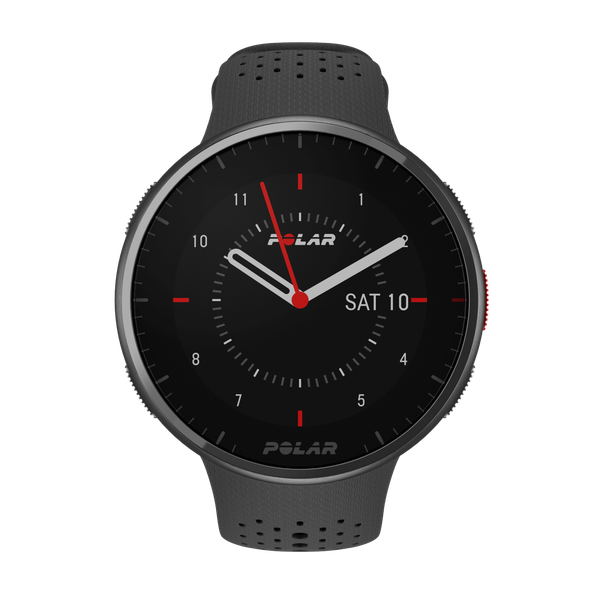
Polar Pacer Pro: Ultra Lightweight GPS Running Watch With Barometric Altitude and Training Analytics
At 41 grams with an integrated barometer, running power, and Polar’s full Training Load Pro analytics, the Pacer Pro delivers serious running science at $349.90 with no subscription required. Presented…
Zombie Cells Are Destroying Your Body From Within. Scientists Are Finally Learning How to Kill Them.
Senescent “zombie” cells accumulate with age, leaking inflammatory molecules that accelerate disease across every organ. For the first time, clinical trials of senolytic drugs and CAR-T immune therapies are proving…
The Daily Rounds: Longevity & Health Care Brief | May 17, 2026
🧠 Brain Training Cuts Dementia Risk by 25% — Cognitive speed training reduced dementia incidence by 25% over 20 years in a large randomized trial, the first intervention to demonstrate this effect at scale. 🧬 Naked Mole Rat Gene Extends Mouse Healthspan — Transferring a longevity-associated gene across species produced healthier, longer-lived mice, showing that species-specific aging mechanisms can be successfully transposed. ⌚ Wearables Detect Diabetes Without Blood Tests — Sleep and temperature data from consumer wearables detected diabetes with 0.880 AUROC, pointing toward passive, blood-free disease screening at population scale. 🦠 Gut Microbes Predict Heart Disease Years Early — A gut-kidney-heart axis identified by Imperial College scientists enables cardiovascular disease prediction years before symptoms appear using microbiome biomarkers. 💪 Grip Strength Predicts Longevity Independently of Exercise — Simple muscle strength tests predicted 8-year mortality risk even in women who did not meet aerobic exercise guidelines, reinforcing strength as a primary longevity target.
