
Sensate 2 Review: Vagus Nerve Claims, Evidence, and Verdict
Sensate 2 borrows the name of one of medicine’s most serious nerve therapies, but the evidence behind the device itself is a registered study and a promise, not a published trial.
Presented By Our Partners


In the 1980s, Zabara and colleagues built an implantable neurocybernetic prosthesis that sent electrical pulses into the vagus nerve to control epilepsy. During the seizure trials of the 1990s, promising mood effects emerged, and in 2005 the FDA approved vagus nerve stimulation for depression (Neuromodulation, 2021). It took surgery, decades of trials, and a lucky observation.
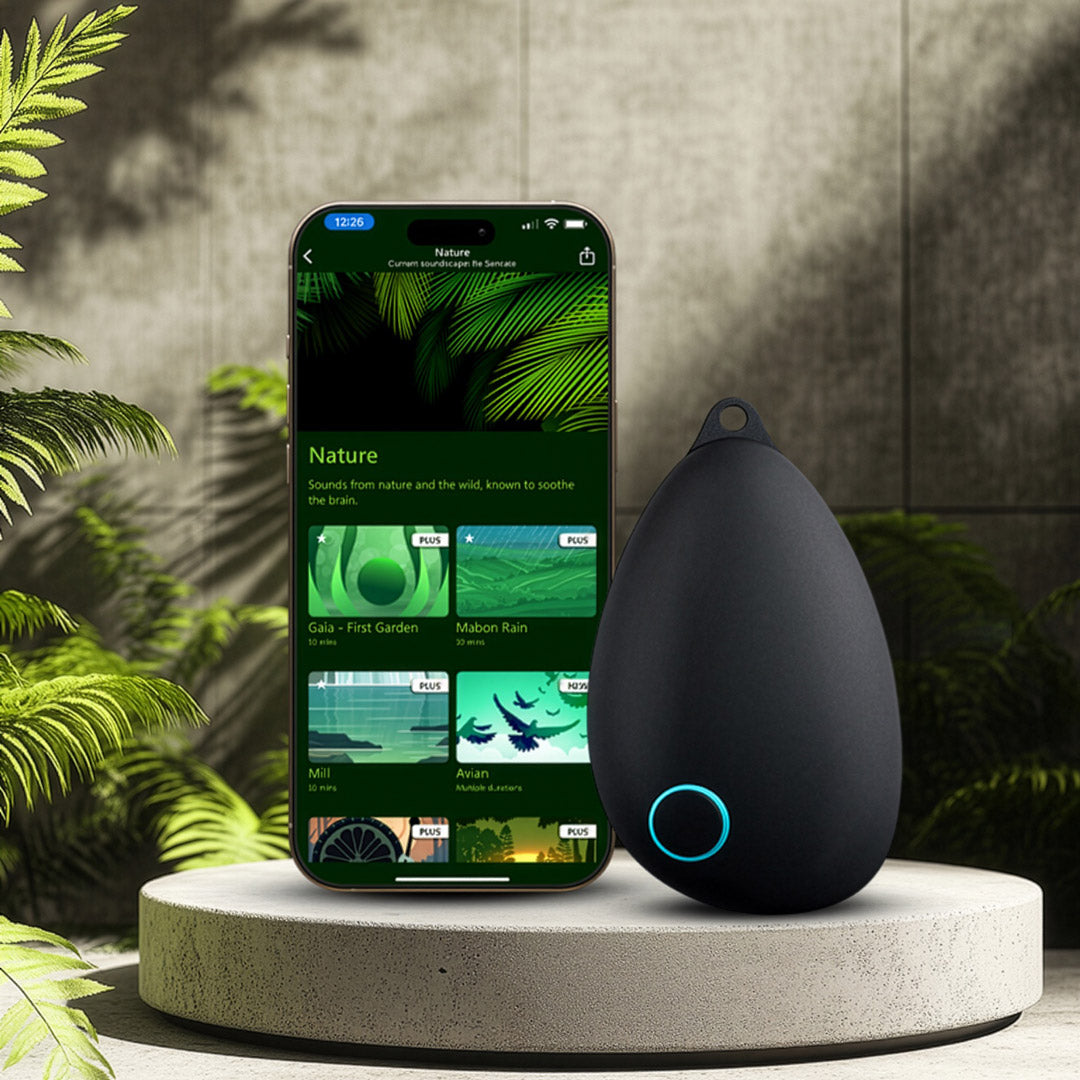
Now the same nerve sells consumer products. Sensate 2, the second-generation relaxation device made by Sensate and on sale as of October 2026, rests on your chest and works with a companion app to combine vibration and sound. The company markets it as a vagus nerve toning device for stress and sleep, with a promise aimed at anyone who has failed at meditation: no meditation required.
That is the paradox at the center of this Sensate review. The implanted stimulator and the chest-worn device share a nerve’s name and little else. One delivers electrical current to the nerve and has decades of clinical trials. The other works through sound and vibration on the skin, and we found no peer-reviewed trial of it in PubMed. Whether Sensate is worth buying depends on keeping those two stories apart.
The short answer: Sensate 2 is a low-risk relaxation ritual, not a proven vagus nerve therapy. It uses sound and chest vibration rather than the electrical stimulation studied in medical research, and as of October 2026 no peer-reviewed trial of the device has been published. If it helps you lie still and breathe slowly, it may help you unwind; the slow breathing is the part with strong evidence.
- Best for: people who find seated meditation hard and want a structured, passive wind-down ritual, and who can spend on a wellness gadget without needing proof that it works.
- Not for: anyone seeking treatment for anxiety, depression, epilepsy, or a digestive disorder; buyers who want measured, trial-backed results for their money.
- Price (October 2026): $299 for a single Sensate 2 device on Sensate’s US store as of October 2026; the store also lists the original Sensate and a two-pack bundle.
- Regulatory status: we found no FDA clearance or approval; it is sold as a consumer stress relief and relaxation device, not a medical treatment.
- Evidence: Limited; no published trial of the device, one registered study without results we could find, and electrical vagus nerve research that does not transfer to it.
What is Sensate 2?
Sensate 2 is a chest-worn relaxation device made by Sensate that combines vibration with audio from the Sensate companion app. The company sells it for stress relief, sleep, and what it calls vagus nerve toning. It is the second generation of the product and, as of October 2026, is sold alongside the original Sensate and a two-pack bundle.
The marketing is direct. Sensate’s US product page is titled “Sensate 2 Vagus Nerve Toning & Stress Relief Device,” and its homepage pitches a “Vagus Nerve Calming Device for Stress & Sleep, No Meditation.” That last phrase is the real product. Meditation apps ask you to train attention, a skill many people abandon. Sensate offers to skip the skill entirely: lie down, place the device, press play.
The software half lives in an app listed on Apple’s App Store as “Sensate: Stress/Anxiety Relief.” The hardware half rests on the chest, which sets it apart from wrist, ankle, and ear devices in the same category.
One practical note for anyone researching it: the word “sensate” belongs to an older idea. Search PubMed for it and you get papers on sensate focus, a couples therapy technique, rather than this device. That is not a quirk of search engines. It is a fair summary of the device’s scientific footprint.
How does Sensate work?
Sensate rests on the chest and delivers vibration alongside audio from its app. The company describes the effect as vagus nerve toning, and its blog ties the idea to a cat’s purr and to sound that resonates with our cells. The likelier mechanism is ordinary: a timed session of stillness, sound, and touch that encourages slower breathing.
Start with the nerve itself. The vagus is the main cable of the parasympathetic nervous system, the body’s brake. It runs from the brainstem to the heart, lungs, and gut, and it carries traffic in both directions: commands down to the organs, and a far larger stream of sensory reports back up to the brain. When people talk about “vagal tone,” they usually mean how firmly that brake is pressed on the heart.
You can watch the brake work with every breath. Breathe in, and the vagal brake on the heart eases, so the heart speeds slightly. Breathe out, and the brake bites again, so the heart slows. This rhythm, called respiratory sinus arrhythmia, is why heart rate variability rises when breathing slows: each long exhale gives the brake more time to act. A 2018 systematic review in Frontiers in Human Neuroscience found that slow breathing below 10 breaths per minute increased heart rate variability and respiratory sinus arrhythmia in healthy people, alongside greater comfort and relaxation and lower anxiety.
Sensate’s own explanation lives elsewhere. Its blog headlines include “Water & Sound: How Sensate Resonates with our Cells” and “Tone Your Vagus Nerve And Release Your Inner Purr With Sensate,” and its science page is titled “The Science of Sensate: Vagus Nerve Toning Explained.” The story, as those headlines frame it, is that vibration resonates through the body and calms the nervous system, an image the company links to a cat’s purr. It is an appealing picture. We found no peer-reviewed evidence that external vibration on the chest changes vagus nerve activity in the way the word “toning” implies, and “toning” is not a defined physiological measure.
That does not mean vibration does nothing. The body responds to vibration in specific, measurable ways, and the specifics matter. In a 2002 study in the American Journal of Respiratory and Critical Care Medicine, humming raised nasal nitric oxide 15-fold compared with quiet exhalation in 10 healthy adults, because the oscillating airflow ventilates the sinuses. That is a real effect of vibration. It depends on air moving through the sinus openings, though, which a device resting on the chest does not do. Specific mechanisms produce specific effects; a general sense of resonance does not.
The closest clinical tradition is vibroacoustic therapy, which applies low-frequency sinusoidal sound and music to the body as vibration. A 2022 scoping review in BMJ Open found 20 studies of it in adults with pain from 430 records, mostly in chronic pain; 40 Hz was the most common frequency and sessions typically ran 20 to 45 minutes. The authors concluded that the research was too sparse to identify which properties of the therapy help, and that randomized controlled trials were still needed.
So the honest model of a Sensate session looks like this. You stop what you are doing. You lie down. Gentle vibration and sound give your attention somewhere to rest that is not your inbox. Your breathing likely slows on its own, and slow breathing reliably engages the vagal brake. That chain is plausible, and every link but the last is untested for this device.
Does Sensate really stimulate the vagus nerve? What the research shows
No published trial has tested Sensate, so no one can say it stimulates the vagus nerve. The strong vagus nerve evidence comes from implanted electrical stimulators, which are FDA approved for epilepsy, depression, and obesity, and from electrical ear stimulation, which has mixed results. Neither uses sound or chest vibration, so neither tells you whether Sensate works.
Most confusion about vagus nerve gadgets comes from blending three separate bodies of research. It helps to take them one at a time.
Layer one: implanted stimulators
Implanted vagus nerve stimulation is the real medicine. A 2022 review in Focus, a journal from American Psychiatric Publishing, notes that it was rediscovered in the late 1980s as a treatment for drug-resistant epilepsy and is now FDA approved for epilepsy, morbid obesity, and treatment-resistant depression. It is also underused, the authors write, because it is costly to implant and usually offered only after other treatments fail. The same review describes RECOVER, a randomized trial in up to 1,000 people testing vagus nerve stimulation for treatment-resistant depression. This is surgery, electrodes, and trials sized for regulators. None of it describes a consumer device.
Layer two: electrical stimulation through the ear
The second layer is transcutaneous auricular vagus nerve stimulation, usually shortened to taVNS. It sends a mild electrical current through the skin of the outer ear, where a branch of the vagus nerve supplies sensation. The Focus review calls it a potential safe, at-home, wearable treatment, and the trial record is real but uneven.
Featured Partner
Invest in the Infrastructure Behind Modern Medicine
As healthcare expands beyond hospital walls, the buildings and campuses supporting that shift are generating compelling returns for investors who move early. The Healthcare Real Estate Fund offers qualified investors direct access to a curated portfolio of medical office, outpatient, and specialty care facilities.
Learn More →
In functional dyspepsia, a disorder of chronic upper digestive symptoms, a 2025 meta-analysis in Complementary Therapies in Medicine pooled 6 randomized trials with 716 participants and found that taVNS improved symptoms, quality of life, and clinician-rated anxiety and depression compared with sham, with moderate certainty of evidence and no serious adverse events. The stimulation was applied to the concha and tragus of the ear, typically at 20 or 25 Hz, twice a day for 2 to 4 weeks.
Broader claims are shakier. A 2021 meta-analysis in the British Journal of Anaesthesia reviewed 31 studies of indirect vagal stimulation in 721 patients and 679 volunteers, 23 of them through the ear and 5 through the skin of the neck. Stimulation reduced pain and inflammation and improved measures of cognition and cardiovascular function, but the authors judged the studies low quality and susceptible to bias, and the results varied enormously between studies (I² of 91% to 97%).
The most sobering result concerns the very marker consumer marketing leans on. A 2021 Bayesian meta-analysis in Psychophysiology pooled 16 single-blind studies comparing taVNS with sham stimulation in healthy people and found strong evidence that acute stimulation does not change vagally mediated heart rate variability (g = 0.014; the evidence favored no effect by a factor of about 25). If electrical current applied to a genuine vagal branch does not reliably move heart rate variability in a single session, a claim that sound and chest vibration “tone” the nerve deserves a high bar.
Layer three: the device itself
Here the record is thin. As of October 2026, a PubMed search for Sensate as a device returns nothing. ClinicalTrials.gov lists one registered study, NCT05519995, titled “Sensate II Utilization and Perceived Stress in Adults.” We found no published results from it. A registration shows that a study was planned. It does not show what the study found, how large it was, or whether it had a control group.
The nearest relatives offer a preview of what device-specific research tends to look like. Apollo Neuro, a vibration wearable worn on the wrist or ankle, has more published work than Sensate. In a 2026 retrospective study in JMIR mHealth and uHealth, written by authors including Apollo Neuroscience staff, nightly data from 935 people who used both the Apollo and an Oura Ring between January 2019 and May 2022 were analyzed; short sleepers who used 240 or more minutes of nighttime stimulation slept 36 minutes longer than their baseline. That is an observational association in self-selected users, not a trial. In a separate 2025 study in the Journal of Psychiatric Research, 16 people in a ketamine-assisted therapy program who used an Apollo were compared with 18 who did not; after balancing baseline differences, anxiety scores improved similarly in both groups (p = 0.63).
Therabody’s SmartGoggles, which vibrate and massage around the eyes, were tested in a 2025 pilot in JMIR Formative Research run by SleepScore Labs. Twenty healthy adults with mild sleep complaints slept 12 minutes longer and gained 6 minutes of deep sleep on nights they used the goggles, and reported less anxiety, compared with a three-week baseline. There was no control group. These studies are small, but they exist. Sensate has not yet reached even that stage in the published literature.
What does have strong evidence
Set the gadgets aside and the evidence for engaging the vagal brake becomes strong and cheap. A 2022 meta-analysis in Neuroscience and Biobehavioral Reviews drew on 223 studies and found that voluntary slow breathing raised vagally mediated heart rate variability during the breathing session, immediately after a single session, and after multi-session programs. A 2017 meta-analysis in Psychological Medicine pooled 24 studies with 484 participants and found that heart rate variability biofeedback training produced a large reduction in self-reported stress and anxiety compared with control conditions (Hedges’ g = 0.83).
Even five minutes counts. In a remote randomized trial published in Cell Reports Medicine in 2023, people practiced one of three breathing exercises or mindfulness meditation for five minutes a day for a month; exhale-focused cyclic sighing improved mood and lowered breathing rate more than meditation did. And a 2017 meta-analysis of 45 randomized trials in the Journal of Psychiatric Research found that meditation compared with active controls reduced cortisol, C-reactive protein, blood pressure, heart rate, triglycerides, and tumor necrosis factor alpha. The physiology Sensate advertises is real. The proven ways to reach it cost nothing.
What Sensate gets right
Sensate gets the problem right. Most people who need to downshift will not sit and meditate, and Sensate turns relaxation into a passive, scheduled ritual with a clear start and end. It involves no electrical current, no implant, and no ear clip, so the physical risk appears low. For some people, that ease is the whole value.
It lowers the activation energy. Breathing and meditation practices share a weak point: people stop doing them. A device you can use lying in bed, with nothing to learn, removes much of that friction. If Sensate gets someone to take a quiet pause most evenings who otherwise would not, it is doing something useful, whatever the mechanism.
It gives attention an anchor. Beginning meditators often struggle because the mind has nothing to hold. Vibration on the chest and sound in the ears give it two anchors at once. That is the same logic guided meditation uses with a voice, delivered through touch.
It is honest about one thing. The “no meditation” pitch admits what the market already knows: most people will not do the harder version. Positioning the device as a shortcut to relaxation is the most defensible part of its marketing.
Its risk profile looks modest. Electrical ear stimulators push current through the skin, so their trials track adverse events closely; the 2025 dyspepsia meta-analysis reported none that were serious. A vibrating device resting on the chest involves no current at all. We found no published safety data specific to Sensate, but its design is gentler than the interventions where safety reporting matters most.
Where Sensate falls short
Sensate’s marketing outruns its evidence. “Vagus nerve toning” borrows credibility from implanted and electrical stimulation research that does not apply to sound and vibration, and as of October 2026 no peer-reviewed trial of the device has been published. Claims about resonating with cells have no support we could find, and the device cannot show you whether it is working.
The name does the heavy lifting. A shopper who reads “vagus nerve” may reasonably assume the device belongs to the same family as FDA-approved stimulators. It does not. Implanted stimulation is electrical and surgical. Ear stimulation is electrical and has mixed results. Sensate is neither, and the research on those methods cannot be borrowed to support it.
The cellular story has no published support. The idea that Sensate’s sound “resonates with our cells,” as a company blog headline puts it, is the kind of claim that should come with a citation. We found no peer-reviewed evidence for it as a mechanism of stress relief.
The one study is unpublished. A registered study of Sensate II exists. Until its results appear in a peer-reviewed journal, with the sample size, control condition, and outcomes visible, it cannot count as evidence, and the claims built on it should be treated as marketing.
Blinding is hard, and the placebo response is large. Any device you can feel is difficult to test against a convincing sham. People know when their chest is vibrating. Separating the specific effect of Sensate’s vibration patterns from the calming effect of lying down with soothing audio would take a carefully designed trial, which is exactly what is missing.
You cannot see the effect. If you want to know whether sessions change your heart rate variability, you will need a validated wearable and a consistent routine: measure on mornings after sessions and mornings without them. Our guide to heart rate variability and vagal tone training explains what that number can and cannot tell you.
Sensate vs Apollo Neuro vs Therabody SmartGoggles vs slow breathing
Sensate, Apollo Neuro, and Therabody SmartGoggles are all passive relaxation devices that touch the body with vibration, and none has large independent trials. Apollo and the SmartGoggles at least have small published studies; Sensate has none yet. Slow breathing, the free option, has by far the strongest evidence for engaging the vagal brake.
| Feature | Sensate 2 | Apollo Neuro | Therabody SmartGoggles | Slow breathing (no device) |
|---|---|---|---|---|
| What it is | Chest-worn vibration and sound device with app | Vibration wearable for wrist or ankle | Goggles with eye and temple massage and vibration | Paced breathing, often under 10 breaths per minute |
| Where it acts | Chest | Wrist or ankle | Eyes and temples | Lungs and heart, through the breath itself |
| Effort required | Low; lie still and listen | Low; wear and select a mode | Low; wear for a session | Moderate; requires practice and attention |
| Published research on the product (October 2026) | None found; one registered study without published results | Retrospective study by company-affiliated authors (935 users); a small 2025 comparison found no anxiety difference | 20-person pre-post pilot with no control group | Meta-analysis of 223 studies showing higher vagally mediated HRV |
| Main limitation | Vagus nerve claims with no device trial | Evidence mostly observational or company-linked | One small uncontrolled pilot | People stop practicing |
| Best for | People who want a passive, chest-based wind-down ritual | People who want a wearable they can keep on, including overnight | Screen-tired eyes and a bedtime routine | Anyone; the evidence-backed default |
Sources for the table: Apollo results from JMIR mHealth and uHealth (2026) and the Journal of Psychiatric Research (2025); SmartGoggles results from JMIR Formative Research (2025); slow breathing from Neuroscience and Biobehavioral Reviews (2022); Sensate from PubMed and ClinicalTrials.gov searches as of October 2026.
If you like the idea of passive vibration but want the device with more published research behind it, read our Apollo Neuro review. If your stress lives in your eyes and forehead after a day of screens, our Therabody SmartGoggles review covers the eye-massage approach. If you want to explore ear-based neurostimulation, the approach closest to the taVNS research, see our review of OhmBody auricular neurostimulation. Browse everything we cover in mental health and stress reviews.
How much does Sensate cost, and is it covered or HSA/FSA eligible?
As of October 2026, Sensate’s US store lists a single Sensate 2 device at $299, alongside the original Sensate and a two-pack bundle. We found no confirmation that it is covered by insurance or eligible for HSA or FSA funds.
Insurance coverage would be surprising for a consumer relaxation device without FDA clearance and without a published trial. HSA and FSA rules differ by plan, so ask your plan administrator before assuming a purchase qualifies. We also could not confirm whether any features in the Sensate app require a paid subscription, so read the store and app listings for current terms before buying.
On value, frame the purchase honestly. You are not buying a treatment. You are buying a ritual and an experience: a guided, physical cue to stop and rest. That can be worth paying for, the way a good pillow or a quiet room is worth paying for. If the store offers a return window, use it as a trial. If after a few weeks you are using it most days and you feel calmer, it is earning its keep. If it sits in a drawer, a free breathing practice would have served you better.
Who should use Sensate, and who should skip it?
Sensate suits people who want a passive, low-effort relaxation ritual, have struggled to stick with meditation or breathwork, and are comfortable paying for an experience rather than a proven outcome. It is a poor fit for anyone who needs treatment for a medical or psychiatric condition, or who will only pay for results shown in published trials.
Good candidates:
- People who cannot sit still to meditate but will lie down with headphones for a session.
- Evening worriers who want a fixed wind-down cue before bed.
- Anyone who already enjoys vibration-based relaxation, such as massage chairs, and wants a portable version.
- People willing to measure their own response with a wearable rather than take the marketing on trust.
Better served by something else:
- Anyone with persistent anxiety, depression, panic attacks, or thoughts of self-harm: see a clinician. The Healthcare Discovery doctor directory lists psychiatrists and other clinicians by state. In a crisis in the United States, call or text 988.
- People with epilepsy, treatment-resistant depression, or functional dyspepsia who are interested in vagus nerve stimulation: the evidence-backed options are medical, so ask your physician about them instead of buying a consumer device.
- People who want structured guidance and the largest trial record among consumer tools: a meditation app with randomized trials behind it, such as the one in our Headspace review, is a better bet.
- Budget-minded buyers: slow breathing and cyclic sighing are free, take five minutes, and have stronger evidence than any device in this category.
What this means for you
The Four Villains of Health and Longevity are slow builds, and chronic stress is one of the currents that feeds them. Its clearest target is the Silent Assassin, cardiovascular disease: across 45 randomized trials, meditation lowered blood pressure, heart rate, cortisol, and inflammatory markers compared with active controls (Journal of Psychiatric Research, 2017). Any habit that reliably downshifts your nervous system each day is working on that machinery. Read more about how we frame these long-term threats in the Four Villains of Health and Longevity.
Sensate belongs to the Breath and Sleep pillars, with a nod to Mindset. Its best case is as a delivery system for the Breath pillar: a cue that gets you lying down, slowing your exhale, and letting the vagal brake do what it does on every out-breath. Its worst case is as a substitute for that practice, a gadget that promises the result while skipping the part that produces it.
Go back to the implanted stimulator of the 1980s. It worked because researchers ran trials, noticed something unexpected, and tested it again until a regulator was convinced. Sensate may yet earn its place the same way; the registered study is a start. Until the results are published, treat it as what it demonstrably is: a pleasant, low-risk ritual. Lie down. Let the vibration settle you. Then breathe in slowly, and breathe out even more slowly. That last part, at least, is proven.
Frequently asked questions
Is Sensate worth it?
Sensate is worth it only if you value a passive relaxation ritual and will use it most days. As of October 2026, no peer-reviewed trial has tested the device, so you are paying for an experience, not a proven outcome. Slow breathing has strong evidence for engaging the vagal brake and costs nothing, so try a free breathing practice first and buy Sensate if you need a physical cue to stick with it.
Does Sensate actually stimulate the vagus nerve?
There is no published evidence that it does. Sensate uses sound and vibration on the chest, while the strong vagus nerve research involves implanted electrical stimulators and electrical stimulation through the ear. Even ear stimulation did not change vagally mediated heart rate variability compared with sham in a 2021 meta-analysis of 16 studies. Sensate may help you relax, most plausibly by slowing your breathing, but direct nerve stimulation is unproven.
Is Sensate FDA approved?
We found no FDA clearance or approval for Sensate as of October 2026. It is sold as a consumer stress relief and relaxation device, not a medical treatment. That sets it apart from implanted vagus nerve stimulators, which are FDA approved for epilepsy, treatment-resistant depression, and morbid obesity. Anyone considering vagus nerve stimulation for a medical condition should discuss the approved options with a physician.
Sensate vs Apollo Neuro: which is better?
Apollo Neuro has more published research, though it is mostly observational or company-linked, while Sensate has no published trial yet. Apollo is worn on the wrist or ankle, including overnight; Sensate rests on the chest and pairs vibration with sound in dedicated sessions. Choose Apollo if you want something you can keep on and Sensate if you want a lie-down ritual with audio.
Can Sensate help with anxiety?
Sensate may help some people feel calmer in the moment, but it has not been shown to treat anxiety. No peer-reviewed trial of the device has been published as of October 2026. Approaches with evidence for stress and anxiety include heart rate variability biofeedback, slow breathing, and structured therapy. Anyone with persistent or severe anxiety should see a clinician rather than rely on a consumer relaxation device.
Sources
- Austelle CW, et al. A comprehensive review of vagus nerve stimulation for depression. Neuromodulation, 2021. DOI
- Badran BW, Austelle CW. The future is noninvasive: a brief review of the evolution and clinical utility of vagus nerve stimulation. Focus (American Psychiatric Publishing), 2022. DOI
- Lee B, et al. Transcutaneous auricular vagus nerve stimulation for functional dyspepsia: a systematic review and meta-analysis. Complementary Therapies in Medicine, 2025. DOI
- Patel ABU, et al. The potential for autonomic neuromodulation to reduce perioperative complications and pain: a systematic review and meta-analysis. British Journal of Anaesthesia, 2021. DOI
- Wolf V, et al. Does transcutaneous auricular vagus nerve stimulation affect vagally mediated heart rate variability? A living and interactive Bayesian meta-analysis. Psychophysiology, 2021. DOI
- Zaccaro A, et al. How breath-control can change your life: a systematic review on psycho-physiological correlates of slow breathing. Frontiers in Human Neuroscience, 2018. DOI
- Laborde S, et al. Effects of voluntary slow breathing on heart rate and heart rate variability: a systematic review and a meta-analysis. Neuroscience and Biobehavioral Reviews, 2022. DOI
- Goessl VC, Curtiss JE, Hofmann SG. The effect of heart rate variability biofeedback training on stress and anxiety: a meta-analysis. Psychological Medicine, 2017. DOI
- Balban MY, et al. Brief structured respiration practices enhance mood and reduce physiological arousal. Cell Reports Medicine, 2023. DOI
- Pascoe MC, et al. Mindfulness mediates the physiological markers of stress: systematic review and meta-analysis. Journal of Psychiatric Research, 2017. DOI
- Weitzberg E, Lundberg JON. Humming greatly increases nasal nitric oxide. American Journal of Respiratory and Critical Care Medicine, 2002. DOI
- Kantor J, et al. Exploring vibroacoustic therapy in adults experiencing pain: a scoping review. BMJ Open, 2022. DOI
- Mandala M, et al. Association between duration of transcutaneous vibratory stimulation delivered by the Apollo Neuro device and extension of total sleep time. JMIR mHealth and uHealth, 2026. DOI
- Tsang VWL, et al. The effect of the Apollo Neuro device on anxiety among participants who underwent ketamine assisted therapy. Journal of Psychiatric Research, 2025. DOI
- Danoff-Burg S, et al. Effects of smart goggles used at bedtime on objectively measured sleep and self-reported anxiety, stress, and relaxation: pre-post pilot study. JMIR Formative Research, 2025. DOI
- ClinicalTrials.gov. Sensate II Utilization and Perceived Stress in Adults (NCT05519995). clinicaltrials.gov
- Sensate. Sensate 2 Vagus Nerve Toning & Stress Relief Device (product page). getsensate.com
- Sensate. Sensate Original Vagus Nerve Toning Device (product page). getsensate.com
- Sensate. The Science of Sensate: Vagus Nerve Toning Explained. getsensate.com
- Sensate. Water & Sound: How Sensate Resonates with our Cells. getsensate.com
- Sensate. Tone Your Vagus Nerve And Release Your Inner Purr With Sensate. getsensate.com
- Apple App Store. Sensate: Stress/Anxiety Relief. apps.apple.com
Sensate 2 Vagal Nerve Stimulator at a glance
- Hardware price
- $299
- Subscription
- $119.88 per year
- First year total
- $418.88
- Form factor
- Chest wearable (infrasonic stimulation)
- FDA status
- Wellness device, no clearance
- HSA/FSA
- Not confirmed
Measures HRV improvement, Infrasonic stimulation, Relaxation, Stress relief
Pricing verified October 20, 2026. Maintained in the Healthcare Discovery device database and updated automatically.


Similar Posts

Ava Fertility Bracelet: FDA-Cleared Wearable for Fertile Window Detection
A clinical study of 237 women found that a wearable bracelet tracking five physiological signals could detect the fertile window with 90% accuracy. That bracelet became a commercial product, and…
CORE Body Temperature Sensor: Continuous Core Temp Monitoring for Athletes and Heat Safety
A chest-strap sensor that continuously estimates core body temperature during exercise, offering athletes and military personnel a real-time window into thermoregulation that was previously available only through invasive clinical methods….
Neurable MW75 Neuro: Brain-Sensing EEG Headphones with Focus and Fatigue Detection
Premium noise-cancelling headphones with 12-channel soft fabric EEG sensors that detect focus, fatigue, calmness, and anxiety in real time, providing Brain Age scoring, cognitive speed metrics, and burnout prevention alerts,…

Sleep Regularity Beats Duration: Why When You Sleep May Matter More Than How Long
A 60,977-person UK Biobank study found that sleep regularity predicts all-cause mortality more powerfully than sleep duration. Inside the science of the Sleep Regularity Index, social jet lag, slow-wave sleep,…

Before You Believe a GLP-1 Claim, Find Its Place on the Evidence Ladder
A seven-rung evidence ladder for separating FDA labels, clinical trials, real-world evidence, sponsor reports, testimonials, and unapproved GLP-1 sales claims.

Smart Money Is Rotating Into Healthcare AI: What ARK Invest’s $87M Big Tech Selloff Signals for Precision Medicine
ARK Invest dumped $87 million in Nvidia and Meta last week and redirected capital into Tempus AI, GeneDx Holdings, CRISPR Therapeutics, and other healthcare AI and genomics companies. The signal…
