
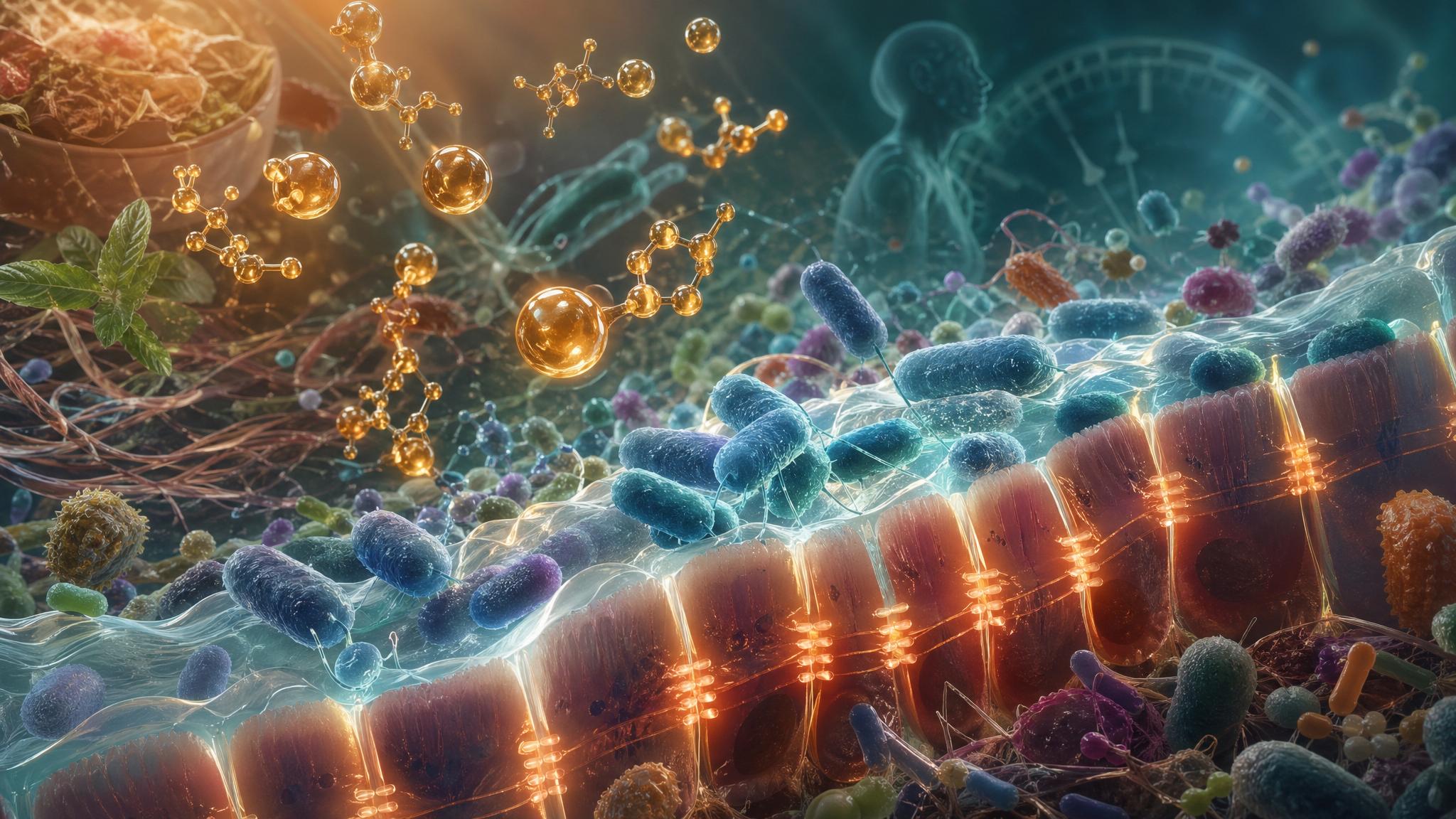
The Centenarian Gut: How Bacterial Bile Acids From the World’s Oldest People Are Rewriting Longevity Science
A 2021 Nature paper from Kenya Honda’s lab at Keio University in Tokyo reported a strange finding. When the team profiled the stool of 160 Japanese centenarians and compared the chemistry with healthy elderly and younger controls, one molecule jumped out of the data. The centenarians carried unusually high concentrations of a secondary bile acid called isoallolithocholic acid, or isoalloLCA. In younger and middle aged adults the molecule was barely detectable. In people who had lived past 100 it appeared at levels up to 25 times higher.
Presented By Our Partners


The team then traced the molecule back to its source and identified a small consortium of gut bacteria, including a previously unstudied strain named Parabacteroides merdae and a member of the Odoribacteraceae family, that performed the multi step chemical transformation needed to produce isoalloLCA from a precursor bile acid. The microbes were rare in most adults and enriched in centenarians. The bile acid itself turned out to be a potent antimicrobial, killing pathogens including vancomycin-resistant Enterococcus faecium and Clostridioides difficile at concentrations the gut routinely reaches.
Five years on, the centenarian gut has become one of the most actively mined data sources in longevity science. The Institute for Systems Biology in Seattle has published a series of papers showing that the human microbiome becomes more individualized with age and that the most unique guts belong to the healthiest survivors. The University of Bologna group led by Patrizia Brigidi and Claudio Franceschi has spent more than a decade documenting how the bacterial composition of Italian centenarians differs from younger adults. The Sonnenburg lab at Stanford has shown that the centenarian community is not just different in species composition but in functional output, producing a distinct chemistry of short chain fatty acids, polyamines, and now bile acids.
The emerging picture is that the gut of an extreme survivor is not a degraded version of a younger gut. It is a remodeled ecosystem with its own chemistry, its own immunological dialogue, and possibly its own contribution to the extra decades a centenarian gets.
What Honda Found and Why It Mattered
The Honda lab paper, published in Nature in August 2021 under the title "Novel bile acids from human gut microbes promote longevity in centenarians," was the kind of result that takes a quiet finding from comparative microbiology and turns it into a serious hypothesis about human aging.
Bile acids are detergents. The liver makes them from cholesterol, secretes them into the small intestine to emulsify dietary fat, and then recycles most of them back to the liver via the portal vein. A small fraction escapes into the colon, where gut bacteria perform a series of chemical edits, removing hydroxyl groups, reorienting stereochemistry, and producing a family of secondary bile acids that signal to the host immune system through receptors like FXR and TGR5.
What Honda’s team found in the centenarian samples was not just one new bile acid. It was an entire pathway. The centenarian microbes converted lithocholic acid, a common secondary bile acid, into a series of derivatives the field had never described in living humans at meaningful concentration. IsoalloLCA was the standout. The molecule’s distinctive 3 beta hydroxyl and 5 alpha hydrogen stereochemistry gave it antimicrobial properties that ordinary lithocholic acid did not have.
When the researchers fed isoalloLCA to mice colonized with Clostridioides difficile, the pathogen was suppressed. When they added it to cultures of vancomycin-resistant Enterococcus, the bacteria died. The minimum inhibitory concentrations were in the same range achieved by some clinical antibiotics, but isoalloLCA was a host friendly molecule that left commensal bacteria largely untouched.
The implication was unsettling and exciting in equal measure. If the centenarian gut was selectively enriched in bacteria that produced a natural antibiotic targeting gut pathogens, then one piece of the centenarian advantage might be a lifelong, low level pressure against the opportunistic infections that kill many older adults.
The Uniqueness Drift Signal
In parallel with Honda, a group at the Institute for Systems Biology led by Sean Gibbons and including microbiome scientist Tomasz Wilmanski published a series of papers in Nature Metabolism between 2021 and 2024 that introduced a different lens on the same phenomenon.
The Gibbons team studied more than 9,000 American adults aged 18 to 101 enrolled in the Arivale and American Gut cohorts. They asked a question slightly different from the species composition question Honda asked. They asked whether the microbiome of an older adult tended to look more or less like the microbiome of an average adult.
The answer was that the healthy aging microbiome diverges. As people get older, the dominant Bacteroides species that anchor most adult guts shrink in proportion. Rarer taxa expand. The functional output shifts. The team called the pattern uniqueness drift. Crucially, the people who scored highest on uniqueness were the healthiest. They had lower LDL cholesterol, lower triglycerides, higher HDL, better self reported energy, and a lower risk of death over follow up.
When Wilmanski stratified the data by age, the uniqueness signal got stronger in each decade. Among nonagenarians and centenarians, the divergence was extreme. The microbiomes of the oldest survivors did not look like the microbiomes of any younger group. They looked like an entirely different community, with its own chemistry and its own dominant species.
Taken with the Honda data, the picture sharpens. The centenarian gut is not a frozen version of a 30 year old gut. It is a remodeled community with bespoke chemistry, including bile acids that the rest of the population does not produce in meaningful amounts.
Featured Partner
Invest in the Infrastructure Behind Modern Medicine
As healthcare expands beyond hospital walls, the buildings and campuses supporting that shift are generating compelling returns for investors who move early. The Healthcare Real Estate Fund offers qualified investors direct access to a curated portfolio of medical office, outpatient, and specialty care facilities.
Learn More →
The Bologna Centenarian Cohort
The Italian work, anchored by the University of Bologna group led by Brigidi, Marco Candela, and Claudio Franceschi, has been building toward this conclusion for nearly two decades. The Bologna team studied the microbiomes of more than 300 Italian centenarians and semi-supercentenarians, the small group of people aged 105 to 109 and beyond.
In a 2016 paper in Current Biology, the group reported that semi-supercentenarians carried a microbiome distinct even from younger centenarians. Akkermansia muciniphila, Christensenellaceae, and Bifidobacterium were enriched. Several Proteobacteria normally associated with inflammaging were depleted. A 2020 follow up in Nature Communications layered metabolomics on top of 16S rRNA sequencing and confirmed that the centenarian gut had a distinct chemical fingerprint, with higher polyamine output and lower secondary bile acid toxicity compared to younger adults.
The Bologna group has been careful to point out that diet is part of the explanation. Italian centenarians eat differently than the rest of the population, with a higher fiber Mediterranean baseline and lifelong exposure to fermented foods. But the team has also shown that diet alone does not account for the divergence. The species composition of the centenarian gut includes strains that are rare or absent in the general population at any age, suggesting either lifelong colonization or active selection by the aging host.
The Akkermansia Story Runs in Parallel
The bile acid finding has a sister narrative built around a single bacterial species. Akkermansia muciniphila was discovered in 2004 by Willem de Vos and Muriel Derrien at Wageningen University. The bacterium lives in the mucus layer of the colon and converts mucin into short chain fatty acids and propionate. The Patrice Cani lab at the Catholic University of Louvain in Belgium has spent two decades showing that higher Akkermansia abundance correlates with better metabolic health, lower visceral fat, and improved insulin sensitivity.
In a 2019 Nature Medicine paper, Cani’s team reported the first human trial of pasteurized Akkermansia muciniphila in overweight adults with metabolic syndrome. Three months of daily supplementation produced reductions in insulin, total cholesterol, and inflammatory markers compared to placebo. The result was modest in absolute terms but striking as a proof of concept. A single bacterium, killed by pasteurization and delivered as a freeze dried capsule, had moved cardiometabolic biomarkers.
Akkermansia is also enriched in centenarians. The Bologna group reports higher abundance in the Italian centenarian cohort. Japanese and Chinese centenarian datasets show the same pattern. The species sits at a crossroads of mucus integrity, metabolic signaling, and inflammatory tone, all of which deteriorate in normal aging.
The Akkermansia story is now moving into clinical territory. Several companies, including The Akkermansia Company in Belgium and Pendulum Therapeutics in San Francisco, are running larger trials in metabolic syndrome and type 2 diabetes. Pendulum reported in 2024 that its proprietary Akkermansia and Clostridium butyricum formulation lowered HbA1c by 0.6 percentage points in adults with type 2 diabetes over 12 weeks, a result roughly comparable to a low dose oral diabetes drug.
The Fiber Connection
A consistent finding across the centenarian datasets is that the bacterial communities that perform the most interesting chemistry depend on a steady stream of fermentable substrate. Justin and Erica Sonnenburg’s lab at Stanford has done some of the most rigorous work on this connection. Their group has shown that a low fiber Western diet collapses microbial diversity within a single generation in mice, and that the lost taxa do not return when fiber is reintroduced. Lifetime fiber intake appears to anchor the kinds of bacteria that can perform the multi step transformations needed to produce molecules like isoalloLCA or generate the polyamine signature seen in Italian centenarians.
A 2021 Cell paper from the Sonnenburg lab compared a high fiber intervention to a fermented food intervention in healthy adults over 10 weeks. The fermented food arm increased microbial diversity and decreased 19 inflammatory markers. The high fiber arm did not produce the same diversity gain over the short trial window, but the authors noted that the people who started with the highest baseline diversity gained the most from added fiber, suggesting the existing community has to have the relevant strains before fiber can do its work.
The take home for longevity science is that the centenarian microbiome cannot be installed in a 60 year old gut overnight. The strains that produce the interesting chemistry need to be present, and they need a substrate. Both conditions are easier to maintain across a lifetime than to recreate in a depleted adult gut.
Drug Development Is Already Mining the Signal
The translation of the Honda finding is happening on two tracks. The first is direct supplementation. Several research groups are working on isoalloLCA and related bile acids as candidate therapeutics for recurrent Clostridioides difficile infection, where the molecule’s host friendly antimicrobial profile could fill a real clinical gap. Honda’s lab has reported in unpublished talks that oral isoalloLCA in mice protects against C. difficile colonization without disturbing the rest of the microbiome.
The second track is live biotherapeutic development. Companies including Vedanta Biosciences in Cambridge, Massachusetts and Pendulum Therapeutics are advancing defined consortia of bacterial strains as oral capsules. Vedanta’s VE303, an eight strain consortium derived from healthy human donors, completed a Phase 2 trial in recurrent C. difficile in 2023 and reduced recurrence by 31% compared to placebo. The strains in VE303 overlap with the isoalloLCA producing community Honda identified, although the company has not publicly disclosed whether the bile acid pathway is part of the proposed mechanism.
The broader pharmaceutical interest is in whether centenarian derived strains can be developed as preventive interventions for adults in their 60s and 70s, the decades where inflammaging accelerates and where opportunistic infections begin to take a significant toll.
What We Still Do Not Know
The honest summary of the field as of 2026 is that the centenarian microbiome is a real and reproducible signal, but the causal direction is not fully established. It is possible that the unique chemistry is a consequence of healthy aging rather than a cause. The bacteria might thrive in the centenarian gut because the centenarian gut has stayed inflammation low and immunologically intact, not the other way around.
Animal data from the Honda lab and others is suggestive but not conclusive. Mice given isoalloLCA show reduced colitis severity and reduced pathogen burden. Mice given centenarian derived consortia show small increases in healthspan markers. None of this proves that boosting these molecules or strains in older humans will move lifespan.
The Wilmanski uniqueness signal has a similar limitation. The association between unique microbiomes and better health is consistent across cohorts, but the direction of causality has been hard to pin down. Wilmanski has been explicit in interviews that the team’s working hypothesis is that uniqueness drives health through better immune training and reduced inflammaging, but the experiment to prove it is still ahead.
What the field does have is converging evidence from several independent groups, working in different countries, on different cohorts, using different methods, all pointing at the same set of bacterial taxa and chemical outputs as enriched in extreme survivors. That is a stronger pattern than any single dataset can produce on its own.
What This Means For You
The clinical reality in 2026 is that there is no validated centenarian probiotic. Anyone selling one is over claiming. What the evidence does support is a set of practical positions that compound across decades.
Eat enough fermentable fiber to feed the kinds of strains that perform the interesting chemistry. The target most microbiome researchers converge on is 30 to 50 grams of mixed fiber per day from diverse plant sources. The strain ecology that produces isoalloLCA and the polyamine signature is anchored by genera that depend on resistant starch, inulin, and pectin.
Eat fermented foods regularly. The Sonnenburg fermented foods trial showed a real diversity gain over 10 weeks. Kimchi, sauerkraut, yogurt, kefir, and tempeh are the most studied. The signal was strongest when participants ate six servings per day, but smaller doses produced measurable changes.
Be cautious with broad spectrum antibiotics in midlife and beyond. Each course depletes diversity, and recovery is not guaranteed. The Bologna data suggest that the strains lost in repeated antibiotic exposure are some of the same strains that anchor the centenarian community.
Treat current direct to consumer probiotic capsules with skepticism. Most of the products on the market deliver strains that do not match the centenarian signal. The exception is the small set of clinically tested live biotherapeutics, including the Akkermansia formulations from Pendulum and The Akkermansia Company, which have run human trials with metabolic endpoints. Even there, the gains are modest and the cost is significant.
If you have access to microbiome sequencing through Tiny Health, Onegevity, Viome, or a research study, the signals worth tracking are total diversity (Shannon index above 4 is a useful floor for an adult), Akkermansia muciniphila presence at any detectable level, and Bifidobacterium maintenance through middle age, where Bifidobacterium typically declines.
The deeper lesson is that the centenarian gut is a long building project. The strains that produce isoalloLCA appear to have been resident in those guts for decades, fed by a lifetime of fiber and fermented food, protected by sparing use of antibiotics, and maintained by an immune system that did not lose its dialogue with the microbial community. The version of you that benefits most from the centenarian microbiome is the version that has been investing in it since your 30s and 40s, not the version that buys a probiotic capsule at 75.
The science still has unanswered questions. But the practical playbook for the next decade of your gut is unusually clear, and the evidence base is unusually strong for a field that is only a few years past its first major centenarian bile acid paper.


Similar Posts
Theragun PRO Gen 6: Professional Grade Percussive Therapy for Deep Tissue Recovery
Muscle recovery begins at the point of contact: the precise application of force to tissue that has been stressed, damaged, and is waiting to be restored. Presented By Our Partners…

Grip Strength: The Underrated Vital Sign That Predicts Healthspan Better Than Blood Pressure
A 140,000 person Lancet study and the UK Biobank both confirm what longevity researchers have been quietly noting for a decade: a hand squeeze predicts mortality better than blood pressure….
The Daily Rounds: Longevity & Health Care Brief | May 11, 2026
⚖️ Weight Management Protects Cognition: A 24-year cohort study shows managing BMI can measurably slow cognitive decline within two years, making weight one of the most actionable levers against brain aging. 🐀 Longevity Gene Transfer Works Across Species: Transferring a naked mole rat longevity gene into mice extended lifespan by 4.4% with less inflammation and stronger cancer resistance, validating cross-species longevity research as a path toward human applications. 🦠 Young Microbiome Halts Liver Aging in Mice: Transplanting gut bacteria from young animals into aging ones stopped liver deterioration and reduced cancer risk, positioning microbiome rejuvenation as a potent preclinical anti-aging strategy. 🤖 AI Drug Discovery Set to Double by 2031: The global market will reach $2.3 billion by 2031, with 80% of pharma organizations increasing AI investment and marking full operational integration of AI into pharmaceutical R&D pipelines. 🌬️ Wim Hof Benefits Compound Over Time: A 404-person randomized trial confirms the Wim Hof Method produces dose-dependent, progressive improvements in stress resilience and mental clarity, with gains accelerating across successive days of practice.
SiPhox Health Core Panel: Fingerstick ApoB and Advanced Lipid Testing at Home
A microfluidics-powered fingerstick blood panel that brings advanced cardiometabolic markers like ApoB, hsCRP, and HbA1c to your kitchen table at a fraction of the cost of traditional lab panels. Presented…
PNOĒ Portable Metabolic Analyzer: Clinical Indirect Calorimetry for Gyms and Clinics
A portable indirect calorimetry system that brings VO2max testing and resting metabolic rate measurement out of the research lab and into the gym, the wellness clinic, and the coaching studio….

FDA AI in Cardiology: Heart Monitoring Moves From the Clinic to the Body
Cardiology is becoming one of the clearest bridges between regulated medical AI, remote monitoring, ECG analysis, and consumer heart devices.
