
Does Berberine Lower Cholesterol? Strong Evidence, 18 Trials Reviewed
Yes. Across 18 placebo-controlled randomized trials with 1,788 participants, berberine lowered LDL cholesterol by 0.46 mmol/L, about 18 mg/dL, total cholesterol by 0.48 mmol/L and triglycerides by 0.34 mmol/L, with no serious adverse events in any trial (PMID 36941490). It is the quietest strong claim in the berberine literature, and the one with the least hype behind it: on HDAI’s HYPE Index it scores 26, Largely calibrated, with the residual gap coming from surrogate endpoints rather than overclaiming.
Presented By Our Partners


What the trials found
| Source | Design | LDL cholesterol result |
|---|---|---|
| PMID 36941490 (2023) | Meta-analysis, 18 placebo-controlled RCTs, n=1,788 | -0.46 mmol/L (95% CI -0.62 to -0.30); TG -0.34 mmol/L; ApoB -0.25 g/L |
| PMID 34956436 (2021) | Meta-analysis, 46 RCTs in type 2 diabetes | -0.86 mmol/L; HDL +0.17 mmol/L |
| PMID 32237527 (2020) | Meta-analysis, 25 RCTs, n=3,042 | Lower TC, TG and LDL, higher HDL; adverse events no different from control |
| PMID 41543854 (2026) | RCT, n=337, 6 months, 1 g/day | -7.72 mg/dL (95% CI -13.13 to -1.93); ApoB -3.42 mg/dL; hs-CRP down |
| PMID 34444711 (2021) | RCT, n=84 men, 12 weeks, 500 mg twice daily | Total cholesterol -0.39 mmol/L; HDL -0.07 mmol/L |
| PMID 29228784 (2018) | Systematic review, 12 RCTs | LDL reductions of roughly 20 to 50 mg/dL; triglycerides 25 to 55 mg/dL |
The 2023 meta-analysis is the cleanest estimate because it included only placebo-controlled trials and registered its protocol in advance. Trials ran 4 to 24 weeks, 83 percent were conducted in mainland China or Hong Kong, and gastrointestinal side effects were more common on berberine (2 to 23 percent versus 2 to 15 percent). It also found a sex difference nobody had reported: HDL rose 0.11 mmol/L in women and fell 0.07 mmol/L in men (PMID 36941490). A trial that stopped and restarted berberine in 97 adults with mild hyperlipidemia watched lipids improve on treatment, rebound during a 2-month washout, and improve again on re-treatment, a pattern that strengthens the causal case (PMID 27491226).
How an 18 mg/dL drop compares
Low-intensity statin therapy typically lowers LDL by 20 to 30 percent; for someone starting at 130 mg/dL that is 26 to 39 mg/dL. Berberine’s pooled 18 mg/dL sits below that range. The comparison matters because statins have decades of trials showing fewer heart attacks and strokes, and berberine has none. A lipid number is a surrogate; the outcome is the event it is supposed to predict.
Featured Partner
Invest in the Infrastructure Behind Modern Medicine
As healthcare expands beyond hospital walls, the buildings and campuses supporting that shift are generating compelling returns for investors who move early. The Healthcare Real Estate Fund offers qualified investors direct access to a curated portfolio of medical office, outpatient, and specialty care facilities.
Learn More →
Why combination products muddy the picture
Many of the most impressive berberine lipid trials did not test berberine. A food supplement combining red yeast rice, berberine, CoQ10 and hydroxytyrosol lowered LDL by 39 mg/dL in 4 weeks (PMID 28579756), but red yeast rice contains monacolin K, which is chemically lovastatin; the result belongs to a statin. Berberine paired with silymarin to improve absorption held lipids steady for 6 months in 137 statin-intolerant patients while the placebo group’s LDL rose 19.6 mg/dL (PMID 25577665), and a meta-analysis found the silymarin combination outperformed berberine alone (PMID 31441678). Those are real results for those products, not for a plain berberine capsule.
What we do not know
No trial has measured cardiovascular events or mortality. No trial has run longer than 52 weeks. The HDL sex difference has no explanation. And berberine’s oral bioavailability is very low, which raises the question of why it works at all; the leading hypothesis is action in the gut and on gut bacteria rather than in the bloodstream, which the PREMOTE lipid substudy supported when berberine plus Bifidobacterium breve outperformed either alone on postprandial lipids (PMID 34923903).
Doses used in studies
These are doses reported by the named sources, not recommendations.
- Trials pooled in PMID 36941490 commonly used 500 mg twice daily for 4 to 24 weeks.
- The Hong Kong men’s trial (PMID 34444711) used 500 mg twice daily for 12 weeks.
- The mild hyperlipidemia washout trial (PMID 27491226) used 300 mg three times daily for 3 months.
What this means for you
Berberine’s lipid effect is real, modest, short-term and untested on outcomes. Anyone comparing it with a statin is comparing a surrogate marker with a mortality trial. The full berberine evidence review grades all 11 claims; the side effects page covers the interaction with anticoagulants and cyclosporine.


Similar Posts

From Prediction to Navigation: The AI Shift Healthcare Has Been Waiting For
Clinical AI has spent years predicting risk. The next test is harder: whether AI can help patients and clinicians choose the right next action and complete the path to care.

Ultra-Processed Food Is Rewiring Your Brain: What 385,000 People Reveal About Diet, Depression, and the Gut-Brain Axis
A meta-analysis of 385,541 people finds that high ultra-processed food consumption raises depression risk by 44 percent and anxiety risk by 48 percent. New research on the gut-brain axis, neuroinflammation,…
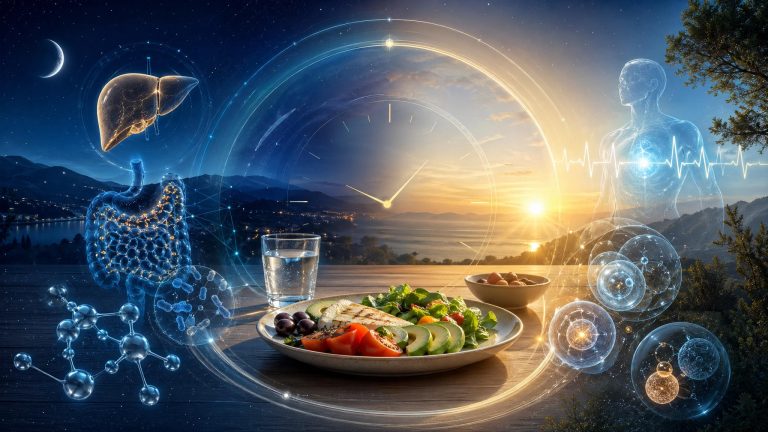
The Three-Day Threshold: New Research Maps When Fasting Actually Transforms Your Body at the Molecular Level
A proteomics study tracking 3,000 proteins during a seven-day water-only fast found that the body’s most dramatic biological changes do not appear until 72 hours in. The implications are reshaping…
Google Nest Hub 2nd Gen: Radar-Based Sleep Tracking in a Smart Display
Google quietly embedded a sleep laboratory’s most basic measurement principle inside a $99 alarm clock. The question is whether convenience can compensate for clinical depth. Presented By Our Partners The…
The Daily Rounds: Longevity & Health Care Brief | April 6, 2026
🔬 Epigenetic Reprogramming Enters Human Trials — The FDA cleared the first partial de-aging trial using OSK reprogramming factors, targeting vision restoration in glaucoma patients. 🧠 Diet and APOE Genetics Collide — Higher meat intake correlated with slower cognitive decline in older adults carrying Alzheimer's risk genes, upending common dietary assumptions. 🤖 NVIDIA and Lilly Bet $1 Billion on AI Drug Discovery — A landmark co-innovation lab in San Francisco will embed AI engineers alongside biologists to redesign how medicines are discovered. 🦠 Gut Bacteria Act Like Syringes — Common gut microbes can inject proteins directly into human cells, reshaping how researchers understand microbiome-immune crosstalk. 😴 Circadian Fragmentation Doubles Dementia Risk — Weak internal body clocks are now confirmed as a significant, and potentially modifiable, risk factor for dementia.
Inito Fertility Monitor: Four-Hormone Cycle Analysis From Your Smartphone
A validation study of 100 women found that quantitative urinary hormone monitoring achieved 100% specificity for confirming ovulation, with correlation to laboratory assays within 5% variance. Presented By Our Partners…