
Emotiv Insight 2.0 Review: 5-Channel EEG, Price, and Real Limits
A century after the first human brainwave was recorded, five sensors and a Bluetooth radio put the signal on your desk. What that signal can honestly tell you is a narrower story.
Presented By Our Partners



In 1924, in a hospital in Jena, Germany, a psychiatrist named Hans Berger recorded something no one had captured before: a faint electrical rhythm rising from the surface of a living human head. Among the waves he described was the rhythm now called alpha, a slow, regular oscillation cycling 8 to 12 times a second that swells when the eyes close. His colleagues were skeptical, and acceptance came slowly. Berger also imagined clinical uses, including in what he called senile dementia, a hope that a 2025 centenary review in Clinical Neurophysiology says the field is still working to fulfill.
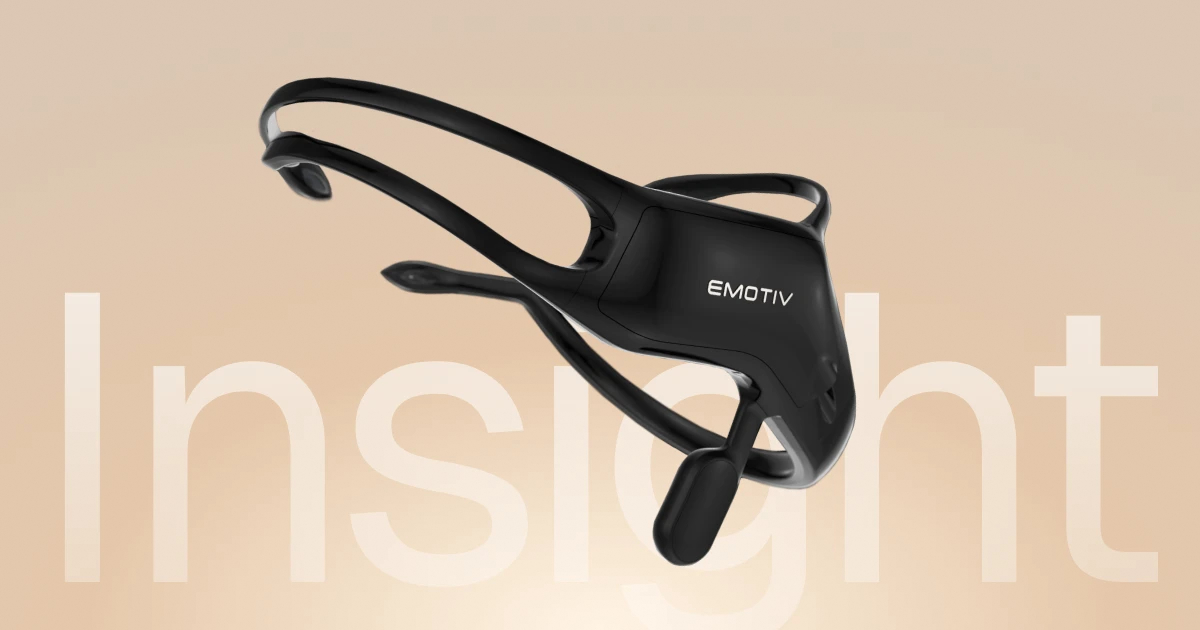
A century later, the Emotiv Insight 2.0 puts a descendant of Berger’s measurement on your own head. It is a five-channel wireless electroencephalography (EEG) headset made by the neurotechnology company Emotiv, and it records the brain’s electrical rhythms through five semi-dry polymer sensors, sampling each 128 times a second and streaming the data to a laptop or phone. Emotiv sells it simply as the Insight; the current generation is the one researchers call Insight 2.0.
The appeal is obvious: real brain signals, raw data you can program against, no gel, and a price far below lab equipment. The question is harder. Five dry-ish sensors on a moving head are listening to a whisper through bone. What can they reliably hear, and what are the apps on top of them only guessing?
The short answer: The Emotiv Insight 2.0 (Emotiv, current model as of 2026) is a five-channel wireless EEG headset that records real brain rhythms and gives developers raw data and a brain-computer interface toolkit. It is a good teaching and prototyping instrument. Its built-in focus and stress scores are not validated, and it is not a medical device. Buy it to build and learn, not to diagnose or optimize your brain.
- Best for: students, developers, and researchers prototyping brain-computer interfaces or simple EEG experiments outside the lab.
- Not for: diagnosing anything, clinical neurofeedback, or anyone who wants a guided meditation experience without technical work.
- Price (October 2026): $499 on Emotiv’s store; some software features may cost extra, so check Emotiv’s current licensing.
- Regulatory status: not FDA cleared (we found no FDA clearance); sold for research and personal use.
- Evidence: Limited; Emotiv’s EPOC family has head-to-head validation against research systems, but we found none for the Insight itself.
What Is the Emotiv Insight 2.0?
The Emotiv Insight 2.0 is a five-channel wireless EEG headset with sensors over the forehead, the temples, and the top of the back of the head. It streams raw EEG wirelessly and works with Emotiv’s software and developer interface for brain-computer interface (BCI) projects, simple experiments, and Emotiv’s own mental-state metrics.
The Insight has a longer history than most consumer neurotech. In 2013, Emotiv took the first Insight to Kickstarter, pitching it as brainwear to track cognitive health, and the campaign cleared a $1 million stretch goal. The company’s larger headsets, the 14-channel EPOC X and the 32-channel EPOC Flex, are built for research coverage. The Insight, with fewer sensors and no saline to prepare, is the quick-setup member of the family.
The details come from the studies that have used it. The five recording sensors sit at standard positions in the international 10-20 system: AF3 and AF4 over the left and right forehead, T7 and T8 over the temples, and Pz at the top of the back of the head, as documented in a 2024 study that built a public EEG dataset with the device. A 2024 engineering study describes five semi-dry polymer sensors plus two reference electrodes, an internal sampling rate of 128 samples per second per channel, wireless connection by Bluetooth or a 2.4 GHz dongle, and a 450 mAh battery rated for about eight hours. The same team controlled a door and a light through Emotiv’s Cortex API, the programming interface that turns the headset into a developer platform.
That platform is the point. A consumer meditation headband hands you a score. The Insight hands you the waveform, and much of its research life has been spent as a data source: a 2024 biometric dataset paired Insight recordings with handwritten signatures from 70 people, and a deception dataset recorded 27 more. As of October 2026, we found no announced successor model.
How Does the Emotiv Insight Work? The Physics of a Brainwave
The Insight measures tiny voltage differences on the scalp produced when large groups of brain cells receive synaptic input at the same time. Software then breaks that signal into rhythms by frequency, such as theta, alpha, and beta, and tracks how their power shifts. It measures the brain’s electrical weather, not individual thoughts.
Start inside the cortex. Its most numerous cells, pyramidal neurons, have long apical dendrites that run in parallel, like the trunks of trees in a planted forest. When synapses along those dendrites fire, ions rush across the cell membrane, and current flows out again elsewhere along the cell. Each neuron becomes a tiny electrical dipole. According to a 2012 review in Nature Reviews Neuroscience, synaptic currents are the main contributor to these extracellular fields, and two factors decide how strong the field gets: how neatly the cells are aligned, and how synchronously they act. One neuron is inaudible. Large populations working in step become a chorus.
That chorus still has to escape. The field weakens with distance from its source, and before reaching an Insight sensor it must pass through cerebrospinal fluid, skull, and scalp. The scalp signal exists at all because of volume conduction: return currents spread through the tissue, and a sliver of them reaches the skin. By the time it arrives, activity from a broad patch of cortex has blurred together. The same review describes the inverse problem that follows. Many different patterns of cellular activity can produce the same scalp signal, so a recording cannot be run backward to say exactly which neurons did what.
Why rhythms matter. What survives the journey best is synchrony, which shows up as oscillation. Alpha, Berger’s rhythm, is the clearest example. For decades alpha was read mainly through its suppression when the brain engaged, but a 2006 review in Brain Research Reviews argues that rising alpha reflects active, top-down inhibition, the brain closing gates on processing it does not need, while falling alpha marks those gates opening as cortex engages. Close your eyes and alpha swells; open them and it shrinks. That eyes-open versus eyes-closed shift is so robust that validation studies use it as a basic test of whether a headset is recording brain activity at all.
What five sensors can and cannot see. Two sensors on the forehead, two at the temples, and one at the back of the crown give the Insight a coarse map: it can compare left with right and front with back. It cannot localize a source with precision, and it leaves most of the scalp unsampled. The sampling rate sets another ceiling. At 128 samples per second, signal theory caps the usable frequency range at 64 cycles per second, so the device cannot see faster activity at all.
The noise problem. The brain is not the only electrical source on your head. Blinks and eye movements produce large voltage swings near the forehead sensors, and the temporal sensors sit close to the jaw muscles, so clenching, chewing, or talking can swamp the signal. Semi-dry sensors make setup fast, but contact through hair is less stable than gel. That is why careful EEG work depends as much on artifact handling as on hardware, and why the Insight’s built-in mental-state scores are only as good as the algorithms cleaning up the signal.
How Accurate Is the Emotiv Insight? What the Research Shows
The Insight records genuine EEG, and Emotiv’s larger headsets have held up in head-to-head tests against research systems. But in our PubMed search we found no published head-to-head validation of the Insight itself, and studies using it report patchy signal quality, modest command accuracy, and classifier results that collapse under stricter testing.
The family record. Emotiv’s EPOC line has been tested repeatedly against lab equipment. In a 2013 PeerJ study, 21 adults wore an EPOC and a research-grade Neuroscan system at the same time; the late auditory brain responses looked similar on both, while a subtler response called the mismatch negativity matched only for 11 of the 21 participants. In a 2020 PeerJ study, the saline EPOC Flex produced mismatch and P300 responses equivalent to Neuroscan, with waveform correlations above 0.81, and both systems saw alpha rise with the eyes closed, though Neuroscan’s signal-to-noise ratio in a flicker test was more than twice as high (19.94 versus 8.98). In 2026, a classroom study of 93 children aged 9 to 10 found the EPOC X measured one parameter of a slow background feature of the EEG, called aperiodic activity, about as reliably as a research-grade system (intraclass correlations of 0.91 to 0.94), though a second parameter was less reliable (0.76 to 0.81), and it replicated a link between that activity and math ability (Behavior Research Methods). The same year, a 32-channel EPOC Flex captured a robust late brain response to images of pain just as a 64-channel lab system did, though neither system reliably separated earlier, subtler effects, and the lab system showed better noise characteristics (NeuroImage).
Read those results carefully before transferring them to the Insight. They used 14 to 32 saline or water-based sensors, not five semi-dry ones, and an older comparison in Physiological Measurement (2015) found the original EPOC simply lacked electrodes in the right places for two of five standard tests. Coverage determines which questions a headset can answer at all.
Signal quality in practice. When nursing researchers in Brazil used the Insight 2.0 to monitor 17 students in a virtual-world learning lab, only 9 produced stable EEG signals (International Journal of Psychological Research, 2024). In the 2024 home-automation study, 20 volunteers trained two mental commands for about 25 minutes, 100 training trials of 8 seconds each per command, then succeeded on roughly 70 percent of attempts, about 10.5 of 15. Participants reported the headset became uncomfortable after 20 minutes, and the authors noted weaker signals in some participants with long or thick hair (Biomimetics). In a 2023 HardwareX project, the Insight steered a low-cost 3D-printed prosthetic hand with an 86.67 percent average success rate in bench tests. These are proof-of-concept builds, not validation studies, but they set realistic expectations.
Featured Partner
Invest in the Infrastructure Behind Modern Medicine
As healthcare expands beyond hospital walls, the buildings and campuses supporting that shift are generating compelling returns for investors who move early. The Healthcare Real Estate Fund offers qualified investors direct access to a curated portfolio of medical office, outpatient, and specialty care facilities.
Learn More →
A cautionary tale about accuracy claims. In 2024, researchers recorded 27 people with the Insight while they told the truth or lied, and reported 99.88 percent accuracy at telling the two apart (Medical and Biological Engineering and Computing). In 2026, a second team reanalyzed the same public dataset with a stricter design: train on some people, test on people the model had never seen. Accuracy fell to 66.70 percent at the session level, with an area under the curve of 0.58, barely above a coin flip. The same team’s own subject-dependent model reached 99.94 percent, and they warned that such near-ceiling results from overlapping data windows “should not be interpreted as a meaningful indicator of deception-detection capability” (Sensors, 2026). Remember that when you see a consumer EEG headline with a number in the high 90s.
What low-cost EEG does reliably. Broad, slow changes in state are the sweet spot. A 2020 systematic review in Frontiers in Neuroinformatics found 46 relevant studies using consumer headsets, including the Insight, to detect drowsiness, and concluded that even basic band-power features consistently picked it up, while warning that differing methods made comparisons between devices problematic and that reliability still had to be addressed. Fine-grained claims, such as reading specific emotions, intentions, or a numeric focus score, are where the evidence thins out.
Is the Emotiv Insight a Research Tool or a Consumer Device?
It is a research and development tool that consumers can buy. Its strengths, raw data and an open developer interface, matter most to people who will write code or run experiments. Its consumer-facing mental-state scores are proprietary estimates without published validation, and consumer EEG neurofeedback in general has weak evidence.
As a research instrument, the Insight earns its place where portability and cost matter more than coverage: teaching labs, public datasets, BCI coursework, and pilot projects that would never get time on a 64-channel lab system. A researcher who knows its limits, validates the specific signal they need, and reports results honestly can do real work with it. Which signal matters: the Insight’s five sites will not capture what a study needs if the effect lives over the motor strip or the back of the head beyond Pz.
As a consumer device, the picture is weaker. Emotiv’s software reports performance metrics such as stress, engagement, focus, excitement, and relaxation; the nursing study used exactly those algorithmic outputs. We found no peer-reviewed study validating those scores against established measures. They may track something real. No one has shown what.
And neurofeedback? Training your brain by watching its rhythms is the promise behind most consumer EEG. The evidence is sobering. A 2025 meta-analysis in the Journal of Medical Internet Research pooled 16 randomized trials of consumer-grade neurofeedback during meditation, 11 of them using the Muse headband, and found a small reduction in psychological distress (an effect size of 0.16) but no improvement in cognition, mindfulness, or physiological health, and no evidence that participants actually changed the brain targets they were trained on. The authors raised the possibility of “neurosuggestion,” a placebo effect of neurotechnology. Even in clinical settings, a 2025 JAMA Psychiatry meta-analysis of 38 randomized trials with 2,472 participants found that neurofeedback for ADHD produced no significant improvement in blinded ratings of total symptoms (effect size 0.04), with a small benefit (0.21) only in the nine trials that used established standard protocols. If clinic-grade neurofeedback struggles to show benefit on blinded ratings, a five-channel home headset should not be sold to you as a brain trainer.
For a framework on reading claims like these, our explainer on what “clinically validated” actually means is a useful companion.
What the Emotiv Insight Gets Right
The Insight gets the developer basics right: real raw EEG, a documented programming interface, quick setup, and a price that puts genuine brain recording within reach of students. For learning how EEG and BCIs work, it is one of the most accessible tools available.
Open data. You can see and process the actual signal rather than trusting a black-box score. That is why researchers have built shared datasets with it, and why it suits anyone who wants to learn signal processing on real brain data.
A real BCI on a budget. Through the Cortex API, hobbyists and engineers have used the Insight to switch lights, open doors, and drive a prosthetic hand. The success rates are modest, but the experience of training a command and watching it work is a genuine education in how brain-computer interfaces function and fail.
Fast setup. Semi-dry polymer sensors need no gel and no saline soaking, which makes short, repeated sessions realistic in classrooms and homes. For many teaching uses, convenience is the feature that decides whether the device gets used at all.
Honest physics. Its five sensors span forehead, temples, and parietal midline, positions suited to demonstrating core phenomena of EEG, such as alpha rising with closed eyes and the effects of blinks and muscle tension, which makes it a useful demonstration tool.
Where the Emotiv Insight Falls Short
Five sensors cover little of the scalp, semi-dry contact is fragile, the device has no published head-to-head validation, and its mental-state scores are unproven. It is easy to get a signal from the Insight. It is harder to be sure what the signal means.
Thin coverage. Five sites leave large regions unsampled, including the central motor strip, which many BCI paradigms rely on. If the activity you care about is not under a sensor, no algorithm can recover it.
Signal reliability. In the nursing study, roughly half of students produced unusable data; in the home-automation study, hair affected quality and comfort faded after about 20 minutes. Expect to spend real time on fit, sensor contact, and artifact rejection.
No direct validation. Emotiv’s EPOC family has a respectable validation record, but those devices use more sensors and saline contacts. We found no peer-reviewed study comparing the Insight’s signal head to head with a research-grade system, so researchers should validate it for their own paradigm before relying on it.
Inflated accuracy is easy. The deception dataset shows how a small sample, overlapping data windows, and testing on the same people used for training can turn a weak signal into a 99 percent headline. That is a methods problem across the field, not an Emotiv flaw, but it is the context in which every Insight result should be read.
Not for health decisions. We found no FDA clearance for the Insight, and it is not designed to detect seizures, sleep disorders, or cognitive decline. Even Emotiv’s 14-channel EPOC X, in a 2025 Brain Sciences study of 122 people, distinguished dementia from healthy controls but could not separate mild cognitive impairment from health.
Emotiv Insight vs EPOC X vs Muse 2 vs Neurosity Crown
The Insight is the light, affordable entry point to Emotiv’s research ecosystem. The EPOC X adds coverage for serious studies, the Muse 2 is the simplest consumer option for meditation feedback, and the Neurosity Crown covers motor and parietal regions for developers focused on attention and BCIs.
| Feature | Emotiv Insight 2.0 | Emotiv EPOC X | Muse 2 | Neurosity Crown |
|---|---|---|---|---|
| EEG channels | 5 | 14 | 4 | 8 |
| Sensor sites | AF3, AF4, T7, T8, Pz | AF3, F7, F3, FC5, T7, P7, O1, O2, P8, T8, FC6, F4, F8, AF4 | AF7, AF8, TP9, TP10 (Muse headbands in published studies) | C3, C4, CP3, CP4, F5, F6, PO3, PO4 |
| Sampling rate in published studies | 128 Hz | 128 Hz | 256 Hz reported for Muse S; Muse 2 not confirmed | 256 Hz |
| Sensor type | Semi-dry polymer | Saline (water-based) | Dry (Muse headbands in published studies) | Not reported in studies we found |
| Published validation | No head-to-head validation found | Strong for its class (EPOC family): ERPs, alpha, aperiodic activity | ERP feasibility shown; small neurofeedback effects | Limited |
| Price (October 2026) | $499 | $1,199 | Check Muse’s store | Check Neurosity’s store |
| Best for | BCI learning and light-weight experiments | Research needing broader coverage | Guided meditation feedback | Developers working on focus and BCIs |
If your project needs more of the scalp, the Emotiv EPOC X nearly triples the channel count and carries most of the family’s validation. For calm, guided sessions with no coding, the Muse 2 headband is purpose-built; the Muse platform’s four sensors were enough for a 2017 study in Frontiers in Neuroscience to capture classic brain responses such as the P300. The Neurosity Crown places its sensors over motor and parietal cortex, territory the Insight barely touches. The NeuroSky MindWave Mobile 2 is another entry-level option, though in the drowsiness review the lowest reported accuracy, a minimum of 31 percent, came from a NeuroSky MindWave study. Browse the full set in our neurology device reviews.
How Much Does the Emotiv Insight Cost, and Is It HSA or FSA Eligible?
As of October 2026, Emotiv’s store lists the Insight at $499, compared with $1,199 for the 14-channel EPOC X. Software matters too: confirm on Emotiv’s site whether the raw-data and analysis features you need require a paid software license before you buy.
Because the Insight is not a prescribed medical device and has no FDA clearance, it is unlikely to qualify for HSA or FSA reimbursement, and insurance is unlikely to cover it. Ask your plan administrator if you are unsure. For researchers, the realistic total cost includes time: fitting the headset, checking sensor contact, and building a pipeline to reject blinks and muscle artifacts. Budget for that, and the $499 sticker is a fair price for a working EEG teaching and prototyping kit. Skip that work, and it is an expensive headband.
Who Should Buy the Emotiv Insight, and Who Should Skip It?
The Insight suits people who want to work with raw brain data: students, developers, educators, and researchers running small or pilot studies. It is the wrong purchase for anyone hoping to measure brain health, treat a condition, or get guided meditation without technical effort.
Good candidates:
- Students and educators teaching how EEG and brain-computer interfaces work, using real signals rather than simulations.
- Developers prototyping BCI or attention-aware applications who can tolerate modest accuracy and long training.
- Researchers running pilot or field studies where portability matters more than coverage, and who will validate the signal they need.
- Technically curious people who want to see their own alpha rhythm and learn signal processing on real data.
Better served by something else:
- Anyone with memory concerns, suspected seizures, or a sleep disorder: those need clinical evaluation, not a consumer headset.
- Parents considering home neurofeedback for ADHD: even clinical neurofeedback shows weak blinded benefit, and this device is not built for it.
- Meditators who want guidance and feedback with no coding: a purpose-built headband or app is simpler.
- Researchers who need broad coverage or publication-grade ERPs: start with the EPOC X, the EPOC Flex, or lab equipment.
If you have neurological symptoms, the Healthcare Discovery doctor directory lists neurologists and sleep specialists by state.
What This Means for You
The brain’s rhythms are among the most promising early signals in the fight against the Mind Thief, neurodegenerative disease, one of the Four Villains of Health and Longevity. The 2025 centenary review of Berger’s work describes decades of independent research linking abnormal delta, theta, and alpha rhythms in Alzheimer’s disease to established markers of neuropathology and cognitive decline. Yet the same review notes that 2024 clinical guidelines from the US National Institute on Aging and Alzheimer’s Association and from European neuroscience societies did not endorse routine resting EEG in the workup of older adults with cognitive impairment. Promise and proof are not the same thing, even with lab-grade equipment.
That is the right frame for the Insight. It is a window onto real physiology, and a good one for learning, building, and asking careful questions. It is not a brain-health gauge, and no score it produces should change a medical decision. The behaviors that actually protect the brain are still the Five Pillars: Sleep, when slow waves sweep through cortex; Movement; Nutrition; Breath; and Mindset. Each has a stronger case for protecting the brain than any consumer EEG score.
If you buy one, use it the way Berger used his first recordings: with curiosity, rigor, and suspicion of easy answers. Close your eyes and watch alpha rise. Then remember how much of the brain’s activity those five sensors never reach.
Frequently Asked Questions
Is the Emotiv Insight Worth It?
It is worth it if you want raw EEG data and a brain-computer interface toolkit for learning, teaching, or prototyping, and you are willing to handle fit, sensor contact, and artifacts yourself. It is not worth it as a brain-health monitor or neurofeedback trainer: its built-in focus and stress scores are not validated, we found no FDA clearance, and studies using it report patchy signal quality.
Emotiv Insight vs EPOC X: Which Is Better?
The EPOC X is better for research and the Insight is better for convenience. The EPOC X records 14 channels with saline sensors, and the EPOC family has been validated against research-grade systems for several brain measures; it lists at $1,199 as of October 2026. The Insight records 5 channels with semi-dry sensors at $499 and sets up faster, but we found no published head-to-head validation of its signal.
How Accurate Is the Emotiv Insight?
It records genuine EEG, but accuracy depends heavily on fit and on the task. In one study only 9 of 17 students produced stable signals, and in another, volunteers succeeded on about 70 percent of trained mental commands. A 99.88 percent lie-detection result fell to 66.70 percent when a later team tested the model on people it had never seen, a reminder to read headline accuracy claims skeptically.
Can the Emotiv Insight Be Used for Neurofeedback or ADHD?
It can run neurofeedback experiments, but the evidence does not support it as a treatment. A 2025 JAMA Psychiatry meta-analysis of 38 trials found clinical neurofeedback for ADHD produced no significant improvement in blinded ratings of total symptoms, with a small benefit only for standard protocols. A 2025 meta-analysis of consumer neurofeedback found only a small reduction in distress and no change in the targeted brain activity.
Is the Emotiv Insight FDA Approved?
Not as far as we can find: we found no FDA clearance or approval for the Emotiv Insight. It is designed for brain-computer interface experiments, research, and personal exploration, not for diagnosing or treating any condition. It should not be used to assess seizures, sleep disorders, or memory problems; anyone with neurological symptoms should see a clinician, such as a neurologist, for proper testing.
How Long Does the Emotiv Insight Battery Last?
A 2024 engineering study describes the Insight’s 450 mAh battery as rated for about eight hours of operation. In practice, comfort may run out first: participants in that study reported the headset became uncomfortable after about 20 minutes of wear. Because its semi-dry sensors need no gel or saline, short repeated sessions are easier to manage than long single recordings.
Sources
- Vergani AA. Hans Berger (1873 to 1941): the German psychiatrist who recorded the first electrical brain signal in humans 100 years ago. Advances in Physiology Education, 2024. DOI
- Babiloni C, et al. Alpha rhythm and Alzheimer’s disease: has Hans Berger’s dream come true? Clinical Neurophysiology, 2025. DOI
- Aslan M, Baykara M, Alakus TB. LieWaves: dataset for lie detection based on EEG signals and wavelets. Medical and Biological Engineering and Computing, 2024. DOI
- Nicolescu ST, et al. Deception detection from five-channel wearable EEG on LieWaves: a reproducible baseline for subject-dependent and subject-independent evaluation. Sensors, 2026. DOI (doi: 10.3390/s26031027)
- Dragoi MV, et al. Real-time home automation system using BCI technology. Biomimetics, 2024. DOI (doi: 10.3390/biomimetics9100594)
- Mishra AR, et al. SignEEG v1.0: multimodal dataset with electroencephalography and hand-written signature for biometric systems. Scientific Data, 2024. DOI (doi: 10.1038/s41597-024-03546-z)
- Buzsaki G, Anastassiou CA, Koch C. The origin of extracellular fields and currents: EEG, ECoG, LFP and spikes. Nature Reviews Neuroscience, 2012. DOI (doi: 10.1038/nrn3241)
- Klimesch W, Sauseng P, Hanslmayr S. EEG alpha oscillations: the inhibition-timing hypothesis. Brain Research Reviews, 2006. DOI (doi: 10.1016/j.brainresrev.2006.06.003)
- Badcock NA, et al. Validation of the Emotiv EPOC EEG gaming system for measuring research quality auditory ERPs. PeerJ, 2013. DOI (doi: 10.7717/peerj.38)
- Williams NS, et al. A validation of Emotiv EPOC Flex saline for EEG and ERP research. PeerJ, 2020. DOI (doi: 10.7717/peerj.9713)
- van Bueren NER, et al. Comparing aperiodic activity in consumer-grade and research-grade EEG: reliability and association with mathematical ability. Behavior Research Methods, 2026. DOI (doi: 10.3758/s13428-025-02905-x)
- Rojas-Thomas F, et al. Mobile EEG as a valid alternative to high-resolution laboratory EEG measures. NeuroImage, 2026. DOI (doi: 10.1016/j.neuroimage.2026.121950)
- Grummett TS, et al. Measurement of neural signals from inexpensive, wireless and dry EEG systems. Physiological Measurement, 2015. DOI (doi: 10.1088/0967-3334/36/7/1469)
- Cardoso K, Zaro MA. Monitoring learning in nursing using the electroencephalogram and Intrinsic Motivation Inventory. International Journal of Psychological Research, 2024. DOI (doi: 10.21500/20112084.7361)
- Cutipa-Puma DR, et al. A low-cost robotic hand prosthesis with apparent haptic sense controlled by electroencephalographic signals. HardwareX, 2023. DOI (doi: 10.1016/j.ohx.2023.e00439)
- LaRocco J, Le MD, Paeng DG. A systemic review of available low-cost EEG headsets used for drowsiness detection. Frontiers in Neuroinformatics, 2020. DOI (doi: 10.3389/fninf.2020.553352)
- Treves I, et al. Consumer-grade neurofeedback with mindfulness meditation: meta-analysis. Journal of Medical Internet Research, 2025. DOI (doi: 10.2196/68204)
- Westwood SJ, et al. Neurofeedback for attention-deficit/hyperactivity disorder: a systematic review and meta-analysis. JAMA Psychiatry, 2025. DOI (doi: 10.1001/jamapsychiatry.2024.3702)
- Walters KF, et al. Resting-state EEG power spectral density analysis between healthy and cognitively impaired subjects. Brain Sciences, 2025. DOI (doi: 10.3390/brainsci15020173)
- Moontaha S, Schumann FEF, Arnrich B. Online learning for wearable EEG-based emotion classification. Sensors, 2023. DOI (doi: 10.3390/s23052387)
- Herrera-Arcos G, et al. Modulation of neural activity during guided viewing of visual art. Frontiers in Human Neuroscience, 2017. DOI (doi: 10.3389/fnhum.2017.00581)
- Krigolson OE, et al. Choosing MUSE: validation of a low-cost, portable EEG system for ERP research. Frontiers in Neuroscience, 2017. DOI (doi: 10.3389/fnins.2017.00109)
- Emotiv. Insight: 5 channel wireless EEG headset (product page). Emotiv
- Emotiv. Emotiv EPOC X price: a full cost breakdown. Emotiv
Emotiv Insight 2.0 at a glance
- Hardware price
- $499
- Subscription
- $119.88 per year
- First year total
- $618.88
- Form factor
- 5-channel EEG headset
- FDA status
- Has FDA clearance
- HSA/FSA
- Not confirmed
Measures EEG : attention, engagement, excitement, interest, relaxation, stress
Pricing verified October 20, 2026. Maintained in the Healthcare Discovery device database and updated automatically.


Similar Posts

The Daily Rounds: Longevity & Health Care Brief | May 9, 2026
⚖️ Weight and Brain Age: A 24-year study finds that sustained weight management may preserve brain age by up to two years, directly slowing the rate of memory and executive function decline. 💉 Gut Bacteria Inject Proteins Into Immune Cells: Scientists discover microbes use molecular injection systems to directly modulate immune cell behavior, explaining how microbiome composition drives systemic health outcomes. 🔓 OpenBind Opens AI Drug Discovery to Everyone: A UK consortium releases the first public AI model for atomic-level protein-drug binding prediction, leveling the pharmaceutical research playing field. 📊 Wearables Predict Insulin Resistance at 80% Accuracy: The WEAR-ME study shows wearable data plus standard blood tests can identify insulin resistance years before diabetes develops, using devices most people already own. 🏋️ Grip Strength Cuts Mortality Risk by 33% in Older Women: A JAMA study of 5,000 older women finds that high grip strength independently predicts survival, even among those who do not meet aerobic exercise guidelines.
Your Brain Has a Hidden Drainage System. Scientists Just Found It, and It Could Redefine Alzheimer’s Prevention.
Scientists at MUSC, using NASA-developed MRI technology, have identified a previously unknown lymphatic drainage hub in the human brain: the middle meningeal artery. The discovery reshapes our understanding of how…

The AI Drug Discovery Pipeline Reaches Its Moment of Truth in 2026
More than 173 AI-discovered drug programs are now in clinical development, with the first Phase III readouts arriving this year. From Insilico Medicine’s rentosertib to Generate Biomedicines’ AI-designed antibody for…

Senolytics in 2026: How the Science of Killing Zombie Cells Reached Its First Human Proof of Concept
A decade of senolytic research is converging into something new. Inside the Mayo Clinic dasatinib quercetin work, the AFFIRM-LITE fisetin trial, Rubedo’s March 2026 Phase 1 readout of RLS-1496, and…

Does Berberine Lower Cholesterol? Strong Evidence, 18 Trials Reviewed
Yes. Across 18 placebo-controlled randomized trials with 1,788 participants, berberine lowered LDL cholesterol by 0.46 mmol/L, about 18 mg/dL, total cholesterol by 0.48 mmol/L and triglycerides by 0.34 mmol/L, with…

Withings Body Cardio: Smart Scale with Pulse Wave Velocity for Arterial Health
Your arteries age faster than you do. A bathroom scale that measures how fast is the first step toward slowing them down. Presented By Our Partners Updated October 28, 2026:…