
Neurosity Crown: Eight Channel EEG for Flow State and Productivity Monitoring
An eight channel EEG headset designed not for meditation or research, but for the specific challenge of measuring and sustaining deep focus during knowledge work.
Presented By Our Partners


The concept of “flow state,” the experience of complete immersion in a task where time distorts and performance peaks, was formalized by psychologist Mihaly Csikszentmihalyi in the 1990s. But the neural correlates of flow remained elusive until EEG research began revealing a distinctive brainwave signature: decreased prefrontal beta activity (reduced self monitoring and inner critic), increased frontal midline theta (deep task engagement), and elevated alpha coherence across hemispheres (efficient neural communication). A 2019 meta analysis published in the Journal of Psychiatric Research by Lambez et al. found that neurofeedback targeting attention and inhibitory control produced medium to large effect sizes (Morris d = 0.685 for inhibition), suggesting that the brain states underlying focused work are not fixed traits but trainable capacities.
The challenge for knowledge workers has been translating this science into a practical tool. Meditation headbands measure calm. Research EEG systems measure everything but require a PhD to interpret. Neither was designed for the specific question a software engineer, writer, analyst, or designer asks every day: am I actually focused right now, and what is breaking my concentration? The Neurosity Crown is a $999 eight channel EEG headset built specifically to answer that question during real work, not during a meditation session.
What Is the Neurosity Crown?
The Neurosity Crown is an eight channel EEG headband designed to be worn during regular work activities. Its eight dry sensors are positioned across frontal and temporal regions to capture the brainwave patterns associated with focused attention, calm alertness, and cognitive load. The device connects wirelessly to a companion app that provides a “Focus Score” and “Calm Score” in real time, allowing users to see how their brain activity shifts across the workday.
Unlike meditation focused EEG devices that require you to stop working and enter a training session, the Crown is designed for passive monitoring. You put it on, start working, and the device tracks your cognitive state in the background. The app can flag when you enter sustained focus periods, alert you when focus degrades, and over time reveal patterns in your cognitive performance across different tasks, times of day, and environmental conditions.
The Crown includes a developer API and SDK, supporting custom application development through raw EEG data access. The “Kinesis” feature allows thought based control of digital interfaces, a brain computer interface capability similar to what Emotiv devices offer but integrated into a productivity workflow. The device charges via USB C, weighs approximately 68 grams, and is designed to be comfortable enough for multi hour wear during desk work. There is no subscription; the purchase price includes lifetime access to the app and all features.
The Science Behind Focus Monitoring and Flow State Detection
The neuroscience of sustained attention and flow state converges on several measurable EEG signatures. Frontal midline theta (4 to 8 Hz activity recorded at the Fz and Cz positions) increases during tasks requiring sustained attention, working memory engagement, and error monitoring. This theta activity reflects the engagement of the anterior cingulate cortex and medial prefrontal cortex, brain regions that serve as the “executive control network” directing cognitive resources toward task demands.
Simultaneously, focused work is associated with specific patterns in alpha (8 to 12 Hz) and beta (12 to 30 Hz) activity. Alpha power tends to increase in brain regions not required for the current task (a phenomenon called alpha suppression or gating), while beta activity in task relevant regions reflects active information processing. The ratio between these frequency bands, and their coherence across brain regions, provides a multi dimensional signature of cognitive engagement that an eight channel system can begin to resolve.
According to PubMed, the 2025 JAMA Psychiatry meta analysis by Westwood et al. found that neurofeedback using standard protocols targeting specific brainwave patterns in specific regions produced significant attention improvements (SMD = 0.21) in ADHD populations. While the Neurosity Crown is not a clinical neurofeedback device, the same neural mechanisms underlie its focus monitoring: if EEG can detect when attention is engaged versus wandering in a clinical context, the same signals can theoretically be detected during real world work.
The practical challenge is artifact contamination. During meditation, the user sits still with eyes closed, minimizing muscle, eye movement, and electrical interference. During work, the user types, reads, moves their eyes across screens, talks, drinks coffee, and shifts posture. Each of these activities generates electrical signals that can overwhelm the relatively weak cortical EEG signal. The Crown’s value depends entirely on how effectively its algorithms separate genuine cognitive state changes from the noise of normal work activity.
Within Healthcare Discovery‘s Five Pillars framework, the Crown addresses the Mindset pillar through cognitive performance optimization. The ability to measure and understand one’s own attention patterns is a prerequisite for improving them, connecting to the broader principle that self awareness precedes behavioral change. That is the science. Here is how the Neurosity Crown applies it.
What the Neurosity Crown Does Well
The Neurosity Crown’s defining strength is its use case specificity. Rather than trying to be a meditation trainer, a research instrument, or a brain computer interface platform, it focuses on answering one question for knowledge workers: when are you actually focused? This clarity of purpose allows the software to be optimized for the specific challenge of detecting cognitive engagement during real world work conditions, including the artifacts generated by typing, reading, and screen interaction.
The passive monitoring approach eliminates the “session” paradigm that limits other EEG devices. You do not need to set aside time for brain training. You wear the Crown while doing your normal work, and it provides feedback on the work itself. Over days and weeks, the accumulated data reveals patterns: which times of day produce the deepest focus, which tasks sustain attention versus fragment it, which environments support concentration versus undermine it. This longitudinal, work integrated approach to cognitive monitoring is genuinely novel in the consumer EEG space.
Featured Partner
Invest in the Infrastructure Behind Modern Medicine
As healthcare expands beyond hospital walls, the buildings and campuses supporting that shift are generating compelling returns for investors who move early. The Healthcare Real Estate Fund offers qualified investors direct access to a curated portfolio of medical office, outpatient, and specialty care facilities.
Learn More →
The subscription free model is a significant financial advantage. At $999 with lifetime app access and no recurring fees, the Crown’s long term cost of ownership is lower than devices with mandatory subscriptions after the first 12 to 18 months. The developer API and SDK provide raw EEG data access for users who want to build custom focus tracking, attention based automation, or brain state triggered workflows, positioning the Crown as both a consumer product and a development platform.
Pricing, Access, and Practical Realities
The Neurosity Crown retails at $999. There is no subscription. The purchase includes lifetime access to the companion app, all current features, and future software updates. No recurring fees, no tiered feature gating, and no consumable components.
First year total cost of ownership is $999. Multi year cost remains $999. For comparison, the Muse 2 at $249.99 plus $94.99/year premium subscription reaches $534.95 over three years, while the Emotiv Insight 2.0 at $499 plus $119.88/year EmotivPRO reaches $858.64 over three years. The Crown’s subscription free model makes it increasingly competitive over longer ownership periods.
The Neurosity Crown is classified as a general wellness device. It is not FDA cleared for any medical purpose. It should not be used to diagnose or treat ADHD, cognitive decline, or any other medical condition. HSA/FSA eligibility is not broadly confirmed.
Who the Neurosity Crown Is Best For
The Crown is designed for knowledge workers who are serious about understanding and optimizing their cognitive performance during work. Software developers, writers, researchers, analysts, designers, and executives who spend their days on tasks requiring sustained concentration represent the primary market. Users who already track other biomarkers (sleep, HRV, glucose) and want to add cognitive performance data to their self optimization practice will find the Crown fills a gap that no wrist worn device addresses.
Developers who want to build attention aware applications, brain state triggered automations, or integrate EEG data into productivity workflows will appreciate the API and SDK. Users interested in the intersection of neuroscience and productivity, who read books on deep work and flow state, represent the intellectual audience that the Crown’s marketing speaks to directly.
Those who may want to skip the Crown include users seeking meditation training (the Muse 2 is purpose built for this at one quarter the price), researchers needing publication grade data (the Emotiv EPOC X provides 14 channels for $150 less), budget conscious users who find $999 prohibitive for a productivity tool, and anyone who works primarily in environments where wearing a visible headband is impractical (open plan offices, client meetings, public spaces). The Crown’s value depends on daily use during focused work; users who cannot or will not wear it consistently will not generate the longitudinal data that makes it useful.
How the Neurosity Crown Compares
The Muse 2 ($249.99, optional $94.99/year) is designed for meditation, not work monitoring. Its audio feedback system requires stopping work to enter a meditation session. The Crown monitors cognitive state during work passively. These are fundamentally different use cases, and users should choose based on whether their goal is building a meditation practice (Muse 2) or understanding their focus patterns during productive work (Crown).
The Emotiv EPOC X ($849, optional $9.99/month) offers 14 EEG channels versus the Crown’s 8, with raw data access, LSL integration, and a broader research software ecosystem. For users who want maximum data richness and research versatility, the EPOC X provides more channels for less money. For users who specifically want passive work monitoring with a polished productivity app, the Crown’s purpose built software is more immediately useful than Emotiv’s research oriented tools.
The BrainCo FocusCalm ($299, $9.99/month) targets attention training through neurofeedback games and exercises. It requires active training sessions rather than passive work monitoring. For users who want to train their attention capacity through dedicated practice, FocusCalm provides a more structured and affordable approach. For users who want to monitor attention during real work without interrupting their workflow, the Crown is the only option in the consumer EEG space.
Limitations and Open Questions
The fundamental challenge of measuring cognitive state during real work is artifact contamination. Eye movements during reading generate electrical potentials that are larger than cortical EEG. Typing creates muscle artifacts from hand and arm movement. Facial expressions during video calls produce electromyographic signals that contaminate frontal EEG channels. The Neurosity Crown’s algorithms must separate genuine cognitive state changes from these ubiquitous work artifacts, and the degree to which they succeed is not documented in peer reviewed publications.
The “Focus Score” and “Calm Score” metrics are proprietary and have not been independently validated against established neuropsychological measures of sustained attention or cognitive load. Whether a high Focus Score on the Crown correlates with actual task performance, learning, or productivity has not been demonstrated in published research. Users should treat the scores as approximate indicators informed by EEG principles, not as precise cognitive measurements.
At $999, the Crown is the most expensive consumer EEG device that is not positioned as a research instrument. The value proposition depends entirely on whether passive focus monitoring during work provides actionable insights that improve productivity enough to justify the investment. For users who already have good self awareness about their focus patterns, the device may confirm what they already know rather than reveal new insights. The absence of published user studies or outcome data makes it difficult to assess the typical return on investment.
What This Means for Your Health
Cognitive performance is not traditionally included in conversations about longevity and healthspan. But as neurodegenerative disease claims its place as one of the Four Villains, the ability to monitor, understand, and optimize brain function becomes increasingly relevant to the longevity equation. The Neurosity Crown does not treat cognitive decline. It provides a daily window into how your brain performs under the demands of knowledge work, creating a baseline against which future changes can be measured.
Within HealthcareDiscovery.ai’s Five Pillars framework, the Crown connects to Mindset (cognitive resilience and performance) and indirectly to Sleep and Movement (both of which profoundly affect cognitive performance and can be correlated with Crown data over time). The idea that you should monitor your brain with the same intention you monitor your heart rate, sleep, or blood glucose is still unfamiliar to most people. But the direction of consumer health technology points clearly toward cognitive monitoring becoming as routine as step counting.
The Crown is an early product in a category that will mature significantly over the coming decade. For knowledge workers who believe that understanding their brain is as important as understanding their body, and who are willing to invest in a first generation tool to start building that understanding, the Neurosity Crown offers something no other consumer device provides: a continuous, passive measure of cognitive engagement during the work that defines your professional life. Whether the current iteration delivers enough actionable insight to justify its price is a question each user must answer for themselves, but the trajectory of the category is undeniable.
Frequently Asked Questions
Do I need to stop working to use the Neurosity Crown?
No. The Crown is designed for passive monitoring during regular work activities. You wear it while working normally, and it tracks your cognitive state (Focus Score, Calm Score) in the background. This is fundamentally different from meditation headbands like the Muse 2, which require dedicated practice sessions. The Crown’s value comes from revealing patterns in your cognitive performance across different tasks, times of day, and work conditions over days and weeks.
Is the Neurosity Crown comfortable for all day wear?
The Crown weighs approximately 68 grams and is designed for multi hour wear during desk work. Comfort varies by individual head shape and sensitivity. Most users report acceptable comfort for two to four hour sessions, though extended full day wear may cause pressure points. The headband form factor means hair and head shape affect both comfort and sensor contact quality. Battery life supports several hours of continuous monitoring.
Why is there no subscription?
Neurosity’s business model is hardware focused: the $999 purchase price includes lifetime access to the companion app, all features, and future software updates. This eliminates recurring costs that add up significantly over time. Over three years, the Crown costs $999 total compared to $534.95 for a Muse 2 with premium subscription or $858.64 for an Emotiv Insight 2.0 with EmotivPRO, making the Crown increasingly cost competitive over longer ownership periods.
Can the Neurosity Crown diagnose ADHD?
No. The Crown is a general wellness device, not a medical instrument. It is not FDA cleared for diagnosing, treating, or monitoring ADHD or any other medical condition. While the EEG patterns it measures are related to attention (and ADHD involves attention dysregulation), clinical diagnosis requires standardized neuropsychological testing and clinical evaluation. Users with concerns about attention or cognitive function should consult a healthcare provider.
How does the Crown’s developer API work?
The Neurosity SDK provides access to raw EEG data, computed focus and calm metrics, and the Kinesis brain computer interface feature. Developers can build custom applications in JavaScript/TypeScript, creating brain state triggered automations (pause notifications when deep focus is detected), attention aware interfaces, or integrations with productivity tools. The API enables the kind of brain computer interface development that was previously limited to more expensive research platforms.
Is 8 channels enough for accurate focus detection?
Eight channels provide significantly better spatial resolution than single or dual channel devices, covering frontal and temporal regions relevant to attention and executive function. However, 8 channels are fewer than the 14 offered by the Emotiv EPOC X ($849) and far below clinical EEG standards (19+ channels). For the specific use case of detecting broad cognitive state changes (focused versus distracted), 8 channels provide a reasonable balance between signal richness and wearability. For detailed brain mapping or research grade analysis, more channels are needed.
Neurosity Crown at a glance
- Hardware price
- $999
- Subscription
- None required
- First year total
- $999
- Form factor
- 8-channel EEG headset
- FDA status
- Has FDA clearance
- HSA/FSA
- Not confirmed
Measures calm, EEG : focus, kinesis, power by band, raw EEG stream
Maintained in the Healthcare Discovery device database and updated automatically.


Similar Posts

Sacituzumab Tirumotecan Slashes Lung Cancer Progression Risk by 65%: The TROP2 Breakthrough Just Published in The Lancet
A Phase III trial presented at ASCO 2026 and simultaneously published in The Lancet shows that pairing a precision TROP2-targeting weapon with the world’s most prescribed immunotherapy rewrites what is…
OhmBody: Dual-Pathway Auricular Neurostimulation Wearable for Menstrual Wellness
The first consumer wearable designed to simultaneously engage vagus and trigeminal nerve pathways through ear-based neurostimulation for drug-free menstrual comfort, with pilot studies showing 88% of participants experiencing greater comfort,…

Before You Believe a GLP-1 Claim, Find Its Place on the Evidence Ladder
A seven-rung evidence ladder for separating FDA labels, clinical trials, real-world evidence, sponsor reports, testimonials, and unapproved GLP-1 sales claims.
Withings ScanWatch: FDA Cleared ECG and SpO2 in a Classic Watch Design
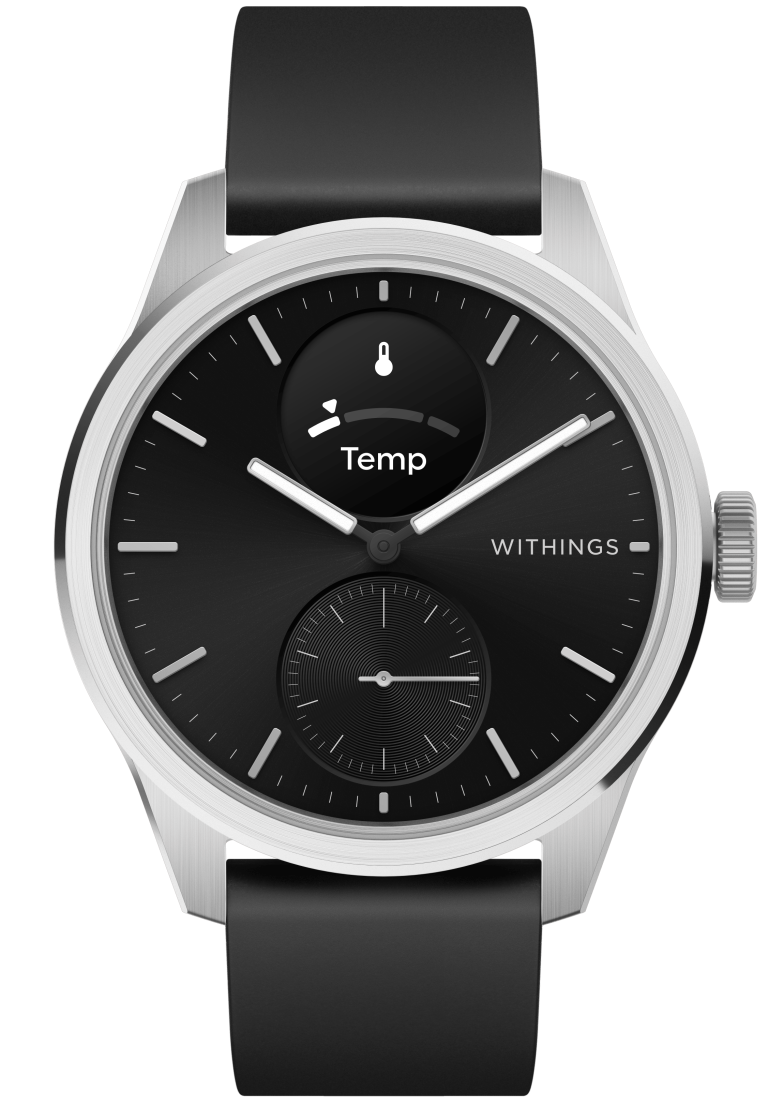
An FDA cleared electrocardiogram and pulse oximeter built into a watch that actually looks like a watch, not a miniature computer strapped to your wrist. Presented By Our Partners Product…
The Daily Rounds: Longevity & Health Care Brief | April 3, 2026
🧬 - Epigenetic reprogramming enters human trials for the first time, with Life Biosciences' ER-100 receiving FDA clearance for a phase 1 study in optic nerve degeneration, marking the dawn of cellular rejuvenation medicine. 🫁 - An AI-designed molecule for idiopathic pulmonary fibrosis shows clinical promise in a phase 2a trial, proving that algorithmically discovered drugs can survive contact with human biology. 🦠 - Gut bacteria can inject proteins directly into human cells, a newly described mechanism now linked to Crohn's disease inflammation and poised to reshape microbiome therapeutics. 🧠 - Disrupted circadian rhythms are associated with 2.5 times the risk of dementia, reinforcing that sleep timing and biological clock integrity are modifiable targets for brain aging. 💊 - With more than 173 AI-discovered drug programs now in clinical trials and Eli Lilly committing $2.75 billion to AI drug development, the algorithmic era of medicine is no longer theoretical.

The U.S. Government Just Made Its Biggest Bet on Healthy Aging: Inside ARPA-H’s $144 Million PROSPR Program
ARPA-H’s $144 million PROSPR program is testing rapamycin, semaglutide, and dapagliflozin in 726 healthy older adults, funding a first-in-humans trial of a retrotransposon-silencing HIV drug, and building a validated biological…
