
The Genome of the Immortals: Inside George Church’s Four-Front War on Aging
A new Atlas of the rarest humans on Earth points to something most scientists have spent careers avoiding saying out loud. Aging may not be destiny. It may be a code. And George Church has spent forty years learning how to rewrite code.
Presented By Our Partners



The Lab at the Edge of Forever
In a fifth-floor lab at Harvard’s Wyss Institute for Biologically Inspired Engineering, a screen glows in the December dark. On it, sixty whole genomes line up in vertical columns, each one a complete biological autobiography of a person who lived past the edge of what biology was supposed to allow.
These are the supercentenarians. Humans who reached 110.
In the United States, roughly one in five million people will ever see that number on a birthday cake. Most never do. Of the seventy thousand Americans who hit 100, only a few dozen each year cross 110. The rest die at the rates the actuarial tables predict, falling to the same four forces that kill almost everyone else: cardiovascular disease, cancer, neurodegeneration, metabolic collapse.
But these sixty did not.
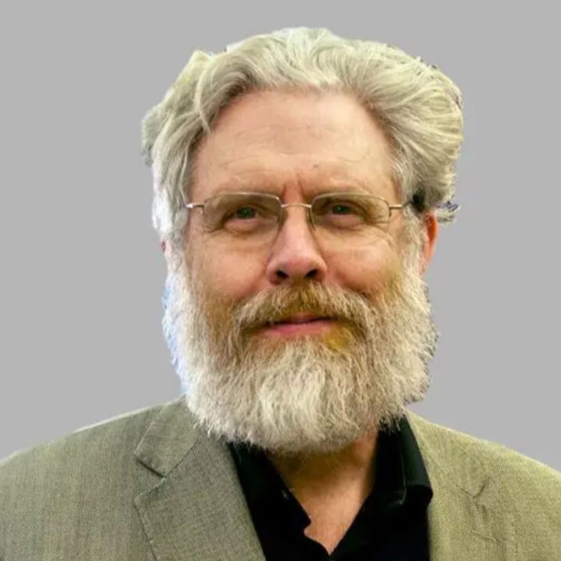
And George Church, the rumpled, six-foot-five geneticist who has been called one of the most consequential scientists alive, wants to know why.
The Misconception
For most of human history, the answer to that question was philosophical. The Greeks called it fate. The medieval theologians called it providence. Even the Enlightenment, with all its faith in mechanism, treated aging as a debt the body owed for the privilege of living. Inevitable. Sacred, almost. Something to age into with grace rather than fight.
That view persists today, often dressed in scientific language. We are not designed to live forever, people say, as though biology cared about design.
The Atlas on Church’s screen tells a different story.
A Better Mental Model
Here is the model the data is forcing.
Aging is not a single process. It is the cumulative output of many cellular and genetic decisions, each one a small fork in the road. Inflammation rises or it doesn’t. DNA repair holds or it slips. Mitochondria stay coupled or they leak. Cells stop dividing on schedule or they stop too soon. Each fork is governed by genes. Each gene is, in principle, editable.
The body, in this view, is not a clock running down. It is a system maintained by hundreds of subsystems, written in a language that humans only learned to read in the last forty years.
Church learned that language early. His 1984 Harvard PhD included one of the first direct genomic sequencing methods, the technical seed that grew into the modern sequencing industry. He was twenty-nine.
He is seventy-one now. And what he has spent the intervening four decades doing is the most ambitious campaign anyone has ever waged against biological time.
A Woman Born in the Nineteenth Century
To understand why the supercentenarian Atlas matters, you have to understand who is in it.
People like Emma Morano. Born in Italy in 1899, she lived through two world wars, the invention of the airplane, the splitting of the atom, the human landing on the Moon, the rise of the internet, and the early years of CRISPR. She drank three raw eggs a day. She married once, briefly. When James Clement, the citizen-scientist who would eventually become the human collector behind the Atlas, met her in December 2011, she was 112. She would live five and a half more years, dying in April 2017 at 117 years and 137 days, the last person on Earth verifiably born in the nineteenth century.
Clement spent six years traveling fourteen US states and seven countries with a small cooler and a centrifuge, gathering blood, saliva, and post-mortem tissue from people like Morano. By 2016, he had collected roughly sixty samples. Forty-five of them were whole-genome sequenced by Veritas Genetics on Illumina’s HiSeq X Ten machines. The data, three billion base pairs per person, was eventually released to qualified researchers worldwide through Clement’s nonprofit, Betterhumans.
George Church advised the project from the beginning.
Then, in 2025, the analysis arrived.
What the Atlas Revealed
In a paper published this year in Human Genomics, Raj, Selvakumar, Clement, Church, and Sivasubramaniam reported a comprehensive analysis of coding region single nucleotide polymorphisms in centenarians and supercentenarians, looking for the genetic signatures of exceptional longevity.
Featured Partner
Invest in the Infrastructure Behind Modern Medicine
As healthcare expands beyond hospital walls, the buildings and campuses supporting that shift are generating compelling returns for investors who move early. The Healthcare Real Estate Fund offers qualified investors direct access to a curated portfolio of medical office, outpatient, and specialty care facilities.
Learn More →
That sentence requires unpacking, because the answer is more interesting than the question.
A single nucleotide polymorphism, or SNP, is a one-letter variation in the genome. Where most people have an A, you have a G. Where most have a T, you have a C. Across three billion letters, a typical human carries millions of these one-letter differences. Most are silent. Some matter enormously.
The Raj et al. analysis focused on SNPs inside protein-coding regions, the parts of the genome that actually build the molecular machines of the body. In supercentenarians, the team found patterns. Variants that appear more frequently in people who live past 110 than in the general population. Variants in genes that affect DNA repair, lipid metabolism, inflammation, insulin signaling, and cellular cleanup.
In earlier work on smaller datasets, Clement and his collaborators had already reported approximately 2,500 differences between supercentenarian DNA and the general population. The 2025 paper is the first systematic attempt to ask which of those differences matter.
The headline finding is not a single magic gene. It is a portfolio. Supercentenarians appear to inherit, on average, fewer variants that raise risk for the diseases that kill most people, and more variants in pathways that buffer cells against the slow erosion of aging itself. They are not, as the popular imagination sometimes suggests, biological mutants with a superpower. They are people who, by chance and by inheritance, drew a hand with fewer bad cards and a handful of unusually good ones.
The point that matters, for Church and for the field, is that those cards are knowable. And anything knowable is, in principle, transferable.
Why Scientists Care
The longevity field has been searching for tractable genetic targets for thirty years. FOXO3 variants in Okinawan centenarians. APOE2 and the apparent protection against Alzheimer’s it confers. IGF1R signaling and its role in dwarf mice that live nearly twice the normal lifespan. The supercentenarian Atlas adds a different kind of evidence. It is not an animal model. It is not a single population. It is a deep look at the genomes of the rarest documented humans in our species, asking what they share.
If even a handful of the SNPs identified turn out to be functionally protective in cells, the implications cascade. Gene therapies that deliver protective variants. Drugs that mimic their downstream effects. Diagnostic panels that tell a forty-year-old which of the Four Villains of Health and Longevity, the cardiovascular, cancerous, neurodegenerative, and metabolic forces that account for roughly four out of five deaths in the developed world, are most likely to come for them first.
Supercentenarians, in this reading, are not curiosities. They are a natural experiment running in our own species, and the experiment has been running for a hundred and seventeen years.
The Uncertainty
It would be dishonest to leave the story here.
Not every researcher in the longevity field believes the supercentenarian genome is the place to look. The argument, made forcefully on aging-research forums, is that supercentenarians are still frail. They still die. They still suffer the diseases of aging, just later. If the genetics of exceptional longevity were truly transformative, the reasoning goes, supercentenarians would not look like very old people. They would look like middle-aged people who happen to be old.
The counter-argument, the one implicit in Church’s career, is that genetic insight does not have to be transformative on its own to be useful. It only has to be informative enough to point at the levers. Combined with measurement, with intervention, with the AI-accelerated discovery cycles now coming online, even modest protective signals can become drug targets, gene therapy payloads, or screening tools.
There is also the sample size problem. Forty-five whole genomes is a lot for a population this rare. It is not a lot for the kind of statistical confidence modern genomics typically demands. Replication will require more sequencing, more participants, and more time. Church and Clement know this. The Betterhumans Supercentenarian Research Study is still recruiting individuals 105 and older, and the data is being released to qualified researchers globally so other labs can run their own analyses.
Genes are not destiny. The Atlas does not promise immortality, or even the casual eighty more years that science fiction sometimes suggests. What it promises is a map. The first systematic map of what the genome of someone who reaches 110 actually looks like.
The Frontier: Four Fronts, One War
Here is where the story stops being about a single paper and starts being about a single career.
Because while the supercentenarian Atlas was being assembled and analyzed, Church was also doing something else. He was opening four fronts in a parallel war on aging, each one designed to feed the others.
The first front is Rejuvenate Bio, the gene therapy company Church co-founded in 2017. Its stated mission is full age-reversal gene therapy. The company has worked on combinations of genes including FGF21, a metabolic signaling factor that in mouse models has produced striking improvements in both lifespan and healthspan. In earlier trials, Rejuvenate tested gene therapy in Cavalier King Charles spaniels with mitral valve disease, a condition that affects the breed at unusually high rates. The dog work was not just animal research. It was a deliberate translational stepping stone, a way to test whether gene-level interventions could meaningfully extend healthy life in a mammal that ages eight times faster than a human.
The second front is the Wyss Institute Healthy Aging Fund, launched in July 2025 with a gift from the Colossal Foundation. The fund supports translational research at the Wyss aimed specifically at extending healthspan, the years of life lived in good health. Wyss Founding Director Don Ingber has framed the fund as a way to move the Institute’s strongest aging-related projects toward clinical translation. Church is leading the artificial womb technology effort under this umbrella, work that began as a way to support extremely premature infants and has implications for how human development, the earliest chapter of the aging process, is understood.
The third front is Lila Sciences, where Church assumed the role of Chief Scientist in 2025. Lila is an AI-for-science platform, the kind of company that exists because the bottleneck in biology is no longer reading the genome or even editing it. It is interpreting the avalanche of multi-omic data that modern labs generate every day. Earlier this year, Church and Harvard Medical School’s Marinka Zitnik, the AI-for-medicine pioneer profiled on this site for her work uncovering hidden treatments for rare diseases, co-authored a paper in which graph-based AI generated neurological disease hypotheses that were then validated in molecular, organoid, and clinical systems. The implication is that AI is no longer just a tool to analyze experiments. It is a tool to design them.
The fourth front is Colossal Biosciences, co-founded with entrepreneur Ben Lamm. Colossal is best known publicly for its de-extinction work on the woolly mammoth and, more controversially, its April 2025 announcement that it had produced genetically modified gray wolves with traits of the extinct dire wolf. Critics pointed out, correctly, that these are not true dire wolves. The deeper point of Colossal, the one Church discussed on the Wyss Institute’s Ignition Sequence podcast in 2025, is that de-extinction and aging research share the same underlying tool kit. Both require precision multiplex editing of mammalian genomes at scale. Solve that engineering problem for one and you have largely solved it for the other.
Four fronts. One war.
The supercentenarian Atlas is the reconnaissance. Rejuvenate Bio is the gene therapy delivery vehicle. The Wyss Healthy Aging Fund is the translational pipeline. Lila Sciences is the AI accelerant. Colossal is the platform stress test.
And George Church, at seventy-one, is the architect.
Why This Matters
There is a reason this matters beyond the lab.
The Four Villains of Health and Longevity, the disease categories that account for the overwhelming majority of mortality in the developed world, are not abstract. They are the things that kill the people we love. Cardiovascular disease. Cancer. Neurodegeneration. Metabolic disorders including type 2 diabetes and its metabolic-syndrome cousins. Every breakthrough in this story, the supercentenarian protective variants, the gene therapy combinations being tested at Rejuvenate, the AI-discovered hypotheses coming out of Lila, points at the same underlying question. Can we design lives in which the Villains arrive later, or arrive less aggressively, or, in the most optimistic readings, sometimes do not arrive at all?
The Atlas does not answer that question. It outlines what an answer might look like.
It also points to a synthesis that has been the editorial thesis of this publication from the beginning. Ancestral Intelligence meets Artificial Intelligence. The supercentenarians lived the way humans have lived for millennia, with regular movement, real food, social connection, and a kind of biological luck written into their genome. The artificial intelligence Church and Zitnik and Lila are deploying now is the scaffolding being built around that luck, so that the rest of us, the 4,999,999 out of 5,000,000 who did not inherit the supercentenarian hand, might still benefit from understanding what they were given.
Frequently Asked
What is a supercentenarian?
A person verified to have lived to age 110 or older. In the United States, roughly one in five million people reaches this age.
Who is George Church?
A geneticist at Harvard Medical School and the Wyss Institute, often credited as a foundational figure in modern genomic sequencing, CRISPR application, and synthetic biology. He has co-founded or advised dozens of biotech companies and is currently Chief Scientist at Lila Sciences.
What is the supercentenarian Atlas?
A research initiative led by James Clement of Betterhumans and advised by George Church that has whole-genome sequenced approximately 45 supercentenarians and is releasing the data to qualified researchers. A 2025 paper in Human Genomics by Raj, Selvakumar, Clement, Church, and Sivasubramaniam reported a comprehensive analysis of protein-coding SNPs in this cohort.
Did the Atlas find a single longevity gene?
No. The analysis identified patterns of protective variants across many genes involved in DNA repair, lipid metabolism, inflammation, and cellular maintenance. The supercentenarian advantage appears to be portfolio-wide, not single-gene.
Is George Church working on gene therapies for aging?
Yes. Through his co-founded company Rejuvenate Bio, he is pursuing what the company describes as full age-reversal gene therapies, including combinations such as FGF21.
What is Lila Sciences?
An AI-for-science platform where Church assumed the role of Chief Scientist in 2025. The platform uses artificial intelligence to accelerate hypothesis generation and validation across biology.
How does this connect to the Four Villains of Health and Longevity?
The Four Villains, cardiovascular disease, cancer, neurodegenerative disease, and metabolic disease, account for the majority of mortality in the developed world. Research like the supercentenarian Atlas matters precisely because supercentenarians appear to delay or evade all four.
Part 2 of this feature, a Healthcare Discovery Featured Voices profile of George Church, the man behind the four-front campaign, follows in the coming days.


Similar Posts

The AI Scientists Are Already Running the Lab: How Autonomous Multi-Agent Systems Are Reinventing Drug Discovery
A new generation of AI systems does not just assist scientists; it organizes itself into research teams, designs experiments, debates hypotheses, and identifies drug candidates at speeds no human laboratory…

Liquid Biopsy Is Rewriting Cancer Detection: How a Single Blood Draw May Find Dozens of Cancers Before Symptoms Appear
A convergence of cfDNA methylation analysis, multi-omics integration, and artificial intelligence is transforming cancer screening. From the PATHFINDER 2 trial showing a seven-fold increase in cancer detection to the PROMISE…

Five Years of Proof: The Personalized mRNA Cancer Vaccine That Halved Melanoma Recurrence
Five-year data from the KEYNOTE-942 trial, presented at ASCO 2026, show that intismeran autogene plus Keytruda sustains a 49% reduction in melanoma recurrence risk and drives overall survival to 92.2%…
How Scientists Are Learning to Reverse Cardiovascular Aging: From Centenarian Genes to Rapamycin
New research reveals that cardiovascular aging can be slowed and even reversed. A centenarian gene rewinds heart age by ten years, rapamycin improves diastolic function in elderly men within weeks,…
The Alzheimer’s Blood Test Has Arrived: How Plasma p-Tau217 Is Rewriting Early Diagnosis in 2026
For decades, confirming Alzheimer’s disease required a spinal tap or a PET scan that few patients ever received. In 2025 the FDA cleared the first plasma p-tau217 blood test, and…
Daraxonrasib Doubles Survival in Pancreatic Cancer: Inside ASCO 2026’s Most Consequential Result
A Phase 3 trial just cut the risk of death by 60 percent in metastatic pancreatic cancer, a disease that has resisted nearly every therapeutic advance for four decades. The…
