
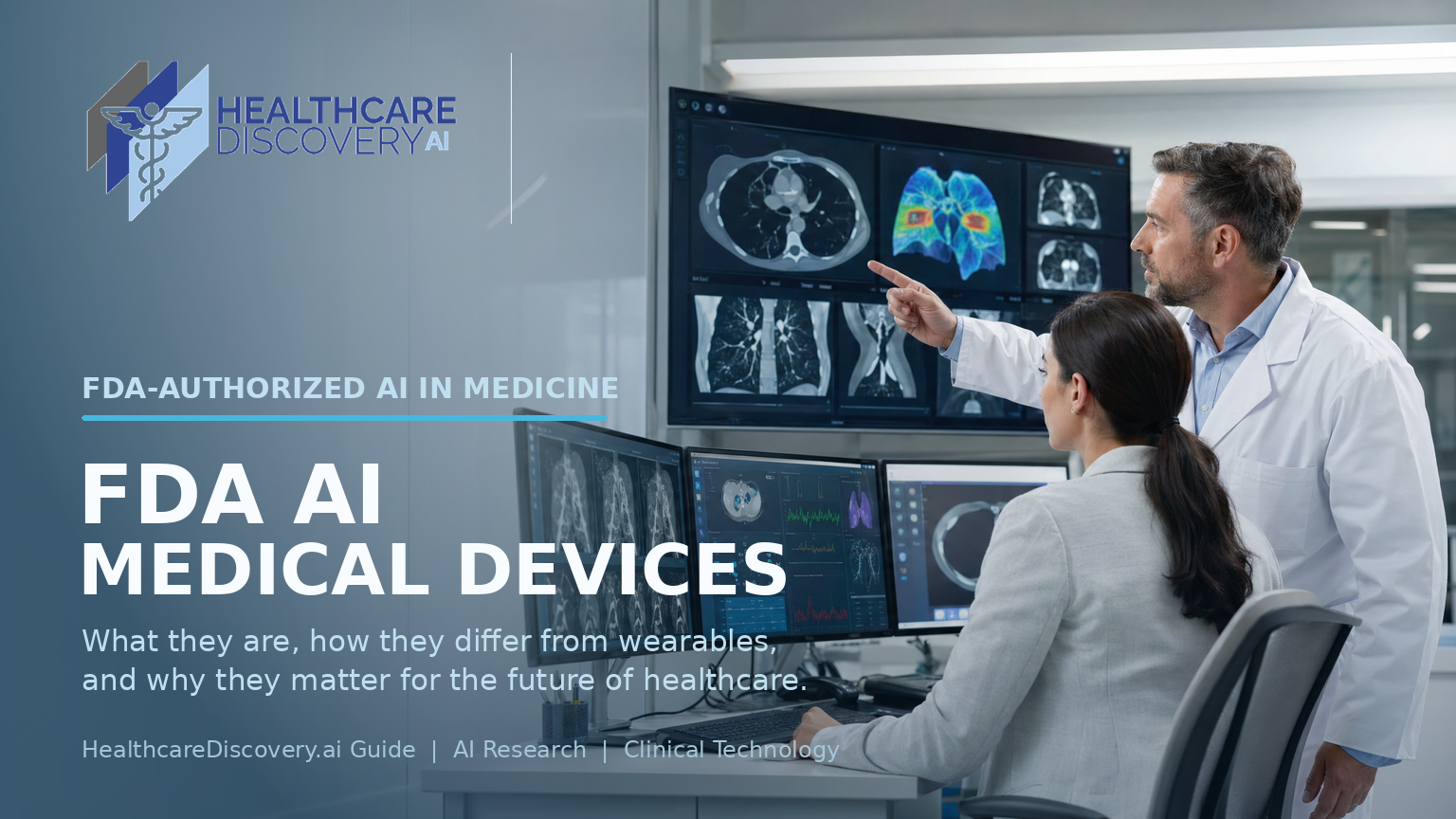
FDA AI Medical Devices and the Quiet Reality of Medical AI
The public imagination has a familiar picture of artificial intelligence in medicine: a machine that looks at a patient, absorbs every symptom, scans every lab result, and announces the answer. It is the fantasy of the all-knowing doctor, compressed into software.
Presented By Our Partners



The real thing is arriving more quietly.
It is showing up inside imaging workstations, ECG monitors, ultrasound systems, sleep tests, cardiac patches, endoscopy tools, stroke triage software, dental imaging systems, and the invisible machinery of hospital workflow. It is often narrow. It is often technical. It may never speak in a human voice. In many cases, the patient may not even know it was there.
That is what makes the FDA’s list of artificial-intelligence-enabled medical devices so revealing. It is not a catalog of futuristic medicine. It is a record of something more practical: the places where AI has already crossed from promise into regulated clinical use.
As of the current FDA AI-enabled medical device CSV, the list includes 1,430 entries, with the latest listed final decision dated December 30, 2025. The FDA says the devices on the list have met applicable premarket requirements for their intended use and technological characteristics. The agency also cautions that the list is not comprehensive; it is assembled primarily from AI-related terms in public authorization summaries and device classifications.
Even with that limitation, the pattern is hard to miss. Medical AI is not entering medicine evenly. It is entering where the data are structured, the task is bounded, and the result can be tested.
The Quiet Center of Medical AI
The largest category is radiology. In the current FDA list, radiology accounts for 1,094 of the 1,430 entries. Cardiovascular devices account for 136. Neurology follows with 65. Anesthesiology, gastroenterology-urology, hematology, ophthalmic, pathology, clinical chemistry, general surgery, microbiology, orthopedic, dental, obstetrics and gynecology, and several smaller categories make up the rest.
That imbalance says something important about the first mature wave of medical AI. It is not general medical reasoning. It is not a digital physician replacing a human one. It is software trained to help with particular clinical tasks: finding, measuring, segmenting, reconstructing, classifying, prioritizing, or monitoring something specific.
Radiology was always likely to move first. Modern imaging already converts the body into digital information. A CT scan, MRI, mammogram, ultrasound, or X-ray is not just a picture. It is a structured object inside a clinical workflow, surrounded by orders, protocols, measurements, reports, and prior studies. That makes it unusually friendly territory for algorithms.
An imaging AI tool might flag a possible intracranial hemorrhage, improve the quality of an MRI image, help segment an organ, assist with lung-nodule detection, support dental interpretation, measure cardiac structures, or prioritize a case for review. These are not small things. But they are also not the same as broad diagnosis. The power comes from the narrowness.
In that sense, radiology AI is less like a replacement for the radiologist and more like a new layer in the imaging system. Some tools help acquire the image. Some help clean it up. Some point to possible findings. Some support measurement or triage. The clinical judgment still sits inside a larger human system.
The Difference Between Helpful and Medical
The confusion begins because health technology now occupies a wide spectrum.
At one end are general wellness products: watches, rings, scales, apps, sleep trackers, fitness monitors, stress tools, nutrition logs, recovery scores, and other products that help people observe patterns in daily life. They may be useful. They may be beautifully engineered. They may even change behavior. But usefulness does not automatically make something a regulated medical device.
The FDA’s general wellness policy, updated as final guidance in January 2026, draws an important line around low-risk products that promote a healthy lifestyle and are unrelated to diagnosing, curing, mitigating, preventing, or treating a disease or condition. A sleep score, a recovery trend, or a reminder to move can live on one side of that line. A function intended to detect sleep apnea, analyze an ECG for atrial fibrillation, measure blood oxygen for a medical purpose, or support diagnosis can move to the other.
This is where familiar consumer brands can become confusing. Apple, Fitbit, Samsung, Withings, AliveCor, iRhythm, Eko, Empatica, and other companies sit near the border between personal health technology and regulated medical use. A smartwatch can be a wellness product for one function and a medical device for another. A ring can estimate sleep patterns without being the same kind of product as a cleared sleep-apnea notification feature. A cardiac patch can be consumer-visible and clinically regulated at the same time.
The dividing line is not the shape of the product. It is the intended use.
Featured Partner
Invest in the Infrastructure Behind Modern Medicine
As healthcare expands beyond hospital walls, the buildings and campuses supporting that shift are generating compelling returns for investors who move early. The Healthcare Real Estate Fund offers qualified investors direct access to a curated portfolio of medical office, outpatient, and specialty care facilities.
Learn More →
That phrase, intended use, does a lot of work in medical regulation. A sensor measuring the body is not automatically medical. Software using AI is not automatically medical. A product described as clinical, advanced, or medical-grade is not automatically authorized. What matters is what the product claims to do, how it is meant to be used, who uses it, and what risk follows if it is wrong.
Medical Grade Is Marketing. Authorization Is Specific.
Terms like medical-grade and clinical-grade sound reassuring, but they are not clean FDA categories. They are marketing language unless they are tied to a specific authorized function.
The practical distinction is simpler than the marketing language suggests:
- Some products support lifestyle awareness.
- Some products are used near clinical care without necessarily being authorized medical devices.
- Some products are FDA-authorized medical devices with a defined medical intended use.
- Some products are FDA-authorized medical devices in which artificial intelligence or machine learning is part of the regulated function.
Those differences are not just bureaucratic. They change the meaning of a claim.
FDA-cleared usually refers to the 510(k) pathway, where a manufacturer demonstrates substantial equivalence to a legally marketed predicate device for the intended use. FDA-approved usually refers to the PMA pathway, a more intensive route generally associated with higher-risk Class III devices. De Novo classification applies to certain novel low-to-moderate-risk devices without an appropriate predicate. FDA-authorized is often the most accurate umbrella term because it can cover cleared, approved, or De Novo granted devices.
FDA-registered is different. Registration alone does not mean the product has been reviewed, cleared, approved, or authorized for a medical claim. That distinction gets lost constantly in consumer health marketing.
AI makes the precision even more important. A software function may be authorized to help a trained clinician detect a specific finding in a specific setting. That does not mean it can diagnose anything, advise anyone, or safely operate outside that intended use. A wearable feature may notify someone about a pattern worth discussing with a clinician. That is not the same as a standalone diagnosis.
The AI Already in the Room
The FDA list is full of devices that sound less like science fiction than infrastructure.
There are image-reconstruction tools, ultrasound systems, software for treatment planning, cardiac-monitoring algorithms, colonoscopy assistance systems, heart-sound analysis products, stroke triage tools, dental imaging aids, portable MRI systems, pathology tools, and sleep-testing technologies. Some are sold directly to consumers. Many are bought by hospitals, imaging centers, specialists, or device companies. Some are embedded so deeply in the workflow that the AI is not the product a patient sees.
That matters because the public conversation about medical AI is often pulled toward the most dramatic examples. Chatbots get attention because they talk. General diagnostic systems get attention because they seem to threaten or transform the physician’s role. But the regulated market is telling a more grounded story.
Medicine is adopting AI where a problem can be narrowed enough to evaluate.
A stroke triage algorithm can be assessed against a defined clinical task. An ECG analysis tool can be tested against known rhythm patterns. A colonoscopy aid can be evaluated for its ability to assist with possible polyp detection. An imaging algorithm can be judged on whether it identifies, measures, segments, or prioritizes the right thing under the right conditions.
That does not make the technology simple. It makes it governable.
What Wearables Have to Do With It
Wearables are part of the same shift, but they occupy a different place in it.
A wristwatch, ring, patch, glucose monitor, blood-pressure cuff, smart scale, or sleep sensor can make the body more visible between medical visits. Heart rate, heart-rate variability, temperature, respiration, blood oxygen, movement, sleep timing, glucose trends, menstrual-cycle signals, and recovery metrics all add to a growing culture of continuous measurement.
That culture is changing medicine even when the devices remain in the wellness category. A patient can now arrive at a clinic with months of sleep data, heart-rate trends, exercise patterns, glucose curves, or irregular-rhythm notifications. A clinician may not treat all of that data as diagnostic, but the old boundary between life outside the clinic and data inside the clinic is getting thinner.
The regulated overlap is where things become especially interesting. An ECG feature, an atrial-fibrillation notification, a sleep-apnea notification, a cardiac monitor, an electronic stethoscope, or a wearable sensor used for active patient monitoring can move from personal tracking into medical territory. The same body signal can be casual information in one setting and clinically meaningful in another.
For longevity, that distinction is central. Better aging is not just a matter of collecting more signals. It depends on knowing which signals are reliable, which are medically meaningful, which are merely suggestive, and when a measurement deserves clinical follow-up. Continuous data can sharpen self-awareness. It can also create false confidence if the regulatory status and intended use are misunderstood.
The False Promise of the Giant AI Doctor
The most seductive version of medical AI is the one that collapses all uncertainty into a single answer. Ask the machine. Receive the diagnosis. Move on.
The FDA list points in the opposite direction. The near-term future is not one giant AI doctor. It is thousands of smaller intelligence layers threaded through the tools medicine already uses.
One layer improves an image. Another helps detect a pattern. Another ranks urgency. Another monitors a heart rhythm. Another supports a procedure. Another assists a specialist looking at a narrow slice of the body. The result is not less medicine. It is more software inside medicine.
That may sound less dramatic, but it is probably more consequential. Hospitals do not change all at once. Clinical trust is not granted to abstractions. Regulation does not reward grand claims. The tools that survive tend to do something specific, measurable, and useful enough to fit into real care.
This is why the quiet version of medical AI deserves attention. It is already here. It is already regulated. It is already unevenly distributed across specialties. And it is already changing what it means to see, measure, monitor, and act before disease becomes harder to treat.
What the List Really Shows
The FDA’s AI-enabled medical device list shows a medical AI revolution that is narrower than the hype and larger than it first appears.
Across that landscape, the category-specific stories are becoming clearer too: cardiology, neurology, gastroenterology-urology and endoscopy, and now anesthesiology’s sleep and respiratory lane each reveal a different way regulated AI is entering care.
It is narrower because most of the tools are not general minds. They are bounded technologies built for defined medical functions. It is larger because those functions are spreading across the infrastructure of care: radiology, cardiology, neurology, sleep medicine, pathology, endoscopy, surgery, and remote monitoring.
The future will not arrive as a single machine replacing the doctor. It will arrive as many smaller systems, each doing a piece of the work, each carrying its own evidence, limits, and intended use. The real question is not whether AI belongs in medicine. It is whether each layer makes care clearer, earlier, safer, and more useful than it was before.
Sources
- FDA: Artificial Intelligence-Enabled Medical Devices
- FDA: General Wellness: Policy for Low Risk Devices
- FDA: Examples of Device Software Functions the FDA Regulates


Similar Posts

The Hashimoto’s Breakthrough: Somatic Mutations and the New Model of Autoimmune Disease
A landmark Nature study finds that Hashimoto’s thyroiditis is driven in part by acquired somatic mutations that disable the immune system’s brakes. A new model of autoimmune disease is taking…
WatchPAT One: The Most Comfortable FDA-Cleared Home Sleep Apnea Test
An estimated 80% of moderate to severe obstructive sleep apnea cases remain undiagnosed. A wrist-worn device that requires no nasal cannula is changing the diagnostic calculus. Presented By Our Partners…
Movano Evie Ring: FDA-Cleared Smart Ring Designed for Women’s Health
The first smart ring designed specifically for women’s health, featuring an open-band design that accommodates finger size fluctuations, FDA-cleared SpO2 monitoring, sleep staging, HRV, skin temperature trends, and menstrual cycle…
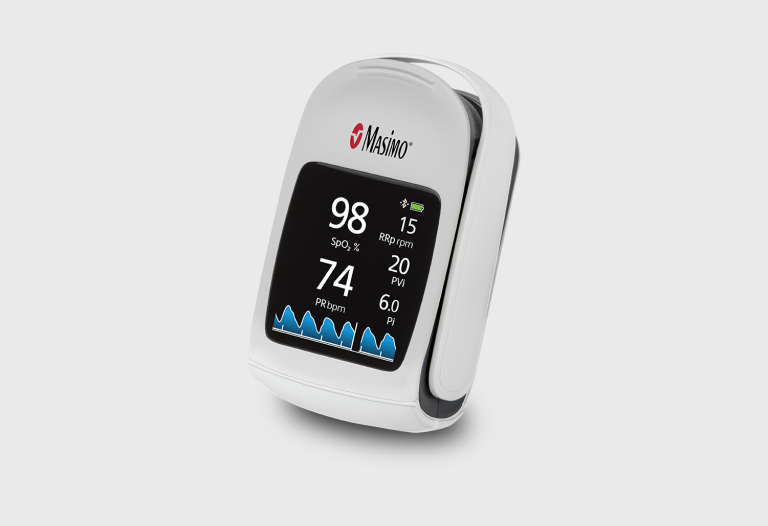
Masimo MightySat: Clinical Grade Pulse Oximetry in a Consumer Fingertip Device
The consumer version of the pulse oximetry technology used in hospital ICUs worldwide, delivering clinical grade SpO2, perfusion index, and pleth variability measurements from your fingertip. Presented By Our Partners…
The Daily Rounds: Longevity & Health Care Brief | April 6, 2026
🔬 Epigenetic Reprogramming Enters Human Trials — The FDA cleared the first partial de-aging trial using OSK reprogramming factors, targeting vision restoration in glaucoma patients. 🧠 Diet and APOE Genetics Collide — Higher meat intake correlated with slower cognitive decline in older adults carrying Alzheimer's risk genes, upending common dietary assumptions. 🤖 NVIDIA and Lilly Bet $1 Billion on AI Drug Discovery — A landmark co-innovation lab in San Francisco will embed AI engineers alongside biologists to redesign how medicines are discovered. 🦠 Gut Bacteria Act Like Syringes — Common gut microbes can inject proteins directly into human cells, reshaping how researchers understand microbiome-immune crosstalk. 😴 Circadian Fragmentation Doubles Dementia Risk — Weak internal body clocks are now confirmed as a significant, and potentially modifiable, risk factor for dementia.
Medtronic Guardian 4: The CGM Powering Automated Insulin Delivery
When a glucose sensor becomes the eyes of an artificial pancreas, continuous monitoring evolves from passive data collection into active, life-sustaining automation. Presented By Our Partners The concept of an…
