
Read the Label Before the GLP-1 Link: A Disclosure Decoder
# Read the Label Before the GLP-1 Link: A Disclosure Decoder
Presented By Our Partners



A disclosure is useful only if it changes what a reader understands before clicking.
On a GLP-1 page, a small word can carry a large amount of hidden machinery. “Partner” may mean an advertiser. “Featured” may mean paid placement. “From $199” may omit medication, laboratory, shipping, titration, or membership costs. “GLP-1 option” may refer to an FDA-approved drug, a compounded drug, or merely an evaluation that does not guarantee a prescription.
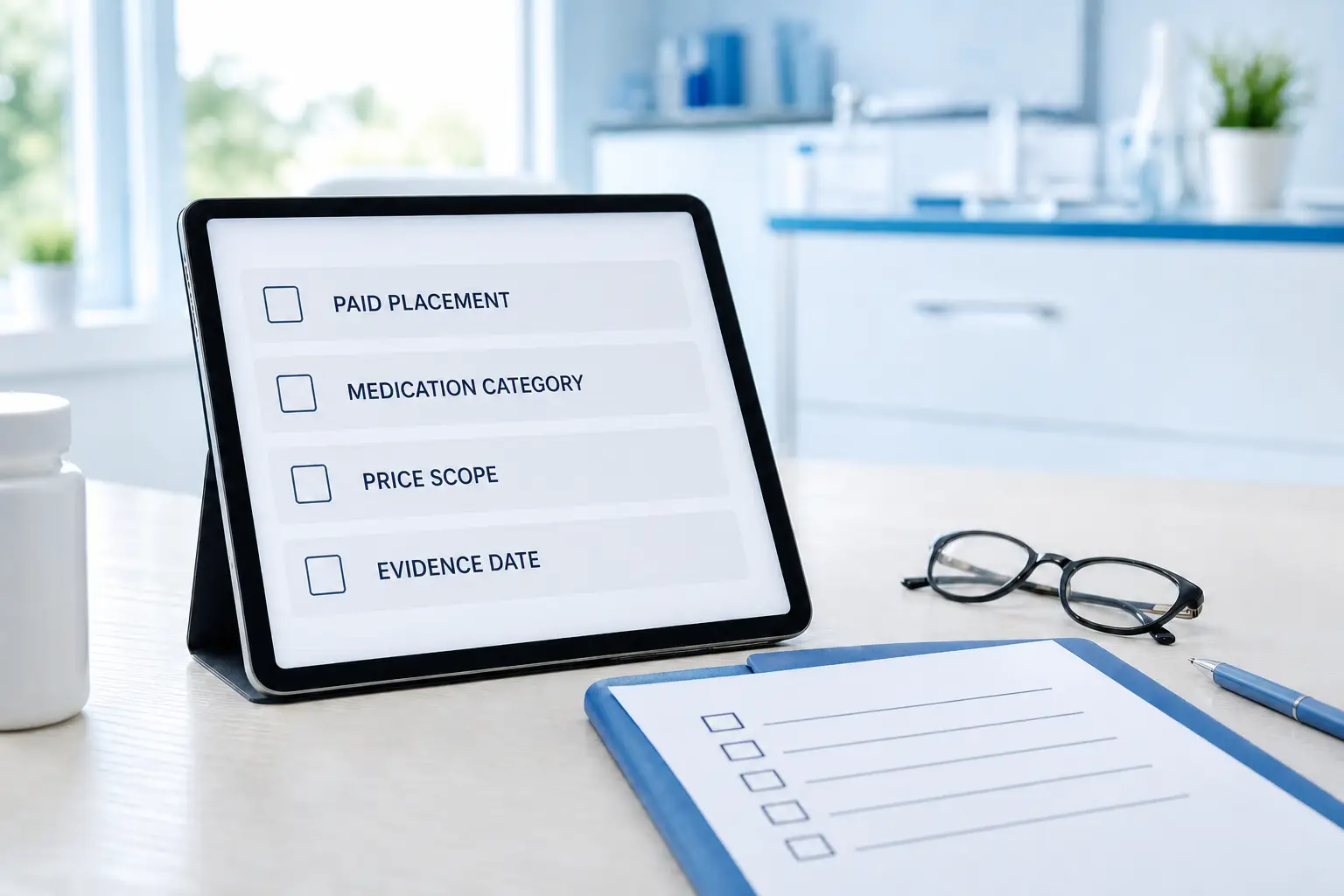
The disclosure decoder below gives readers a plain-language test: **What is being paid for, what is being claimed, what remains unknown, and who is accountable for care?** It does not recommend a clinic, medication, or treatment. It makes the business relationship and the limits of the information easier to see.
## The five disclosures a GLP-1 page may need
### 1. Affiliate-link disclosure
Use this when the publisher may earn money after a click, registration, purchase, or other action.
> **Affiliate disclosure:** HealthcareDiscovery.ai may earn compensation if you use this link. That relationship does not make the service medically appropriate for you and does not change our educational safety guidance.
What this tells you: the link can generate revenue. What it does **not** tell you: that the clinic is clinically superior, that a prescription will be appropriate, or that every cost is included.
### 2. Paid-placement disclosure
Use this when compensation affects whether or where an advertisement appears.
> **Paid placement:** This advertisement appears because the company has a commercial relationship with HealthcareDiscovery.ai. Payment is not a medical endorsement. Review the medication category, clinician, pharmacy, total cost, and follow-up terms before acting.
The FTC’s endorsement guidance treats undisclosed material connections as potentially important to how people evaluate a message. In health advertising, the context matters even more: design, badges, testimonials, and placement can imply a verdict the words never state.
### 3. Medication-category disclosure
Use this whenever “GLP-1” could conceal a material product distinction.
> **Medication category:** This service may discuss FDA-approved prescription drugs and/or compounded drugs. Compounded drugs are not FDA-approved, and FDA does not review them for safety, effectiveness, or quality before marketing. An evaluation does not guarantee that a medication will be prescribed.
Featured Partner
Invest in the Infrastructure Behind Modern Medicine
As healthcare expands beyond hospital walls, the buildings and campuses supporting that shift are generating compelling returns for investors who move early. The Healthcare Real Estate Fund offers qualified investors direct access to a curated portfolio of medical office, outpatient, and specialty care facilities.
Learn More →
FDA warns consumers not to treat unapproved GLP-1 products as interchangeable with FDA-approved drugs. A disclosure should therefore name the category before the click, not after payment.
### 4. Price-scope disclosure
Use this when a page presents a starting price, monthly price, coupon, or limited-time offer.
> **Price scope:** The displayed price may not include every cost. Confirm whether it includes the clinical visit, medication, laboratory testing, shipping, membership fees, dose changes, refills, and cancellation charges. Prices and availability can change; check the provider’s current terms.
This is not a price comparison. It is a reminder that a headline price can describe only one part of a care pathway.
### 5. Evidence-and-update disclosure
Use this beside a medical or service claim whose meaning depends on sources and date.
> **Evidence note:** Medical claims are linked to the product, indication, population, endpoint, and evidence cited. Service details such as price, states served, pharmacy relationships, and follow-up may come from the provider and can change. Last reviewed: August 27, 2026.
The distinction matters. A prescribing label or clinical trial can support a bounded medical claim; it does not verify a telehealth company’s current price, customer service, pharmacy network, or state availability.
## A short disclosure is not a substitute for a complete one
Mobile cards and search results often have little space. The short label still needs to identify the relationship plainly:
– **Ad — paid placement**
– **Affiliate link — we may earn compensation**
– **Provider-supplied price — verify current total cost**
– **Provider-supplied service detail — last checked August 27, 2026**
– **Compounded medication may be offered — not FDA-approved**
“Partner,” “featured,” “preferred,” and “trusted” are not adequate substitutes when they leave the financial relationship or the basis of the claim unclear.
## How to read a GLP-1 advertisement without turning it into medical advice
Before using a commercial link, separate four questions:
1. **What is the relationship?** Is this advertising, an affiliate link, provider-supplied information, or independent editorial material?
2. **What is the product category?** Is the page discussing a specific FDA-approved drug, a compounded drug, another prescription medicine, coaching, laboratory services, or only an eligibility evaluation?
3. **Who is accountable?** Can you identify the clinician pathway, medical group, pharmacy, follow-up process, and method for raising a problem after medication arrives?
4. **What is still unknown?** Does the page omit total cost, pharmacy identity, medication category, state availability, evidence, or the date of review?
Missing information should remain missing. A disclosure makes uncertainty visible; it does not certify the seller.
## Testimonials and “best” claims need extra skepticism
A testimonial is one person’s account, not a prediction of what will happen to another person. A paid or incentivized testimonial needs a clear material-connection disclosure. A “best,” “safest,” or “doctor recommended” claim needs a defined basis and evidence; visual prominence or payment cannot create clinical proof.
For health products, the FTC says advertising must be truthful, not misleading, and adequately substantiated. FDA separately warns that unapproved GLP-1 products do not undergo its premarket review for safety, effectiveness, and quality. Those are different standards, and a good disclosure should not blur them.
## What this decoder cannot establish
A disclosure can reveal a commercial relationship. It cannot determine whether a medication is right for a particular person, whether a clinician’s judgment is sound, whether a pharmacy dispensed the correct product, or whether a program will deliver a particular result.
HealthcareDiscovery.ai provides educational information and verification frameworks. It does not diagnose, prescribe, select a medication, adjust doses, interpret side effects, or replace a licensed clinician or pharmacist. Questions about personal eligibility, medication use, adverse effects, or an existing prescription belong with an appropriate licensed professional.
Continue with the [GLP-1 Intelligence Hub](https://healthcarediscovery.ai/glp-1-intelligence-hub/) to decode drug identity, evidence, care accountability, and online-offer red flags.
## Sources
– Federal Trade Commission, [Endorsements, Influencers, and Reviews](https://www.ftc.gov/business-guidance/advertising-marketing/endorsements-influencers-reviews), including the FTC’s Endorsement Guides and material-connection disclosure resources. Source URL reviewed August 27, 2026; the official page rejected automated retrieval with HTTP 403, so no newly changed wording is attributed to it.
– Federal Trade Commission, [Health Products Compliance Guidance](https://www.ftc.gov/business-guidance/resources/health-products-compliance-guidance), on truthful, non-misleading, adequately substantiated health advertising. Source URL reviewed August 27, 2026; the official page rejected automated retrieval with HTTP 403, so claims here are limited to the established guidance principles.
– U.S. Food and Drug Administration, [FDA’s Concerns with Unapproved GLP-1 Drugs Used for Weight Loss](https://www.fda.gov/drugs/drug-alerts-and-statements/fdas-concerns-unapproved-glp-1-drugs-used-weight-loss), including the distinction between FDA-approved and unapproved/compounded products and warnings about misleading online offers. Retrieved successfully August 27, 2026.
Explore the GLP-1 Intelligence Hub: This guide is part of HealthcareDiscovery.ai’s source-backed collection for checking GLP-1 claims, product categories, online-care transparency, and safety boundaries. See the complete GLP-1 Intelligence Hub.


Similar Posts
The Daily Rounds: Longevity & Health Care Brief | March 31, 2026
🧠 - Heidelberg scientists have identified a protein pairing that acts as a molecular "death switch" in Alzheimer's disease, and a new compound can break it apart, protecting neurons even as it reduces amyloid. 🧬 - The first-ever human trial of partial epigenetic reprogramming is now enrolling, with Life Biosciences testing ER-100 in patients with retinal degeneration in a trial that could redefine what it means to treat aging at the cellular level. 💊 - GLP-1 receptor agonists do not cause disproportionate muscle loss, and new data shows they actually increase mitochondrial proteins in skeletal muscle, suggesting metabolic benefits that go well beyond weight reduction. 🦠 - Gut bacteria are actively injecting proteins into human intestinal cells via molecular syringes, and this mechanism appears more prevalent in people with Crohn's disease, pointing to a new pathway for understanding and treating chronic gut inflammation. ⌚ - ARPA-H's new Delphi program is funding wearable biosensors that can continuously track cytokines and hormones in real time, a potential leap from tracking symptoms to detecting the earliest biological signals of disease and aging.
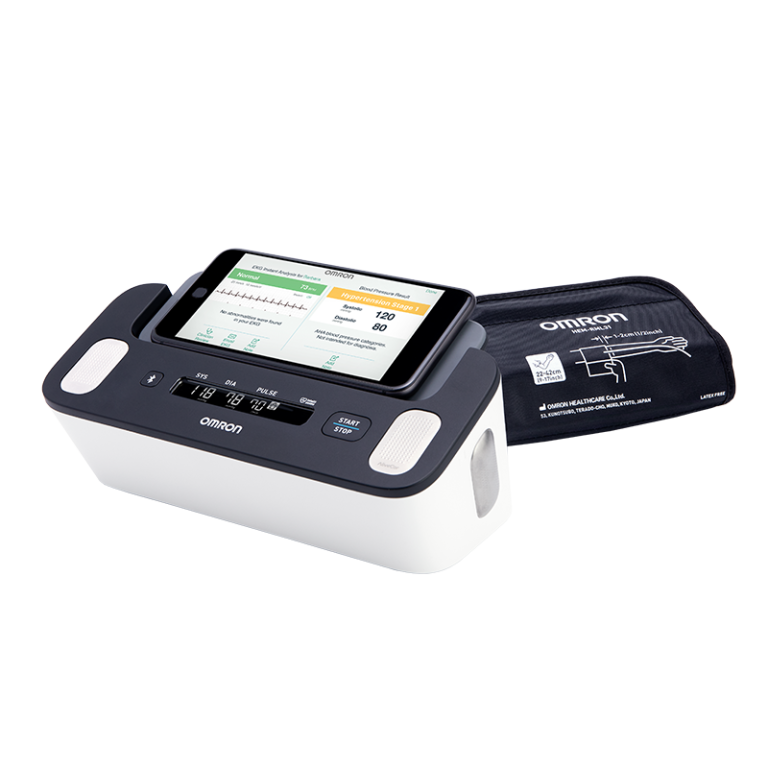
Omron Complete: FDA Cleared Blood Pressure Monitor With Built In ECG for AFib Detection
The most affordable FDA cleared device that combines upper arm blood pressure measurement with a single lead ECG for atrial fibrillation screening, built on AliveCor’s proven detection technology. Presented By…

Garmin Venu 3: FDA-Cleared ECG With 14-Day Battery and No Subscription
Battery life is not a specs race. For a health monitoring device, it determines whether you actually capture the data that matters most: your sleep, your recovery, and the hours…

Garmin CIRQA Smart Band: Pricing, Features, and Accuracy
Garmin CIRQA is a $199.99 screen-free health and fitness band with no required subscription. Here is what it tracks, what it omits, and how its pricing compares.
The Daily Rounds: Longevity & Health Care Brief | May 1, 2026
💊 Rapamycin vs. Exercise: A controlled trial found the longevity drug blunted physical gains in older adults, raising urgent questions about combining mTOR inhibition with exercise-based longevity protocols. 🧫 Harvard Pinpoints How a Gut Bacterium Triggers Depression: Morganella morganii produces an inflammation-triggering molecule when interacting with a common pollutant, providing the first mechanistic explanation for the gut-brain-depression link. 🤖 NVIDIA and Lilly Commit $1B to AI Drug Discovery Infrastructure: The San Francisco co-innovation lab marks one of the largest AI-pharma investments ever, aiming to compress the full drug development value chain with agentic AI systems. 🦠 Roseburia Bacteria Linked to 29% Greater Grip Strength in Older Adults: The gut species declines sharply with age and its restoration in mice produced a 30% strength gain, opening a new probiotic angle on sarcopenia prevention. 🧬 T Cell Senescence Drives 40% of Immune Gene Expression Changes: Senescence, not chronological age, is the primary epigenomic driver of immune aging, suggesting senolytics could restore immune function independent of broader biological age reversal strategies.

The Mitochondrial Decade: Urolithin A, NAD+, MOTS-c, and the 2026 Science of Cellular Aging
In 2026, mitochondria have moved from a footnote in biology textbooks to the central organelle of aging research. From urolithin A’s mitophagy revolution to new NAD+ trials, MOTS-c, and the…
